





























Create privacy in your garden with ornamental grasses
7 perfect ornamental grasses for a privacy screen
Contents
Ornamental grasses are an excellent option for quickly creating privacy by forming a living, flexible screen. These perennial plants provide a natural, flexible barrier that helps define areas (patio, pool, courtyard or even a dining nook in the garden), without isolating them completely. They require little maintenance and grow quickly, offering an aesthetically pleasing and practical solution almost all year round, to strike a balance between privacy and openness. There are many varieties and they adapt to a range of conditions, whether it’s a sunny or a shady corner to shield from prying eyes. Very architectural, they create separation while offering texture and movement, rustling in the slightest breeze. Provided you choose tall or medium-height varieties, they meet the challenge of combining a screening effect and lightness. For an effective result, planting density is essential, and the icing on the cake is that all can be grown in pots.
Discover our selection of the most suitable ornamental grasses to provide you with privacy in your outdoor space!

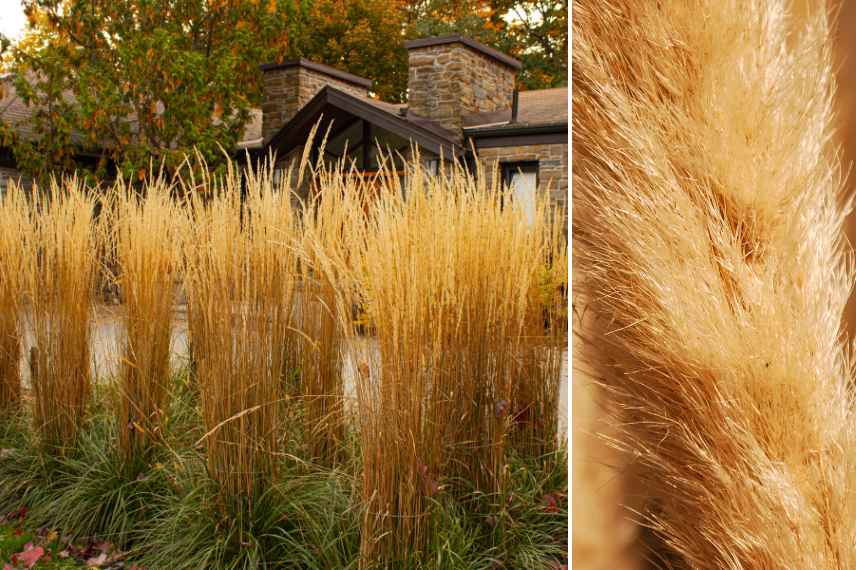
Calamagrostis 'Karl Foerster'
Calamagrostis ‘Karl Foerster’ is a grass that forms a particularly slender, upright clump, reaching 1.20 m in height. It is valued for its handsome habit and its deciduous foliage that changes with the seasons, blue-green in summer, taking lovely gleaming golden tones from November. In June–July, the long, fine flowering spikes form on plume-like panicles, reaching up to 1.60 m in height, rosy-bronze turning pale straw in autumn. Very hardy (down to -29°C) and accommodating, this grass stands up well to severe winters, but also to drought. Its vertical habit and dense foliage create an effective, moving screen. Calamagrostis ‘Karl Foerster’ is also suited to a wide range of soils, provided they are well-drained. It prefers full sun, though it tolerates partial shade.
Read also
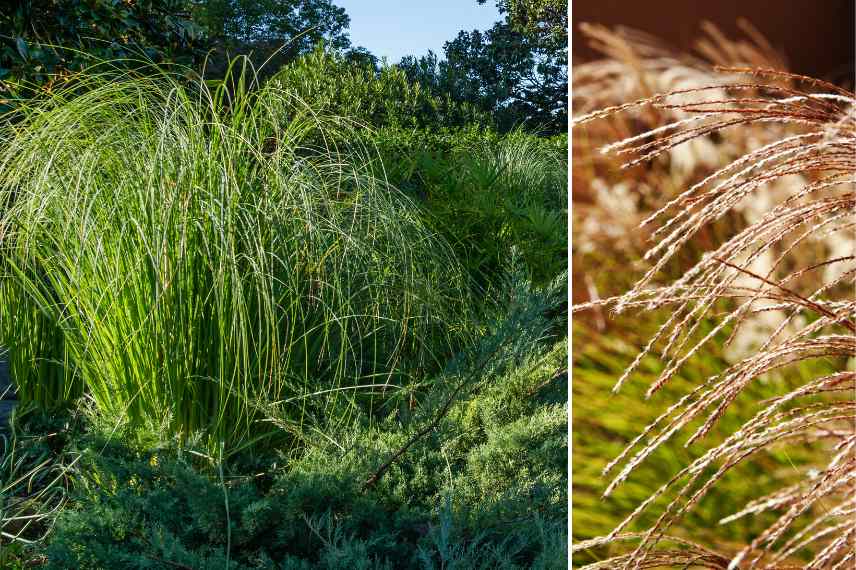
Grasses: which variety to choose?Miscanthus giganteus
As its name suggests, the Miscanthus giganteus is a towering grass, with a height of up to 3 m and a width of 1 m. It forms a broad, upright clump with a bamboo-like appearance, but without invading space. Its ribbon-like foliage, pale green with a blue tinge, displays bronze-gold and coppery tones in autumn and winter. This Miscanthus, however, rarely blooms. Only in a very warm summer does it reward us with feathery spikes of a silvery colour, appearing from the end of summer through autumn. With its architectural silhouette, it is ideal for creating a dense greenery screen. Fairly tolerant of soil, it prefers slightly cool, deep soil, but will adapt to less-than-ideal conditions, including poor soils. It starts late in spring, but from May onwards, it quickly regains vigour, returning to its majestic stature within a few weeks.

Miscanthus sinensis ‘Gracillimus’
Another Miscanthus, but much more delicate than its cousin! The Miscanthus sinensis ‘Gracillimus’ has a tufted, rounded and dense habit, rapid growth and a handsome flowering height of up to two metres, all of which make it an excellent choice for composing a natural barrier with finesse. This Chinese reed is particularly prized for its fine and elegant foliage in a fresh, spring-like green, consisting of very fine and long, ribbon-like leaves, about 1 to 2 metres in length, marked by a white midrib. In autumn, these leaves turn to a caramel-to-bronze shade. The flowering of this grass, when it occurs, is late, generally starting toward the end of September. The silky copper-red spikes rise well above the foliage. Although flowering can be sporadic, depending on the climate, it remains spectacular. These fluffy plumes persist in winter. To thrive, this Miscanthus requires well-drained soil and sun exposure. Its frost tolerance is remarkable, with hardiness down to -20°C.
Read also
7 fast-growing grassesPanicum virgatum 'Dallas Blues'
The imposing stature, bluish foliage and cloud-like flowering of Panicum virgatum ‘Dallas Blues’ give this grass a beautiful solution, particularly for creating a privacy corner, while benefiting from a hardy and easy-to-care-for plant. The semi-evergreen leaves display metallic reflections that intensify as the season progresses. In autumn, the foliage takes on rust to brown tones before turning yellow in winter. The fountain-arched habit remains graceful even in the rain. This ample foliage gives the plant an imposing stature that easily reaches between 1.5 m and 2 m in height and almost as wide, depending on growing conditions. From August to October, long stiff stems emerge from the foliage to support panicles measuring up to 40 cm long. These consist of small flowers tinged pinkish-purple, creating the illusion of a cloud floating above the plant. Capable of withstanding the harshest conditions, hardy to -28°C, drought-tolerant, and even in waterlogged soils, this Panicum adapts to anywhere.
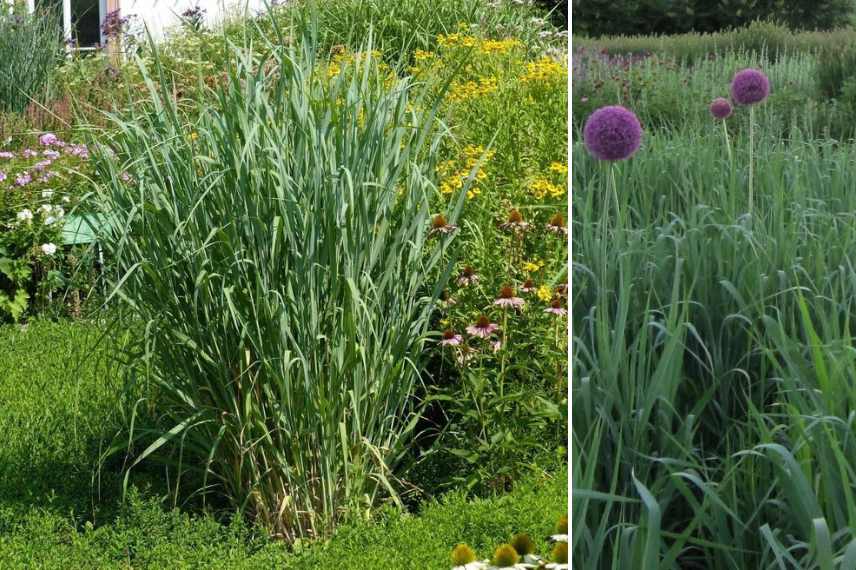
Panicum virgatum ‘Dallas Blues’ (© Cultivar 413)
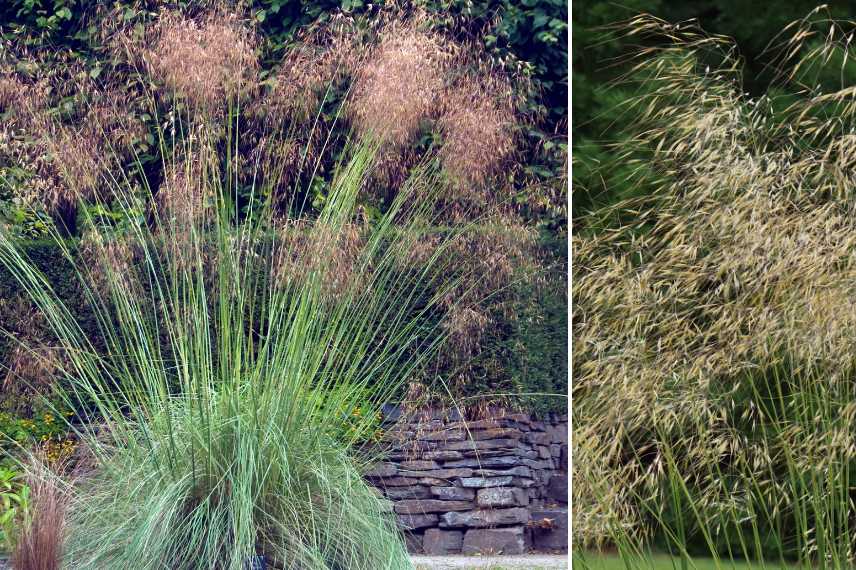
Stipa gigantea
Stipa gigantea is another natural option for creating screening hedges or plant barriers. Its height, density and year-round appearance make it an excellent choice for those seeking to combine privacy and greenery. Here is a handsome grass of generous dimensions, growing into a dense clump that can reach up to 2.5 metres in height when flowering. The leaves, slender, arching and glossy, are blue-green in colour and can reach up to one metre in length. The tall, slender stems form a natural curtain, allowing an area to be isolated with ease and discretion. The display is all the more striking when the rays of the setting sun bathe the stems and panicles, creating a play of light and shade. The inflorescences take the form of large, airy panicles, almost purple, offering a striking display from early summer, before turning golden with the arrival of winter. Hardiness down to -15°C, this grass can withstand severe winters and prefers light, well-drained soil, even dry soil in summer.
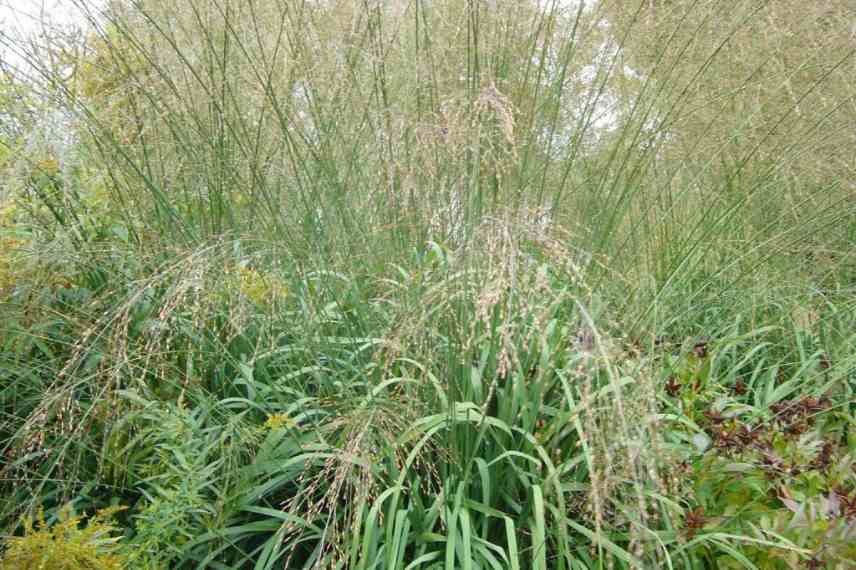
Molinia caerulea ssp. arundinacea 'Transparent'
The Molinia caerulea ssp. arundinacea ‘Transparent’ is another beautiful, graceful tall grass with an elegant, slender, bristly-looking habit!
It is distinguished by its airy and slender habit, and adds charm and character to a privacy screen. It forms a rounded clump about 90 cm in diameter, composed of long, arching green leaves. The ribbon-like foliage is evergreen, which makes it an additional asset even in winter. From August through to autumn, graceful panicles reaching almost 2 m in height bear spikelets pale green to pink-tinged beige, so fine and delicate that they create an almost transparent effect, and add to the plant’s verticality, making it an excellent choice for masking unsightly features in the garden. When autumn arrives, the plant takes on golden and coppery tones that persist until the end of January. This moor grass requires little maintenance and reaches its mature size in two to three years. Adapted to deep, moist soil, ranging from slightly acidic to slightly alkaline, it is also frost-hardy to -15°C.
Pennisetum orientale 'Tall Tails'
Combining grace and sturdiness, the Pennisetum orientale ‘Tall Tails’ forms beautiful, elegant, airy clumps. With a slightly loose habit and a flowering height of 1.2 metres, this variety of grass with foxtail-like inflorescences gives an impression of lightness while occupying space. With its compact dimensions, it is perfect for small spaces requiring partial screening. In summer, its cottony inflorescences, a soft pale pink, gradually transform into snowy white with silvery reflections, rising from grey-green strap-like foliage, creating a striking display that lasts until the first signs of winter. The foliage takes on straw-coloured tones when the cold arrives. With rapid growth, reaching its mature size in just 2-3 years, this pennisetum is an excellent choice for those eager to create a secluded, intimate atmosphere. It tolerates dry soils and is frost hardy to -15°C.
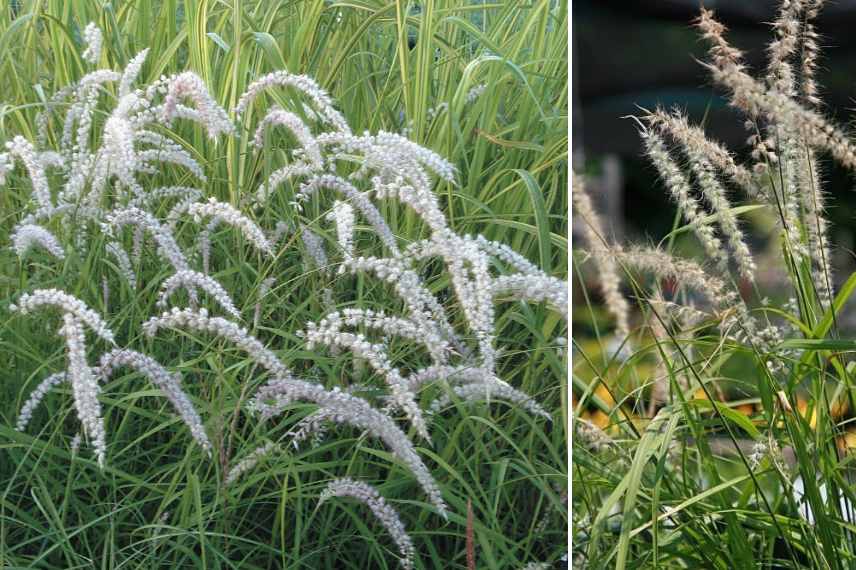
Pennisetum orientale ‘Tall Tails’ (©David Stang Wikimedia Commons)
- Subscribe!
- Contents
Comments