





























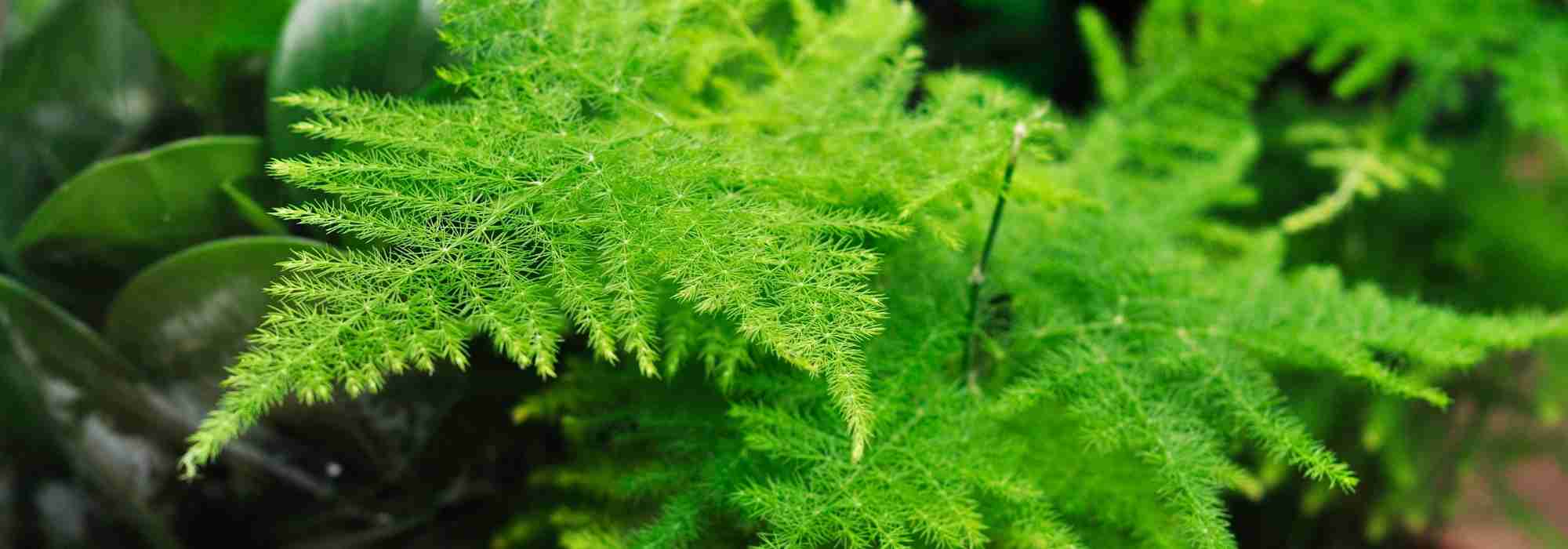
Diseases and parasitic pests of Asparagus
Our tips for identifying them, treating them and preventing them
Contents
Originating from South Africa, asparagus is a houseplant, recognisable for its foliage of extreme fineness and a wispy, ethereal delicacy. A member of the Asparagaceae family, this herbaceous plant with a tuberous root offers a multitude of species, to suit a range of tastes. Here, asparagus is grown primarily indoors, but can perfectly find a place in a garden, only in regions with a mild climate, its hardiness limited to -4 to -7 °C.
Asparagus plants are relatively easy to grow, requiring little in the way of care, fairly robust and durable. However, some cultivation incidents can occur, linked to unsuitable cultural conditions, parasitic invasions or diseases.
Discover how to identify pests or diseases of asparagus, but above all the various natural means to treat and prevent them.
Further reading: How to grow indoor asparagus?

A quick reminder of the cultivation conditions for Asparagus.
The appearance of pests or diseases is often linked to poor growing conditions. A poorly drained growing medium, too little light, and overwatering are all reasons that can explain the problems with asparagus. That’s why a quick reminder about planting and care is in order. By following these tips, you will significantly reduce the risk of your asparagus being infested with pests, or having yellowing foliage.
Asparagus, grown in a pot or in the ground, appreciates a humus-bearing substrate, perfectly drained, fairly light and loose. A heavy, waterlogged soil can be fatal and encourage rhizome rot. The chosen location for the asparagus is just as important. Asparagus needs good light, but, like most indoor plants, it does not enjoy direct sunlight. Asparagus also likes to spend winter in a room with a temperature around 15°C. And in summer, it can take up residence outdoors, in the garden, in partial shade.
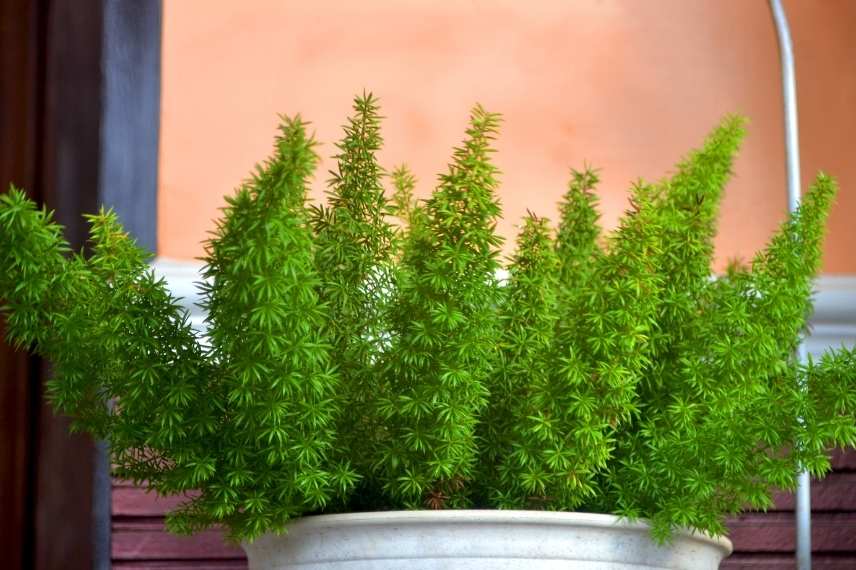
Lovely Asparagus densiflorus grown in a pot
In terms of care, watering should be generous and regular in summer, more spaced in winter. The substrate must be moist, but no standing water should accumulate in the saucer or the decorative pot. A light, regular misting of the foliage helps maintain some humidity. A monthly application of fertiliser helps to fertilise your asparagus. Finally, after 2 to 3 years, an asparagus may feel a little cramped in its pot. Repotting becomes essential.
Read also
How to grow indoor Asparagus?Pests of the delicate foliage of asparagus
When grown properly, asparagus proves resistant to insect attacks. However, with average growing conditions or an unfavourable environment, it may be the target of parasitic attacks. And there are three different species:
Scale insects
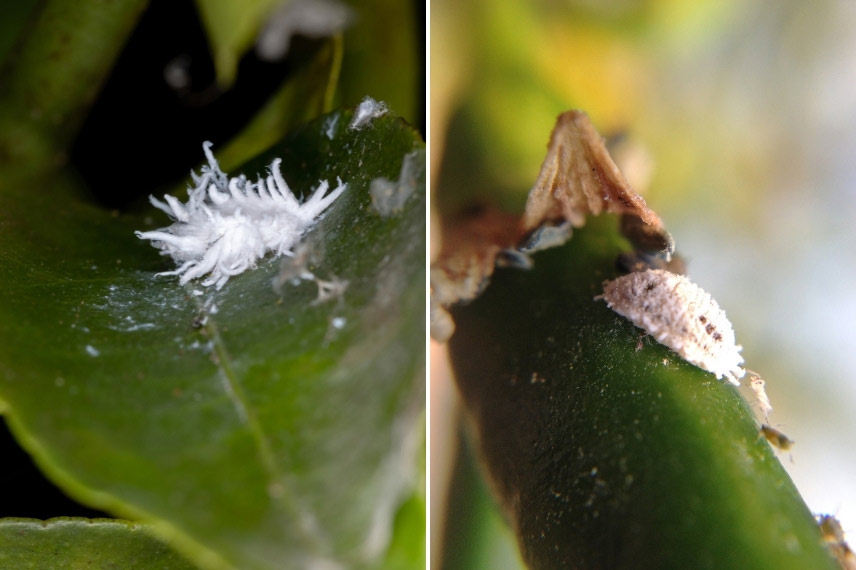
Scale insects are parasitic and often difficult to eradicate because of their shells. Most species remain immobile, but their larvae are considerably swifter. Moreover, they settle on the most inaccessible parts of the asparagus, mainly on the undersides of the foliage, near the central vein.
Symptoms
The main stems bear round pustules, grey-brown in colour, or small cottony masses. The foliage yellows in patches along the veins, then eventually dries and falls. Generally, the tissues discolour at the site where the pustules have established themselves.
In severe infestations, a blackish, soot-like substance appears on the foliage. It is sooty mould, arising from honeydew secretions, sticky.
An invasion of scale insects does not kill the asparagus, but greatly weakens it.
Curative control
First, you can scratch scale insects off with a fingernail, a matchstick or a cotton bud, taking care not to damage the plant tissues. Then, you should rub the leaves and stems with a cotton bud soaked in soapy water or alcohol, possibly combined with a vegetable oil. This oil will coat and smother the larvae and the eggs. The foliage of asparagus is very delicate, so you can also spray this solution. This treatment can be repeated weekly until all scale insects have disappeared.
Isolating the plant is also essential, as scale insects can move between plants. Some heavily infested branches may be cut back.
Don’t forget to check the roots, which may be colonised by scale insects. In that case, repotting is required, after cutting off the infested root segments.
Prevention
- Monitor your asparagus and other houseplants regularly
- Water asparagus with the appropriate amount of water
- Fertilise asparagus regularly to keep it healthy
- Remove dead foliage and plant debris regularly
- Keep a suitable distance between the various houseplants to maintain good air circulation
Red spider mites
Named red spider mites for their tendency to weave pale webs on the foliage, red spider mites are, in fact, sap-sucking mites. These mites are tiny, often invisible to the naked eye. These pests typically thrive in dry, warm conditions. They reproduce very quickly and move from one plant to another.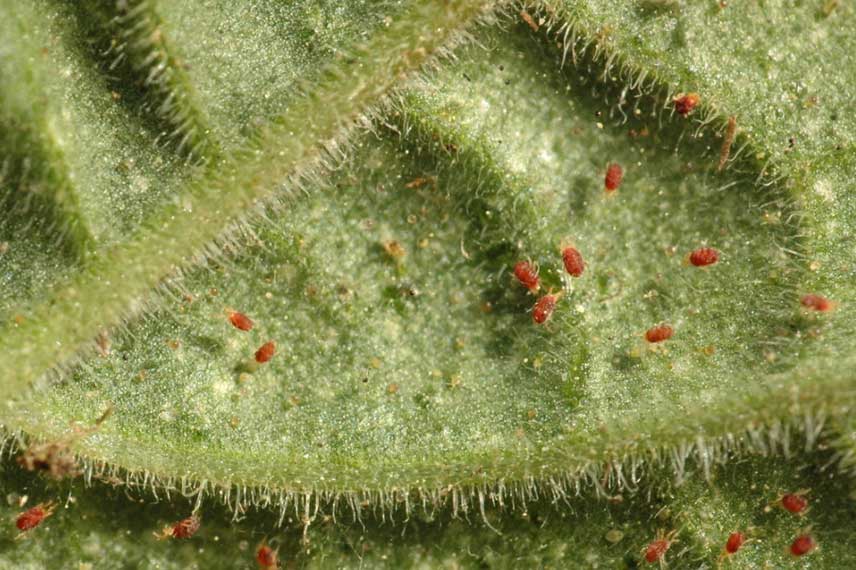
Symptoms
The underside of asparagus foliage takes on a grey-silver tint or iridescent colours. Young shoots are frequently the first to be affected. Some leaves may lose their pigmentation and turn yellow. Ultimately, the foliage falls, after being covered in white webs, signs of a heavy infestation.
Curative control and prevention
The remedy is the same as for red spider mites. You must maintain a certain humidity around the asparagus to hinder the development of the parasites. Therefore, continue to mist the foliage, especially the undersides of the leaves. Thrips will eventually disappear. And if that isn’t enough, garlic decoction should eradicate the last individuals.
Thrips
Thrips are tiny insects—sap-suckers and jumpers, like fleas. Like red spider mites, thrips develop very rapidly. And several generations can occur in a year. Eggs, very difficult to detect and reach, are laid in the tissues. Then the larvae burrow into the substrate.
Thrips also develop in summer when the atmosphere is warm and dry.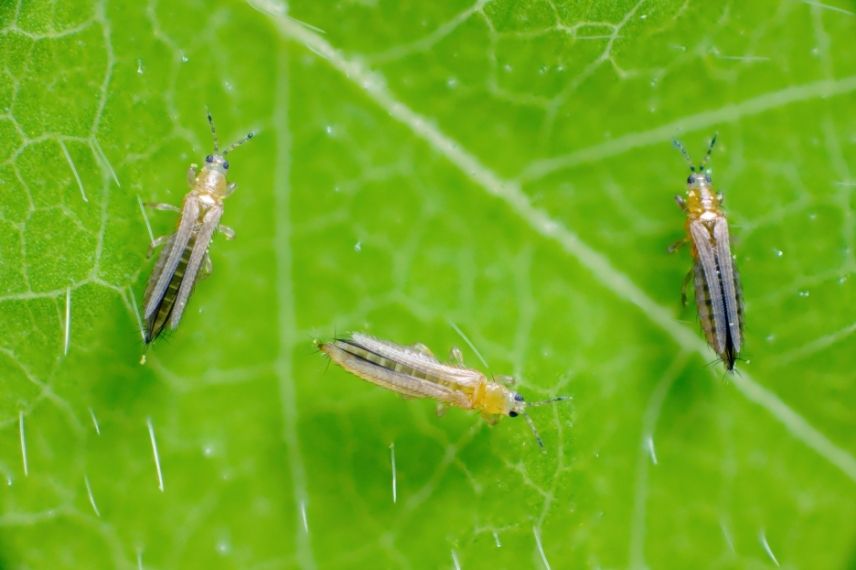
Symptoms
Thrips are evident from numerous puncture marks on the leaves and the presence of tiny black excrement. The foliage yellows, discolours in patches and eventually dries.
Curative control and prevention
The remedy is the same as for red spider mites. You must maintain a certain humidity around the asparagus to hinder the development of the parasites. Therefore, continue to mist the foliage, especially the undersides of the leaves. Thrips will eventually disappear. And if that isn’t enough, garlic decoction should eradicate the last individuals.
Growing problems affecting the health of asparagus
The foliage of the asparagus plant can yellow for various reasons, beyond those related to pest infestations. Thus, a foliage that yellows, dries and drops may simply be the sign of a lack of watering. This is, in fact, what happens naturally during the dry season in Africa, its native range. Moreover, concretely, the root ball will also be very dry. The dry indoor air can also cause this phenomenon. In this case, simply water more, without allowing the water to stagnate. And remove the dry foliage right at the base of the root ball.
This yellowing of the foliage can also be due to an excess of water, or to too much sun exposure.
As for the rotting of the roots, it is linked to water stagnation in the saucer or the cachepot. To prevent this, be sure to remove any residual water one to two hours after watering.
Diseases that can affect asparagus
Overall, asparagus is a very hardy plant and is relatively resistant to common indoor diseases. Only fusarium wilt may, in exceptional cases, occur if growing conditions are not optimal.
This disease is generally fairly easy to detect, since the base of the shoots and the collar turn brown and rot gradually. The leaves eventually fall and the asparagus dies. If you repot the plant, you will see that the rootstock is brownish and decomposed. It may emit an unpleasant odour.
To prevent this fungal disease, simply water properly. While avoiding watering when the asparagus does not need it. Good ventilation of the room where the asparagus is kept is also essential, especially after watering.
Similarly, excessive nitrogen fertilisers promote the appearance of the disease. Therefore choose a special fertiliser for green plants, and apply it only once a month. No more.
- Subscribe!
- Contents
Comments