





























Diseases and pests of Fuchsias
Identification, prevention and natural treatments
Contents
Fuchsias are perennial plants that reward us with their generous flowering for long months in summer. Their small, colourful bells brighten up the semi-shaded areas of the garden, terrace, or balcony.
Easy to grow in pots as well as in open ground, fuchsias can, however, be susceptible to certain diseases or fall victim to pests.
Let’s explore how to prevent risks and which natural treatments to use for healthy fuchsias.

The fuchsia gall
Description and Symptoms
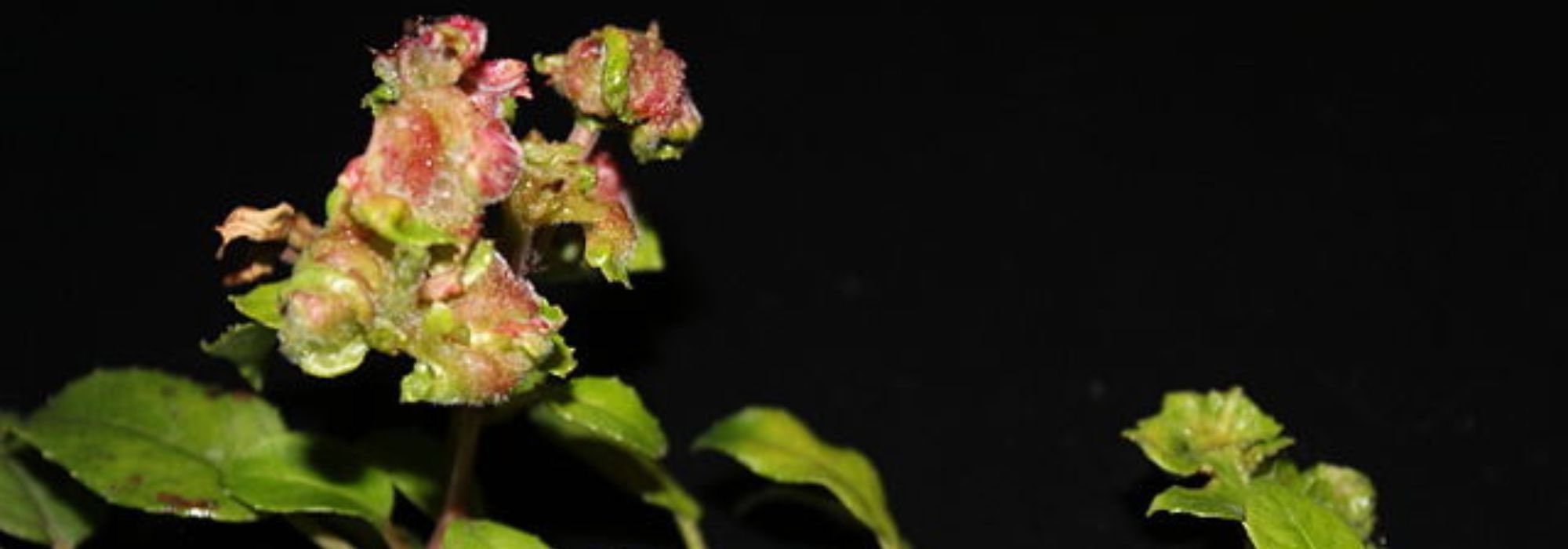
It is one of the most dreaded diseases: fuchsia gall or fuchsia mite. It is caused by a tiny mite called fuchsia aculops (Aculops fuchsiae), discovered in Brazil in the 1970s. Its presence in Europe was noted later, in the 2000s.
This piercing and sucking mite feeds on the plant by extracting its sap. Its microscopic size makes it invisible to the naked eye, so it is only after the appearance of symptoms that its presence can be detected. Under a magnifying glass, you may observe an elongated, light yellow mite.
As is often the case with pests, its life cycle is very short (21 days) and its multiplication rapid. A female lays an average of fifty eggs, which hatch after 7 days. Several generations occur each year. The mite is particularly active in late spring and summer. However, winter does not signal its destruction, as it can survive cold temperatures, well protected within the plant.
The symptoms of fuchsia gall are:
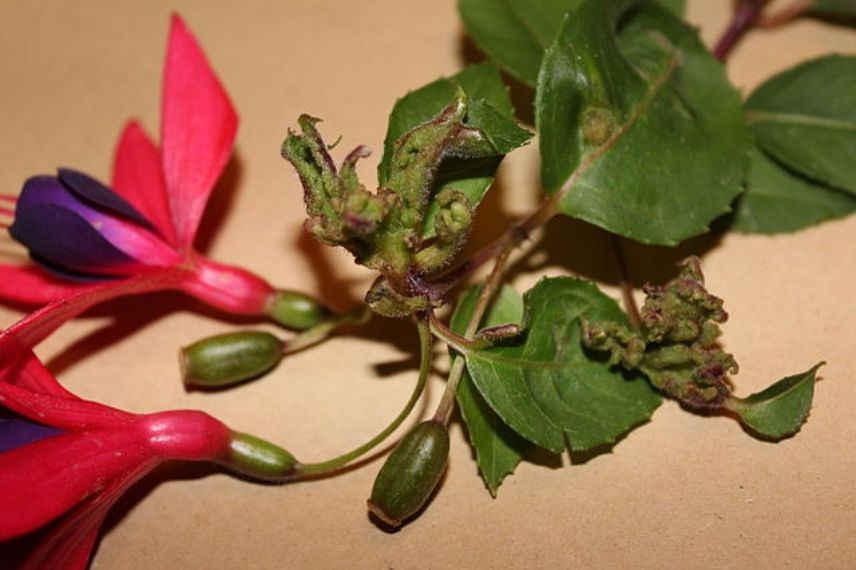
- the presence of a white felt on the leaves (which may resemble powdery mildew);
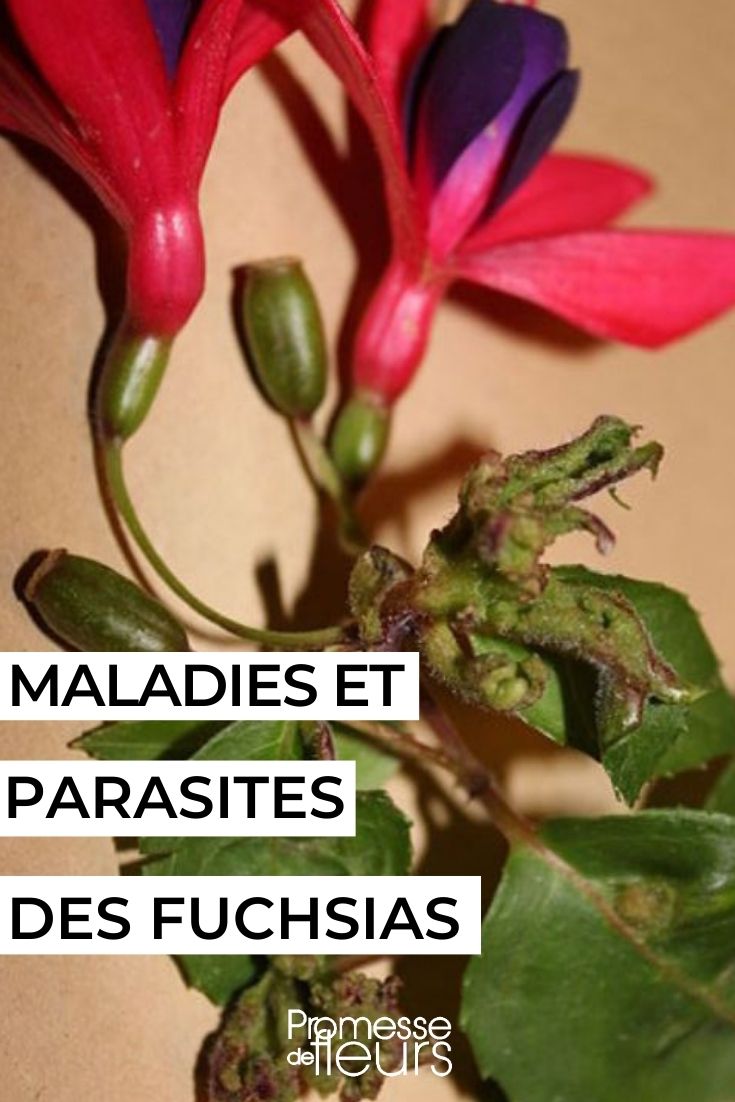
- leaves that deform, become swollen, and take on a reddish hue;
- the appearance of galls (abnormal growths) pale green, then red, on the leaves and young stems;
- wilting of the buds;
- deformation of the flowers;
- stopped growth.
Some varieties of fuchsias are more sensitive than others: this is the case for Fuchsia arborescens, Fuchsia magellanica or Fuchsia procumbens. Certain regions of France, such as Brittany or Normandy, provide a climate conducive to the development of Aculops fuchsiae, combining mild warmth and humidity.
Fuchsia gall spreads rapidly throughout the plant, leading to its decline. Highly contagious, it can also quickly transmit to nearby fuchsias. Its mode of propagation uses wind, insects such as pollinators visiting the plant, or even humans.
Prevention
Some preventive measures can help avoid the appearance of Aculops fuchsiae.
First, choose varieties known for their resistance and low sensitivity to the mite, such as Fuchsia microphylla or Fuchsia thymifolia.
Avoid taking cuttings from plants whose health status you do not know: this is one of the other means of spreading the disease. The same caution applies when exchanging plants, especially in the highest risk areas.
Always disinfect cutting tools such as pruning shears with alcohol, before and after use. This helps limit the risk of spreading.
Finally, some gardeners recommend cutting back potted or garden fuchsias in late autumn, pruning the stems by at least two-thirds of their length. This reduces hiding places for our unwanted mite to survive the winter.
Natural Treatments
Unfortunately, there is no curative treatment: the fuchsia is generally doomed.
Aculops fuchsiae is classified as a pest in the European Union, which means that its control is obligatory to try to limit its spread.
Start by cutting away the affected parts well below the visible symptoms, then dispose of them with household waste. Monitor closely for the development of new symptoms. In case of evidence of re-infestation, destroy the entire plant, including the root system. Do not compost them.
Fuchsia rust
Description and Symptoms
Fuchsia rust is a cryptogamic disease caused by a fungus (Pucciniastrum epilobii to give it its proper name).
The symptoms are:
- the appearance of pale yellow or brown ringed spots on the upper side of the leaves;
- the presence of powdery pustules, coloured brown-orange on the underside of the leaves (containing spores);
- leaves that may take on a slightly crinkled appearance, yellow, and eventually fall prematurely;
- the development of pustules along the veins.
This disease generally appears during winter. The fungus takes advantage of the presence of other host plants, such as willowherbs and firs.
The disease is not necessarily fatal when it affects a mature and healthy fuchsia, but it weakens the plant. This can contribute to the development of other diseases or attacks by pests.
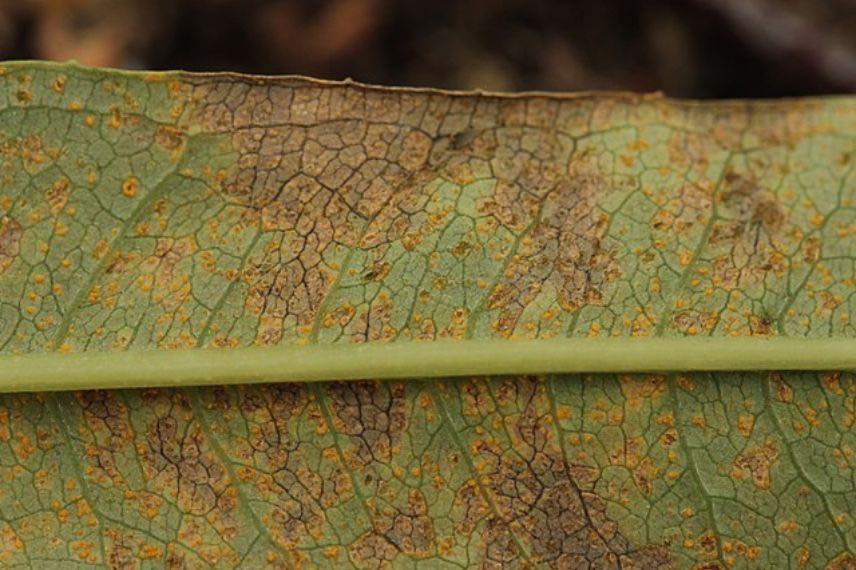
Pucciniastrum epilobii on willowherb leaf
Prevention
Fungi naturally thrive in humid and confined conditions. To limit their appearance:
- avoid wetting the foliage during watering;
- water in the morning, so that the foliage can dry more quickly;
- empty the saucers of your potted fuchsias about twenty minutes after watering;
- do not let wilted flowers or leaves stagnate at the base of the fuchsias;
- always use clean cutting tools, previously disinfected.
Some plant manures are also known for their antifungal properties. Spray garlic manure, nettle manure, or horsetail manure on your fuchsias as a preventive measure.
Find the various recipes in our dedicated tutorials:
- Garlic manure or garlic decoction: recipe and uses in the garden
- How to make nettle manure?
- How to make horsetail manure?
Natural Treatments
At the first signs of symptoms, remove all affected parts. Destroy them without composting and thoroughly clean your cutting tools.
Spray a sulphur-based solution on all aerial parts of the plant, to be repeated if necessary.
For more information, check out our article: “Getting rid of rust disease.”
Botrytis
Description and Symptoms
Another fungal disease that can affect fuchsia is botrytis, also known as grey mould (Botrytis cinerea). It is identified by the appearance of brown spots and grey fluff on the leaves, buds, flower buds, and even the roots of the plant in cases of severe infestation.
The fuchsia can eventually rot and completely decline.
Prevention
It is humid conditions at moderate temperatures (around 15°C) that promote the emergence of this fungus.
To prevent risks:
- outside of the summer period, water your fuchsias moderately, waiting for the substrate to be dry a few centimetres below the surface;
- do not wet the foliage;
- empty any saucers after about twenty minutes;
- protect the plant from heavy rain;
- place it in a well-ventilated area, not confined.
Here again, you can use plant manures, to be sprayed as a preventive measure.
Natural Treatments
At the first signs, remove the affected parts. Spray with a fungicidal product or one based on sulphur.
For more information, check out our article: “Botrytis or Grey Mould.”
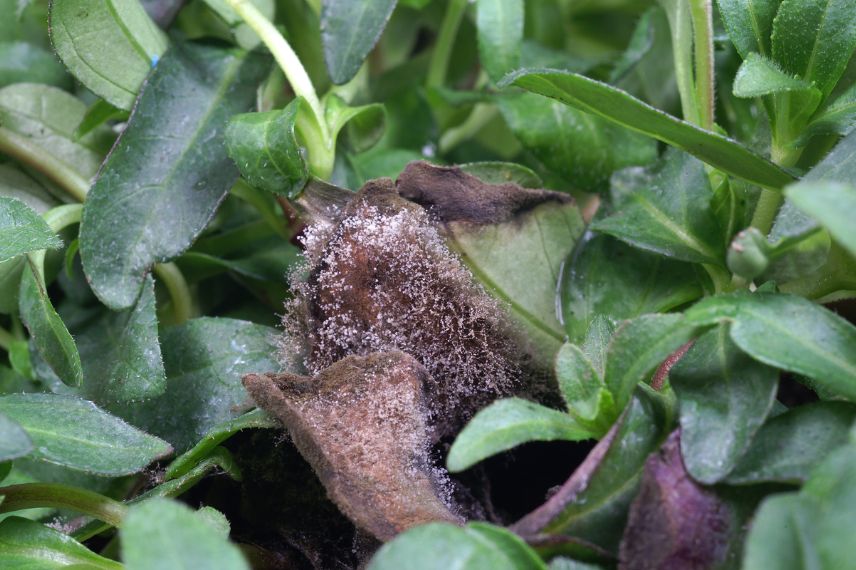
botrytis cinerea
Read also
Growing a Fuchsia in a potCommon pests on fuchsias
Description and Symptoms
Aphids, red spiders, whiteflies, and mealybugs can also attack fuchsias. These little pests feed on the sap of the plant. While their presence is not always problematic, a heavy infestation can weaken the fuchsia and open the door to pathogenous agents causing diseases. These parasites can also be responsible for the appearance of sooty mould, a fungus that develops as a result of their honeydew secretion.
Warm, rather dry air in a confined environment promotes the development and proliferation of pests.
Symptoms are often first noticed on the leaves: they curl, turn yellow, wilt, become sticky, and may eventually fall off. You may also notice the appearance of black soot (the infamous sooty mould).
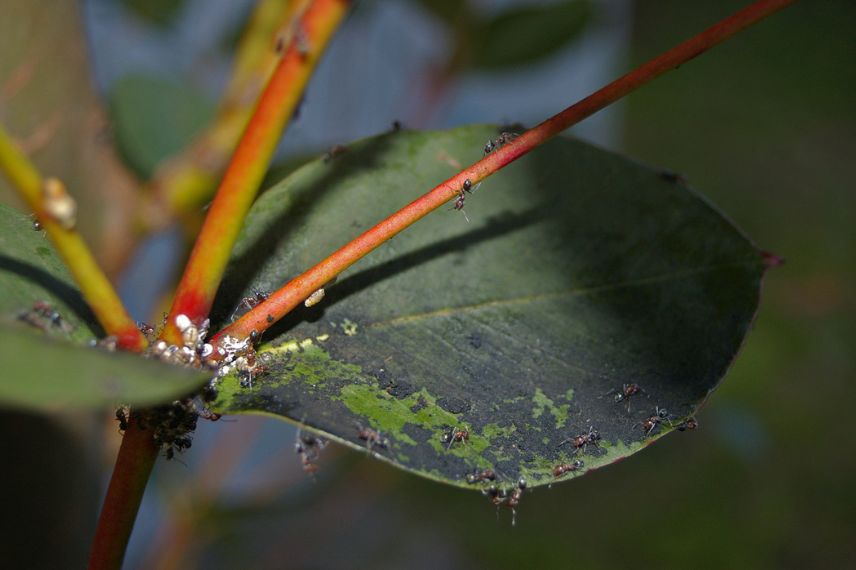
The characteristic black soot of sooty mould after an aphid attack
Prevention
Do not grow your fuchsias in overly confined spaces. Regularly ventilate if growing in a greenhouse or conservatory. Move your plants outside as soon as possible.
Some gardeners recommend spraying nettle manure or tansy manure, which would act as natural repellents.
Care for the growing conditions: healthy plants will be less susceptible to attacks. Regularly inspect your plants to act as soon as the first pests are spotted and prevent their proliferation.
Natural Solutions
If they are few in number, aphids can be removed by hand or dislodged with a simple jet of water.
Watering the aerial parts of the plant often helps to get rid of red spiders, which fear humidity.
Mealybugs, which are more difficult to eradicate, will be removed manually using a cotton swab soaked in alcohol.
In the case of a more developed infestation, treat your fuchsia with a natural insecticide: mix 1 tablespoon of black soap in 1 litre of warm water. Spray in the late afternoon on the affected parts and repeat if necessary.
To learn more about these pests, check out our articles:
- Subscribe!
- Contents
Comments