





























Diseases and pests of wattle
Identify and treat wattle diseases and pests naturally
Contents
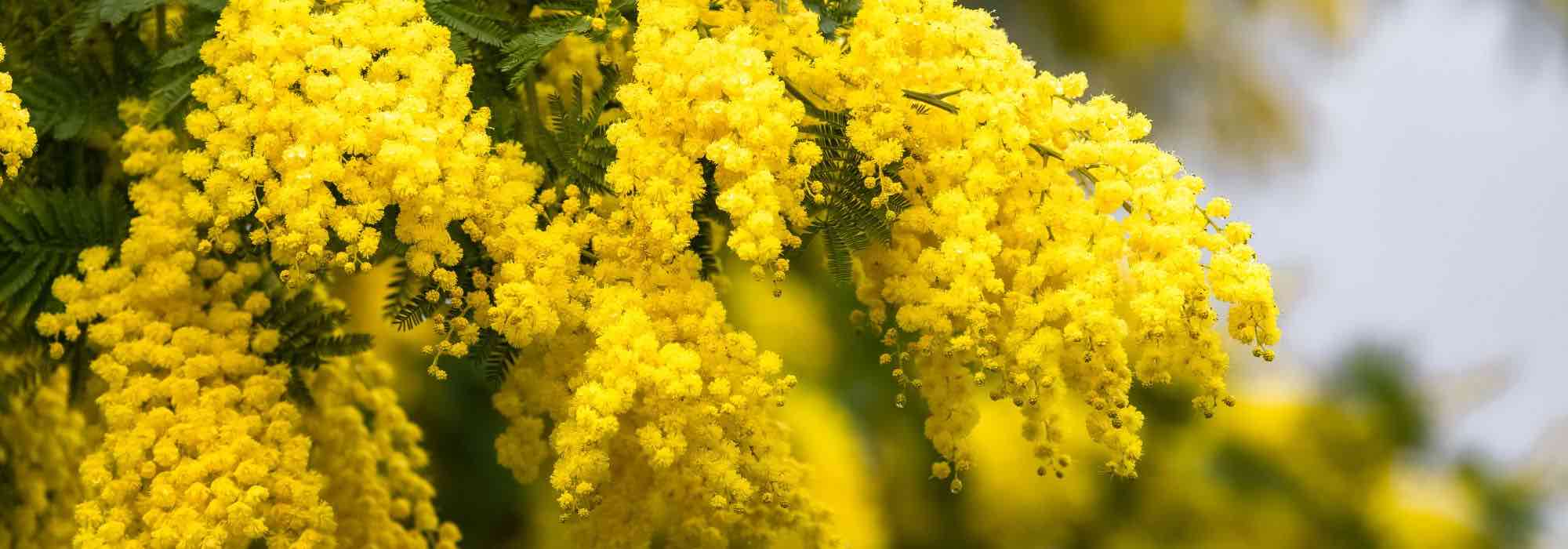
Wattle, with its small, scented, bright yellow pompom-shaped flowers and its lush, airy foliage, is a gem in any garden. The best known of all is the florist’s mimosa, also called the winter mimosa or Acacia dealbata. Introduced to regions with a mild climate, the mimosa is a bush or a tree often found in the south of France and along the Atlantic coast. Semi-hardy, mimosa can also be grown in a pot in regions where the winter is too cold. When planted in good growing conditions, mimosa is not very susceptible to diseases and pests. However, as with all plants, its health can be affected by certain problems. Discover the diseases and pests that can affect mimosa, their symptoms, methods of prevention, and possible natural treatments.

Chlorosis
Chlorosis is not in itself a disease, but the sign of a deficiency, most often iron. It indicates that the plant has a problem absorbing iron, a nutrient essential for photosynthesis. This condition weakens the wattle.
Symptoms
Chlorosis, often caused by an iron deficiency or by soil that is too calcareous, manifests as yellowing of the wattle’s leaves while leaving the veins green.
Prevention
To prevent chlorosis, make sure that the pH of your soil is suited to the wattle’s needs and that the substrate is not too calcareous. You can also water your wattle with rainwater, which may be less calcareous than tap water.
Treatment
If chlorosis occurs, several natural treatments are possible. We recommend adding well-rotted compost to the soil in which the wattle is planted, as well as a little heather soil to correct the pH. You can also add a mulch of pine needles. For watering, use rainwater. If these methods do not work, apply an iron chelate product, to be diluted in the irrigation water.
For further reading, consult our advice sheet: “Iron chlorosis”.
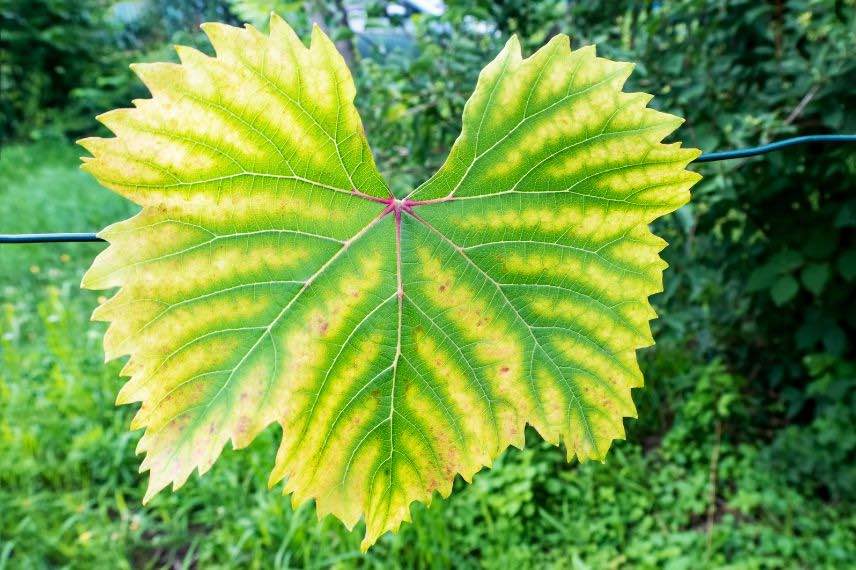
Typical symptoms of chlorosis
Read also
How to protect wattle over winter?Gummosis
Wattle can also be affected by gummosis, characterised by the presence of a pale yellow or golden viscous substance. It is not a disease, but a defence response of the tree.
Symptoms
Gummosis appears as the exudation of a sticky, viscous gum on the tree’s bark, as well as the appearance of cankers. The foliage turns yellow and withers. It is caused by a wood-inhabiting fungus.
Prevention
To prevent gummosis, avoid watering the tree’s collar, wounding the bark or trunk and ensure the soil is well drained.
Treatment
In case of infection by gummosis, remove the affected parts by scraping them away and apply Bordeaux mixture, then a natural mastic to aid healing.
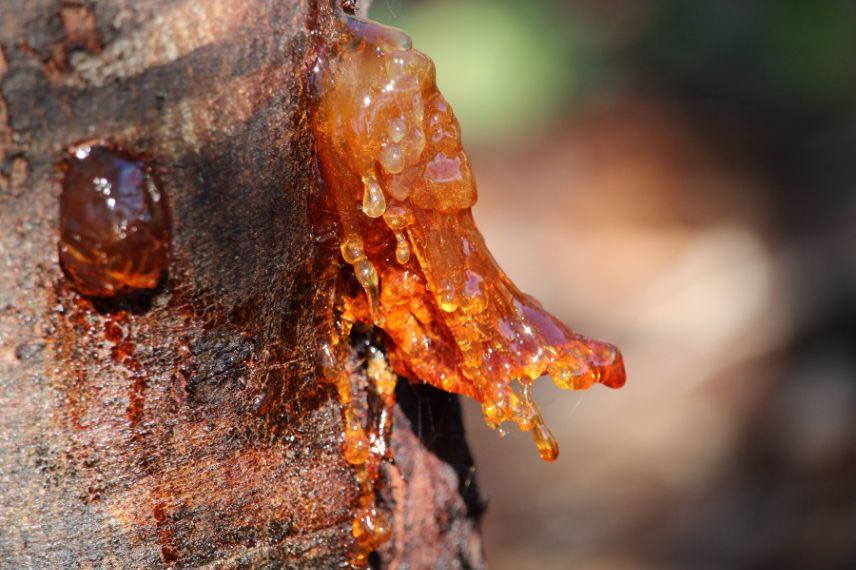
Gummosis on acacia
Leafhoppers
Leafhoppers are small jumping insects with folded wings that pierce plants and suck the sap. They weaken the plant. The white leafhopper is common in the south of France. It ranges from light grey to dark grey in colour. The larvae of the white leafhopper produce a whitish, waxy bloom that helps to camouflage them. A black layer called sooty mould can develop on this bloom. The problem with leafhoppers is mainly cosmetic. A massive infestation is required for the tree to decline.
Symptoms
Leafhoppers are found on the wattle’s leaves, with small larvae appearing on the undersides of the leaves. They can cause discolouration and distortion of the leaves, with the edges appearing dry.
Prevention
Inspect your wattle regularly to check for their presence. You can also attract or introduce animals that eat leafhoppers, such as blue tits, predatory bugs and certain species of ladybirds.
Treatment
To control white leafhoppers naturally, you can use predators of these insects: Neodryinus typhlocybae, which are a type of small wasp. Spraying water mixed with black soap can also be effective in keeping these pests away. In one litre of lukewarm water, mix 10 to 20 g of black soap. Spray this preparation on the infested parts in the evening and in humid conditions.
For further reading, see our advice sheet on the leafhoppers.
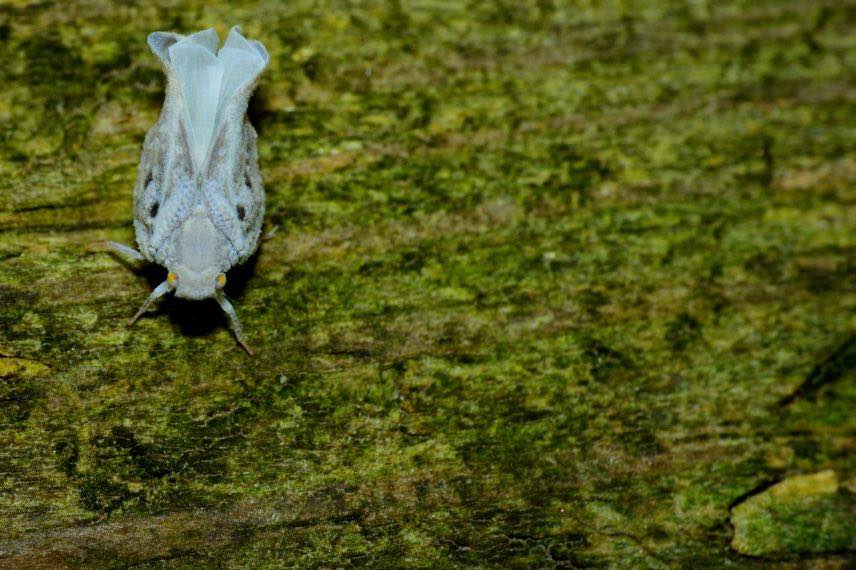
Spot the leafhoppers
Scale insects
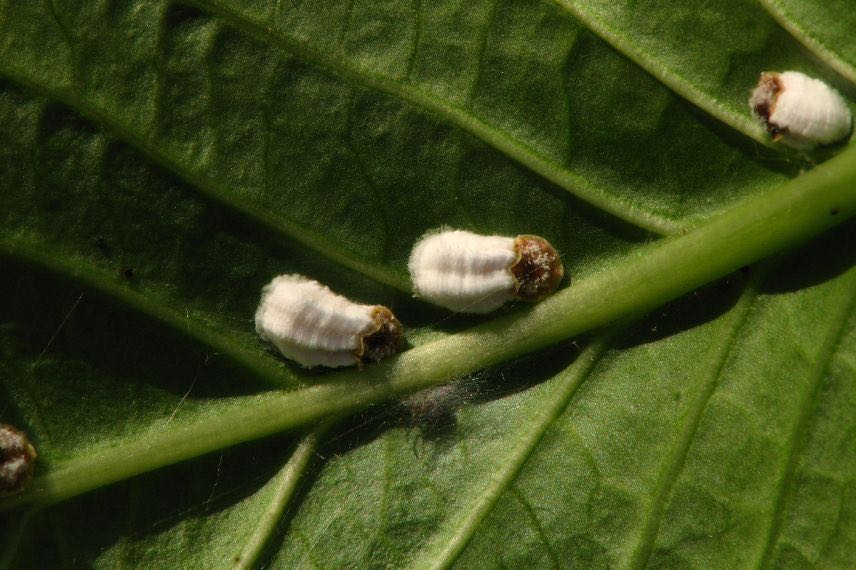
Scale insects are small piercing-and-sucking insects that can colonise the leaves, young shoots and stems of the wattle. Because they do not move, they are difficult to spot. In addition, they protect themselves with a small domed shell. You can encounter different kinds of scale insects. The farinose scale is distinguished by its white shell and the armoured scale by its brown or black shell. These parasitic insects suck the sap from the plant like aphids and weaken the plant.
Symptoms
These insects, 1 to 6 mm long, can be recognised by their small white or black shell-like shapes, or by the presence of small farinose clumps. These small shells come away from the bark when scratched with a fingernail. The leaves turn yellow and become covered in a sticky substance secreted by the insects called honeydew. On this honeydew, a black dust may appear. This is sooty mould, caused by a fungus.
Prevention
Scale insects appear in confined, warm and humid environments. To prevent their development, ensure that the wattle, especially if it is kept in a greenhouse, benefits from good ventilation. You can also introduce natural predators of scale insects, which are certain species of ladybirds, lacewings and hoverflies.
Treatment
To treat scale insects naturally, use a cotton bud soaked in 90% alcohol or soapy water and use it to remove the scale insects present on the stems, leaves and branches. You can also remove scale insects gently with a knife that is not too sharp, then destroy them by burning.
Spraying a solution of black soap, alcohol, oil and water on the infested parts is also a commonly used treatment method.
Mix:
– 1 teaspoon liquid black soap
– 1 teaspoon methylated spirits
– 1 teaspoon vegetable oil, such as rapeseed oil.
Spray this preparation twice at 30-minute intervals. Repeat every 8 days until the scale insects have completely disappeared.
For further reading, consult our advice sheet: Mealybug: identification and treatment
In addition, discover our sheet: Identify the main parasitic insects and plant diseases, as well as our comprehensive sheet on the planting and care of wattle.
Scale insects
- Subscribe!
- Contents
Comments