






























Eco-friendly gardening: organic and natural products
The toolkit for sustainable gardening
Contents
Whether in the vegetable garden, orchard, or even ornamental garden, when one decides to garden organically, it is essential to minimise inputs, meaning everything external to the garden. In this case, it is advisable to work with Nature and especially with what is available on-site (compost, mulch, dried herbs, urine…). However, this is not always easy or feasible, particularly in new or small gardens.
Fortunately, some “products“ (the term is inaccurate, but difficult to replace) that are natural, eco-friendly, and usable in organic farming and permaculture can provide a boost to the gardener who is mindful of respecting nature. Natural fertilisers such as horn or dried blood, seaweed, nettle manure, or compost activators are useful elements that can now be found in stores and garden centres. Let’s take a look at the main organic “products”: their types and uses.

Mulching
To mimic nature, one should never leave soil naked. At least, as little as possible. To avoid this, groundcovers should be planted under trees and in beds, or green manures on unused vegetable plots. However, it is not always possible to plant or let things grow, especially in the vegetable garden or around new plantings. This is where mulching comes into play.
We differentiate between organic mulching (bark, chippings, hemp, flax shives…) and mineral mulching (gravel). In this specific case, we will discuss organic mulching, which, as it breaks down, improves the structure and life of the soil. Mulching helps to limit weeds, retain moisture at the base of plants, reduce soil erosion, regulate temperature around plants, and improve the soil as it decomposes. For everything you need to know about mulching, check out Michael’s advice on the subject.
The best approach is to avoid bringing (or taking) things in and out of the garden. “Nothing is lost, nothing is created, everything is transformed,” as Lavoisier would say. This applies to the garden as well. Dried grass, straw, chippings from pruning waste… everything is useful. It’s free and effective.
If, however, you do not have the option to use what is available in the garden or nearby, you can turn to commercial mulching solutions. → Discover our organic UAB (usable in organic farming) mulches, suitable for permaculture in our online nursery.
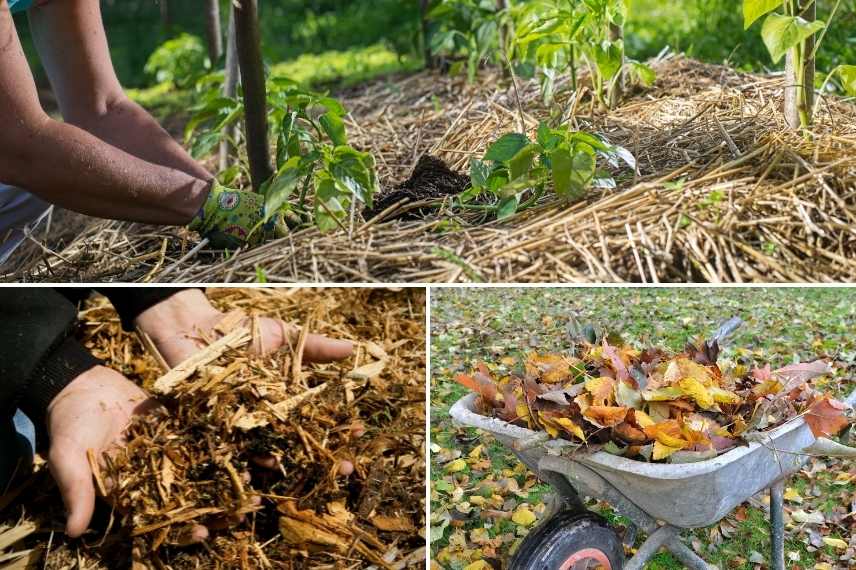
Straw, mulch or RCW, dead leaves: a boon for mulching beds
Read also
Mulching: Why? how?Compost
Well-matured compost is a top-quality fertiliser, with no excessive nitrogen content and rich in microorganisms. It maintains the biological activity of soil life. Compost is essential for the formation of humus, the substrate we should aim for to achieve the most fertile soil possible. Unfortunately, making good compost is not an easy task: Ingrid explains the 5 essential points to successfully create your compost.
However, you can “boost” your compost heap a bit with natural compost activators that will speed up the degradation of organic matter: nettle, comfrey, burdock, and even bracken. Compost activators are also available commercially. They are ready to use and compatible with organic gardening. Compost activators come in the form of granules that are mixed with the waste heap.
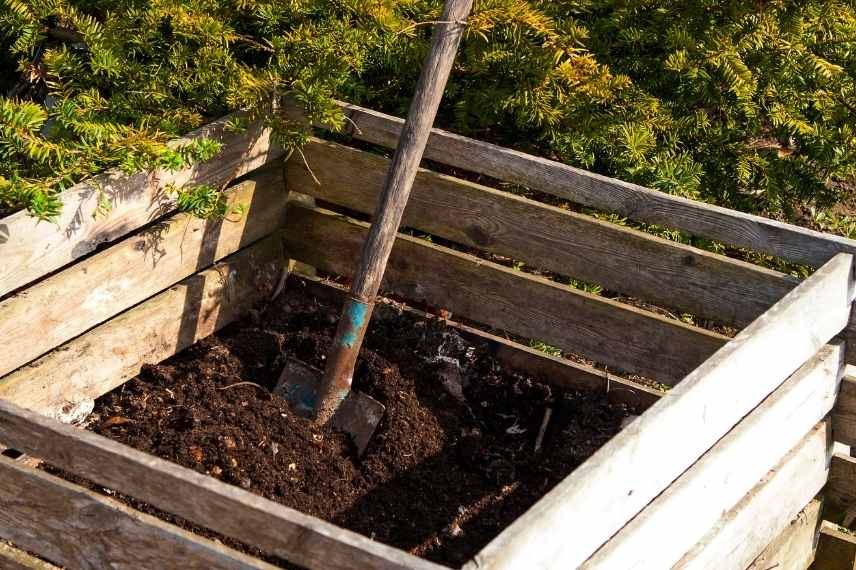 Making your own compost, when possible, is one of the best natural inputs for soil.
Discover other Care and organic control
View all →
Available in 1 sizes
Available in 1 sizes
Available in 1 sizes
Available in 1 sizes
Available in 1 sizes
Available in 1 sizes
Available in 1 sizes
Available in 1 sizes
Available in 1 sizes
Available in 1 sizes
Natural fertilisers and soil fertility enhancers
We categorically forget about chemical and artificial fertilisers to focus instead on healthy and natural solutions (yet effective).
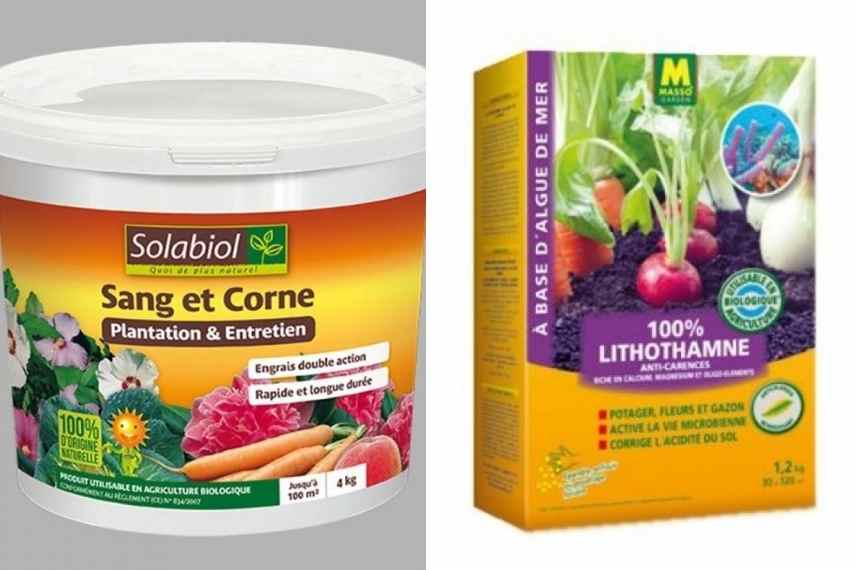
In natural fertilisers, you will find dried blood and ground horn, for example. Both are rich in nitrogen, but with different effects: blood gives a boost to plants, while horn provides a base fertilisation.
Your urine (yes, you read that correctly) can also be used as a natural fertiliser if diluted before use. To learn more, read: Is urine in the garden a good idea?
Some natural soil improvers can also prove effective. This is the case with dried seaweed or Lithothamnium. They help to correct soil acidity while improving its structure and stimulating microbial life.
→ You will find all natural origin fertilisers suitable for organic farming in our online nursery.
Read also
Comfrey manure: recipe, use and benefitsManures and infusions
Fermented extracts or manures are the result of soaking plants (nettle, horsetail, comfrey…) for several days or weeks. These manures then become concentrated in active ingredients, often fungicidal or insecticidal. Decoctions (garlic, tansy, wormwood…) differ in their preparation: a few grams of the plant are soaked in a litre of water for a day, then the water is boiled for a few minutes. After that, everything is filtered. Decoctions are most often used as repellents against insects and slugs. There are also infusions, like chamomile, which are ultimately used quite infrequently in the garden.
While manures and decoctions are relatively simple to prepare, it is not always easy to find the right plant in your garden. For example, nettle is usually absent from gardens with poor soil, and horsetail does not grow in calcareous soil.
Fortunately, manures are now almost ready to use (though they still need to be diluted in water!) available commercially. You can find horsetail manure to combat fungal diseases in fruit trees and in the vegetable garden. You can also find nettle manure, an ideal manure for protecting plants from certain diseases, promoting biological activity in the soil, and stimulating the growth of young plants and seedlings.
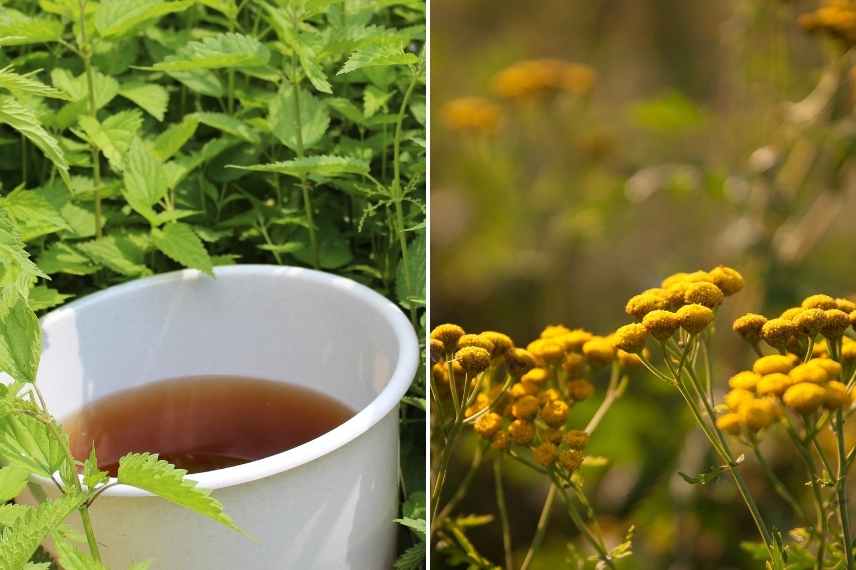
Nettle and tansy manure
Biological control
If your garden already has a good natural balance, natural predators should take care of reducing any pest populations. Unfortunately, this is rarely the case, especially in the vegetable garden or orchard.
This is where “biological control” comes into play. This biological control is a means of regulating pests by introducing natural predators (beneficial insects like ladybird or lacewing larvae), parasitoids (nematodes), or a pathogenous agent for the pest in question. These control methods will only target the specific insect, larva, or gastropod and will not harm the rest of the fauna. All these biological control methods are applicable in organic farming.
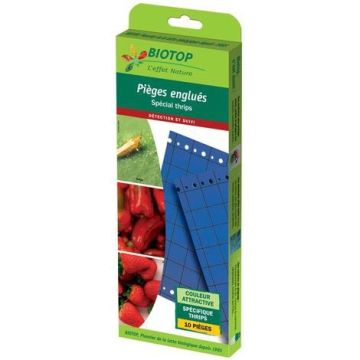
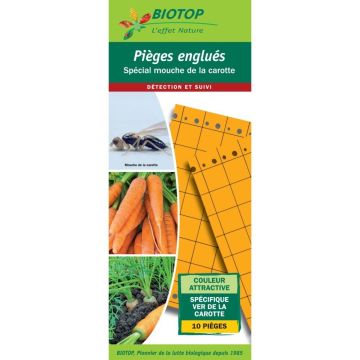
In the context of biological control, we can also mention trapping methods, particularly pheromone traps. These traps attract males of a specific species (wireworm, thrips, tomato leaf miner, codling moth…), which will then be unable to reproduce, leaving the rest undisturbed. This is not the case with more “mechanical” traps like sticky traps or chromatic traps, which catch many beneficial insects in the garden.
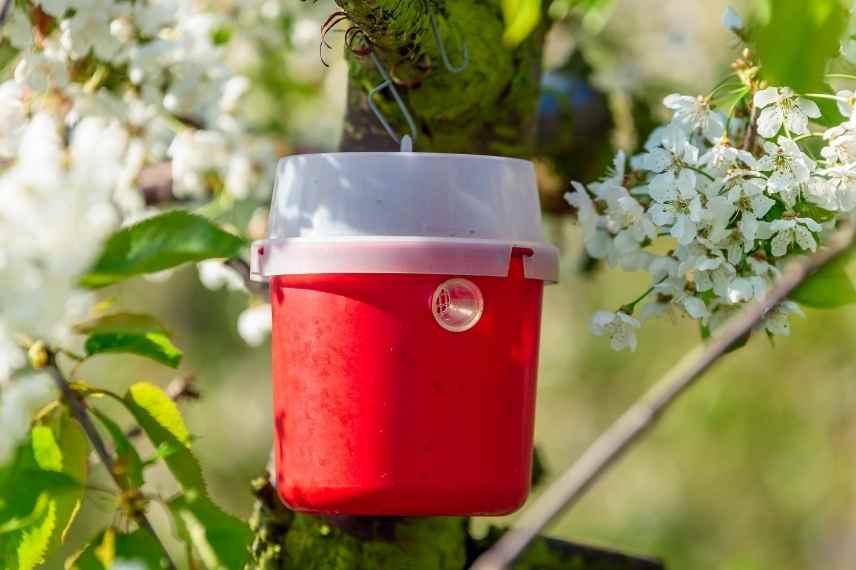
Pheromone trap
- Subscribe!
- Contents

Comments