





























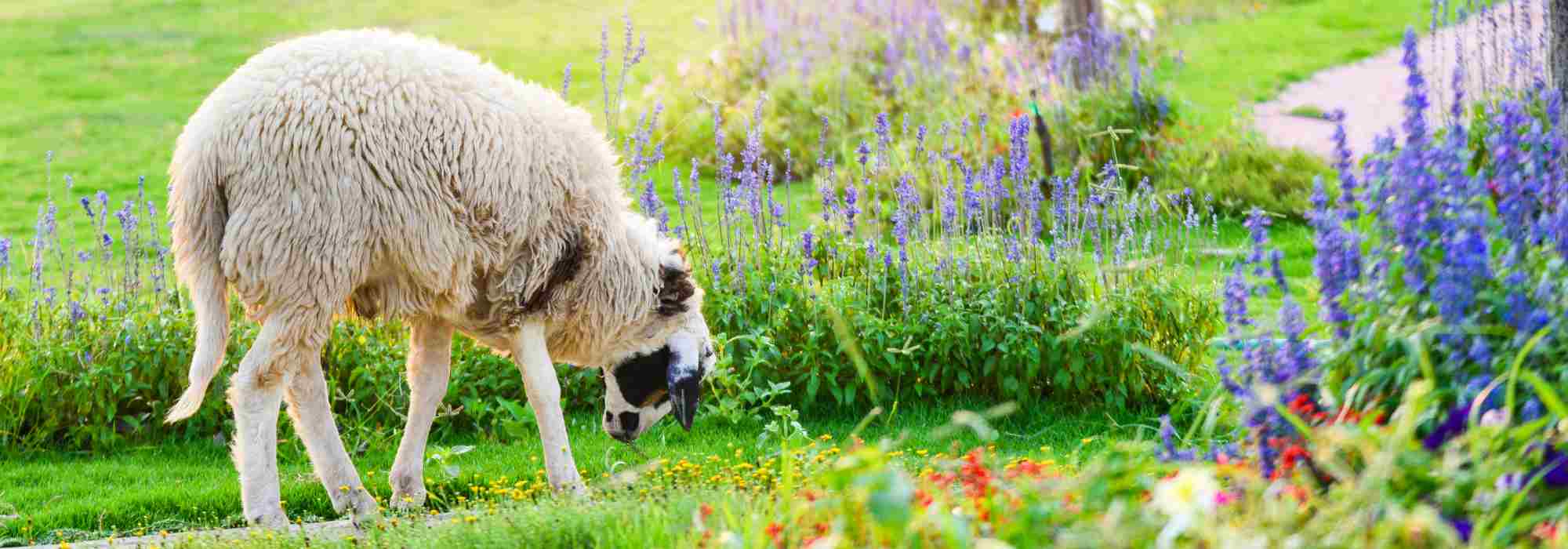
Eco-grazing: which animals to choose for your land?
Discover best practices and ideal animals
Contents
Imagine a flock of sheep grazing your lawn peacefully, or goats adeptly climbing the slopes of your land to clear scrub. No, it’s not a bucolic scene from a tale, but a reality accessible thanks to eco-grazing! This time-honoured method of managing green spaces is undergoing a real revival. In addition to reducing your carbon footprint, it transforms your land into a thriving and living ecosystem. Ready to swap your lawnmower for some four-legged friends? Follow the guide to discover the secrets of eco-grazing and choose the most suitable animals.

What is eco-grazing?
Eco-grazing is a method of managing green spaces that uses herbivorous animals to manage vegetation. Unlike mechanical maintenance, eco-grazing relies on natural grazing, where the animals graze the grass and plants, thereby ensuring a sustainable and ecological management of the grounds. This ancient practice is experiencing renewed interest due to its numerous environmental, economic and aesthetic benefits.
Within eco-grazing, this is what is known as extensive grazing, that is to say the number of animals is reduced to prevent too heavy a burden on the flora.
Benefits of eco-grazing
- Ecological: animals contribute to biodiversity by promoting the growth of different plant species. Grazing keeps meadows open, preventing colonisation by unwanted shrubs and trees. Manure enriches the soil with organic matter, thereby improving its fertility and structure. Moreover, eco-grazing reduces the use of heavy machinery and pesticides, thereby reducing CO2 emissions and the pollution of soils and waters.
- Economic: costs associated with purchasing and maintaining mowing equipment and pesticides are reduced. The use of animals does require an initial investment in infrastructure and veterinary care, but these costs are often offset by long-term savings. Moreover, by-products such as wool, milk or meat can generate additional income.
- Aesthetic : the presence of animals in parks, public gardens or private grounds creates a living and dynamic landscape, in harmony with nature. This natural approach is perceived as more attractive and pleasant by visitors and residents. Grazing animals can also become educational and recreational elements, offering learning and leisure opportunities for children and adults alike.
Different soil types
Prairies
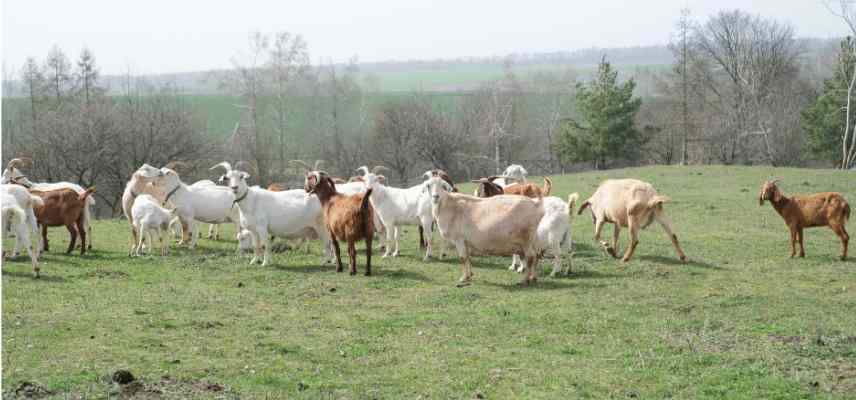
Prairies are open spaces mainly composed of grasses and herbaceous plants. They are particularly suited to eco-grazing due to their abundant vegetation and accessibility. Sheep, goats and cattle are commonly used for grazing in these areas. Prairies provide a large area for the animals to move freely, which promotes effective vegetation management. Furthermore, grazing helps to maintain floristic diversity, preventing the dominance of certain species at the expense of others.
Wooded areas
Wooded areas present a more complex environment for eco-grazing due to the presence of trees and dense undergrowth. However, certain animal species, such as goats, are particularly effective at managing these spaces. Goats are able to browse scrub and eat the young shoots of trees, thereby contributing to the management of the undergrowth and to the prevention of forest fires. Wooded areas can also benefit from natural fertilisation by animal droppings, improving soil quality.
Sloping terrain
Sloping terrain poses particular challenges for mechanical maintenance, making eco-grazing an ideal solution. Sheep and goats are well suited to these environments due to their agility and their ability to move on steep slopes. Grazing on sloping terrain helps stabilise the soil, reducing erosion and runoff. Furthermore, the animals can access areas that are difficult for machines to reach, ensuring uniform vegetation management across the entire site.
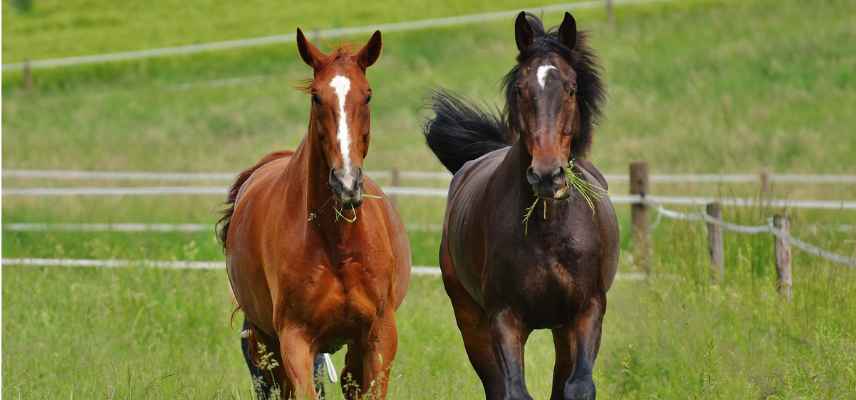
Horses are well suited to flat, prairie-type terrain
Urban spaces
Eco-grazing in urban spaces is an increasingly popular practice. Parks, wastelands and public gardens can all benefit from eco-grazing. Animals such as sheep and goats are often used in these environments to maintain lawns and vegetation zones. Integrating eco-grazing into urban spaces offers educational and recreational benefits, giving city dwellers an opportunity to reconnect with nature. Moreover, this practice can enhance the aesthetics of urban green spaces and contribute to local biodiversity.
Animals in eco-grazing
Sheep
Sheep are the most commonly used animals for eco-grazing. They are docile, easy to manage and effective at grazing a variety of herbaceous plants. Their light weight reduces soil disturbance, minimising soil compaction. Sheep are also useful for preventing excessive growth of grasses and maintaining an ideal vegetation height.
Types of sheep suited
- Ouessant sheep: small and hardy, ideal for small spaces and hard-to-reach terrain.
- Merino sheep: renowned for their high-quality wool, they are also very effective for grazing.
- Soay sheep: hardy and adaptable, perfect for uneven ground and varied climates.
Goats
Goats are particularly effective for managing scrub and young growth of trees, making them ideal for wooded areas and overgrown terrain. They are agile and can access areas difficult for other animals. Goats are also known for their ability to control invasive species.
Types of goats suited
- Alpine goat: versatile and hardy, suited to various types of terrain.
- Boer goat: known for their large size and ability to browse dense vegetation.
- Kiko goat: hardy and low-maintenance, ideal for harsh environments.
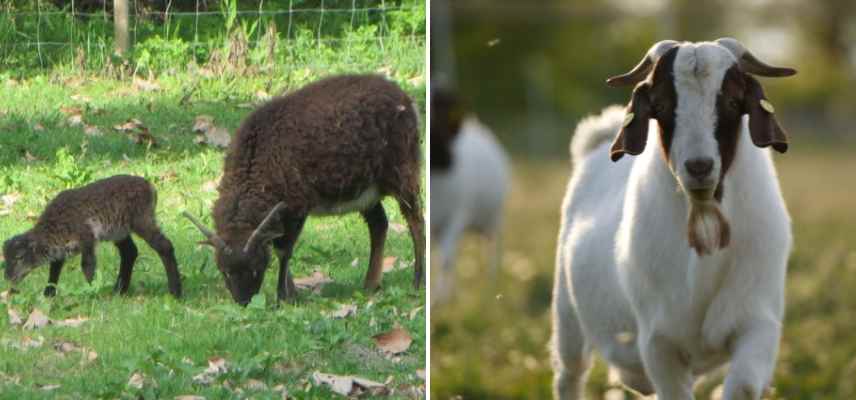
Soay sheep at the Château du Lude in Sarthe (© Château du Lude) and Boer goat
Cattle
Cattle are used for eco-grazing on large areas. They graze effectively tall grass and herbaceous plants, contributing to pasture management and large open spaces. Their greater weight helps to break compacted soil, improving soil structure and water penetration.
Suitable cow breeds
- Highland cattle: rugged and weather-hardy, suited to cold climates.
- Hereford cattle: known for ease of keeping and their ability to adapt to various environments.
- Dexter cattle: small and agile, ideal for small holdings and varied terrain.
- Galloway cattle: rugged and very hardy, suited to cold and wet climates.
Horses
Horses are used for grazing on large areas and open terrain. They are effective at grazing tall grass and can also help control certain plant species. Their presence in urban green spaces or parks adds an aesthetic and recreational dimension.
Types of horses suited
- Shetland pony: small and rugged, ideal for small areas and difficult terrain.
- Fjord horse: hardy and versatile, suited to varied climates.
- Haflinger horse: known for its ability to work in challenging environments, suited to rugged terrain.
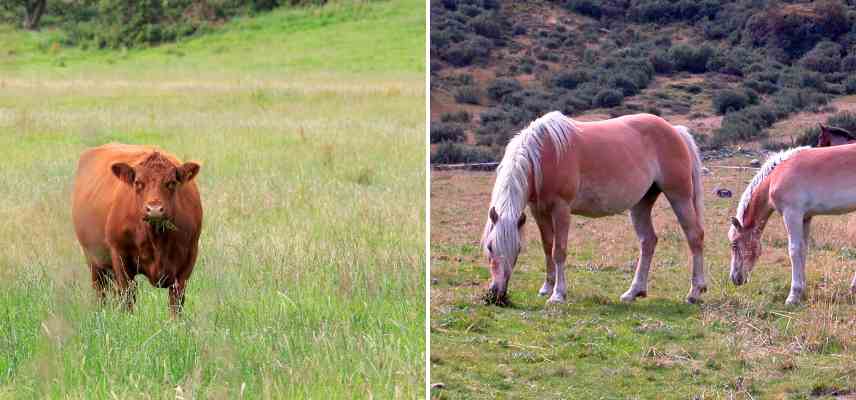
Dexter cow and Haflinger horses
Other animals (llamas, donkeys…)
Llamas are used for eco-grazing, particularly in specific environments. Llamas are effective at grazing bushes and woody plants, while donkeys are useful for sloped and hard-to-access terrain.
Types suited
- Llama: hardy and low-maintenance, suited to wooded and rugged terrain.
- Poitou donkey: known for its resilience and ability to work in challenging environments.
- Mule: hardy and versatile, ideal for sloping and varied terrain.
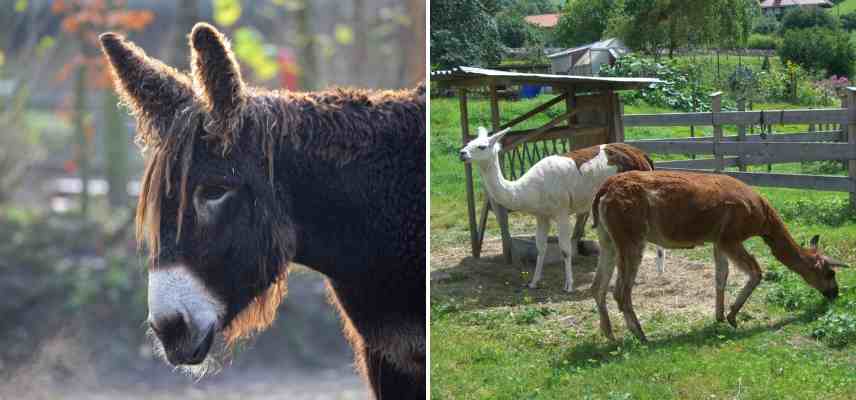
Poitou donkey and llamas
What does the law say?
To get eco-pasture up and running on the best possible footing, it is essential to seek advice from specialists at the very outset of the project. They will be best placed to guide you on selecting animals and care to provide.
Legislation in France
Administration and identification: any person wishing to use animals for eco-pasture must hold an exploitation number issued by the competent authorities. Animals must be identified in accordance with current rules, including ear-tags for sheep and goats. A herd register must be kept, and animals must benefit from regular veterinary health monitoring provided by a designated veterinary surgeon.
Animal welfare: living conditions of the animals must comply with the provisions of the Rural Code, ensuring that they do not suffer from hunger, thirst, physical constraints, pain or disease, and that they can express normal behaviours.
Transport and management: the rules relating to the transport of live animals and animal welfare also apply. Infrastructures such as fences and shelters must be adapted to guarantee the safety and comfort of the animals. Spaces must be well defined to prevent overgrazing and to ensure rotation of pastures.
→ For more information, visit the site of the French Federation of Eco-pasture and Eco-pastoralism.
Legislation in Belgium
Exploitation number: animal keepers must be registered and hold an exploitation number. Animals must be identified with official marks, and a register of animal movements must be kept up to date.
Animal welfare: Belgian animal welfare laws state that animals must have access to sufficient food and water and must be protected against inclement weather. Shelters must be appropriate to provide adequate refuge according to climatic conditions.
Transport and care: transporting animals must comply with European Union regulations, which stipulate that animals must be transported in conditions that minimise stress and injury. Regular veterinary monitoring is also obligatory to prevent disease and safeguard the health of the animals.
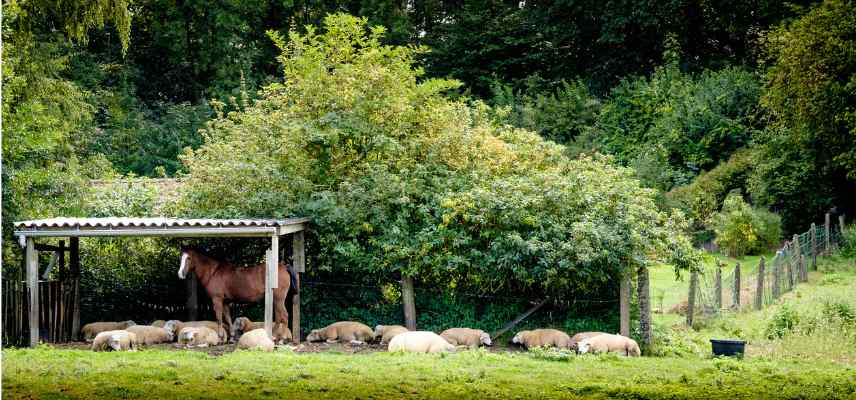
A shelter protects animals from rain and cold
How to choose the right animal for you?
When selecting animals, several factors must be considered:
- Size : the area of the land will influence the number and type of animals required. Large meadows can accommodate cows or horses, while small plots are better suited to sheep or goats.
- Type of vegetation : the dominant vegetation should guide the choice of animals. Goats are ideal for woodland and scrub-covered areas, whereas sheep are better suited to grassy meadows.
- Climate : the local climate affects the hardiness and resilience of the animals. It is crucial to choose species adapted to the climatic conditions of your region to ensure their welfare and effectiveness.
- Environment : it is important to ensure that the animals do not disrupt existing ecosystems and contribute positively to biodiversity.
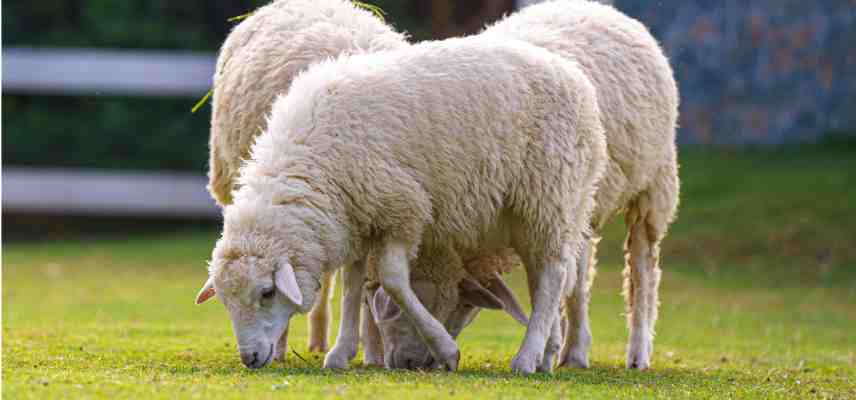
Choose based on the animals’ cold tolerance for your region.
Setting up on your plot
Ground preparation
It is important to begin by assessing the current state of the vegetation and soil. This includes identifying the plant species present and determining any unwanted vegetation that may require prior management. The land should then be prepared to accommodate the animals. Work will involve clearing debris, removing plants toxic to animals and improving water access points.
Required infrastructure
To support eco-pasture, it is essential to establish the appropriate infrastructure:
- Fences: sturdy, well-maintained fencing are required to contain the animals within designated areas and to protect them from predators. The type of fence will depend on the animal species chosen. For example, electric fences can be effective for sheep and goats, while more robust fences may be necessary for cattle and horses.
- Shelters: animals need shelter to protect them from the elements, such as rain, wind and the intense sun. Shelters should be appropriate to the size and number of animals, providing enough space for each animal to rest comfortably. Simple structures, such as sheds or huts, may suffice.
- Water points: constant access to clean, fresh water is essential for grazing animals. Automatic waterers or natural water sources should be available and regularly checked to prevent contamination.
Animal management
Careful, regular management of the animals is essential to ensure the success of eco-pasture:
- Feeding: while the animals feed mainly on the vegetation on the ground, it may be necessary to supplement their diet, especially during periods of low grass growth. Nutritional supplements and minerals can be provided to ensure a balanced diet.
- Veterinary care: vaccinations, parasite control and routine checks are essential to maintain the animals’ health. It is also important to monitor signs of illness or injury and provide immediate care if needed.
- Monitoring: ongoing monitoring is required to ensure the animals remain healthy and the land is managed effectively. This regular monitoring allows adjustments to management practices according to needs and changing conditions.
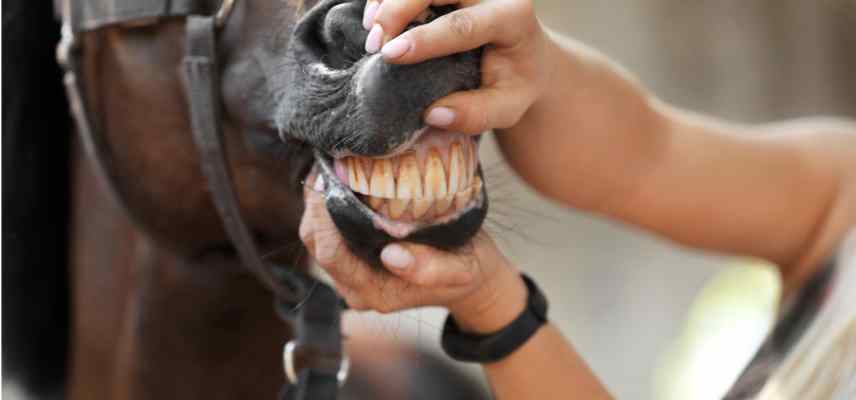
A health check for the animals is essential.
Maintenance and monitoring
Vegetation management
Regular monitoring of vegetation condition is important to ensure it is grazed evenly and that no species becomes dominant at the expense of others. This monitoring helps maintain balance between different plants, promoting biodiversity and preventing the spread of invasive plants. Based on observations, it may be necessary to move animals to new areas to prevent overgrazing, which can deplete soil and hinder plant regeneration.
Animal health and welfare
Animals should be continually monitored for signs of illness, injury or stress. Special attention should be paid to their feeding and hydration, particularly in extreme weather conditions. Providing dietary supplements and minerals may be necessary to maintain good condition. In addition, ensure animals always have adequate shelters from the weather.
Ecological monitoring (impact on biodiversity, soil)
Regular flora surveys can reveal changes in the display of plant species, indicating successful management or need for adjustments. Monitoring populations of insects, birds and small mammals by competent bodies will also provide indications of overall biodiversity.
For soil, it is important to monitor indicators of soil health such as organic matter content, soil structure and microbial activity. Periodic soil tests will detect signs of compaction, erosion or nutritional imbalances.
The particular case of eco-grazing applied to a garden.
Eco-grazing is not limited to large meadows and public parks. More and more private individuals are discovering the benefits of keeping herbivores to tend their garden. This eco-friendly method offers a natural alternative to mechanical mowing and supports biodiversity. Here’s everything you need to know to implement eco-grazing in your garden.
Animals to choose
For private gardens, sheep and goats are the most popular choices.
- Sheep : Ouessant sheep are particularly well suited to small gardens due to their small size and docile nature. They graze mainly on grass and keep vegetation at an ideal height.
- Goats : dwarf goats or ditch goats are ideal for gardens with bushes or scrub. They are agile and can browse a wide variety of plants, including brambles and young tree shoots.
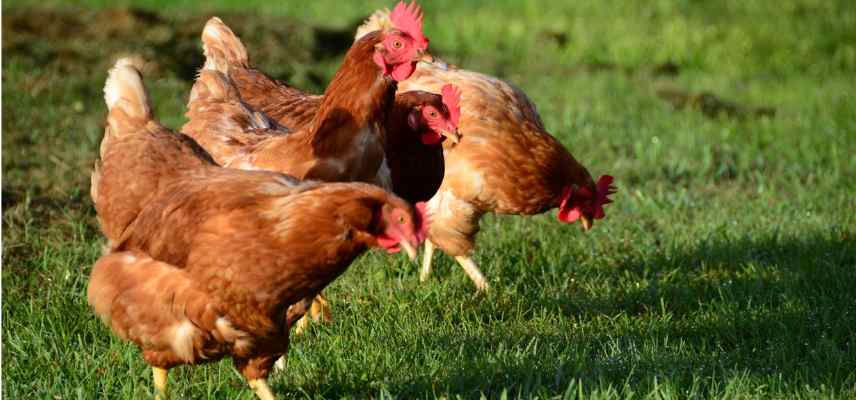
- Hens : although not strict herbivores, hens can help control weeds and insects, while providing fresh eggs.
How many animals?
The number of animals to introduce depends on the size of your garden and the density of the vegetation.
- For a garden of 500 m² to 1000 m², one or two Ouessant sheep are usually sufficient to maintain the space without overloading the land.
- Goats, owing to their more varied diet, may require a slightly larger area. About one goat per 1000 m² of land is a good rule of thumb.
- For hens, count 4 to 5 hens for a garden of 200 m².
What area is required?
Eco-grazing is viable even on relatively small areas. A 500 m² garden can already benefit from the presence of a small herd of sheep or goats. For chickens, even an area of 100 m² may be sufficient.
Legislation
Before introducing animals to your garden, it is important to check local legislation.
- Declarations : in France, introducing sheep or goats requires a declaration to the Direction Départementale de la Protection des Populations (DDPP). A livestock registration number will be allocated to you, even for domestic use.
- Specific needs : goats and sheep must be identified by an ear tag, and goats may require a brucellosis test.
- Local rules : some municipalities impose restrictions on keeping farm animals in urban areas. Check with your town hall for regulations concerning potential nuisances and the minimum distances from neighbouring dwellings.
- Space requirements : ensure your garden provides enough space and suitable conditions for the animals’ welfare (shelter, water points, appropriate fencing).
- Subscribe!
- Contents
Comments