





























Edible plants: leaves that can be cooked
Leaves for the garden... and the table!
Contents
In addition to aromatic plants, many wild plants are edible, not to mention certain flowers that have become accustomed to enchanting our plates with their vibrant colours. But there are also ornamental plants that hide delightful culinary surprises behind their leaves: they are just as beautiful in the garden as they are delicious to eat.
The plant trend among chefs now embraces the herbaceous, peppery, or aniseed notes of these doubly attractive plants. Chefs are increasingly surprising us with wild garlic pestos and other plant flavours that uniquely enhance their creations. It has become easy to draw inspiration from them and recreate these dishes at home by sourcing them directly from our borders!
For all garden and cooking enthusiasts, we offer a selection of perennial plants with edible foliage to delight your taste buds.

Allium ursinum or wild garlic
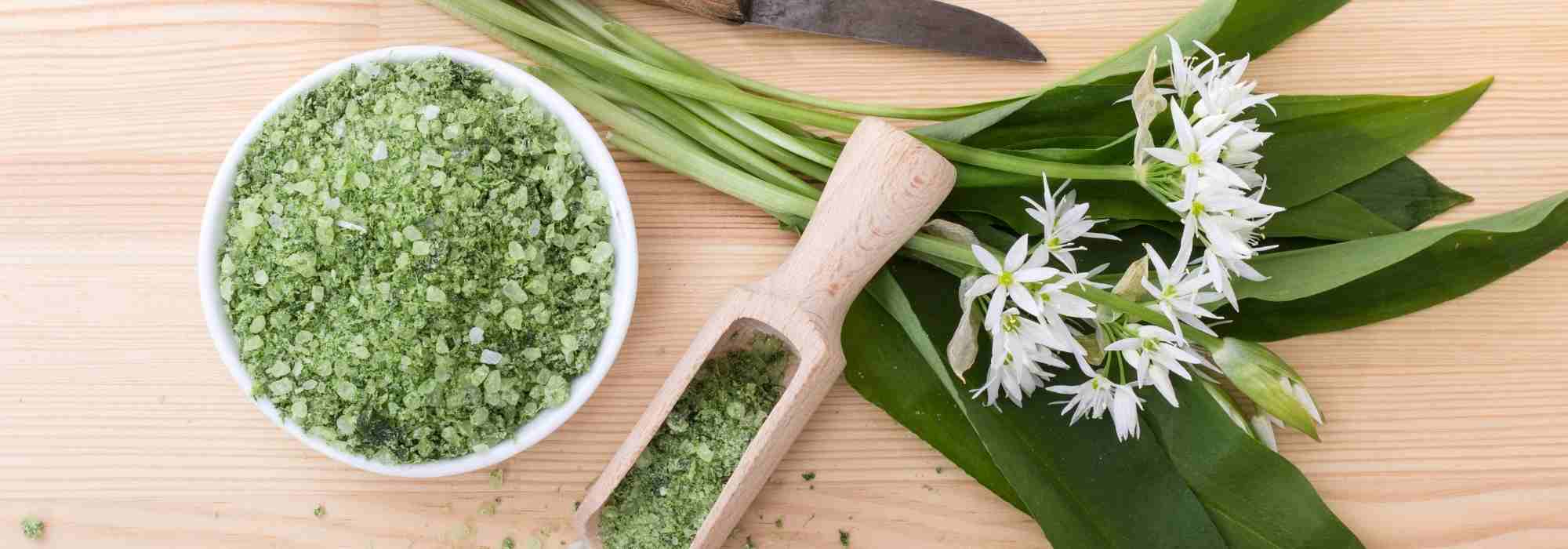
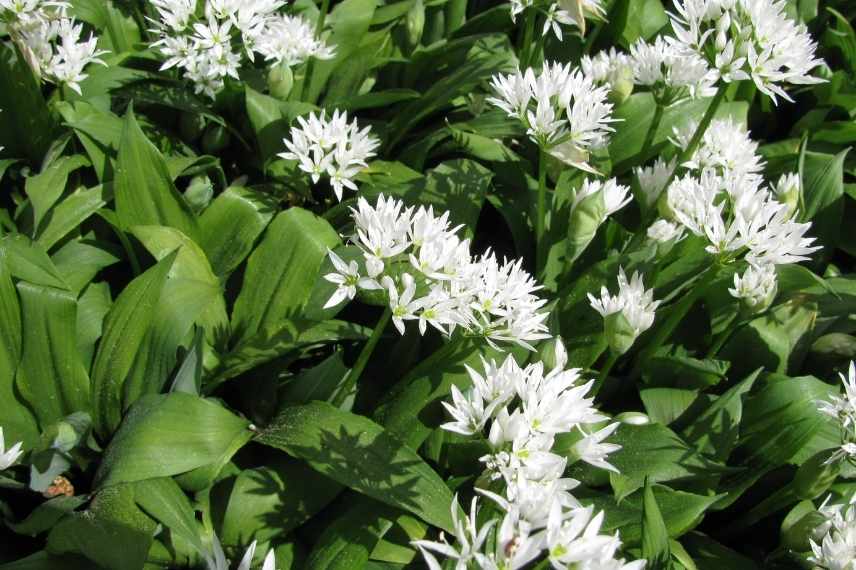
Let’s start with one of the plants that has made a name for itself lately among the general public: Allium ursinum, more commonly known as wild garlic. This perennial bulbous plant is grown in gardens in sunny to shady spots, where it brightens up the spring with its delicate clusters of small white flowers. Its strong garlic flavour is a true substitute for garlic cloves.
⇒ In the garden: Allium ursinum is a beautiful ornamental plant that looks stunning when planted in masses in cool, shady borders. The soil should be humus-bearing and remain cool but well-drained. It only fears drought, so be sure to water it well to achieve a lush result. Returning each spring around April, this small bulbous plant with broad leaves and small white umbel flowers is deciduous, turning yellow in summer and then completely disappearing in winter. Hardy, you can plant it anywhere! Be careful not to confuse its leaves with those of lily of the valley, which is toxic. It can also be grown in pots on a balcony.
⇒ In the kitchen: wild garlic pesto has become a classic among creative cooks who incorporate it into their spring recipes. The fresh leaves of wild garlic can also be used in compound butter to thicken a sauce, or as herb butter, and even in “garlic bread,” without needing to add any garlic! The leaves of wild garlic will also enhance fresh cheese and flavour soups or salads.
Read also
Best edible flowers for the gardenMertensia maritima or oyster plant
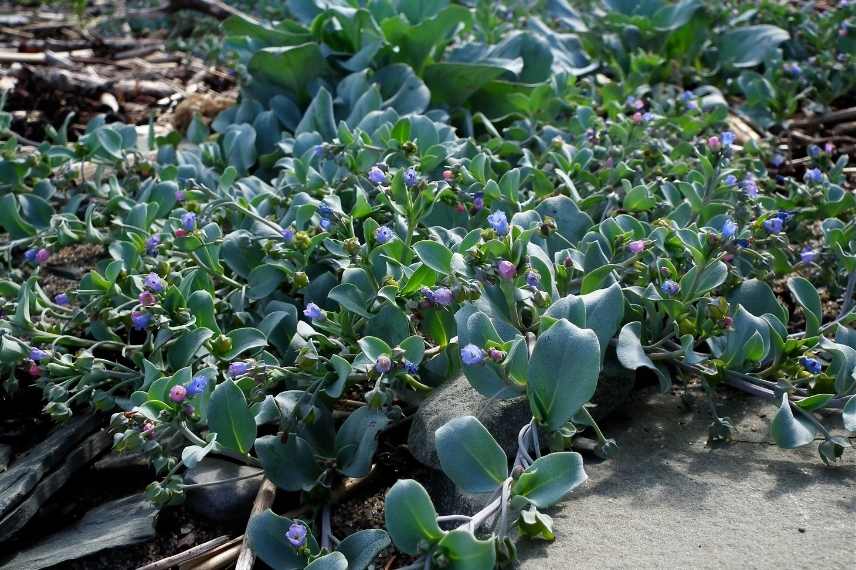
Here is another plant that is becoming well-known in the kitchen: the oyster plant or vegetable oyster. Mertensia maritima belongs to the family of Boraginaceae, which includes many plants such as borage (Borago officinalis) and bugloss. These plants are characterised by their lovely blue flowers and their foliar (leaves) and cauline (stems) parts that have a strongly iodised flavour.
It can be said that the vegetable oyster lives up to its name, as its fleshy leaves, with a beautiful bluish-green hue, have a powerful oyster scent. While the flowers are also edible, they do not share the same flavour (unlike borage).
⇒ In the garden: the vegetable oyster should be planted in full sun or partial shade, in well-drained, rich soil, possibly slightly sandy. It can also be grown in pots on a balcony or in a window box. With its spreading habit, it looks wonderful in rockeries.
⇒ In the kitchen: Mertensia maritima pairs beautifully with mixed salads or can be used in the preparation of a seaweed butter. It can be incorporated as a condiment in refreshing verrines, seafood, and fish dishes. Like all the plants in this selection, use it very fresh, once harvested.
Oxalis
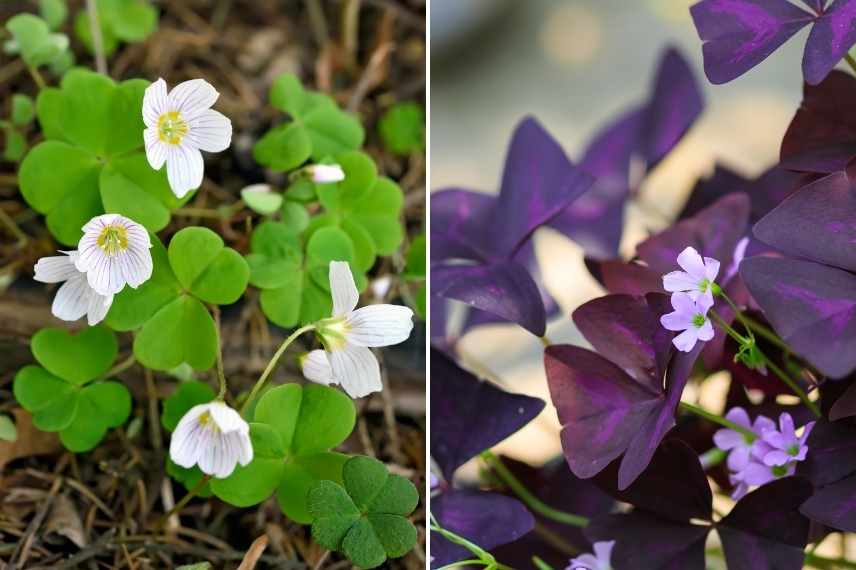
Originating from Peru, this small perennial groundcover resembles clover with its heart-shaped trifoliate leaves. Oxalis is a low-growing, often creeping plant that reaches a maximum height of 10 to 20 cm. There are several species, but in cooking, it is primarily Oxalis acetosella that is used. Be cautious, as its name indicates the presence of oxalic acid, so it should be consumed in moderation.
⇒ In the garden: oxalis is typically grown in containers or pots to add original foliage alongside annuals or perennials. It can also be used in rockeries and as a border in mixed borders. Reserve a semi-shaded area for it, as it prefers morning sun.
⇒ In the kitchen: its lemony and tangy flavour pairs well with fish and certain meats. It is most often consumed raw. Purple oxalis is perfect in a salad, adding a welcome splash of colour.
♥ Discover an elegant and refreshing starter: razor clams, cucumber, apples, and oxalis
Read also
Growing steviaGallium odoratum
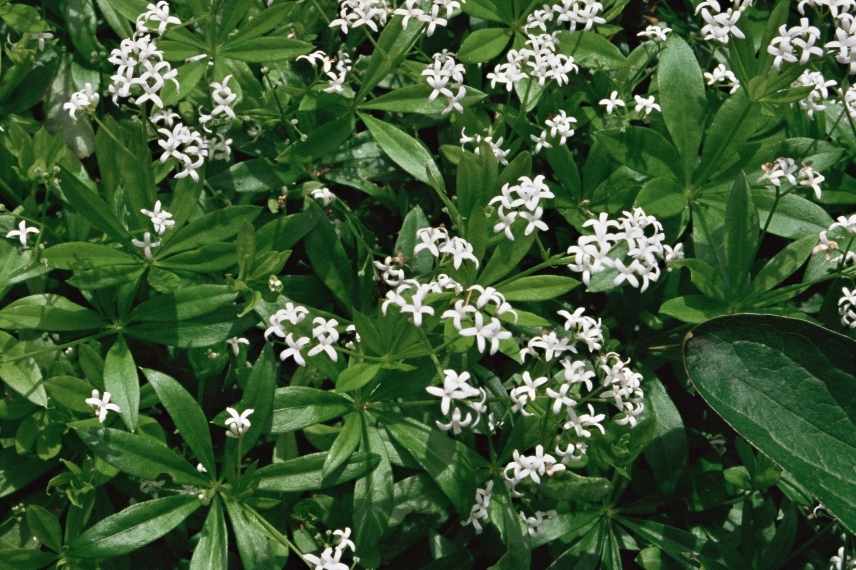
The sweet woodruff or Galium odoratum is a small woodland perennial that is now welcomed into gardens for its strong groundcover ability. It quickly blankets shaded corners and prevents the emergence of weeds. Sometimes, its spread needs to be controlled, as it can expand from a single small plant. This plant has been known for a long time, but chefs have recently incorporated it into their recipes for its flavour reminiscent of tonka bean.
⇒ In the garden: with its whorled leaves and starry white flowers appearing between May and June, sweet woodruff is often used for its beautiful groundcover effect, which should be managed. It is useful in cool woodland areas or shaded spots along a wall, at the base of trees, or in clearings.
⇒ In the kitchen: sweet woodruff has long been used in Germany, Belgium, and Alsace for making liqueurs and is part of the recipe for May wine. Unlike other leaves that are consumed fresh, sweet woodruff is slightly dried—the plant should not turn black—to release a vanilla aroma of tonka bean (the stem is particularly fragrant). It is then used, infused, in certain dairy desserts, creams, or ice creams, for example.
♥ Discover the recipe for sweet woodruff creams
Houttuynia cordata
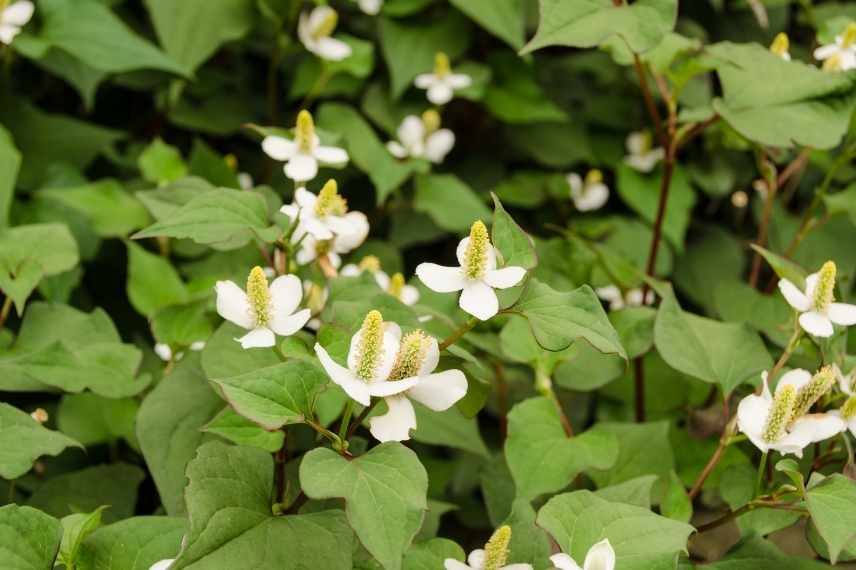
Houttuynia cordata is a perennial plant considered invasive, somewhat like Aegopodium, but like it, it can be controlled by growing it in pots. It then becomes not only very ornamental with its beautiful, heart-shaped (cordiform) leaves.
⇒ In the garden: useful in difficult areas that are hard to vegetate, Houttuynia cordata stands out as a groundcover plant as it easily spreads through running rhizomes in moist soil. It is mainly sought after for its leaves, which, although deciduous, are attractive, even if its lovely white flowering is an additional draw in late spring.
Learn more in our articles: Associating Houttuynia cordata and Growing Houttuynia in a pot.
⇒ In the kitchen: its nickname of wood coriander and Chinese pepper is well-deserved.
Houttuynia indeed has a pronounced peppery taste and a citrus flavour, between lemon and orange. Use its leaves in Vietnamese dishes, such as spring rolls, Asian broths like Pho, or to season certain fish.
Aegopodium
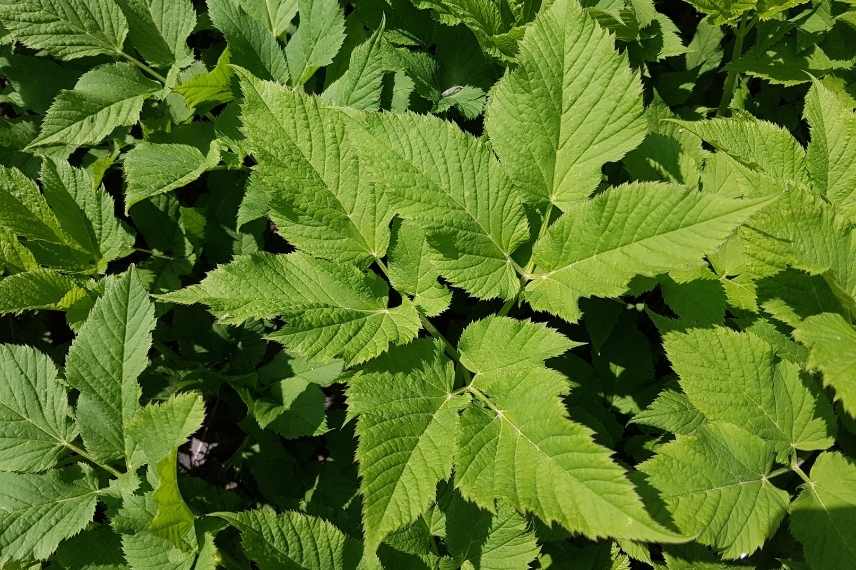
The herb known as goutweed has a very bad reputation, and it is true that it tends to proliferate excessively in gardens with moist soil. Its deep root system and running rhizomes make it very difficult to eradicate once well established. However, it is an interesting perennial groundcover for greening up difficult shady or semi-shady areas, particularly at the base of trees. Its leaves are finely dentate, and it produces a light white flowering in umbels above the foliage in spring.
⇒ In the garden: the variegated variety, Aegopodium podagraria ‘Variegata’, is more ornamental and will be useful for brightening up a shaded tree base, taking care to contain it.
⇒ In the kitchen: only the young shoots are used, between April and June: they can be consumed raw, adding their flavour reminiscent of parsley and celery to salads, risottos, or pestos.
Salvia elegans or pineapple sage
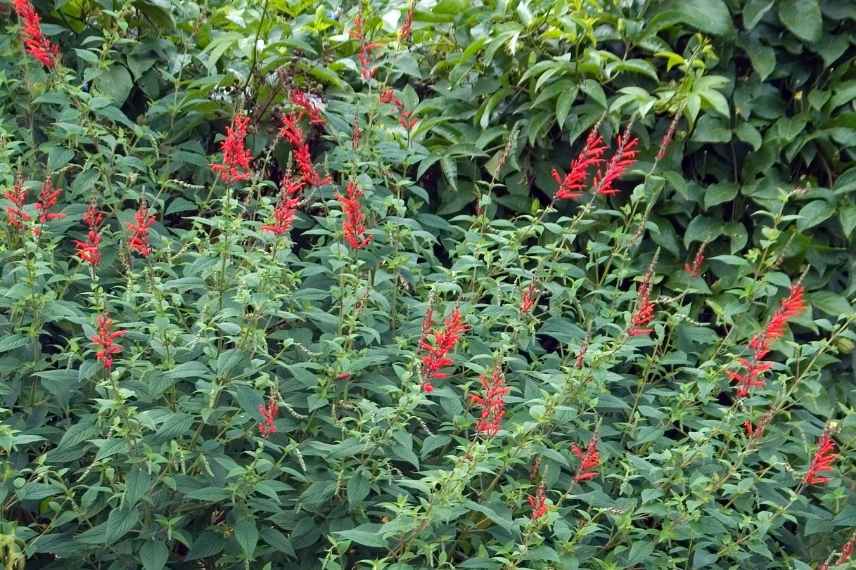
From the family Lamiaceae like all sages, the elegant sage, often referred to as pineapple sage, is distinguished by its late red flowering, from the end of summer until frost, as well as the possibility of using its highly aromatic leaves in cooking.
⇒ In the garden: here is an admirable perennial, evergreen in mild coastal climates, cherished for its corymbs of vivid blood-red flowers along the stems. It brightens the garden at a time when it becomes less floriferous and forms a stunning mass nearly 1 m high and wide. Plant it in a sunny border, or on the terrace in a large pot.
⇒ In the kitchen: pineapple sage features beautiful light green edible foliage with a pineapple scent. It is favoured by chefs and restaurateurs for flavouring exotic dishes. Native to Mexico, combine its fruity aroma with sweet and savoury recipes, with sweet-sour flavours alongside pork or duck, as well as fish in a Tahitian style. Pineapple sage also enhances fruit salads and cakes.
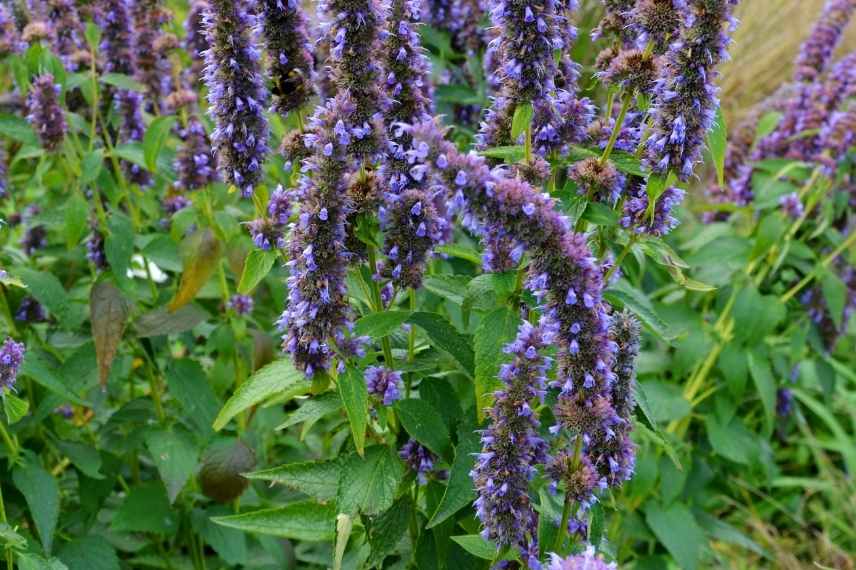
Agastache
Agastaches delight us in the garden with their lavender-blue to violet spikes. These are aromatic perennials that form beautiful, colourful clumps throughout the summer. Most of them are particularly melliferous, especially the Agastache foeniculum. All agastaches have aromatic properties, varying in intensity. The Agastache foeniculum is also known as anise hyssop.
⇒ In the garden: A boon for natural gardens, country gardens, or city gardens, as it grows well in pots, the Agastache foeniculum is a robust plant that blooms all summer long, until the frosts. It can certainly be included in the vegetable garden or herb garden.
⇒ In the kitchen: The leaves of Agastache have the advantage of complementing both savoury and sweet dishes. Its subtle menthol and aniseed flavour pairs well with summer salads featuring tomatoes and feta, as well as watermelon, courgettes, and pasta… they can be included in a vinaigrette and flavour fish. Finely chopped, it also enhances fruit salads and biscuits. This is a plant to truly discover in the kitchen, and you won’t be able to do without it all summer long!
♥ Discover an exceptional recipe from chef Nicole Fagegaltier: Lamb sweetbreads sautéed in agastache oil
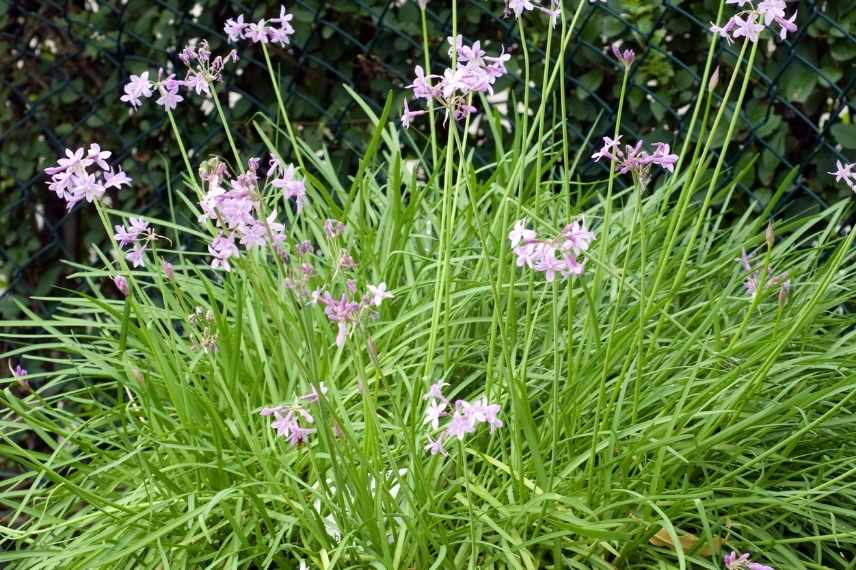
Tulbaghia
How charming are the Tulbaghias, with their small mauve flower umbels, varying shades of violet, seemingly suspended atop long, slender, robust stems! They create a beautiful and very long, light and airy flowering display. They form lovely clumps with long, slender ribbon-like leaves at their base. Their leaves reveal another use, as their delicate garlic flavour deserves to be remembered in the preparation of certain dishes!
⇒ In the garden: Not completely hardy (being South African, they can withstand temperatures down to -7°C), Tulbaghias can be grown in many regions if their base is mulched for winter, especially as they perform well in pots. They are quite drought-resistant, making them ideal for low-water gardens, holiday gardens, and coastal gardens as they tolerate wind and salt spray. Plant in full sun for a beautiful flowering display, and in well-drained soil.
⇒ In the kitchen: Raw and finely chopped, Tulbaghia add a subtle and interesting aromatic touch to a simple buttered slice of bread, bring zest to a salad of raw vegetables, appetizers, fish, eggs…
→ Learn more in our tutorial: How to use Tulbaghia in cooking?
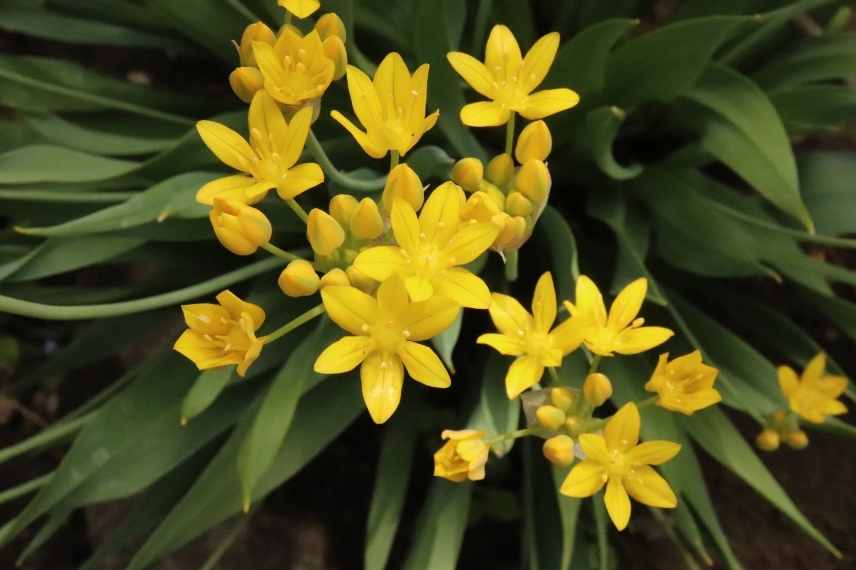
Allium moly
Also known as golden garlic or Spanish garlic, Allium moly is a species native to the south of France, Italy, and Spain. The bright yellow colour of its flowering is unique among ornamental garlics. It occurs quite late, around June. Its leaves are lanceolate, a beautiful rich green with a slight greyish tint. The plant reaches about 30 cm in height.
⇒ In the garden: This ornamental garlic has its place in the ornamental garden, in a flowerbed, a rockery, a border, or a mixed border with warm tones, and even in pots to brighten up the terrace or balcony. It thrives in full sun or light shade, in any sufficiently drained soil. Easily naturalising if it is happy, Allium moly is best planted in masses to create a stunning display.
⇒ In the kitchen: Its sweet and fresh onion flavour pairs well with tomato. Simply slice the leaves over a tart, pizza, or summer salad. You can also use it in Eastern recipes or sprinkle some finely chopped pieces over a green soup (hot or cold like gazpacho).
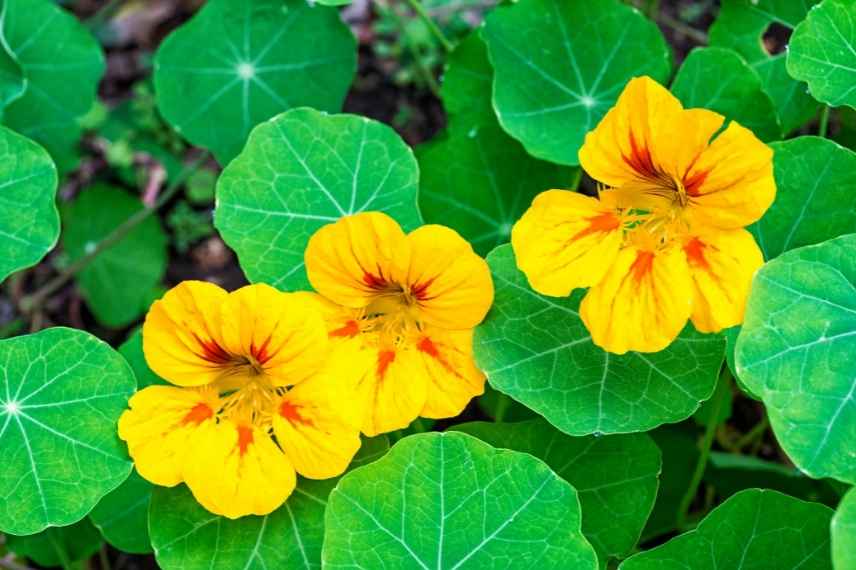
Nasturtium
If we now often use nasturtium flowers to decorate our entrances or dishes, the leaves, with their delicious roundness, are also edible and provide a lovely decoration on the plate. Nasturtium, or Tropaeoleum majus, is an annual plant in our regions, but it grows as a perennial in Latin America, its area of origin, and in warm climates. It is a climbing plant that can reach up to 3 m in height. Grown in full sun, the leaves take on an almost spicy flavour (its nickname of Peruvian cress is well-deserved!).
⇒ In the garden: an essential in country gardens, it actually has a place almost everywhere and adds a beautiful splash of colour when trained on a trellis or obelisk. Nasturtium serves as an excellent groundcover for hard-to-reach areas, in full sun or partial shade. The flowering period is long, with flowers ranging from yellow to orange and red. For culinary use of the leaves, it is best to choose the standard species, with its beautiful uniform emerald green foliage.
⇒ In the kitchen: the leaves have a peppery taste, useful for enhancing a rather bland starter. Add them whole when plating a green salad, for example, at the last moment. They can also be cooked with eggs, as in an omelette, just like you would with sorrel. Since nasturtium attracts aphids in the vegetable garden, be sure to rinse it thoroughly. → Read also: How to use nasturtium in cooking?
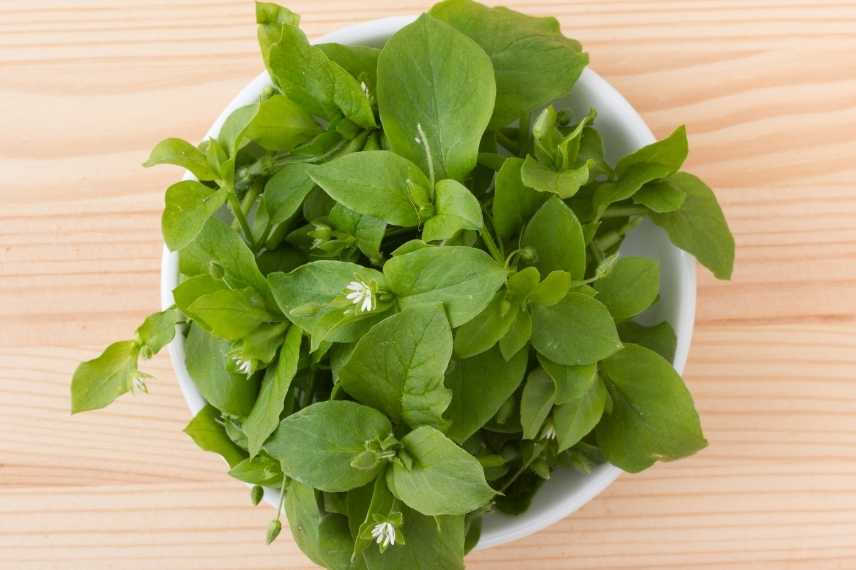
Chickweed
Finally, here’s another plant that deserves its place in this selection, even though it is a wild plant, as it is widely used as decoration on plates: the chickweed or intermediate starwort (Stellaria media in Latin). It is an annual plant with green, ovate leaves and small white star-shaped flowers. Its name comes from the fact that its seeds are highly appreciated by birds. Considered at worst a weed, it is actually more of a wild plant that grows in clumps and reaches about 15 cm in height. It thrives in semi-shaded areas. To recognise it in nature, its line of white hairs along the stem is one of its most characteristic features. Its leaves are edible, with a very subtle and sweet flavour, having a slight nutty taste. Chickweed can be harvested all year round.
⇒ In the garden: chickweed should preferably be planted in the vegetable garden or in a wild garden. Be careful not to use red chickweed (Anagallis arvensis) or blue-flowered varieties, which are toxic.
⇒ In the kitchen: when cooked, its leaves can be consumed much like spinach or watercress, making a perfect cream or vegetable sauce, or used as decoration on a plate.
♥ Discover an original recipe, the chickweed frittata.
For further reading
Discover the French website Je cuisine sauvage for a change from the ordinary, with original starters, main dishes, desserts, jams, or appetizers made from garden plants and fruits!
Check out our tutorial: How to harvest and store maceron?, and our article How to harvest and use amaranth in cooking?
- Subscribe!
- Contents
Comments