






























Everything you need to know about growing carnivorous plants
Our guide to caring for them
Contents
Carnivorous plants have a mysterious allure and ingenious trapping mechanisms that have long fascinated gardeners and houseplant enthusiasts. These unique species are distinguished by their ability to trap and digest small insects and other prey and an astonishing adaptation to environments where nutrients are scarce.
In this article, let’s explore the captivating world of carnivorous plants and provide practical tips for their cultivation and care.

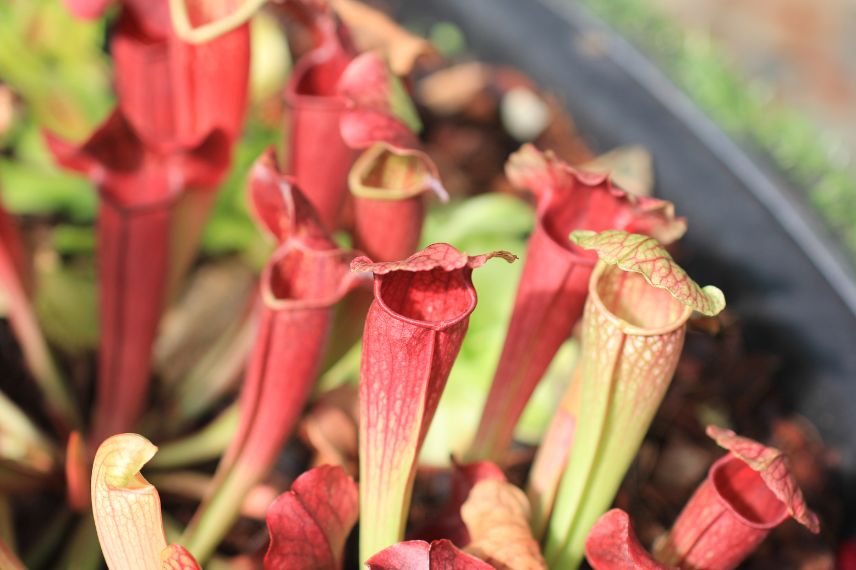
Common species of carnivorous plants
Read also
What do carnivorous plants really eat?Optimal growing conditions
To successfully cultivate carnivorous plants, it is essential to understand and replicate as closely as possible their natural habitat. These plants have specific requirements in terms of light, humidity, substrate and watering.
Light
Light plays a crucial role in the growth and health of carnivorous plants. Most of these plants, including Dionaea and Sarracenia, require direct sunlight for several hours each day. A lack of light can lead to weakened traps and less vigorous growth. For indoor plants, a position near a well-lit window or the use of grow lights may be necessary.
Humidity
Humidity is another key factor, particularly for Nepenthes and other tropical carnivorous plants. These plants thrive in high-humidity environments. It may be useful to use a humidifier or place the plants in terrariums to maintain the required humidity. Plants such as Sarracenia, however, adapt well to less humid conditions.
Substrate
The choice of substrate is essential for carnivorous plants. They generally prefer a nutrient-poor soil, often a mix of turf without additives and of perlite or of sand. It is crucial to avoid enriched potting mixes or standard substrates for houseplants, as they can be harmful to these specialist species.
Watering
Watering should be carried out with care. Tap water, often high in minerals, is not recommended. It is preferable to use rainwater or demineralised water. Carnivorous plants prefer a consistently moist but not waterlogged medium. Overwatering can lead to root rot, while underwatering can stress the plant.
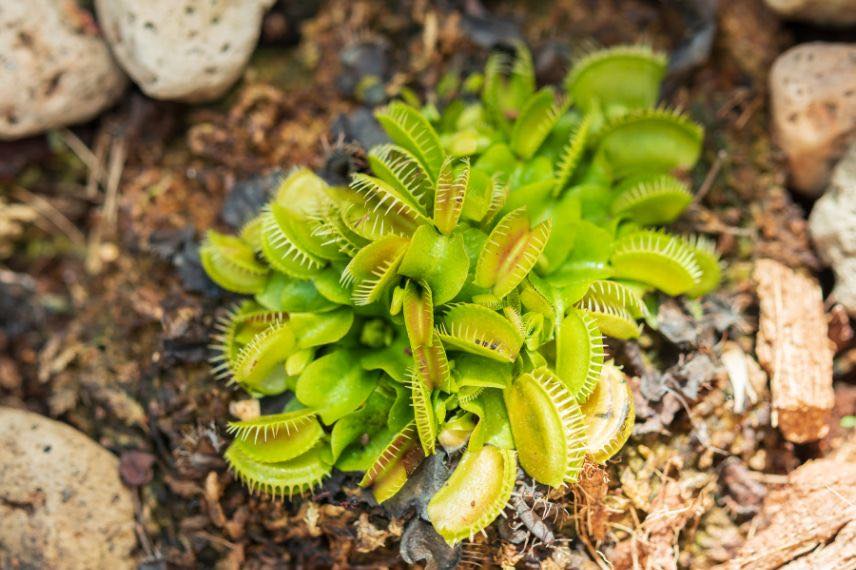
Dionaea and their ciliate jaws are fairly easy to grow.
Daily care and maintenance
Carnivorous plants, although they may seem demanding, can thrive with proper care. Understanding their specific daily-care needs such as fertilisation, repotting and disease prevention is essential to keep these houseplants healthy.
Care routine
The daily care routine for carnivorous plants is fairly simple. It is important to regularly check the substrate moisture and ensure adequate light exposure. Dead or damaged leaves should be removed to prevent rot and infestations. It is also advisable to monitor trap activity to ensure they are functioning correctly.
Fertilisation
Unlike ordinary houseplants, carnivorous plants generally do not require fertilisation frequently. In fact, over-fertilisation can be detrimental to them. If necessary, very dilute fertilisation can be applied directly to the traps or leaves, but this should be done with care and rarely.
Repotting
Repotting is an important step in caring for carnivorous plants. It is generally recommended to repot these plants every one to two years to refresh the substrate and prevent the soil from becoming compacted. Repotting should be carried out carefully, using appropriate substrate and avoiding excessive disturbance of the delicate roots.
Disease prevention
Carnivorous plants can be susceptible to various health issues, including insect infestations and fungal diseases. Regular inspection of the plants to detect any signs of stress or disease is crucial. If a problem occurs, it is important to treat the plant with products suited to carnivorous plants, as some standard houseplant treatments can be harmful to them. See the next chapter for more details.
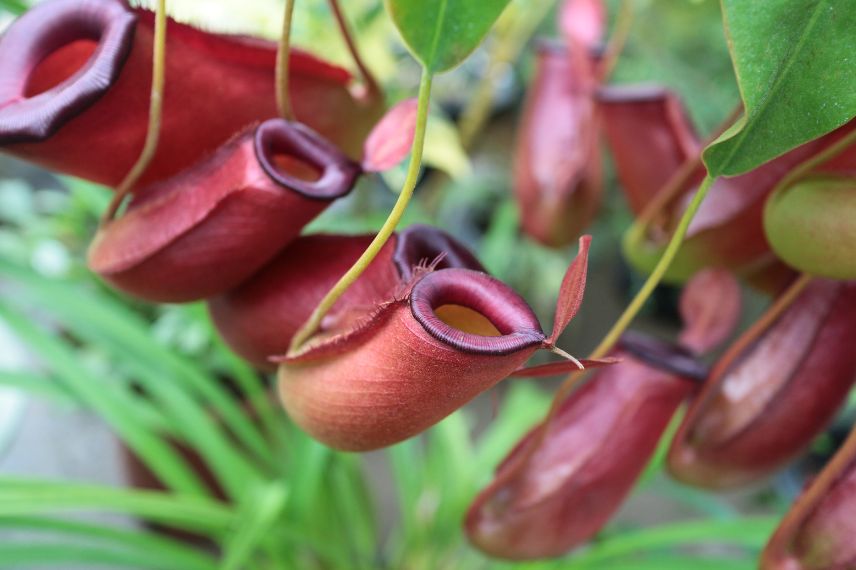
Nepenthes and their swollen urns are grown in suspension
Common diseases and parasites
Carnivorous plants, despite their hardy nature, can be susceptible to a range of diseases and parasitic infestations. Understanding these problems and implementing appropriate preventive and curative measures is essential to maintaining the health of these unique houseplants.
Fungal rot
Fungal rot is one of the most common diseases in carnivorous plants. It is often caused by excessive humidity and poor substrate drainage. The symptoms include discolouration of the leaves and traps, as well as soft tissue decay of the plant. To prevent this disease, it is crucial to maintain a proper humidity balance and ensure adequate drainage. In case of infection, remove the affected parts and treat the plant with an appropriate fungicide.
Insect infestations
Although carnivorous plants are themselves insect predators, they can sometimes be infested by certain pests. Aphids and mealybugs are the most common. These pests feed on the plant sap, weakening their growth and vitality. Signs of infestation include slowed growth, sticky leaves, or the presence of small insects on the plant. Biological control methods may be required to tackle these pests.
→ Read our article on how to get rid of aphids
→ Read our article on how to treat mealybugs
Moulds and algae
Moulds and algae can also affect carnivorous plants, particularly in conditions of poor air circulation and high humidity. These organisms can cover the traps and leaves, hindering photosynthesis and the plant’s ability to capture its prey. Good ventilation and reducing humidity are often sufficient to prevent these problems. If an infestation occurs, it may be necessary to carefully clean the plant and adjust growing conditions.
Viral and bacterial diseases
Although less common, some carnivorous plants can be affected by viral or bacterial diseases. These diseases can be difficult to treat and often manifest as leaf spots, deformation of the traps or abnormal growth. Prevention is best, by avoiding overcrowding of plants and maintaining strict hygiene when handling and repotting.
- Subscribe!
- Contents
Comments