





























Fighting against the mole rat or field vole
All our solutions to get rid of this devastating pest
Contents
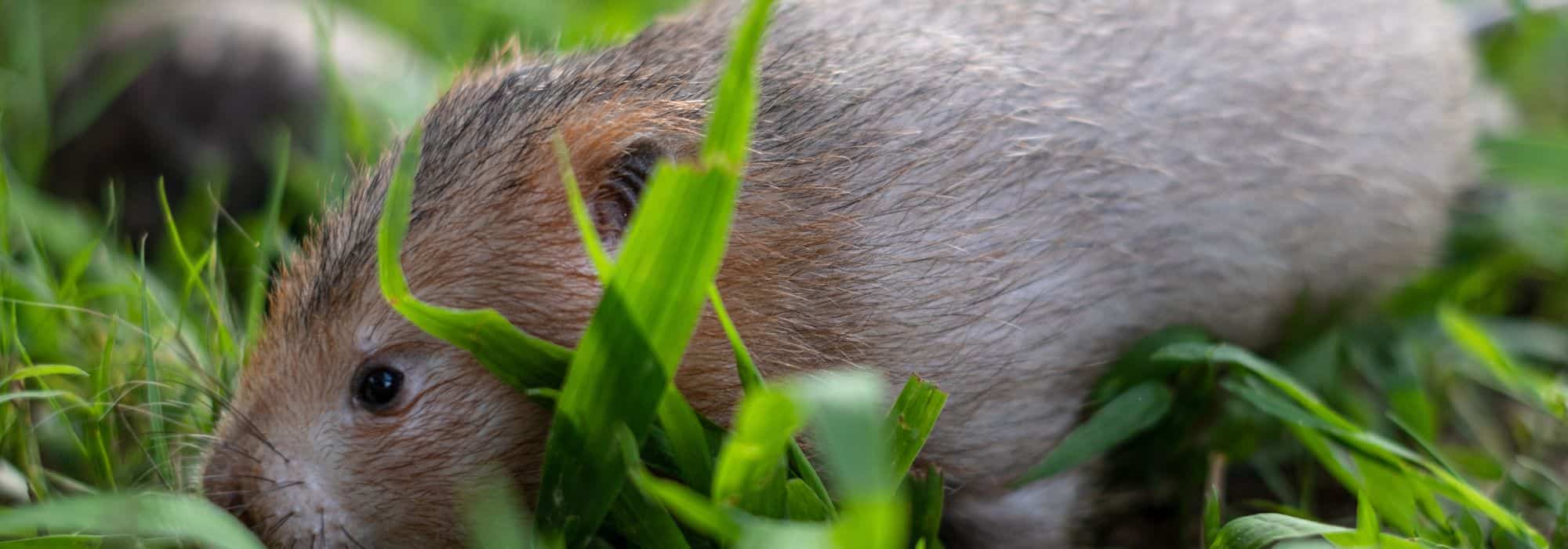
One morning, with your eyes barely open, you discover with horror mounds of freshly turned soil scattered across your lawn or, worse still, your vegetable patch. It’s enough to make you choke on your last sip of coffee! As you lean in to assess the disaster (and gather information from those around you), you quickly identify the culprit behind this demolition of your garden: the mole rat, also known as a voles. Yes, this small vegetarian rodent, quite cute in its own right, is a formidable pest, capable of turning the soil of a lawn, field, or vegetable patch in just a few hours by digging tunnels. Moreover, it will feed on whatever it can get its incisors on, namely the roots of your vegetables or fruit trees.
To prevent your soil from turning into a minefield, we offer you some tips to counter the invasion of mole rats.

What exactly is a mole rat?
Like most of the population, you tend to group mice, voles, shrews, and of course our moles, the focus of this article, into the same category.
However, although they are all rodents, these little creatures are quite different. First, it may be necessary to remind you that the shrew, being insectivorous, is a fantastic ally for gardeners. It will indeed feast on all the harmful insects that populate your vegetable garden, such as woodlice, caterpillars, and spiders. In contrast, it completely disregards vegetables. This is not the case with the mole (Arvicola terrestris)!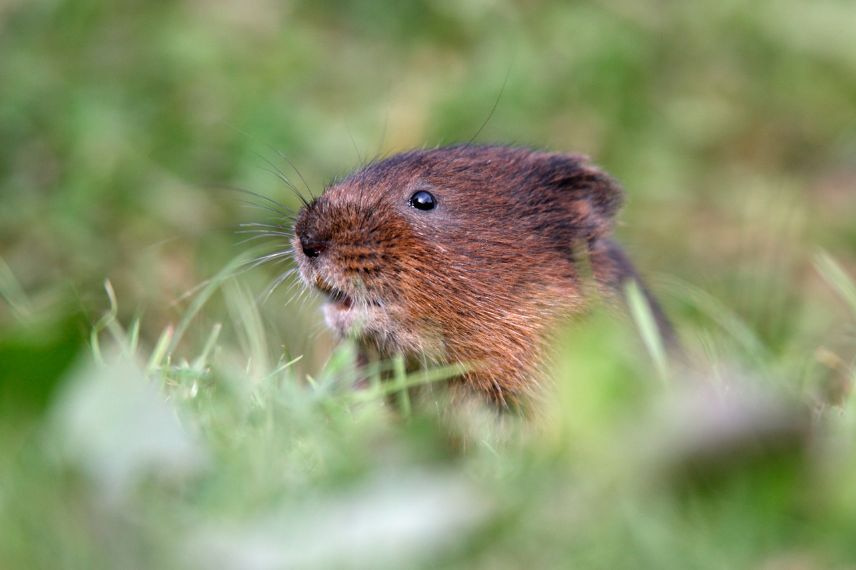
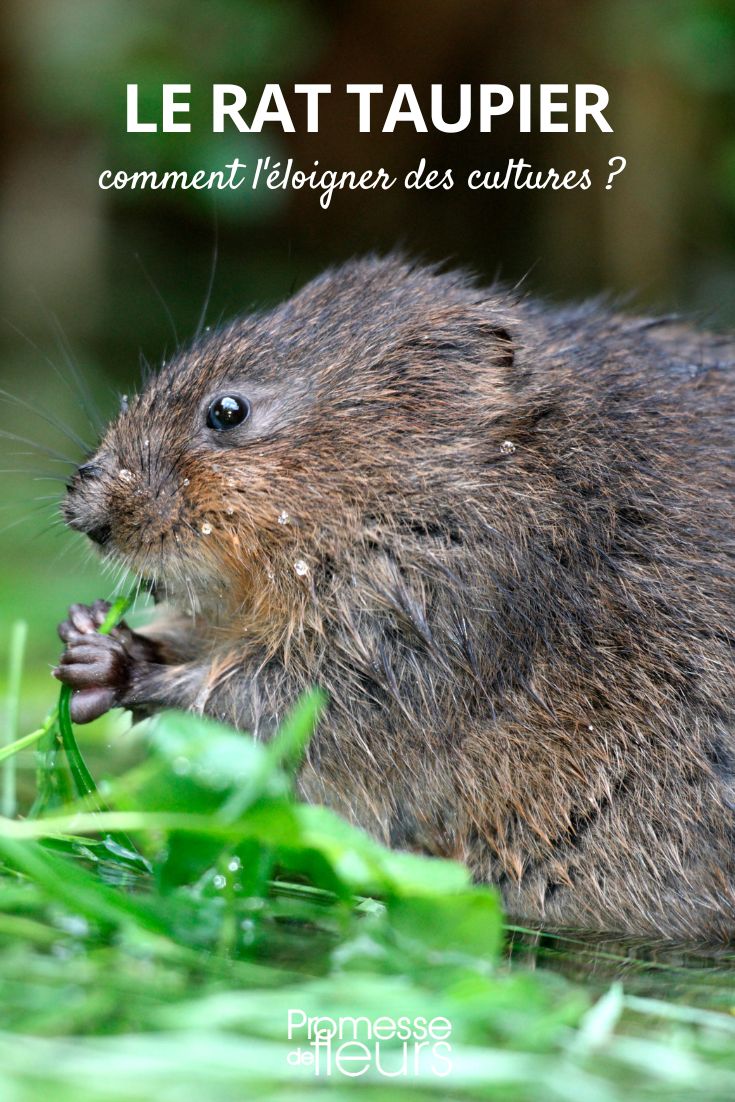
Let’s return to this little rodent with a stocky and round body measuring 12 to 20 cm long, plus an additional 6 cm for the tail. With its reddish-brown fur on the back, lighter brown on the belly, small round black eyes, rounded snout, and cute ears, it is a rodent from the Cricetidae family that is quite charming. Especially if we overlook its feet, which have 4 toes at the front and 5 toes at the back, along with its sharp incisors!
Weighing no more than 300 g, it is mainly found in high or medium mountain regions, such as the Massif Central, the Alps, the Jura, and the Vosges. It can indeed live up to 2000 m in altitude without any difficulty.
The voles, an invasive rodent
Far from being solitary, the mole rat lives in family groups. And it’s safe to say that it is quite fertile! It reaches reproductive age at just 2 months! Moreover, between March and October, a female can have 5 to 6 litters consisting of about 5 baby mole rats each. I’ll let you do the math…
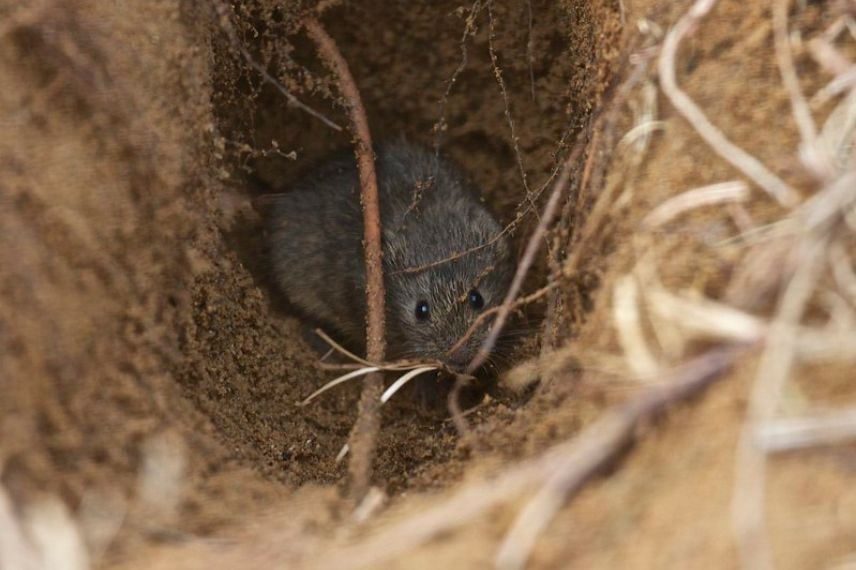
Thus, it’s easy to imagine the consequences of a pair of mole rats settling in your vegetable garden… Even though these charming rodents have a limited lifespan of 8 months. For the mole digs many tunnels to shelter its little family, pushing the soil to the surface. These tunnels can reach 50 m in length, 1 m in depth, and they cross and intertwine without any clear direction.
In its vast underground network, the mole rat and its offspring take refuge, build their nests, and store food for leaner times. They rarely venture outside, and if they do, you won’t see them much. They poke their snouts out at night, often in damp weather.
What damage do moles cause?
The damage caused by water voles can be significant, both for farmers and for gardeners or fruit growers. It comes in several forms:
- The mounds of soil that turn your land into a battlefield. Indeed, by pushing up soil, water voles create mounds similar to those of moles, but with finer soil. While you might be pleased to see your soil well-aerated, I doubt it. The mounds created by water voles differ from those of moles in the entrance of the tunnel. It is oblique for the water vole, vertical for the mole.
- The water vole has a vegetarian diet and mainly enjoys the collar and roots of garden vegetables such as carrots, turnips, potatoes, beets, leeks… They also like salads, chard, courgettes, and celery. In short, few vegetables escape its acute appetite. It goes without saying that these vegetables wither very quickly!
- The water vole also enjoys nibbling the roots of fruit trees, particularly those of apple and pear trees. Naturally, damaged roots lead to the death of the tree. And when one notices it, it is often too late.
- Bulbs can also be part of the water vole’s daily meal.
- The network of tunnels can also weaken the banks of a body of water or a river.
- The water vole can be a transmitter of diseases to humans and animals such as rabies, tularemia, or listeriosis.
Read also
Garden Helper: The ShrewDoes the mole rat have any predators?
Nature being well-designed, the mole rat has natural predators:
- Diurnal raptors such as buzzards or kestrels, and nocturnal raptors like the barn owl or tawny owl, the owl…
- Reptiles
- Mustelids such as weasels, badgers, stoats, and ferrets
- The fox, lynx, and wolf
However, it must be acknowledged that the decline of some of these populations leads to the proliferation of mole rats.
Moreover, it is somewhat complicated to attract these predators to your garden. Especially if you have chickens! On the other hand, if you have a large wooded area, do not hesitate to install specific nesting boxes for owls and hawks in the trees or in an old barn.
Finally, one last predator can prove very effective in hunting mole rats: your cat. Unfortunately, no matter how clever it is, it will not distinguish between a vole and a shrew.
How to keep moles away?
Several methods can be considered to keep moles away from your vegetable garden or ornamental garden. Right from the start, we will set aside traps that only kill (in horrific conditions) one or two individuals.
It is therefore better to favour gentler methods:
- Literally surround your vegetable garden with repellent plants such as wormwood, tansy, common rue, spurge, Incarvillea, garlic, and imperial fritillary, which emit scents that rodents find unpleasant.
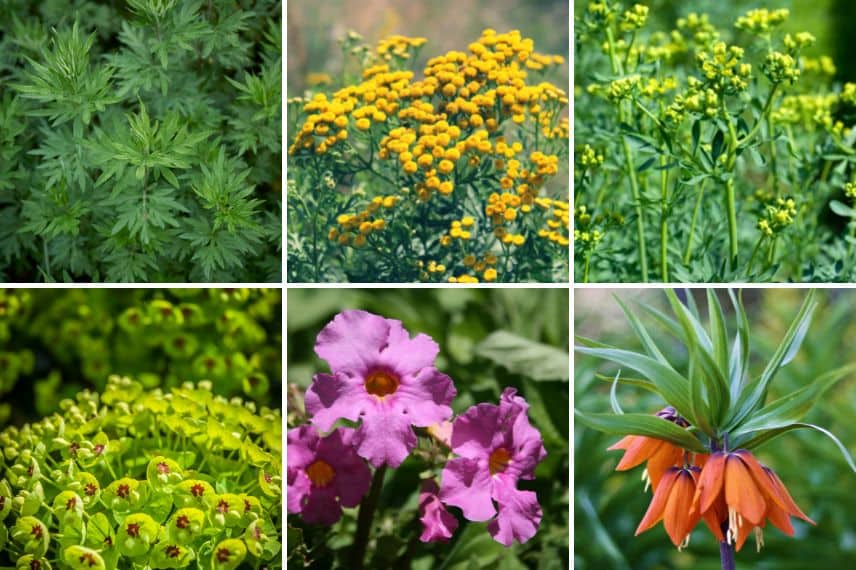 Wormwood, tansy, common rue, spurge, Incarvillea, and imperial fritillary
- Throw some crushed leaves of black elder into the tunnels or, even better, prepare a manure from black elder using 200 g of leaves macerated for 3 days in one litre of water.
- Deeply plant construction stakes made of iron topped with inverted water bottles. With the wind, these move and transmit vibrations in the soil that moles are sensitive to.
- Spread castor cake in the vegetable garden, provided that no children or pets have access, as it is a toxic product. Castor cake is also an excellent fertiliser. You can also bury it in the tunnels.
- Enclose bulbs in wire mesh or a bulb basket.
- Subscribe!
- Contents
Comments