





























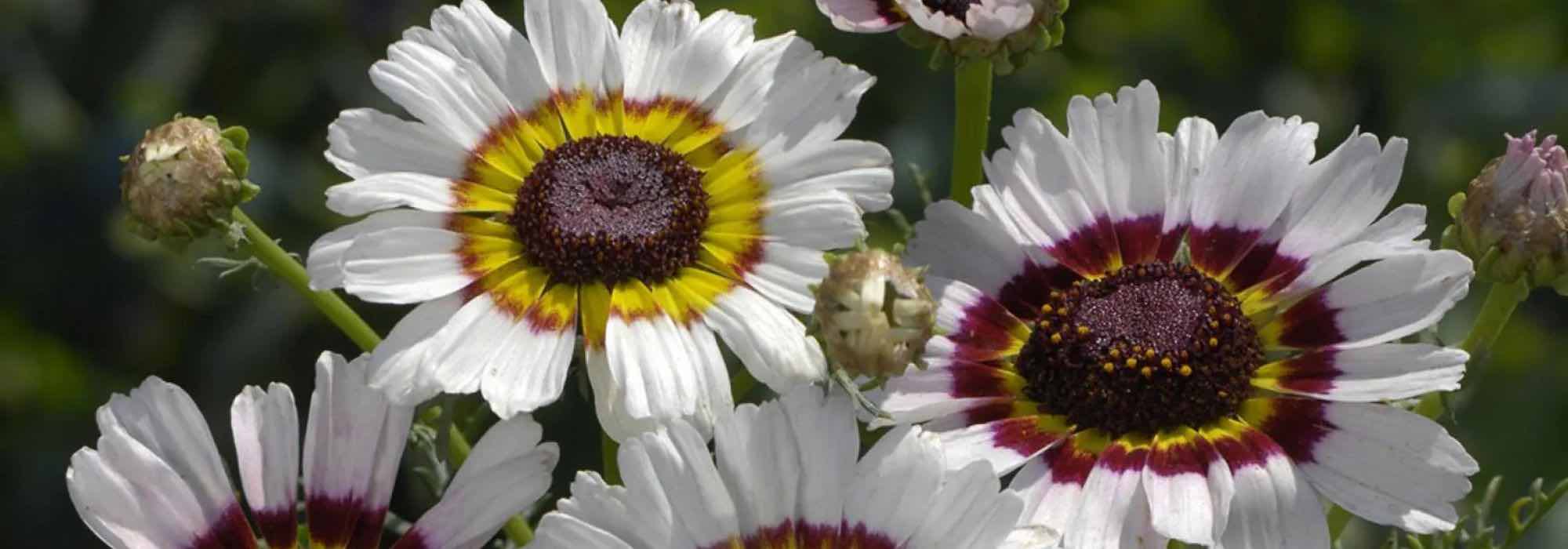
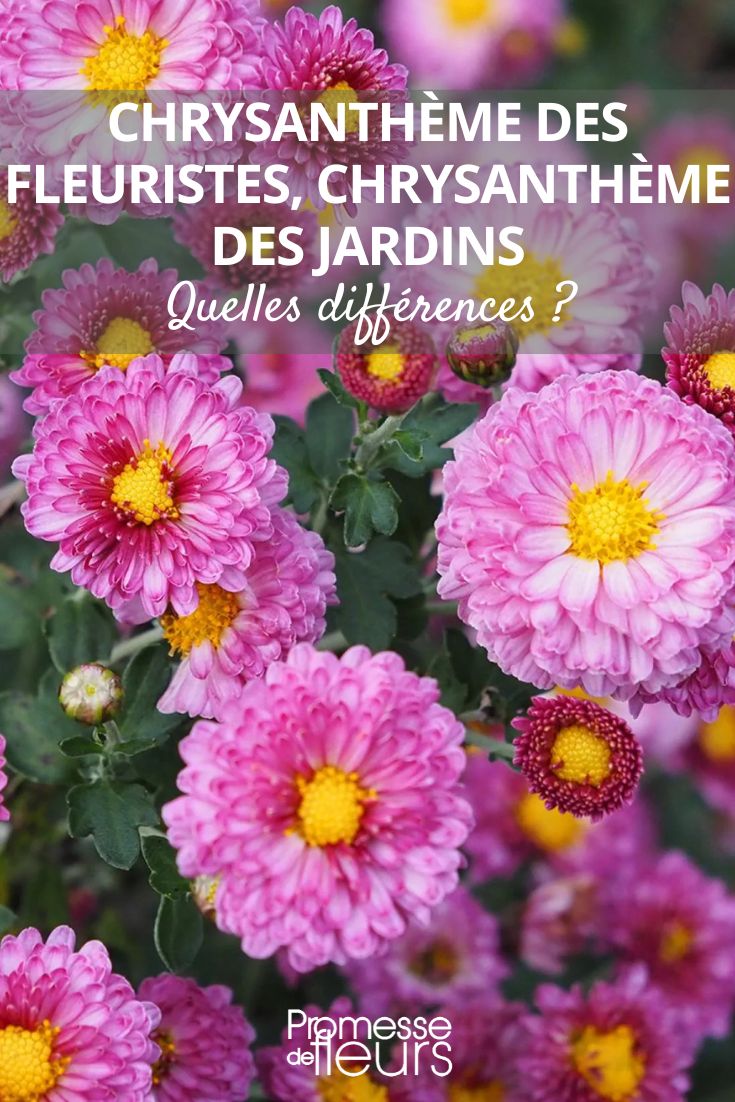
Florist's chrysanthemum, garden chrysanthemum: what are the difference?
Discover how to tell them apart and use them
Contents
Chrysanthemum is, without a doubt, one of autumn’s most iconic plants, with its colourful flowers that brighten our gardens and balconies at a time when most other plants go into winter dormancy. Yet, behind this very popular flower, there is some confusion for gardening enthusiasts, when it comes to distinguishing florist’s chrysanthemum and the garden chrysanthemum.
Often associated with All Saints’ Day, where it is used to decorate graves, florist’s chrysanthemum stands out from its perennial cousin, the garden chrysanthemum, in several respects. Indeed, although these two types of chrysanthemums belong to the same genus, their characteristics in cultivation, frost resistance, and even their aesthetics, make them quite different.
This article aims to clarify these differences to help you better understand these two types of chrysanthemums. Whether you wish to grow them in the ground or in pots, as an annual or perennial plant, it is important to know their specifics to make the most of their beauty and longevity. So, how do you know which one to choose for your garden or balcony? What are the essentials for looking after them properly? Dive into the distinctive features of florist’s chrysanthemum and garden chrysanthemum to guide your choices.

Origin and classification of chrysanthemums
Chrysanthemums, whether florist’s or garden varieties, originate in Asia, chiefly in China and Japan, where they have been cultivated for over 2,000 years. Introduced to Europe in the 17th century, these flowers quickly gained popularity, particularly in France, where they became a strong symbol of autumn.
Chrysanthemums all belong to the genus Chrysanthemum, which comprises many species and varieties. However, two broad categories stand out: the florist’s chrysanthemum and the garden chrysanthemum.
The florist’s chrysanthemum is a complex hybrid, derived from several species, including Chrysanthemum carinatum (also known as the tricolour chrysanthemum). This type of chrysanthemum is cultivated mainly for its abundant, colourful flowering. Due to its low hardiness, it is usually grown as an annual plant in gardens, or in pots, as it tolerates temperatures below -5 °C poorly (in a mild climate, it can, however, be perennial). Contrary to popular belief, it is not only used to adorn graves; it is also valued for brightening our outdoor spaces with its vivid colours.
The garden chrysanthemum, called Chrysanthemum indicum, is a perennial plant. It is hardy and capable of withstanding harsher winters, generally able to tolerate between -10 °C and -15 °C depending on the varieties. This plant is ideal for outdoor flower beds and borders, as it can rebloom year after year if well maintained. Garden chrysanthemum varieties are less spectacular than florist’s chrysanthemums, but they bring a natural and enduring touch to the garden.
Florist's chrysanthemum: a colourful annual for the garden
The florist’s chrysanthemum is cultivated as an annual plant in the garden, in the ground or in pots on terraces and balconies. It is distinguished by its spectacular and highly varied flowering.
The florist’s chrysanthemum results from cross-breeding between different species, giving it a wide range of shapes and colours. Its flowers can be single, semi-double or double, and the colours range from white to purple, including yellows, oranges, reds and even bi-colours or tri-colours. In addition, its flowering lasts a long time, often from September to the first frosts. It allows for very varied and bright displays, even late in the season.
The florist’s chrysanthemum is ideal for creating colourful beds or for planting along borders, where it will provide generous flowering throughout the autumn. It is usually sold in pots, but it can also be sown directly in the garden from seeds.
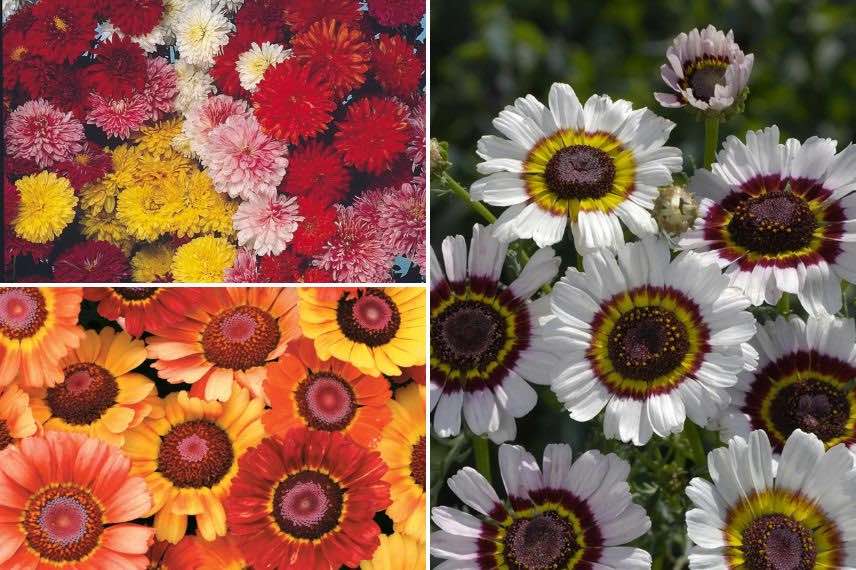
Three florist’s chrysanthemums cultivars: ‘Fanfare Improved F1’ with double flowers, ‘Sunset’ in warm colours and ‘Cockade’ with very contrasting colours
Garden chrysanthemum: a hardy perennial for long-lasting decoration.
Garden chrysanthemum, grown as a perennial, is an excellent choice for those looking to add a lasting, hardy touch to their garden. Unlike florist’s chrysanthemums, it is able to survive harsh winters and flowers again each year, making it a real asset for late-season beds.
Garden chrysanthemum is recognised for its good cold hardiness, allowing it to thrive in many regions. Some varieties can withstand temperatures down to -15°C. It is therefore a plant suited to planting in the ground, often planted in beds or borders.
Its flowers are simpler and less showy than those of florist’s chrysanthemums, but they offer a long-lasting, natural flowering, ideal for extending the garden’s beauty until winter arrives. Colours range from white to pink, including yellows, oranges and purples, with single or double flower heads.
Garden chrysanthemum is ideal for those seeking a late-flowering plant that can withstand the first frosts. It is planted in the ground, where it can remain for several years without needing replanting. This perennial requires little maintenance once well established. It prefers sunny locations, but also tolerates light shade, and adapts to most soil types, provided they are well-drained.
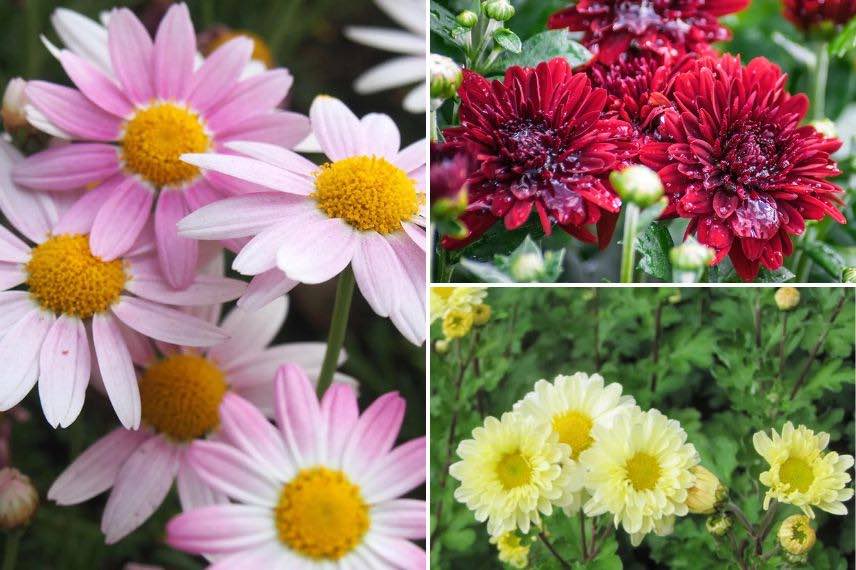
Three garden chrysanthemum cultivars: ‘Hebe’ with blush pink blooms, ‘Herbstrubin’ in velvet red and ‘Poésie’ in a very soft yellow
Read also
5 pairing ideas with ChrysanthemumsPractical tips for growing these two chrysanthemums.
Here are some practical tips to get the most from your chrysanthemums, whether in pots or in the ground, and to enjoy a beautiful autumn display of flowering.
How to grow florist’s chrysanthemum?
The florist’s chrysanthemum, although not very hardy, can be grown successfully in the garden or in a pot if certain conditions are met.
- Sowing and planting : You can sow florist’s chrysanthemum seeds in spring, under cover or directly in the ground when the risk of frost has passed. It is important to choose a sunny spot, as the chrysanthemum needs plenty of light to flower well. If buying it in a pot, acclimate it gradually to outdoor conditions if temperatures are still cool.
- Watering and fertilising : Regular watering is essential, especially during the growth and flowering period. Ensure the soil is well drained, as excess water can lead to root rot. It is recommended to add a fertiliser rich in potassium at the start of flowering to promote flower production.
- To prolong flowering: don’t hesitate to regularly deadhead faded blooms. This will encourage the plant to produce new flower buds. At the end of the season, when temperatures drop, you can bring the pots indoors to a sheltered place if you wish to extend flowering indoors.
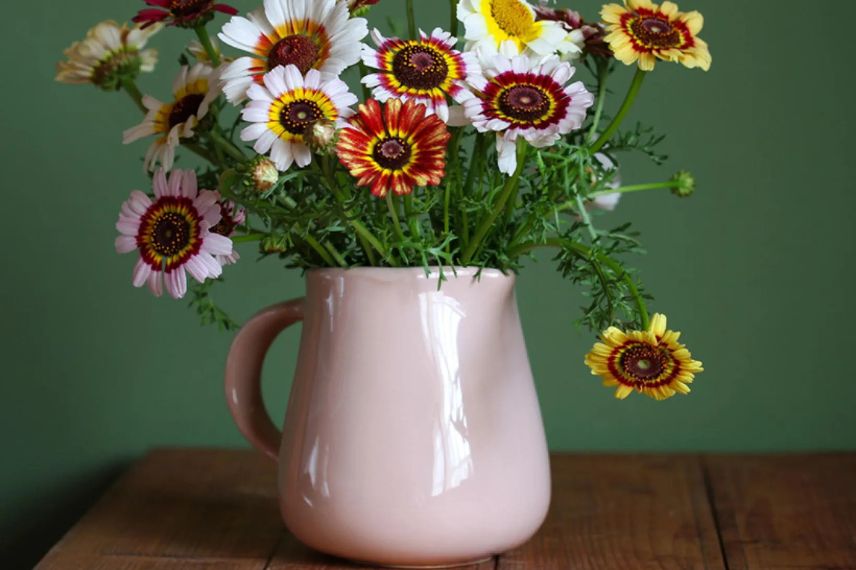
Beautiful florist’s chrysanthemums ‘Rainbow’ in a vase
How to grow the garden chrysanthemum?
The garden chrysanthemum is a perennial and hardy plant, which makes it easier to care for once it is well established. Here are a few recommendations to ensure a beautiful flowering every year.
- Planting : The best time to plant the garden chrysanthemum is spring, to give it time to establish roots before winter. Choose a sunny spot or half shade, with well-drained soil. Avoid overly damp areas where water could stagnate, as this could harm the plant, particularly in winter.
- Pruning and annual care : to encourage generous flowering, you can pinch back the new shoots in spring. This helps the plant to ramify and produce more flowers. After the autumn flowering, it is advisable to cut back the plant (prune the stems) to allow it to regenerate for the following year.
- Watering : as with florist’s chrysanthemum, moderate watering is necessary, taking care to avoid excess moisture which could cause fungal diseases. Water regularly, especially during hot periods, but allow the soil to dry between waterings.
- Winter protection : although the garden chrysanthemum is hardy, it is recommended to protect the base of the plant with mulch in regions with very cold winters. Mulching will help insulate the roots from frost. You can also add a winter fleece over the young plants to protect them from cold winds.
- Dividing clumps : every two to three years, it is advisable to divide the chrysanthemum clumps to rejuvenate them. This will yield sturdier plants and allow you to propagate your chrysanthemums to brighten other areas of the garden.
- Subscribe!
- Contents
Comments