





























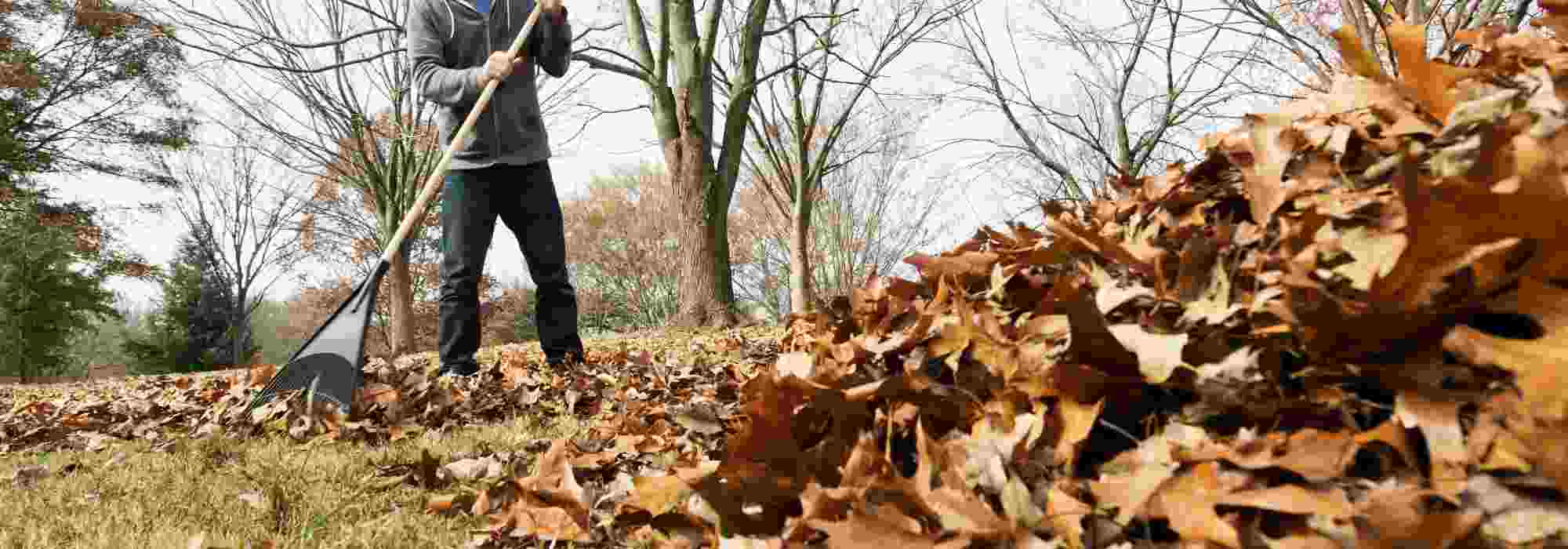
Garden maintenance: essential tools for tidying and clearing up
A selection of essential gardening tools to tidy up your garden efficiently
Contents
Raking up fallen leaves, clearing crop debris, removing moss from the lawn… All these gardening tasks are as essential as they are tedious! Essential, because they are the guarantee of a clean, well‑kept garden, where the risk of diseases and parasites is lower. But tedious too, because these are tasks that require considerable effort, a lot of time and energy expended, and a backache is almost guaranteed. Especially if you are not equipped with the most suitable gardening tools for this major spring and autumn clean‑up of the garden.
Discover our comprehensive guide to the essential tools and small equipment that enable you to clean, sweep, and polish… your garden and vegetable patch in all seasons, and (almost) with no effort.

The rake—it's hard to do without!
Clearly, any self-respecting gardener should have their own rake. Because it is indeed an essential gardening tool. An tool that, chronologically speaking, generally comes last to finish the job. We’ll mainly discuss the traditional rake, which can perform multiple cleaning and gathering functions. Even though the rake is also very useful for leveling and smoothing the soil in the vegetable plot, the gravel paths, and the mulched beds…
The rake is always made up of a wooden or metal handle and a steel head, (or copper for premium models), equipped with teeth. The number of teeth can differ from one model to another, generally between 10 and 20. The more teeth there are, the wider the working width. There are rake models with straight teeth, and others with curved teeth. The difference is small, but it has its utility. Indeed, the straight-toothed rake is ideal for very precise levelling, but also for loosening and refining the surface soil, for example for sowing seeds. Conversely, the curved-toothed rake will be more effective for gathering small debris and waste (clumps, weeds pulled, stones…). It can also be used to rake and level gravel laid on geotextile fabric, without risking tearing it.
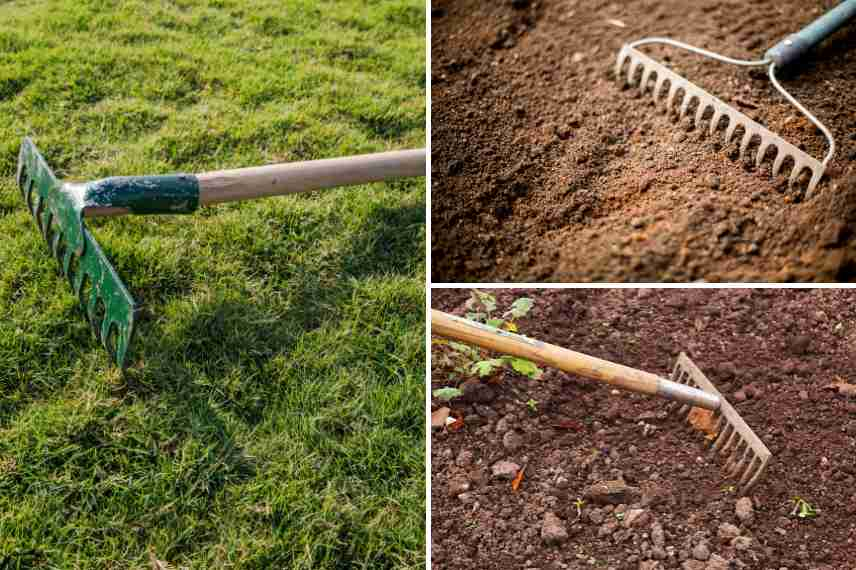 The rake can be fitted with straight or curved teeth. There are also stirrup rakes.
But the rake’s primary function is indeed to gather and collect vegetation of all kinds, from lawn clippings to dead leaves, including crop debris. Beyond aesthetics, this work can be essential if the plants in your garden or vegetable plot have suffered a pest attack or a fungal disease. Indeed, some insects or certain fungal spores overwinter in dead leaves or crop debris. A careful and thorough gathering is therefore one of the most effective ways to combat diseases and pests.
There is also the very specific hay rake, featuring only nine teeth, very effective for gathering hay in swaths, or models of traditional rakes designed especially for children.
As for the stirrup rake, it fulfils the same functions as a traditional rake, with the addition of leaf gathering and scarification. It is therefore a multi-use tool.
When we told you that you couldn’t live without a traditional rake!
→ For further reading : What is a rake used for?
Read also
Garden tools: essentialsLeaf rake to tidy up the lawn
Dead leaves are the quintessential symbol of autumn. In nature, they are a beautiful display that renews itself every year. In the garden, however, they are less welcome. Simply because these dead leaves can damage the lawn by depriving the blades of grass of oxygen and light. Moreover, as they decompose, these leaves can become a cause of slips. Especially if they cover patios or paths. Finally, let’s not forget that some dead leaves can harbour unwanted pest insects (horse chestnut leaf miner, codling moth…) that will find a cosy place to overwinter as larvae.
So there’s no getting away from it—you’ll have to rake up these dead leaves. Not least because they can be useful in the garden and the vegetable plot.
Of course, you can rake dead leaves with a traditional rake, but it’s not necessarily very practical, as the tines tend to dig into the lawn and pull out patches of grass. The ideal is therefore the leaf rake. It is a kind of rake with very fine, long teeth arranged in a fan, perfect for gathering dead leaves into a pile, but also the dry lawn clippings.
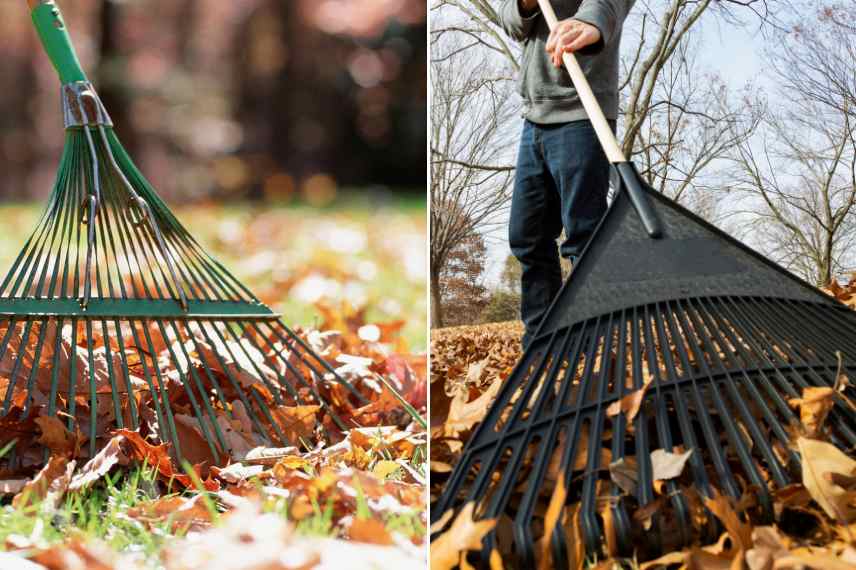
Whether metal or plastic, the leaf rake is essential if you have trees or bushes
There are, again, many different models too, which, beyond the materials used in their manufacture, differ mainly by the number of teeth. Some models of lawn rakes can be equipped with a stiffener, or crossbar reinforcement, designed to strengthen the grip on the ground. Other models of lawn rake, just as sturdy, but lighter and more flexible, are made of plastic and fibreglass.
Did you know that dead leaves can be very useful? Ingrid B. explains everything to you: Dead leaves, how to use them in the garden? How to make good leaf mould?
The scarifier for stubborn moss
Incorporating the scarifier into garden-cleaning and debris-collection tools is simply because its function is to remove moss and the thatch that forms on the lawn. Thatch refers to the residues of mowing that accumulate due to trampling, lawnmower passes and the weather. In the long term, thatch can suffocate the lawn by depriving it of water and air.
The scarifier is therefore a tool consisting of a handle and a head, similar to a rake, but fitted with very sharp teeth that scratch the lawn. Once this work is done, a sweep with a leaf rake is required to collect the scarification debris. This operation is carried out either in spring or autumn, but not every year.
Personally, I use a far less tiring solution: I release my four hens onto the lawn! In no time at all, they scratch moss and thatch away underfoot.
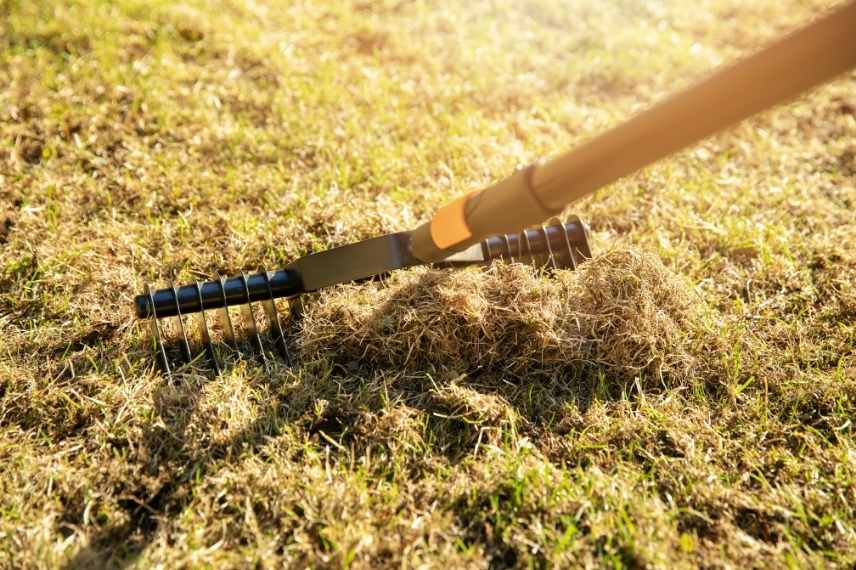
The scarifier is very useful for the lawn, but you should not overdo it
→ Learn more:
Read also
7 time-saving toolsThe small garden cleaning kit, after all, is very handy
- Green waste bags for transporting, moving or storing leaves and debris
- The narrow flat-wire flower rake with 9 tines is ideal for cleaning and maintaining small spaces such as borders or rockeries
- The pair of plastic leaf grabbers for collecting leaves and transferring them to a bag or storage area.
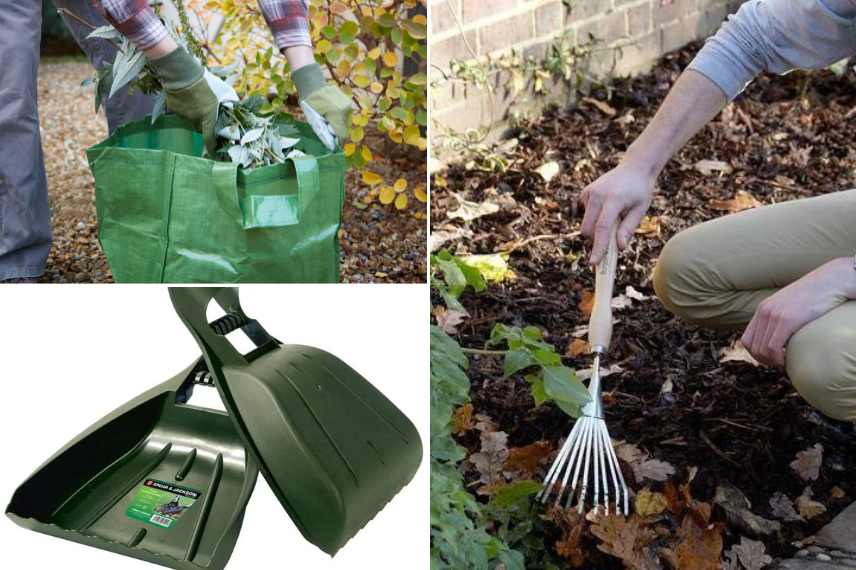
A small but very handy bit of kit!
- Subscribe!
- Contents
Comments