





























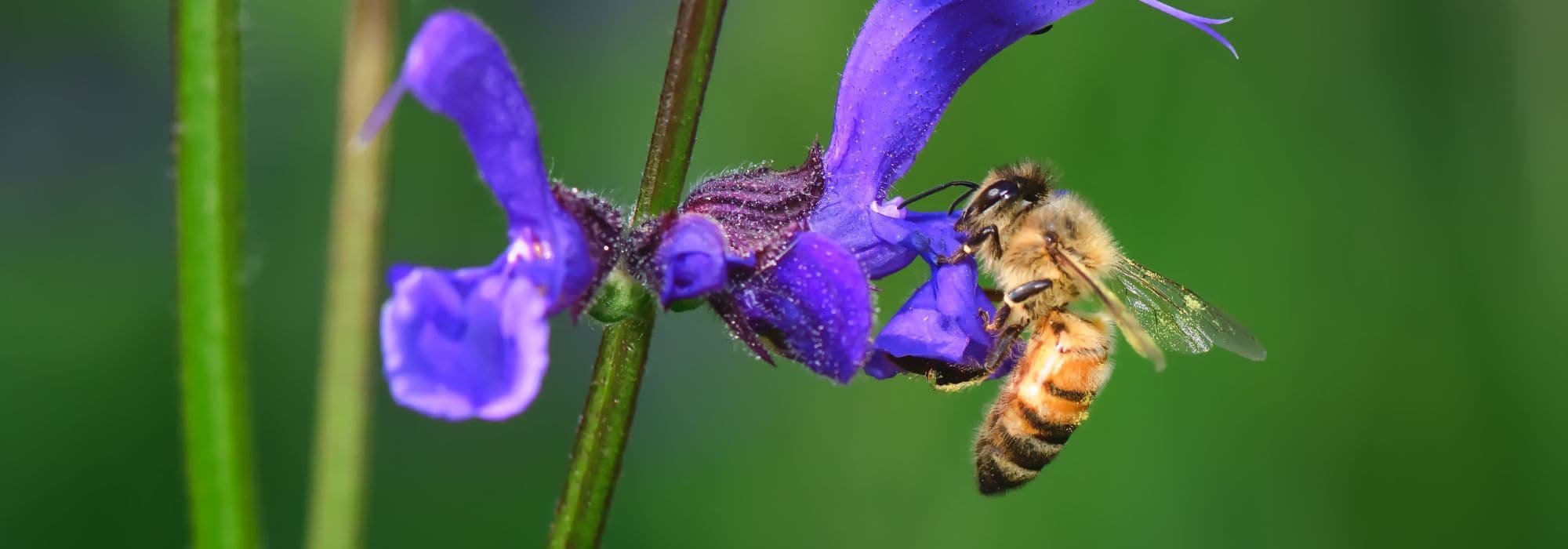
Garden smart with drought-tolerant melliferous perennials
Our tips for attracting pollinators
Contents
Attracting pollinators to your garden is essential for biodiversity and the beauty of our green spaces. Indeed, these insects, including bees, butterflies, bumblebees and others, play a crucial role in the pollination of plants, thereby contributing to the production of fruits and vegetables and to the reproduction of flowers. In a context of climate change and recurring droughts, it is important to favour drought-tolerant plants that do not require excessive watering. Fortunately, many perennials meet these criteria and, at the same time, offer real appeal to pollinators.
Discover our tips for designing a garden that attracts pollinators with drought-tolerant perennials.

The importance of pollinators
Pollinators, such as bees, butterflies and other insects, play an essential role in our gardens, ensuring the pollination necessary for plant reproduction and biodiversity. Their work not only supports the production of fruit, vegetables and seeds, but also contributes to ecosystem health. In the face of current environmental threats (loss of habitats, widespread use of pesticides, etc.), it is important to foster welcoming gardens to maintain biodiversity.
To support them, nothing beats choosing plants that provide nectar and pollen, their sources of food. Perennials are an excellent choice for several reasons. They come back every year, providing a sustainable source of food for pollinators. In addition, they require less maintenance than annuals, which reduces the time and effort needed to keep this garden welcoming.
→ To learn more about the topic, read our article: “Decline of pollinators: the consequences for plants”.
Read also
Planting a hedge for insectsDrought-tolerant perennials: a solution to climate change
Climate change is driving hotter summers and more frequent droughts, which makes regular garden watering more difficult. Not to mention the recurring water restrictions! Water is becoming a scarce resource, leaving water-hungry plants to wither in its absence. In the face of these problems, drought-tolerant perennials are better adapted to extreme climate conditions and can survive with less water, which reduces water consumption and maintenance costs.
Note, however, that a drought-tolerant plant first needs to establish itself well when young in order to survive water shortages properly thereafter. You will therefore need to be vigilant about watering during the first summer (and even the second) after planting.
The best drought-tolerant perennials for attracting pollinators
Choose plants that bloom at different times of the year to provide a continuous food source for pollinators. Here are a few varieties that stand out for their ability to attract pollinators while being drought-tolerant:
Lavender
Lavender, with its fragrant flowers and exceptional drought tolerance, is a classic choice. It attracts a host of pollinators and offers a long flowering period throughout the summer. We recommend the variety ‘Dutch group’ for its very long summer flowering and the butterfly lavender ‘Magical Posy Pink’, less hardy, but which bears bright pink flowers from April to September.
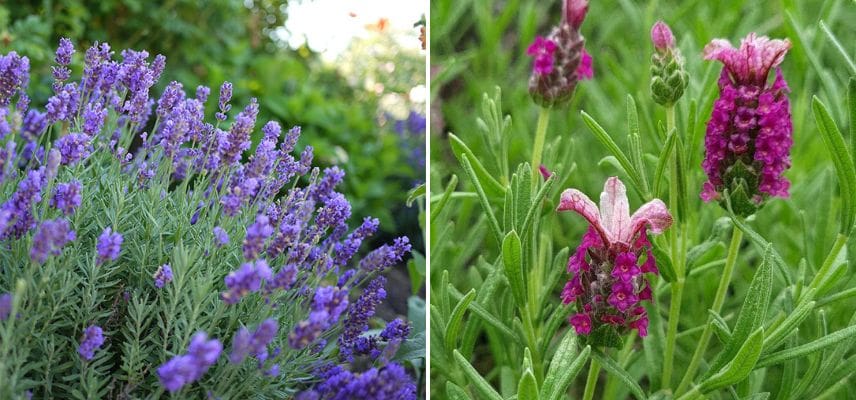
Lavender ‘Dutch group’ and butterfly lavender ‘Magical Posy Pink'</caption]
Sedum
Sedum, or creeping stonecrop, is particularly valued for its easy cultivation and tolerance of poor, dry soils. Its star-shaped flowers are a magnet for bees and butterflies, especially late summer and autumn. Among the many varieties, the creeping ‘Cape Blanco’ sedum is one of the first to flower in May–June, followed by the Sedum ‘Chocolate Cherry’ (flowering July to September) and the variety ‘Autumn Joy’ (flowering from August to November).
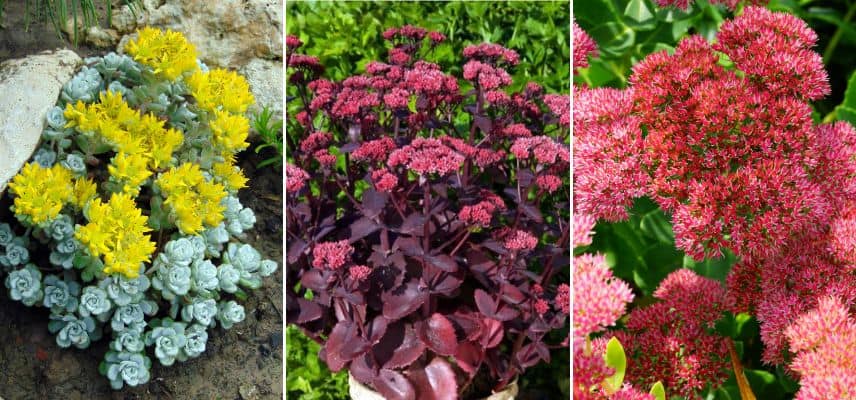
Creeping Sedum ‘Cape Blanco’, ‘Chocolate Cherry’ and ‘Autumn Joy'</caption]
Sage
Sages tolerate temporary drought well when well established. Among the wide range of colourful varieties, meadow sage is a favourite with bees and butterflies thanks to its nectariferous flowers (flowering from June to August). It adapts well to heat and dry soils.
[caption id="attachment_248720" align="aligncenter" width="856"]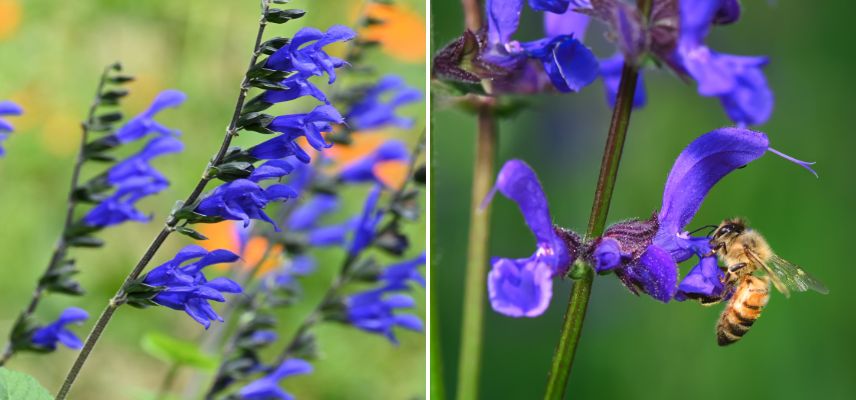 Salvia pratensis
Perennial wallflower
Perennial wallflowers or Erysimum, with its purple, orange or yellow flowering, is a perennial that attracts bees. Drought-tolerant, the Erysimum ‘Poem Lavender’ flowers prolifically from March to June, enriching dry gardens.
[caption id="attachment_248721" align="aligncenter" width="856"]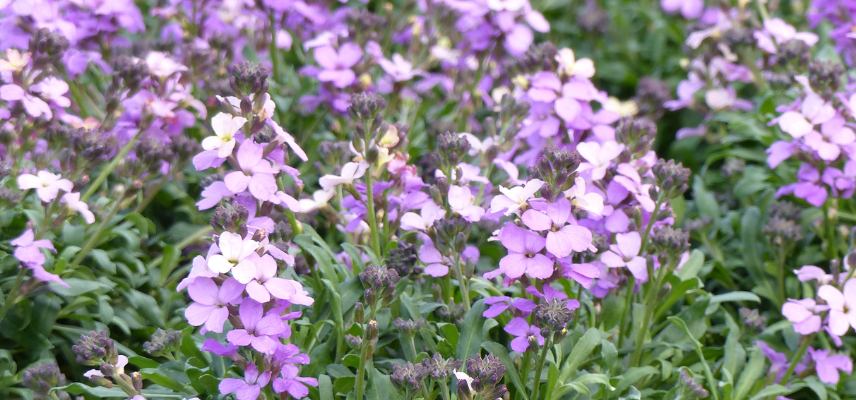 Erysimum ‘Poem Lavender’
Aubrietias
Aubrietias are perfect for dry gardens. They flower in spring, usually from April to June. They can come in a range of colours, such as purple, pink, blue and white. They are fairly easy to grow and require little maintenance.
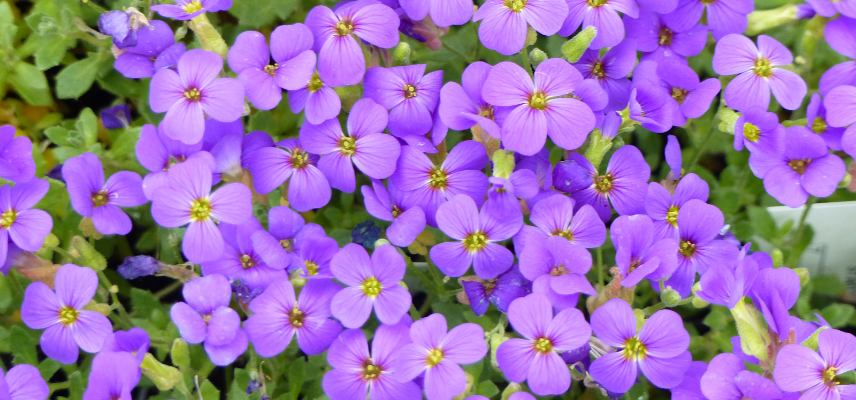
Aubrieta x cultorum ‘Hamburger Stadtpark'</caption]
Garden valerian
Garden valerian, or Centranthus ruber, delights with its pink to red flowers, attracting butterflies and bees. Once established, it is drought-tolerant and nearly foolproof, brightening gardens from late spring to summer.
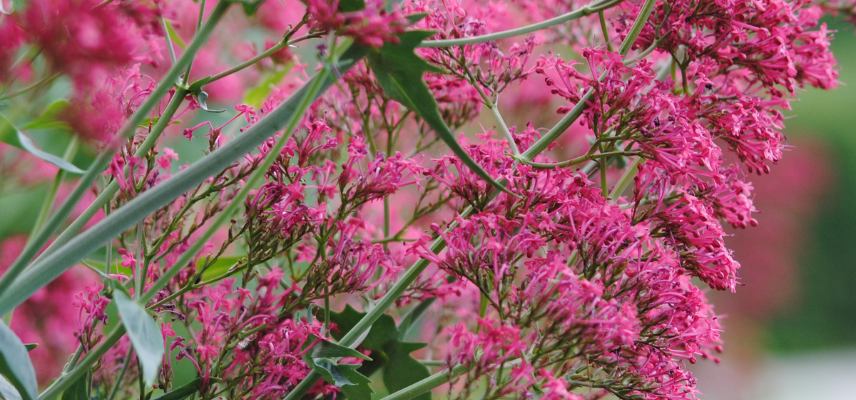 Centranthus ruber
Nepetas
Nepetas, or catnip, with their blue or purple flowers, are prized by pollinators (and even by our feline friends). These drought-tolerant perennials offer generous flowering from late spring through to October.
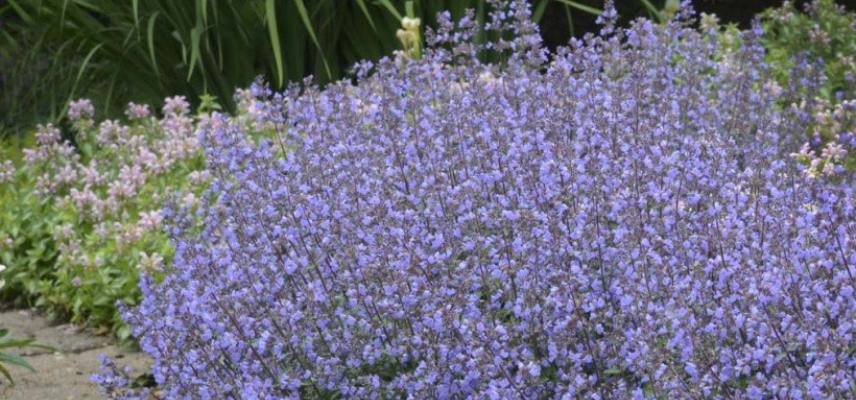
Nepeta ‘Purrsian Blue'</caption]
Achilleas
Achilleas bloom from early summer to autumn, primarily June to September, sometimes October as with the variety ‘Cerise Queen’. They can be white, yellow, pink or red, attracting pollinating insects.
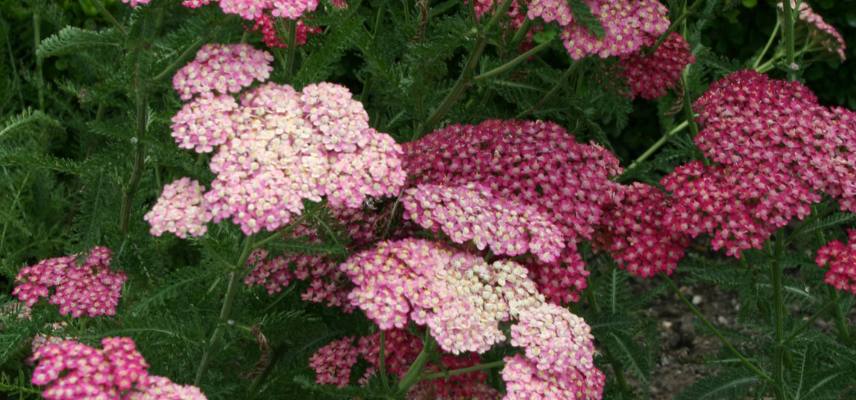 Achillea ‘Cerise Queen'</caption]
Perovskias
Perovskias or Russian sage is a perennial appreciated for its blue flowers that attract bees and butterflies. It flowers from summer to autumn and can reach a height of 1.5 metres.
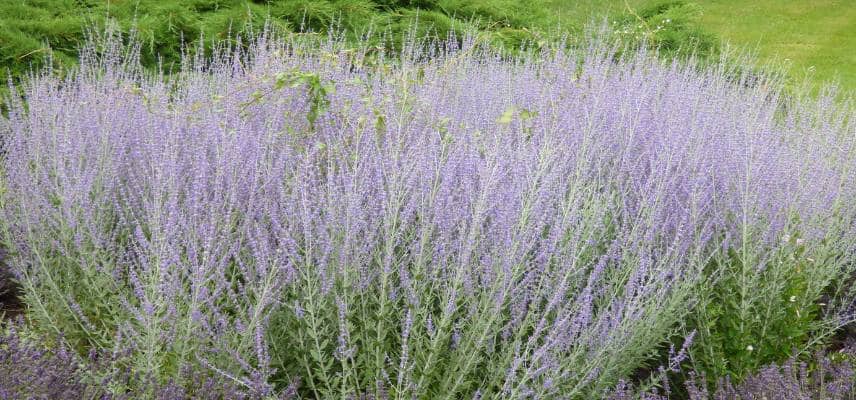 Perovskias
And many more
The list of drought-tolerant perennials loved by pollinators is long. Also consider thyme, Delosperma, Soapwort, Agapanthus, Gaura, heathers, Euphorbia, Buenos Aires Verbena… Not to mention numerous shrubs and flowering trees.
A few final tips for creating a drought-tolerant garden that attracts pollinators
- Prioritise native plants adapted to local climate conditions to attract pollinators in your region. Choose plants that flower at different times of the year to provide a continuous food source for pollinators.
- Avoid pesticides and instead opt for natural or biological pest control methods.
- Although drought-tolerant perennials require less water, monitor your plantings in case of prolonged droughts. Remember that a newly planted young plant needs watering for 1–2 years to establish a solid and resilient root system.
- Remember to take into account your climate region and your soil type when choosing plants. To help you, you can use our Plantfit tool, on our site (at the very top, next to your name when you are logged in) to find varieties that will suit you.
- Pollinators also need water to survive. Install a water source, such as a bird bath or a small pond, in your garden.
- Remember to provide them with places to rest, breed or overwinter. Install insect hotels for solitary bees and rocks and logs for butterflies. Find our article on the subject: “Welcoming garden insects: 7 shelters to build yourself”.
- Subscribe!
- Contents
Comments