





























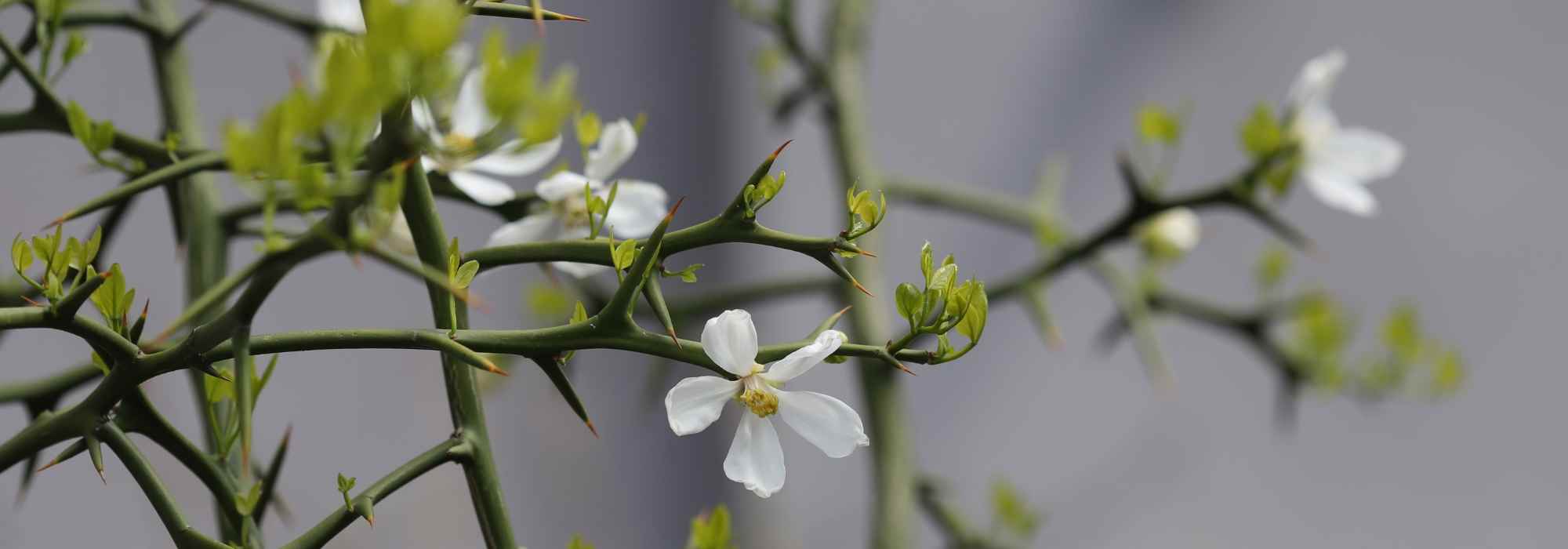
Graphic and spiky plants: a touch of originality for your garden
Create a unique, modern garden with thorny plants
Contents
At first glance, discouraging, even off-putting, the plants with thorny foliage or branches possess a singular, striking charm.
Beneath their rugged exterior, and their reputation for being difficult to maintain and to fit into a garden, they bring texture and character to any setting. Whether simply ornamental or defensive in function, these prickly beauties require careful placement, especially away from young children or domestic pets.
Discover our selection of plants with extraordinary thorny silhouettes to create a garden that really packs a punch!

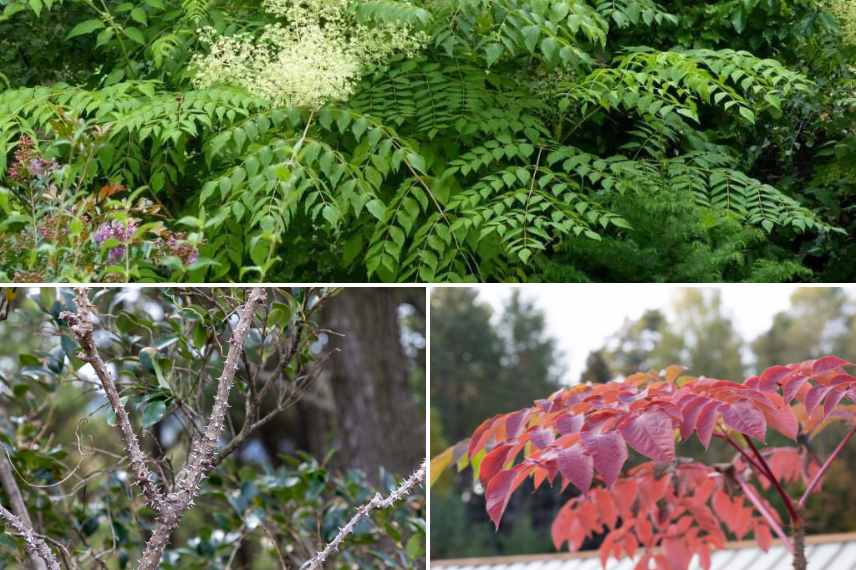
Aralia elata or Japanese angelica tree
The Aralia elata, also known as the angelica tree, forms a large bush that can reach 4 to 5 m in height, with a 5 m spread. It displays a spreading habit with sturdy stems that ramify widely, making it resemble a giant bouquet. The bark and twigs are armed with sharp spines, as is the foliage. The Aralia elata presents large palmately divided leaves, deeply cut, reaching up to 1 m in length with sumptuous yellow and red colourings in autumn. This lush foliage forms a backdrop to the spectacular summer flowering. The large umbels of 30 to 60 cm are composed of numerous small white flowers, reminiscent of those of the classic angelica. These airy flowers then transform into black drupes in late summer, which birds relish.
In a garden, the Aralia elata thrives particularly well in semi-shaded areas, sheltered from strong or drying winds. It prefers humus-bearing soil, cool to moist. It is a very hardy tree (-23°C) perfect as a specimen on a lawn or in a clump that will offer a real fireworks display in late season!
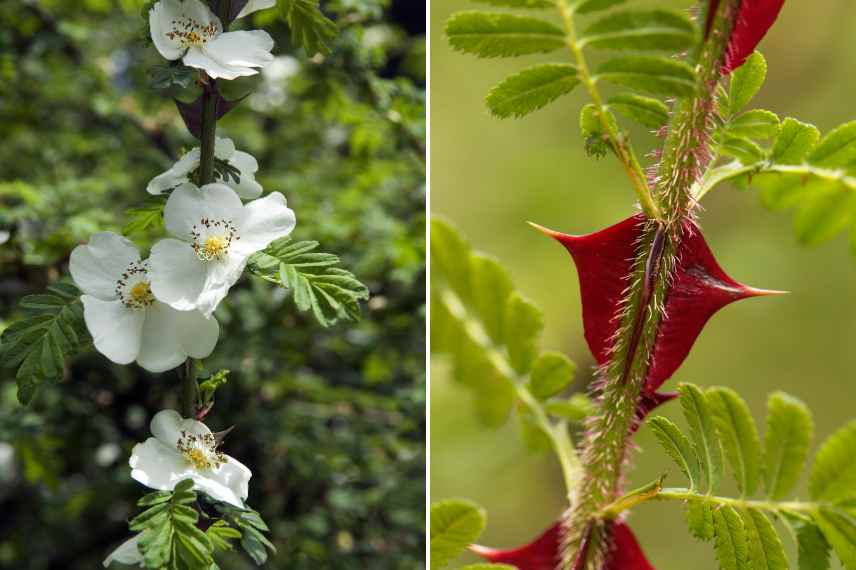
Rose 'Pteracantha'
Here is an eccentric, charming rose to welcome into a large garden for the curious. The Rosa omeiensis ‘Pteracantha’ (or Rosa sericea ‘Pteracantha’) nicknamed “silky rose with large thorns,” is a Chinese botanical rose that captivates with its singularity. Vigorous, it has an upright, bushy habit, and forms a striking mass of thorns 2 m to 2.5 m tall, and more if left unpruned. Its distinctive feature lies in its young shoots, remarkable when they are clothed in red, flat and broad thorns, in a cock’s-comb crest, almost translucent when the sun shines through them. These large red thorns lend the rose a sculptural appearance before the deeply dissected foliage hides them. Rosa ‘Pteracantha’ flowers in early summer, displaying small white dog-rose blossoms dotted among dark green, fern-like leaves. These flowers are followed by spherical reddish hips, called hips, that persist into winter.
This rose integrates ideally into defensive hedges, rustic hedges, or as a botanical curiosity as a specimen in a natural-style garden. Reserve a position where backlighting will reveal the splendour of its thorns. Very hardy down to -23°C, undemanding, it tolerates drought well, grows in poor soils or under harsh climates.
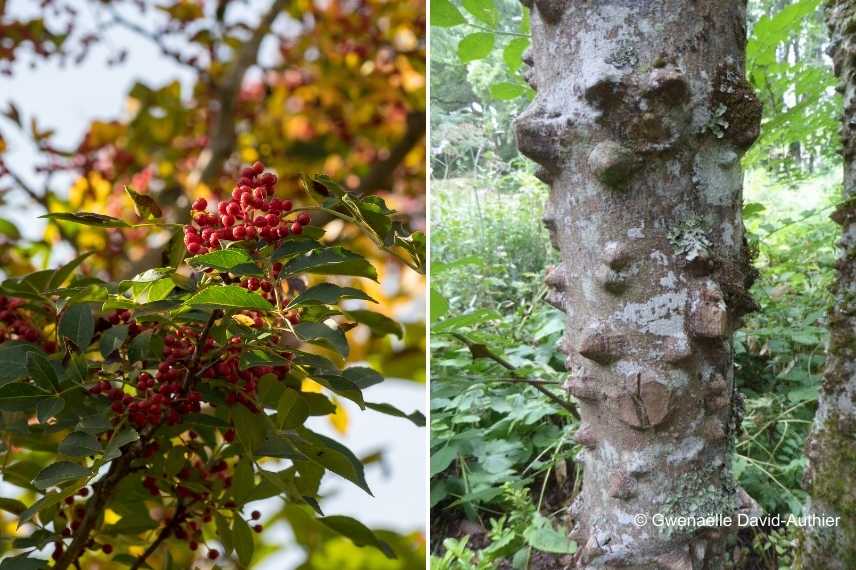
Sichuan pepper tree
The Zanthoxylum piperitum, known as Sichuan pepper, is a bush widely distributed in Asia, prized for its foliage and berries which are used as a spice. The Sichuan pepper plant forms a handsome bush with an elegant habit and naturally bushy to around 4 m in all directions. Its trunk and young branches are adorned with fine spines, which over time resemble wart-like outgrowths, quite fascinating. The deciduous leaves, alternate, composed of 11 to 21 oval leaflets, glossy, green and dentate, turn to gold and purple in autumn before dropping. The edges of the leaflets are armed with small essential oil glands as well as tiny spines. When crushed, these leaves release a complex fragrance blending spicy, woody, citrusy and slightly peppery notes. In spring, the shrub bears clusters of small yellow flowers that contrast with the deep green of the leaves. In summer, these flowers give way to red-rose berries which, when ripe, split to reveal a black seed whose envelope is consumed once dried and ground.
In the garden, the Sichuan pepper makes a handsome specimen in an unpruned or defensive hedge thanks to its very spiny young branches. It thrives in sun or partial shade, sheltered from cold, dry winds in deep, fertile, well-drained and slightly acidic soil. Somewhat hardy to -18°C; in severe climates, mulch around the trunk in winter.
Read also
7 shrubs with graphic foliage and habitAgave isthmensis
A bold little rosette with a formidable look! The Agave isthmensis is a succulent plant native to the coastal regions of Oaxaca, Mexico whose spiny leaves unfold like forked little tongues. With a low, compact rosette habit, this agave will reach no more than 50–60 cm across. It is ideal for adding an exotic touch to the garden or a terrace, as it is easily grown in a pot. Its short, fleshy leaves in blue-green or grey-green are edged with formidable red spines and end in a long, blood-red acute tip. It offers a striking visual appeal. Although Agave flowers only once in its life, the flowering stalk, when it appears, is spectacular, reaching several metres in height and bearing numerous yellow or green flowers.
Frost-tender, it is best grown in the ground along the Mediterranean coast, where it will dress an exotic rockery, an arid slope or a border; in pots, elsewhere. It prefers well-drained soil and full sun.
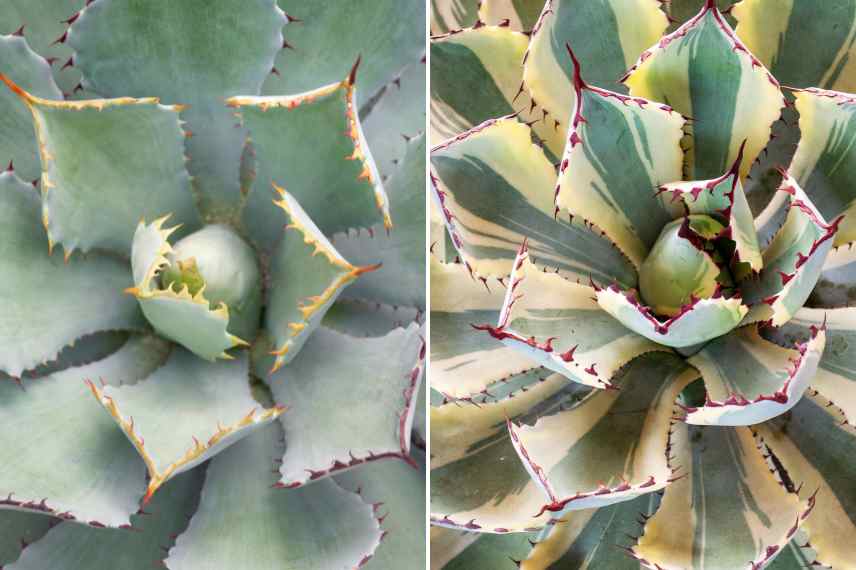
The agave isthmensis. On the right, the variegated variety.
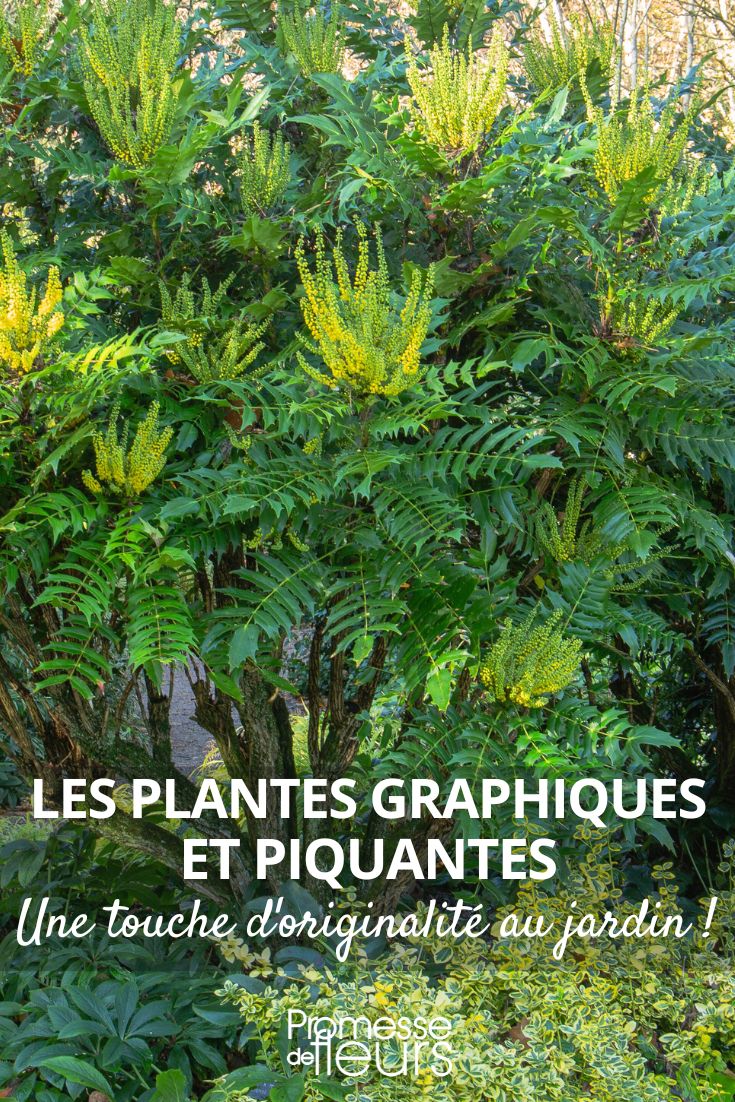
The Mahonia 'Hivernant'
The Mahonia Japonica ‘Hivernant’ is a bush with an exotic appearance that allows you to create a truly tropical atmosphere even in mid-winter! Renowned for its large thorny leaves and its wonderfully sunny winter flowering, the Mahonia Japonica ‘Hivernant’ will illuminate shaded areas of the garden, whether as a standalone plant, in shrub borders, in a hedge or in a woodland under the canopy of taller trees. This cultivar forms an evergreen bush, 1.5 m tall in all directions, with large dark-green, pinnate, leathery leaves with spiny margins up to 50 cm long, drawing the eye immediately. They provide a bristly backdrop for the abundant yellow flowering that appears from November to March. It takes the form of clusters of yellow flower spikes that diffuse a powerful lily-of-the-valley fragrance in the heart of winter.
These flowers are followed by blue-black berries in summer. ‘Hivernant’ prefers slightly acidic soil, rich in organic matter, well-drained and fairly cool. Hardy, it brings surprisingly exotic luxuriance and will acclimatise to most of our regions.
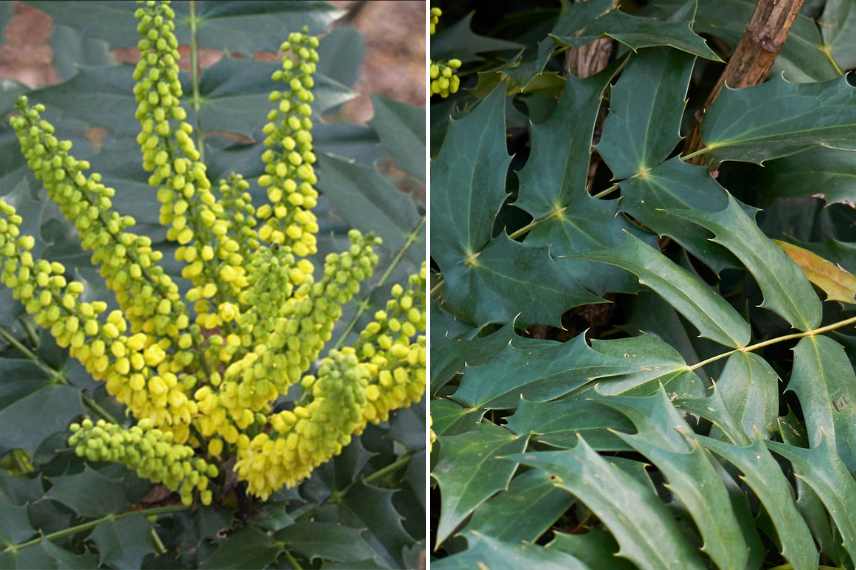
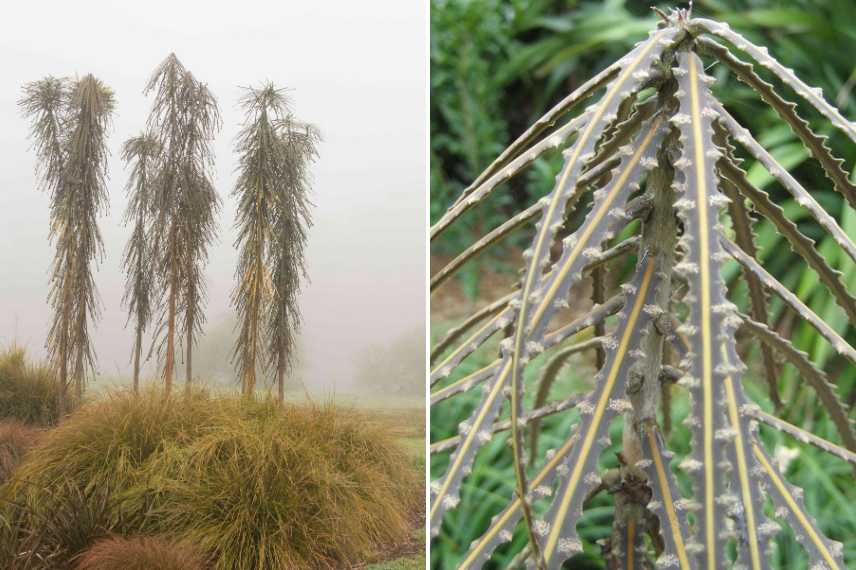
Pseudopanax ferox
Issu de la même famille que l’Angélique en arbre (les Araliacées), le Pseudopanax ferox, également appelé « lancewood » en anglais, est un bush pour le moins insolite ! Endemic to New Zealand, this pure botanical curiosity will appeal to lovers of exotic, spiky plants! It forms a small tree up to 8 m tall with a stark, almost fossil-like silhouette that makes it appear as a nearly fossil plant. It assumes a very distinctive morphology: the most interesting aspect of the Pseudopanax ferox lies in its evolving foliage. Its juvenile leaves are narrow, brownish-grey, and toothed on both margins like serrated blades, almost 50 cm long and drooping, while the adult leaves lose their dentate character and become smoother year by year. The older the tree gets, the more it sheds at the base, and it develops a curious tuft at the crown of the trunk composed of dark-green pointed leaves. The change of foliage with age offers unusual visual interest.
Very frost-tender (-7°C), it requires a sheltered exposure from cold, dry winds, in mild climates and can be grown in a pot to be stored indoors in winter in harsher regions. It grows in non-calcareous, humus-bearing, well-drained soil and will surprise when planted in a large exotic bed in partial shade, or in morning sun.
Contorted lemon tree 'Flying Dragon'
A tormented appearance and sharp, menacing thorns, the Poncirus trifoliata ‘Flying Dragon’ is a thorny citrus variety that has everything to please! Cold-hardy, as it tolerates frosts down to around -15°C, it is arguably the only citrus able to find a place in almost all our gardens in France. But that isn’t its only asset! It features twisted branches punctuated by thorns, making it as graphic as it is sculptural in the garden. Reaching up to 2m in height, it will be perfect within a shrub border. It is also remarkable in spring, when trifoliate foliage covers its undulated twigs and a white diffuse flowering releases a heady fragrance. This citrus tree also bears small yellow fruits, although these are too bitter to be eaten. Their bark, however, can be cooked. Cold weather turns the foliage yellow and red, enhancing its visual appeal in autumn. A sunny exposure and well-drained lime-free soil will suffice for its growth.
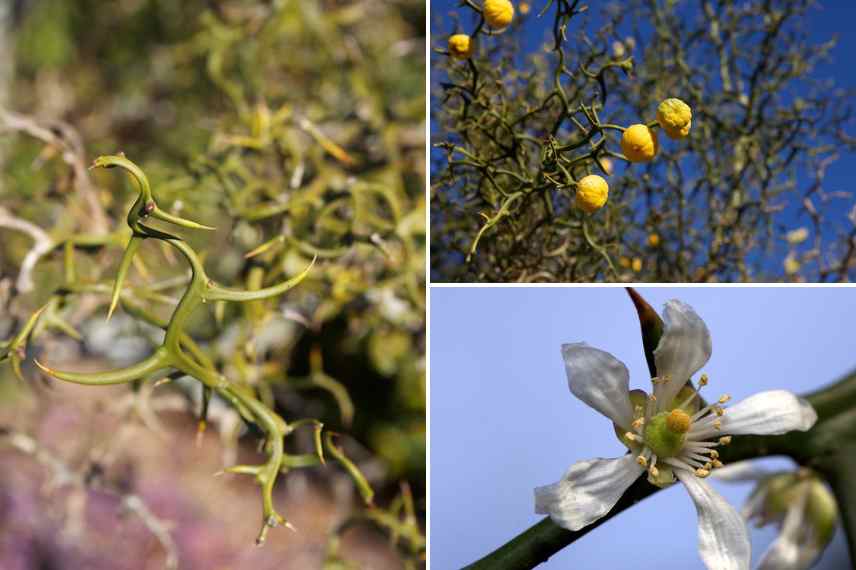
Poncirus trifoliata ‘Flying Dragon’ : branches and fruits (©Malcom Manners), flowering (© jalexartis Photography)
- Subscribe!
- Contents
Comments