





























Growing a photinia in a pot
Planting and maintenance tips
Contents
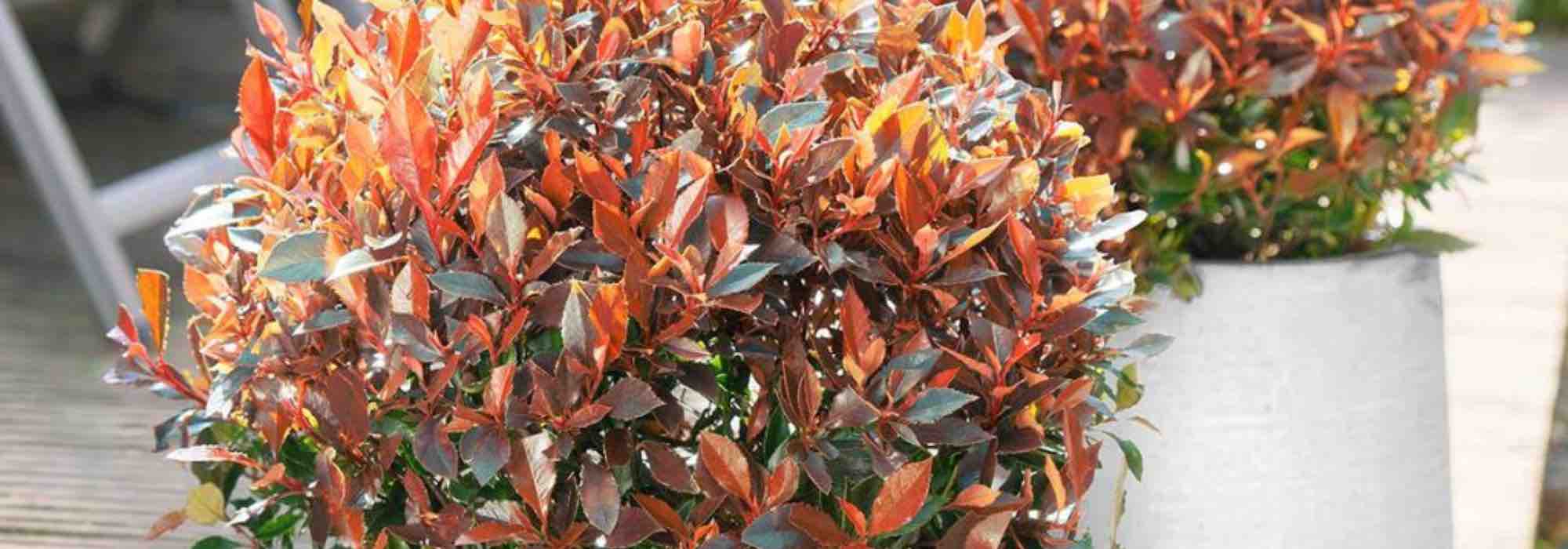
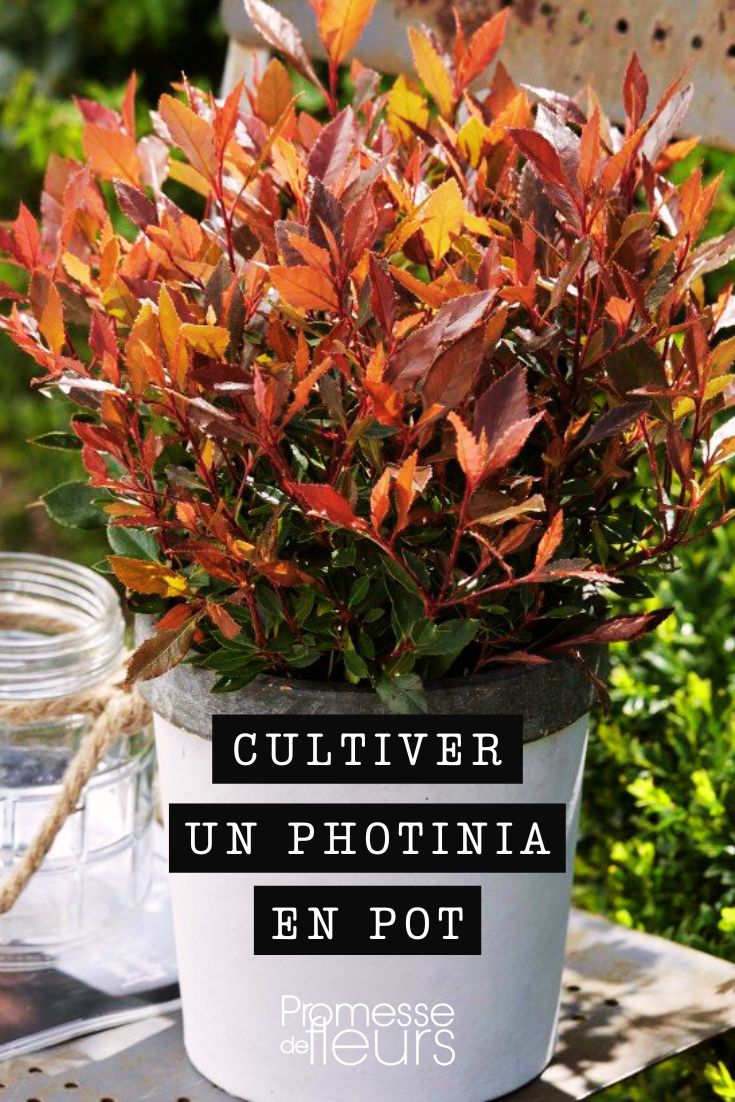
Attractive with its evergreen and decorative foliage, Photinia is commonly used in hedges, but it can also be grown in pots for more compact varieties. Its ovate and elongated leaves take variegated, red or pink tones depending on the season and the varieties. Its flowering takes the form of umbels, reminiscent of hawthorn flowers and cream-coloured in spring. In August and September it bears small red or blue-black berries that birds feast on. It has a rounded, dense habit that is quite graceful. Very easy to grow, it can be planted in full sun or semi-shade. Discover our tips for growing Photinia in pots and enjoying the beautiful colours of its foliage all year round.

Which Photinia should you grow in pots?
For pot cultivation, select compact or dwarf Photinias such as:
- the Photinia ‘Little Red Robin’: It is a dwarf variety of Photinia fraseri ‘Red Robin’ that reaches a height of 1 metre at maturity, perfect for pot culture. It has a rounded habit and evergreen, decorative foliage with new shoots in bright red in spring and green leaves in summer. It bears cream-coloured umbels of flowers in spring.
- the Photinia fraseri ‘Louise’ : more unusual still, this Photinia produces red shoots edged with pink, which become green leaves variegated with cream in summer. It grows to 1.75 metres tall at maturity.
- the Photinia serratifolia ‘Pink Crispy’ : a recent and striking cultivar, with very dentate foliage, variegated with light green and dark green on a cream background. In spring, its new shoots also display vivid pink. It grows to a height of 1.75 metres.
- the Photinia x fraseri ‘Nana’ : with a height of 1.50 metres at maturity, this small Photinia has slow growth, ideal for pot cultivation. It bears new shoots a bright red, which contrast with the dark, glossy green adult leaves. Its flowering produces cream-coloured umbels.
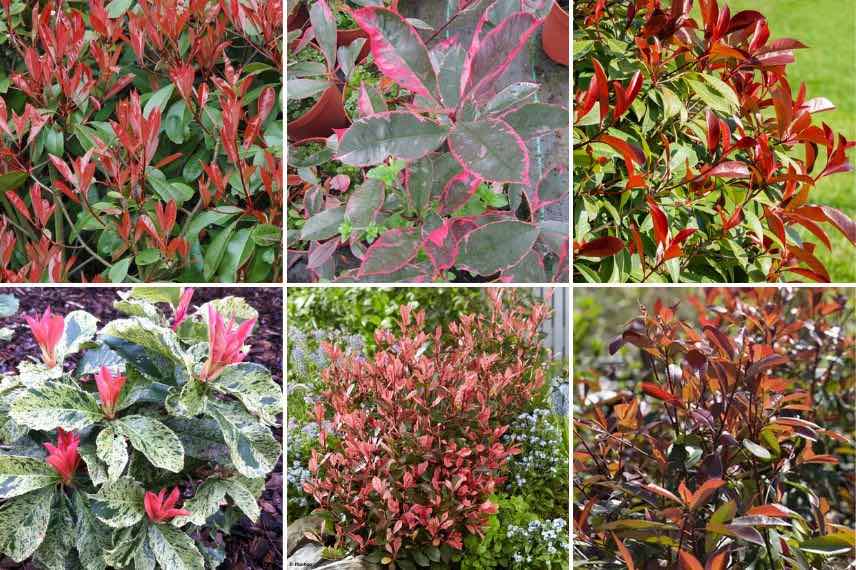
Photinia ‘Little Red Robin’, ‘Louise’, ‘Nana’, ‘Red Ballcoon’, ‘Little Fenna’, Photinia serratifolia ‘Pink Crispy’
Read also
Photinia: planting, pruning and careWhen and where should you plant a Photinia in a pot?
- The best time to plant a Photinia in a pot is autumn or spring. Planting can take place from October to March or April, avoiding frosts, drought and the bush’s flowering period.
- Photinia appreciates a sunny exposure or partial shade, but a sunny location helps produce well-coloured young shoots. Plant Photinia preferably sheltered from cold, dry winds.
- In terms of soil, the Photinia fraseri prefers a light, humus-bearing, well-drained substrate, acidic, neutral or slightly calcareous. The Photinia serratifolia tolerates drought less well than its congener, but accepts waterlogged and calcareous soil.
How to grow Photinia in a pot?
What type of pot?
You can plant Photinia in any type of pot: in soil, in wood, or in plastic. All pot types are suitable, but those made of soil promote better aeration around the roots.
What substrate?
Photinia appreciates well-drained, light and humus-bearing soil. The substrate can be acidic, neutral or slightly calcareous.
Planting
- Moisten the Photinia’s root ball
- Take a large pot 30–60 cm in diameter with a drainage hole at the bottom
- Place at the bottom a 3–4 cm thick layer of clay pebbles or gravel to ensure good drainage
- Fill the pot with a mix of one third soil, one third compost and one third sand
- Place the shrub in the middle of the pot and fill the pot with the remaining mix taking care not to bury the Photinia’s collar (the junction between the roots and the trunk)
- Gently firm the soil to expel any air pockets
- You can mulch the base to keep the substrate cool
- Water the base thoroughly at the base.
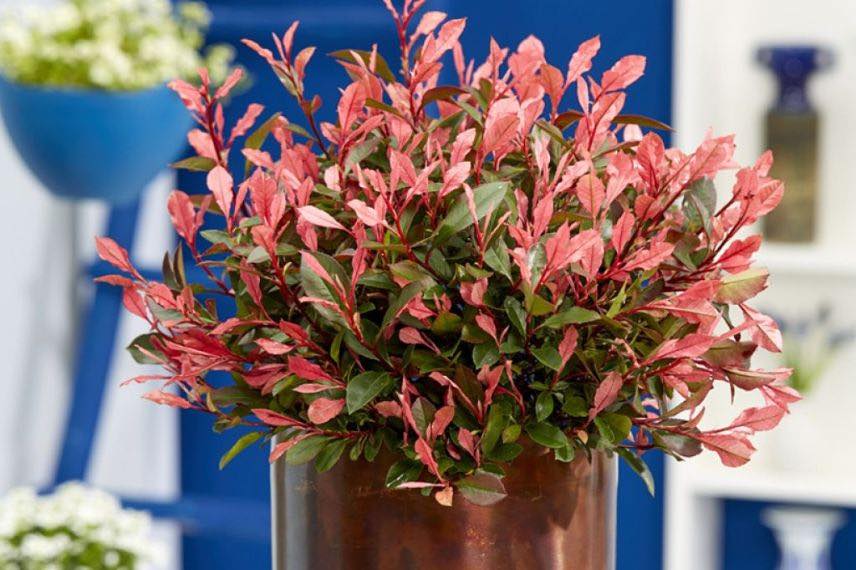
Photinia fraseri ‘Little Fenna’ in a copper pot, nicely coordinated with its pink young leaves
Read also
Diseases and parasitic pests of PhotiniaCare
Watering
Water Photinia in pots regularly to keep substrate fresh. During fine weather, expect about one watering per week on average.
Fertilising
You can fertilise or use compost in spring to make the foliage glossier.
Pruning
- Photinia responds well to pruning, and pruning promotes branching and the appearance of coloured new shoots.
- Annual pruning in August helps maintain a compact habit.
- Photinia can also be pruned into a topiary, ball or cone.
Diseases
- Photinia is a bush that is very hardy. The species Photinia serratifolia is reputed to be more resistant to diseases than the species Photinia fraseri.
- Photinia can sometimes be susceptible to powdery mildew, a white deposit that appears on the leaves and can be eliminated with a sulfur-based treatment. Find out how to treat powdery mildew in our dedicated article.
- Red or brown spots can also appear on Photinia leaves. This leaf-spot disease does not threaten the life of the plant, but it spoils its appearance. To treat this, remove all affected leaves and apply a copper-based treatment to the foliage in May and the following month.
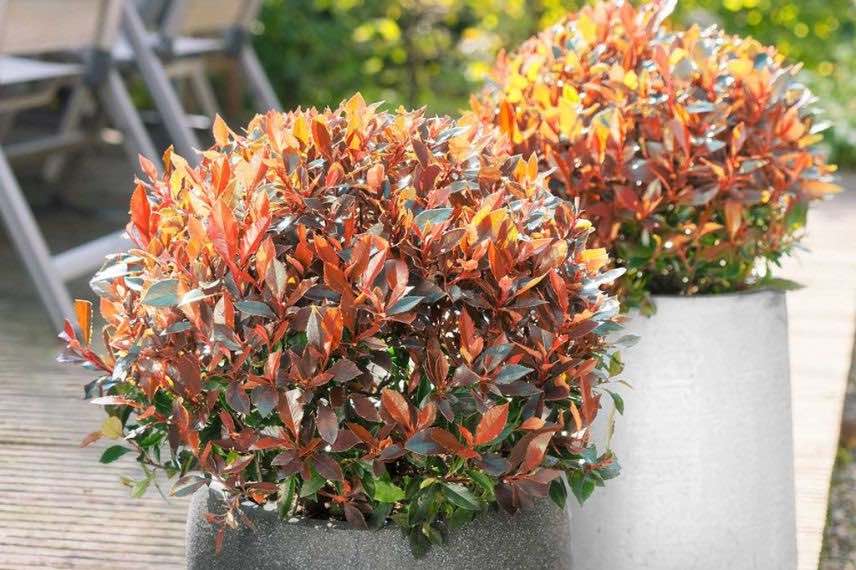
Two pretty pots of Photinia fraseri ‘Red Ballcoon’, a dwarf variety about 50 cm across in all directions at maturity
- Subscribe!
- Contents
Comments