





























Growing Stipa in a pot
to liven up your terrace or balcony
Contents
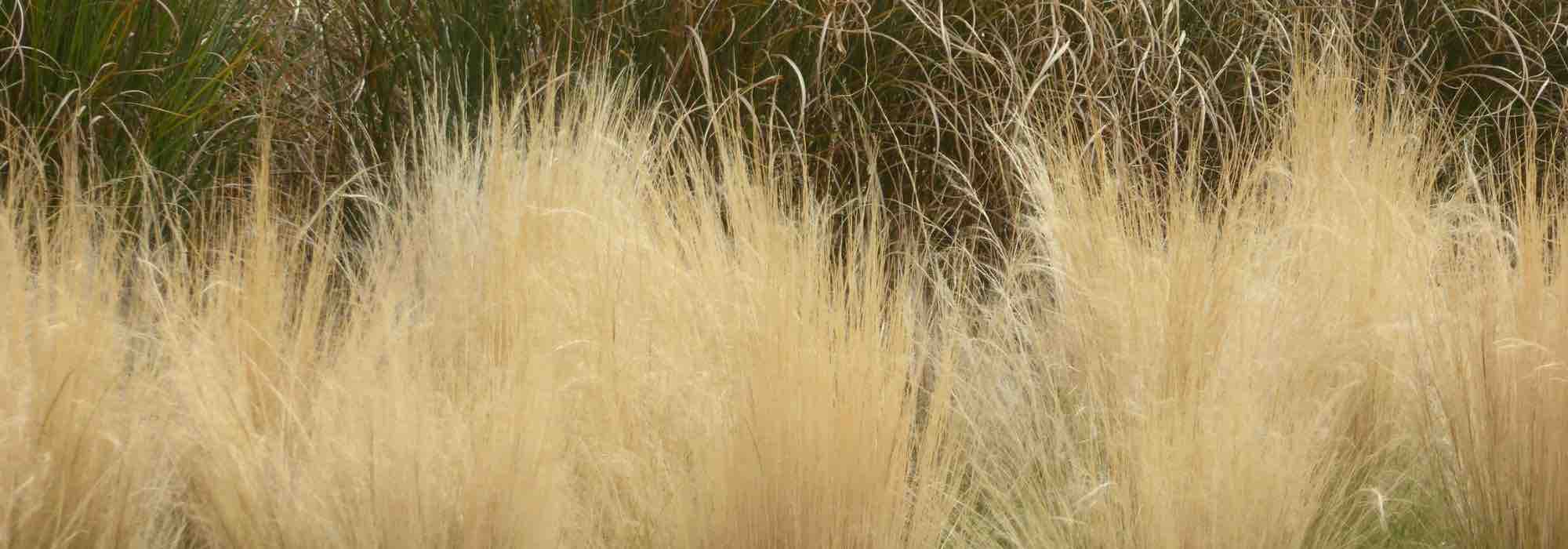
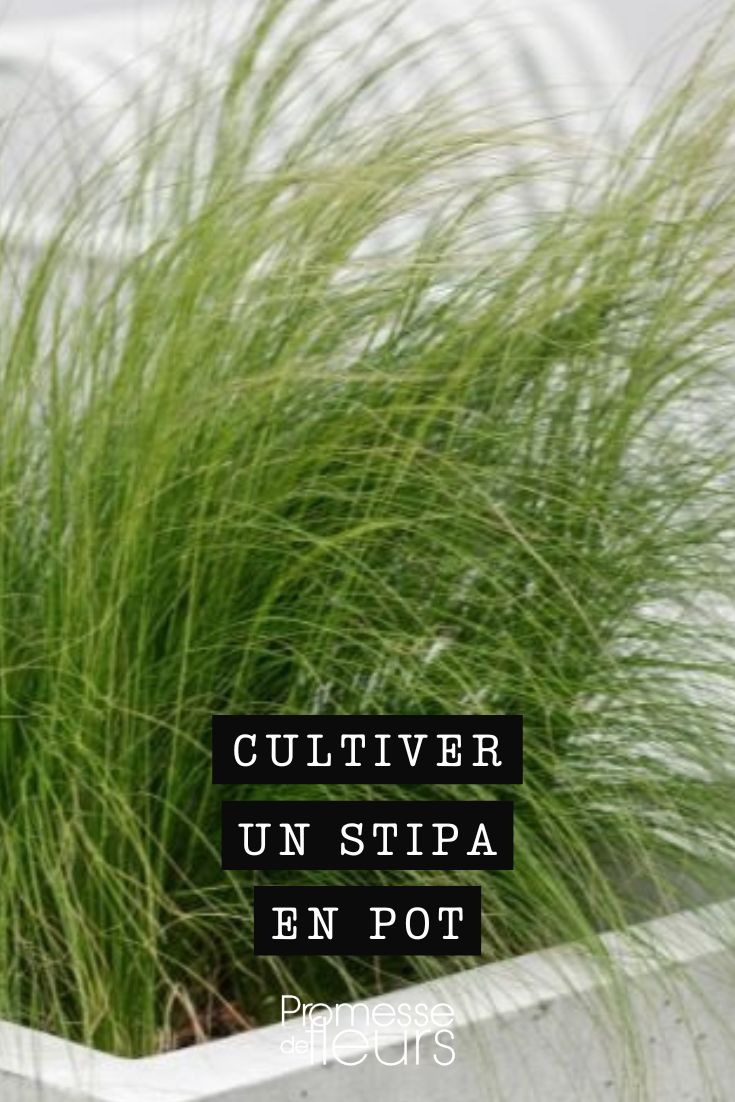
Stipa, or feather grass is an ornamental grass with fine tufts of soft leaves and silky spikes, swaying gracefully in the slightest breeze. Appreciated for its natural elegance and hardiness, it is ideal for growing in pots, making it a perfect choice for balconies, terraces, and even small urban gardens. Stipa adds a touch of lightness and movement to your plant displays, while being easy to maintain. Cultivate it in pots as well if your soil is too heavy for in-ground planting, for instance. This guide provides all the steps for successful cultivation of Stipa in pots, from selecting the container and substrate to regular maintenance, including watering and nutrient supply.

Which varieties or species should I choose?
All Stipa grasses are suitable for container planting, but they do not all come in the same sizes, so choose them carefully according to the effect you wish to achieve. Stipa generally reach between 30 and 60 cm across at maturity, with heights varying from 40 cm to almost 2 m tall.
You can group several young plants of the same variety in a large pot.
What type of pot? What size?
Pot material
Pot material affects water retention, root aeration and plant stability.
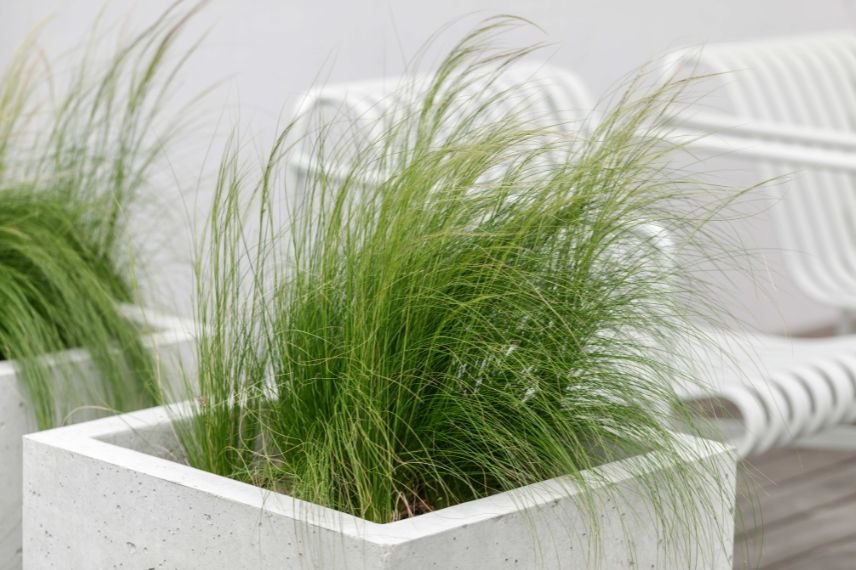
Terracotta pots are the best choice for Stipa, as they allow good root aeration due to their natural porosity. This material effectively regulates soil moisture, which is particularly beneficial for a plant like Stipa, which prefers soil that is well-drained and dry between waterings. Terracotta pots are heavier, which helps stabilise Stipa, especially in windy conditions, but they require more frequent watering, particularly in summer.
Plastic or resin pots are lighter and retain moisture better, which can be useful if you cannot water regularly. These materials are also more affordable and available in a wide range of styles and colours. However, they provide less root aeration, which can sometimes lead to a risk of overwatering if drainage isn’t sufficient. Make sure the pot is of good quality, UV resistant to avoid deterioration under sunlight.
Pot size
This depends on the type of Stipa you choose, but clumps grow fairly quickly, so don’t go too small. Don’t start with a pot less than 20–30 cm in diameter. You will then move to a pot with a diameter and depth of at least 30–40 cm. This size provides enough space for Stipa roots to develop freely, which is essential for vigorous growth.
Which substrate to choose?
This ornamental grass appreciates a well-drained and relatively poor growing medium that imitates the natural conditions of its habitat. A good growing medium helps ensure healthy growth while avoiding problems associated with excessive moisture.
A high-quality universal potting mix is a suitable base, but it is recommended to amend it to improve drainage. A potting mix that is too rich or too compact may tend to retain moisture, which is unfavourable for this grass that prefers drier conditions.
A mix formed of two-thirds potting mix and one third sand is ideal. This mix helps to ensure good drainage, preventing water from pooling around the roots. The sand also helps to create a well-aerated structure that allows the roots to develop without restriction.
If you’re looking for a ready-to-use solution, the cactus potting mix or succulents can be a good alternative.
This type of growing medium is specifically designed to be very well-draining, which suits the needs of Stipa.
Finally, if you have garden soil, use it provided it is not too compact or heavy, and is clayey, and improve drainage.
Avant de remplir le pot avec le substrat, il est essentiel de prévoir une couche de drainage au fond du pot. Utilisez des billes d’argile expansée, du gravier ou des tessons de poterie cassée pour former une couche de 3–5 cm d’épaisseur. Cette couche assure que l’excès d’eau puisse s’écouler rapidement, protégeant ainsi les racines du Stipa de l’humidité excessive.
How to plant a Stipa in a pot?
Stipa planting takes place between March and June in cold, wet regions. In a warm, dry climate, plant between October and November to allow it to establish well before the arrival of summer. In all cases, plant when frosts are no longer a threat.
For planting, proceed as follows:
- Remove the root ball from its nursery pot and, if necessary, tease out the roots.
- Immerse it in a basin of water while you prepare your pot.
- Pour a drainage layer of a few centimetres at the bottom of the pot in the form of clay balls, gravel or pozzolana.
- In a separate bowl, mix the different elements of the substrate.
- Pour substrate to cover about one third of the pot.
- Position the root ball of your Stipa.
- Complete with substrate, gently and evenly firming.
- Fill to within a few centimetres of the rim, and press down again.
- Water thoroughly.
- When the water has been absorbed, add a little more substrate if necessary to fill any voids.
What sun exposure should you plant your Stipa in?
Full sun! Given its drought tolerance and ability to cope with tough conditions, give it the sunny exposure it prefers. If your site faces southeast or southwest, with a little more shade planned, it will also grow well.
Stipa tolerates drying winds and sea spray. The only limit here is that the pot should not be toppled by a gust of wind for tall tufted varieties. Take precautions to shelter it if necessary.
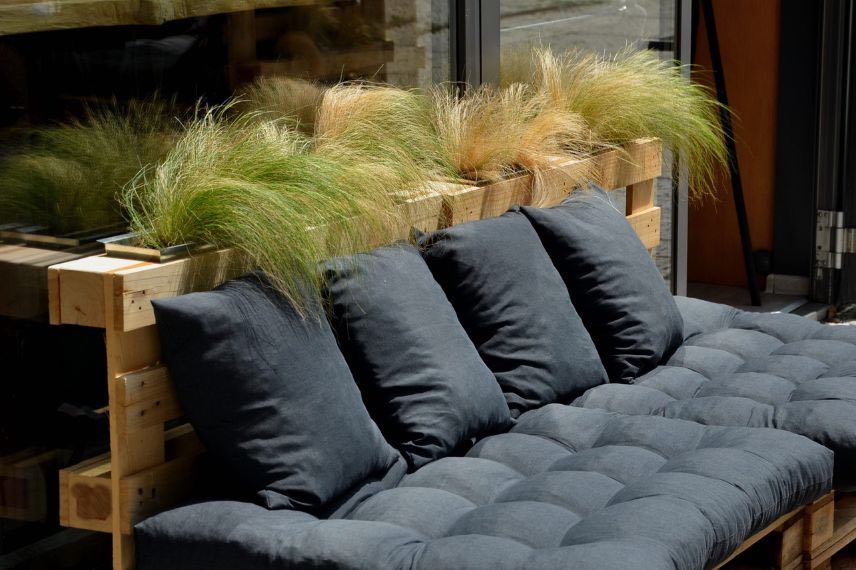
Tufts of Stipa tenuifolia in a window box, in full sun
Watering and fertilisers
Let’s start straight away with the exception: the Stipa gigantea, which appreciates slightly cool soil to display its lush growth. So, plan to water it regularly.
Stipa are fairly drought-tolerant, but a potted plant is not self-sufficient like a plant grown in the ground.
Watering frequency
Stipa tolerates excess moisture poorly. It is therefore important to tailor watering to the weather conditions and the season.
During the hot season, potted Stipa should be watered about one to two times per week depending on the heat. Do not let the potting mix dry out, as it is very difficult to rehydrate afterwards. During periods of intense heat, regularly check the moisture of the potting mix by inserting a finger into the soil, and adjust the watering accordingly.
During the intermediate seasons, Stipa’s water needs decrease. Watering every two weeks may be sufficient, especially if temperatures are moderate. It is advisable to reduce watering gradually as winter approaches.
During the winter period, Stipa goes into vegetative rest and requires very little water. A light watering once a month is often sufficient. It is important to ensure that water does not stagnate in the pot, as this could freeze and damage the roots.
Fertiliser
Just provide compost and/or organic fertiliser in spring, when growth restarts.
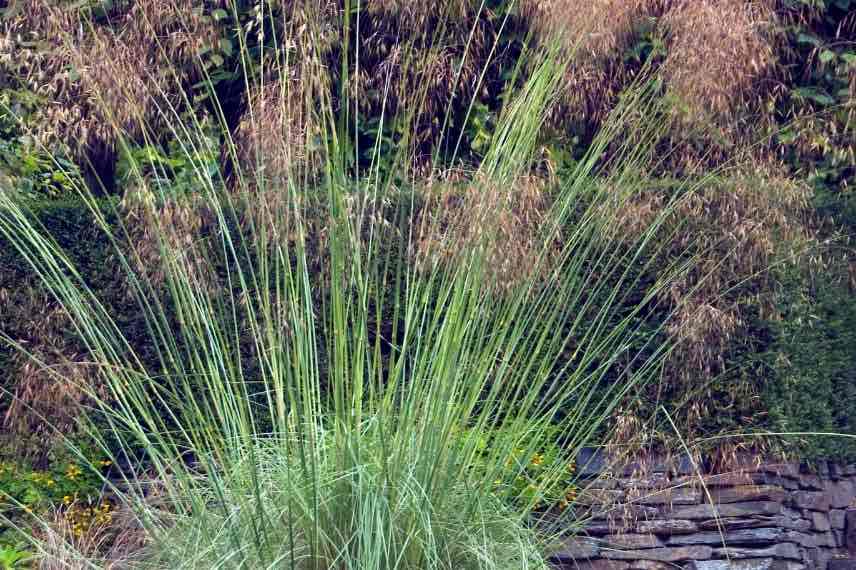
Stipa gigantea forms a tuft that is particularly large at flowering. It prefers slightly cool soil
How to care for a Stipa in a pot?
Stipa is an easy-to-care-for plant, but to keep its decorative appearance and stay healthy, there are a few maintenance tasks to undertake.
Stipa grasses do not die back until growth resumes in spring, as with some grasses such as miscanthus, for example. Their foliage is evergreen, and they are simply trimmed at the end of winter or in early spring to remove dead leaves, which weigh them down and to stimulate the growth of new foliage.
With gloves, run your fingers through the clump of foliage to remove dead leaves. You can also use a rake.
Repotting
A potted Stipa may need to be repotted every two to three years, depending on its growth.
Repotting is preferably carried out in spring, when the plant comes out of its dormancy. Repotting refreshes the substrate and gives more space to the roots, thereby promoting better growth.
Choose a pot slightly larger than the previous one and prepare a new substrate similar to that used initially.
Division
If your Stipa becomes too large for its pot, you can divide it in spring. This operation involves splitting the clump into several sections with a sharp knife. Each section can be replanted in a new pot, allowing you to multiply your Stipa plants.
- Subscribe!
- Contents
Comments