





























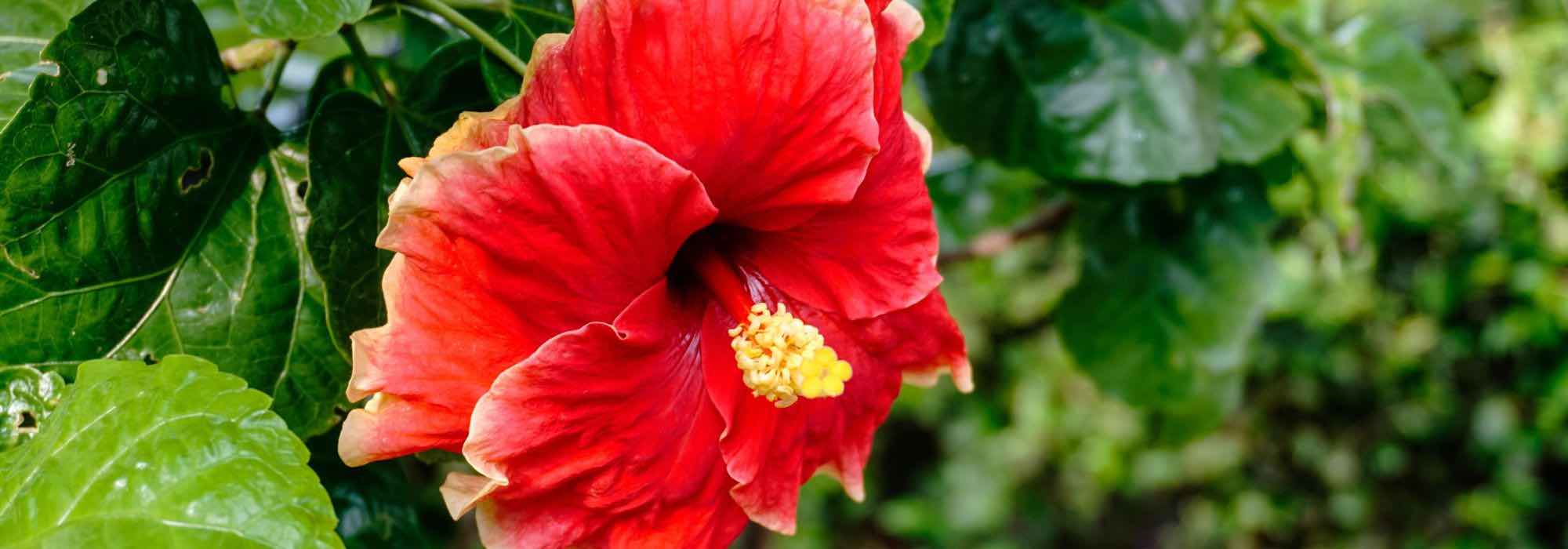
Growing indoor hibiscus
Our guide to growing this green flowering plant successfully
Contents
The Hibiscus rosa-sinensis, commonly known as the Chinese rose, is an indoor plant prized for its large colourful flowers and lush foliage. Of tropical origin, probably from Southeast Asia, although this has not been formally established, This stunning plant can be grown indoors quite easily. Hibiscus flowers, with their vivid colours and exotic shape, are a sight to behold. They can vary in colour, from deep red to bright yellow and vibrant orange, to vivid pink and white, offering a colour palette to suit all tastes. Several cultivars offer double or semi-double flowers. Let’s explore in detail how to grow and care for indoor hibiscus, focusing on the necessary care and solutions to common problems.

Description
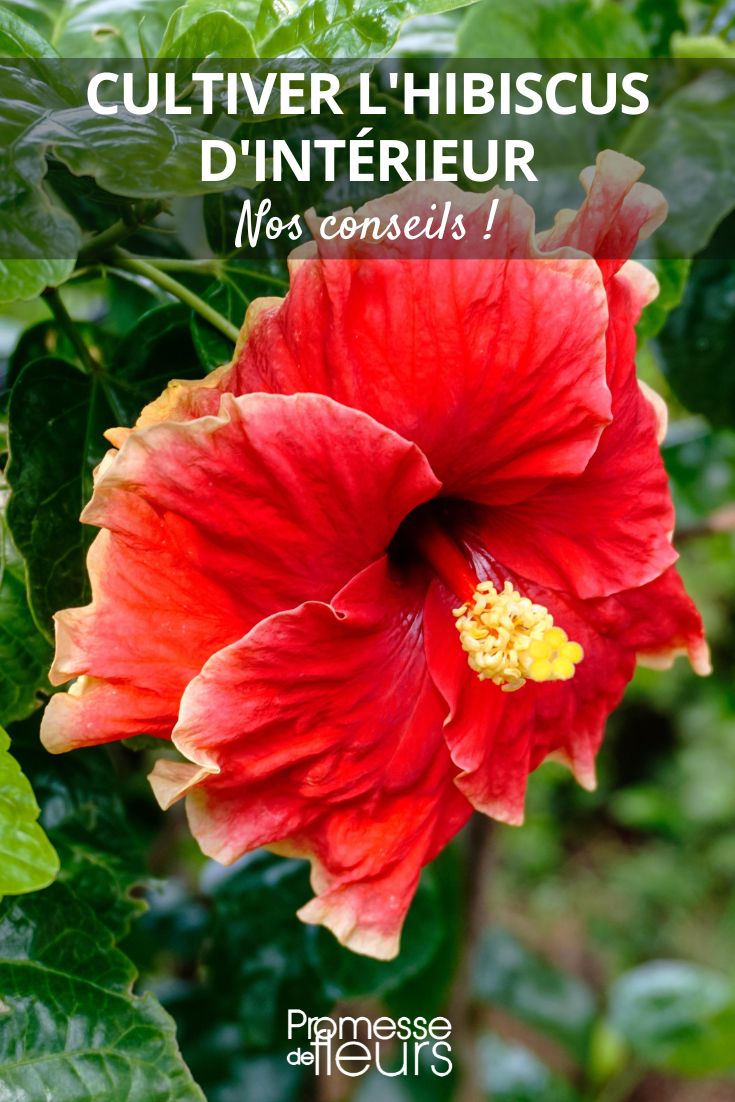
Hibiscus rosa-sinensis, or Chinese hibiscus, is a tropical plant famous for its spectacular flowers and glossy dark-green foliage, making it a popular houseplant. Its flowers are large, 4 to 10 cm in diameter, and colourful, often consisting of five petals. They open trumpet-shaped to reveal a contrasting heart, often darker in colour, and long red stamens protruding with yellow anthers. These hibiscus flowers typically last only a day or two, but the plant makes up for it with abundant and regular flowering, especially if well cared for. It flowers intermittently throughout the year, but more pronounced between June and October.
Its dense foliage is dark green, contrasting with the bright colours of its flowers. Its leaves are broad and glossy, adding to the plant’s aesthetic appeal. They are oval, broad, lanceolate, with dentate margins and measure between 7 and 15 cm. This forms a ramified shrub with a spreading habit, reaching up to 1.5 m in height. As a houseplant, Hibiscus rosa-sinensis is valued for its ability to adapt to a variety of indoor environments. Although it prefers bright and warm conditions, typical of its natural habitat, it can thrive in less ideal conditions, provided it receives the appropriate care.
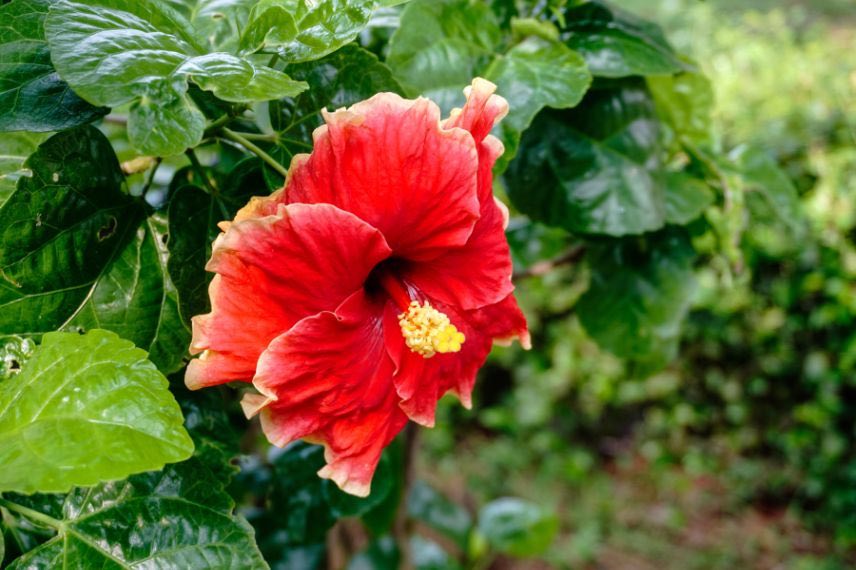
The most common form, with red flowers
Read also
How to repot a houseplant?Growing conditions
To help Hibiscus rosa-sinensis thrive, recreate its tropical natural environment as closely as possible.
Exposure
Hibiscus needs plenty of light to flower abundantly. Place it in a well-lit spot, without direct sun. A fairly large window facing north is ideal. If the window faces south-west or south-east, during the summer months, direct sun rays are likely to burn the leaves, so some shading or moving the plant away from the window may be necessary.
Ambient humidity
As a tropical plant, hibiscus appreciates high humidity. In dry indoor environments, especially in winter with heating, it can be beneficial to use a humidifier or mister to increase the humidity around the plant.
Temperatures
Hibiscus prefers warm, steady temperatures, ideally between 18 and 27°C. Avoid placing your plant in cold draughts or near direct heat sources, such as radiators, which can cause thermal stress. The plant, frost-sensitive, should not be placed at temperatures below 10°C.
Substrate
Good drainage is crucial for hibiscus. Use a lightweight, well-draining potting mix, ideally a blend designed for flowering indoor plants. Adequate drainage will prevent root rot, a common problem in substrates that are too compact or poorly drained.
Summer outdoor placement
In fine weather, you can move the plant outdoors, provided it has a sheltered, warm spot, partly shaded. The temperature should not drop below 15°C.
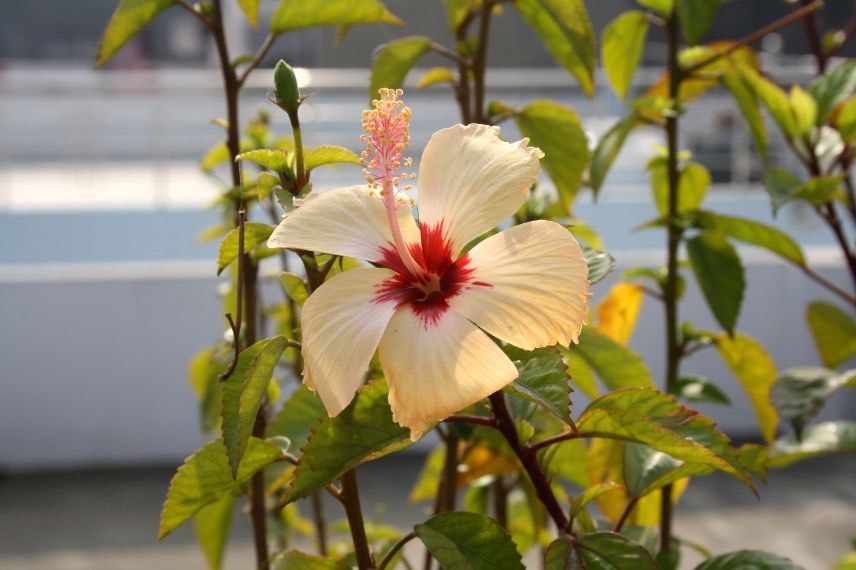
Take the China rose outdoors in good weather, above 15°C, in a sheltered warm location, in partial shade
Care
To ensure healthy growth and spectacular flowering of your indoor hibiscus, regular, attentive care is essential.
Watering
Hibiscus requires regular watering to keep the potting compost moist during the growth period, but it is crucial to avoid overwatering. Let potting compost dry slightly to a depth of a few centimetres between waterings in winter, when the plant is in dormancy. During active growth, from spring to autumn, water regularly to keep the potting compost consistently moist. Take care not to saturate it, or roots may rot.
Fertilisation
To support its abundant flowering, hibiscus needs regular fertilisation. Use a balanced fertiliser for flowering plants, applied according to the manufacturer’s instructions, typically every two weeks or monthly depending on the formulation, during the growing season. In winter, stop fertilising.
Repotting
Repot your hibiscus every two to three years in spring to provide adequate space for root growth and to refresh the potting compost. Choose a pot slightly larger than the previous one and ensure it has adequate drainage holes.
Pruning
Pruning is important to maintain its shape and encourage more abundant flowering. Prune the plant at the start of spring, before new growth begins. Remove dead or weak branches and prune vigorously to stimulate new shoots and flowers and maintain a compact habit.
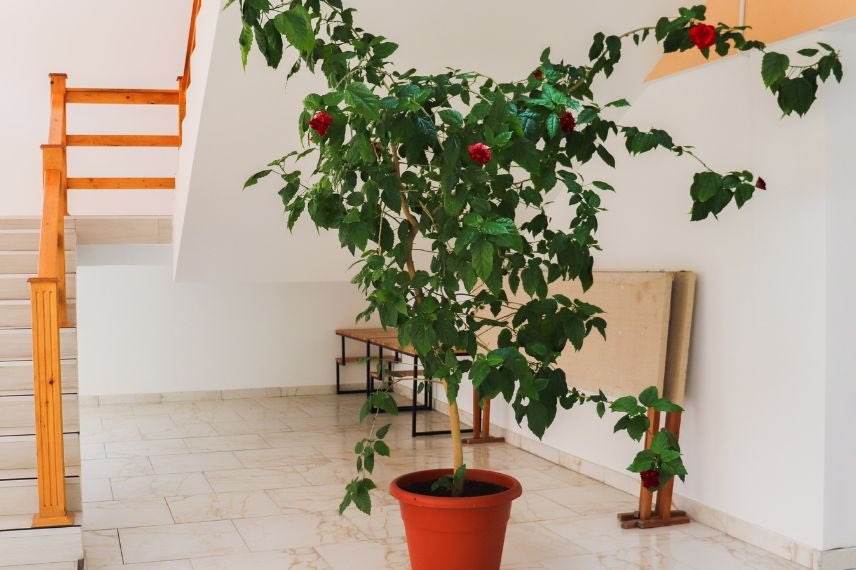
The plant forms a bush of good size, even in an indoor pot
Common problems
Flower bud drop
If the environment is too dry, flower buds may drop prematurely. Mist the plant with water daily. Maintain this balance, because conversely, if the leaves wilt, the plant is probably getting too much water.
Diseases
- Root rot: Often caused by overwatering, root rot is manifested by yellowing leaves and the plant wilting. To remedy, reduce watering and ensure the pot has good drainage. If the rot is advanced, repot into fresh potting mix may be necessary.
- Leaf spots: Brown or black spots on the leaves may indicate a fungal infection. Remove affected leaves and use a fungicidal product suitable for indoor plants.
Pests
- Aphids: These small insects can attack young shoots and buds. They leave behind a sticky residue called honeydew. Treat with insecticidal soap.
- Red spider mites: These tiny mites cause yellowing and leaf drop, usually in case of low ambient humidity or underwatering. Increasing humidity around the plant can help; mist the foliage and the potting mix.
- Mealybugs: also to watch for, they appear as small white masses.
→ Read our articles on treating aphids, des mealybugs et des red spider mites.
En prévention, regularly inspect your hibiscus for early signs of diseases or pests. Wipe the leaves with a cloth to remove dust and any pests.
- Subscribe!
- Contents
Comments