





























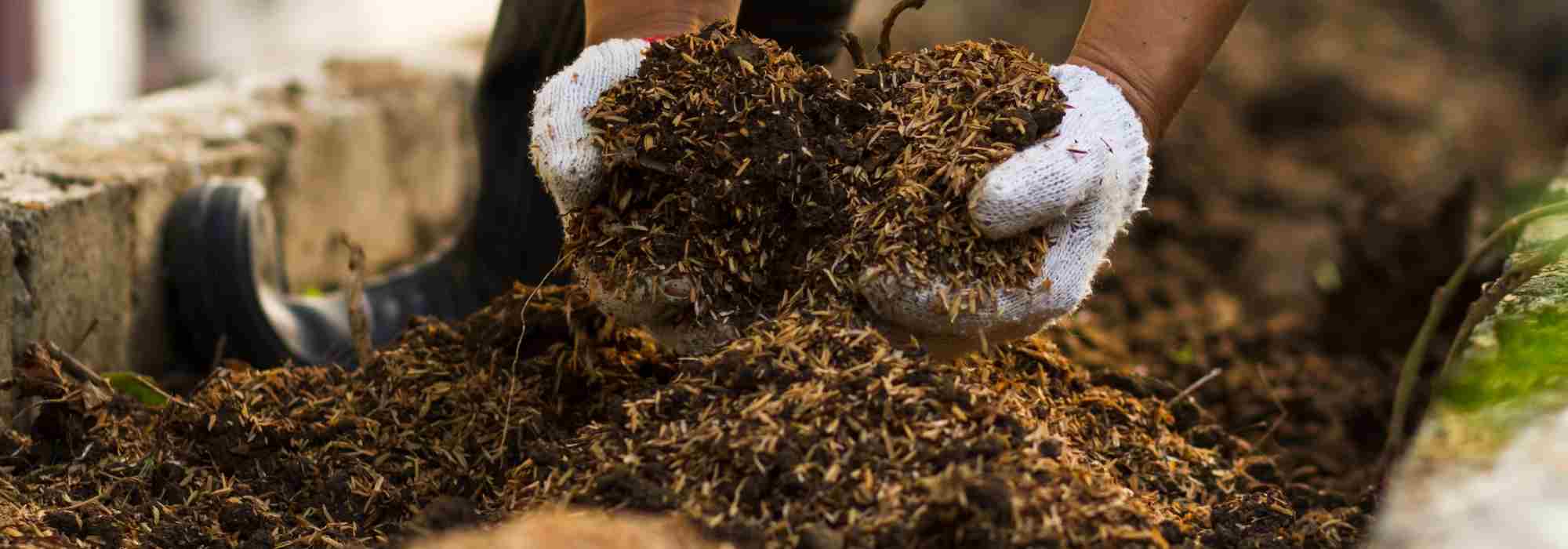
How do I know if my compost is ready?
Everything you need to know about compost ripeness to use it correctly in a vegetable garden
Contents
As a gardener, you know that humus is the key to fertility. Maintaining or even increasing the soil’s humus content is the primary objective of the gardener who wants to achieve great harvests or lush, flowering plants. Or, as a reminder, this humus can be obtained by transforming plant or animal waste into fertile organic matter, the compost. Where nature takes many years to carry out this decomposition and transformation of waste into humus, the compost heap takes only a few months to form. Indeed, the biological processes there are accelerated, thanks to the gardener’s input, but especially the microorganisms that live there.
Nevertheless, although this process lasts a few months, it’s not always easy to tell when the compost is truly ripe and usable.
Discover our various methods for determining when the compost has actually reached ripeness. And when it can be spread in the vegetable plot or at the base of trees, bushes and plants without any risk.

Compost: how does it work exactly?
In theory, making your own compost is fairly straightforward. In practice, composting may not be as easy as it seems. For composting is effectively reproducing, on the scale of a garden, what happens in nature, but in a considerably shorter time.
What is composting exactly?
Indeed, in a woodland, plant and animal waste accumulates naturally and, as the seasons pass, decomposes to form fertile humus. Of course, this slow decomposition of waste into a nutrient-rich organic matter relies on the action and work of thousands of microorganisms (worms, insects, bacteria, fungi…). Once mature, this humus releases nitrogen and carbon, essential for the growth of plants and soil life.
Making your own compost is a bit the same, but on a smaller scale and in less time. On a simple heap, in a bin, or a closed composting unit, plant-based waste (kitchen scraps such as peels, grass clippings, twigs, weeds…) or animal waste (manure and poultry droppings) are regularly added. Thanks to the activity of microorganisms and red earthworms, present in the soil, these materials decompose into compost rich in nutrients.
Keys to successful composting
To succeed, this decomposition process requires oxygen, a certain level of moisture, and a proper balance of waste, incorporated in successive layers. Indeed, you should deposit about one third of moist waste (peelings, grass clippings…), rich in nitrogen, and two thirds of dry waste (dead leaves, twigs, wood chips…), rich in carbon.
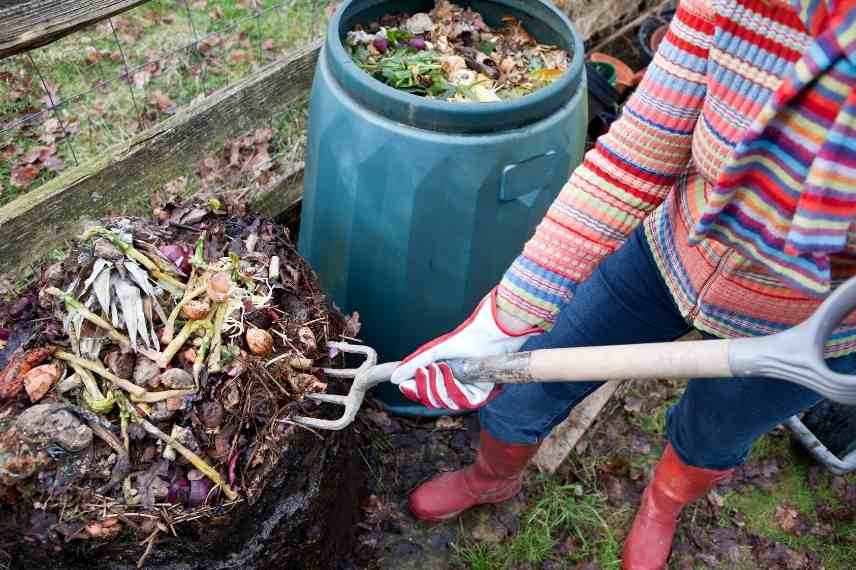
The compost needs to be aerated and moistened regularly, but not excessively
To be successful, compost must therefore heat up (to 50–60 °C at its core) then fall as the waste settles. To help this decomposition, it may be necessary to turn and moisten the heap.
Generally, after 8 to 10 months, the base of the compost should be mature, meaning all components are well decomposed. But this timeframe can extend to two years if the conditions of execution are not optimal. Thus, a compost bin that is too large, a lack of oxygen or moisture, significant temperature fluctuations, the nature of the organic waste… can increase the decomposition time.
But as soon as your compost is mature, simply harvest it to use by spreading in the vegetable patch, in flower beds or at the base of trees and shrubs.
But are you sure it is truly ready?
For further reading :
Read also
Organic waste: what can be composted?The dangers of immature compost
Using poorly decomposed compost can be very harmful to soil as well as to plants. Indeed, an immature compost is not rich enough in humus, and therefore in nutrients. And your crops will not be sufficiently nourished even though you think they will. Harvests may not live up to your expectations.
It can also upset the soil pH, which can have a significant impact on the development of the root system.
Finally, an immature compost may potentially contain pathogenic agents or parasites, normally destroyed by heat. Likewise, it may contain a few adventive seeds, which will end up in your soil and may germinate.
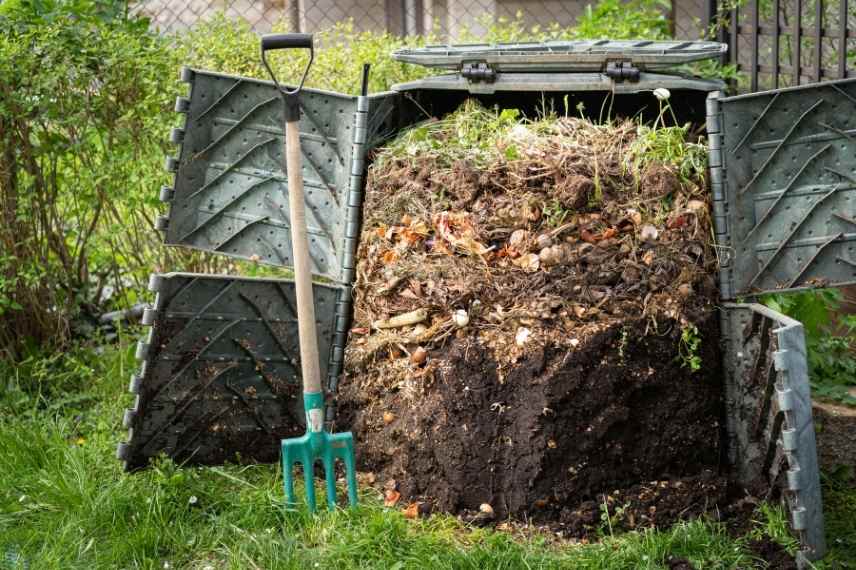
In this composter, you can clearly see that the base is more mature than the top
How can you tell if your compost is ready?
Mature compost is compost that has finished decomposing. It can therefore be used with complete confidence, without risk to plants. To tell whether it is truly mature, you should start by observing it, touching it and smelling it. Indeed, a few signs do not lie regarding the compost’s ripeness:
- Appearance and texture: A well-matured compost has a crumbly, uniform and homogeneous texture, fine and smooth. If you pick it up between your fingers, it crumbles and does not form lumps like potting compost would.
- Colour: A well-decomposed compost presents a dark hue, ranging from dark brown to black, similar to the humus found in woods.
- Smell: A mature compost gives off a pleasant odour of woodland, fresh earth and mushrooms. There should be no odour of ammonia (a sign there are too many green wastes) or damp odour (a sign that the wastes are fermenting due to a lack of oxygen).
- Appearance: In a mature compost, you can no longer distinguish the embedded components. Thus, vegetable peels, shredded branches, grass clippings… must be completely degraded.
- Temperature: A mature compost should be at room temperature, whereas during the decomposition phase it is still warm. When ripening is reached, the temperature falls and stabilises, signalling that the microorganisms have completed their work.
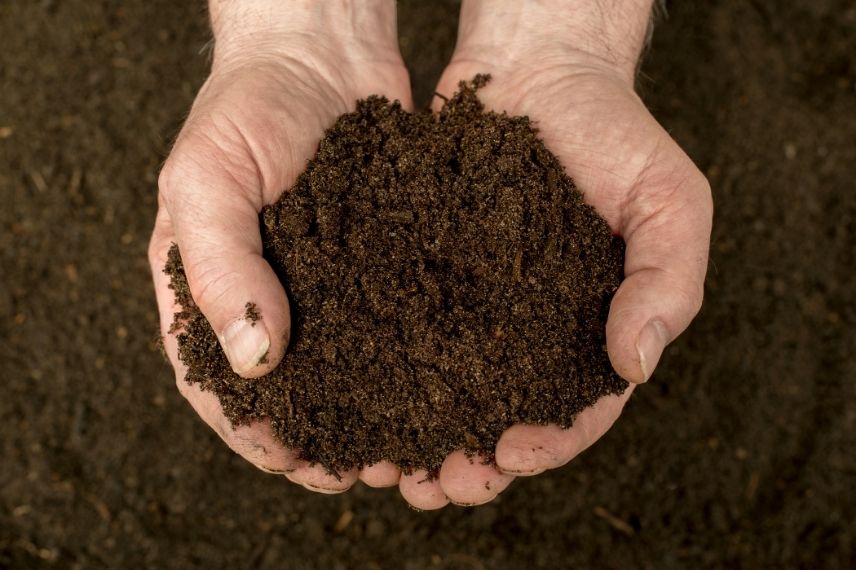
A mature compost is recognisable by its texture, odour, colour and temperature
Sometimes, when you observe your compost, you may notice that it is too dry. Simply moisten it a bit. Conversely, compost can sometimes be too wet. It looks soggy and gives off a strong odor. To fix this, just add carbon-rich materials (twigs, dead leaves, etc.) to restore balance. And most importantly, aerate your compost using a fork or acompost aerator.
Tests to confirm the ripeness of compost
If, despite careful observation, you are unable to determine the degree of ripening of your compost, it is possible to carry out a few fairly simple tests. Depending on the results, you will be reassured (or not) in your assessment. Some of these tests are very reliable, others more variable.
- The germination test : this test relies on the germination of easy-to-grow seeds such as the garden cress with broad leaves, the radish, and the lettuce. It is sufficient to sow seeds in a small amount of compost taken from the bin or heap, water regularly and observe germination. If the seeds germinate and the seedlings appear healthy, the compost is ready. If germination is slow and the seedlings are yellow or weak, the compost does not contain enough nutrients. To help your conclusions, you can prepare a control pot filled with seed compost to compare germination results. This test is relatively reliable.
- The plastic bag test : put a handful of compost in a sealed plastic bag that you place in the shade for a week. On reopening it, it should give off a pleasant odour.
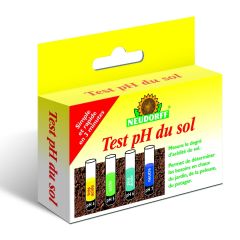
- The pH test : the pH of compost should be close to neutral, i.e. between 6 and 7.5. If it is not within this range, it may cause nutrient deficiencies or slow growth. To test the compost, simply use a soil pH testing kit.
- The sieving test : you can try passing the compost through a sieve to test its maturity. If most of the material passes through, that is a very good sign. Otherwise, leave it to mature a little longer.
- The worm test : if your compost has a pleasant texture and contains no worms or other decomposer insects, that’s proof that it is mature. However, if you still see worms, there’s a good chance it is not yet fully decomposed. Likewise, you can also try introducing a few of them to see if they settle and breed; if they do, it means there is material for them to stay. So your compost is not yet fully decomposed.
- Subscribe!
- Contents
Comments