





























How to create a conservatory orchard?
All our tips for creating an educational orchard
Contents
Creating an orchard is a great idea. Creating a conservation orchard is even better, as it encompasses concepts of preservation, transmission, learning, training, discovery, sharing, and passion. A conservation orchard, also known as an educational orchard, aims to preserve and protect a fruit heritage. This heritage consists of fruit tree varieties that are old, sometimes forgotten or lost, but always local. In short, for the “older generation,” creating a conservation orchard is about rediscovering the taste of those apples, pears, or plums, picked straight from the tree, and savoured with delight. It is also about introducing younger generations to flavours, techniques, and the preservation of the environment and biodiversity. For the younger ones, a conservation orchard is a place to learn, understand, discover, and develop their senses…
If the idea of creating a conservation orchard excites you, here are some tips and tricks

Un verger conservatoire est un espace dédié à la préservation et à la conservation de variétés anciennes de fruits. Il sert à protéger la biodiversité fruitière en cultivant des arbres fruitiers qui ne sont plus couramment cultivés dans les vergers commerciaux. Ces vergers jouent un rôle essentiel dans la recherche, l'éducation et la sensibilisation à l'importance de la diversité génétique des plantes fruitières. Ils peuvent également servir de ressources pour les jardiniers et les agriculteurs souhaitant redécouvrir des variétés oubliées.
As its name suggests, a conservatory orchard aims to preserve concepts related to a fruit heritage. It thus allows for the survival of fruit varieties that are representative of a territory and/or ancient to prevent them from falling into oblivion. However, a conservatory orchard can also include more recent varieties to maintain their characteristics.
A conservatory orchard can therefore be seen as a place of memory and preservation of a fruit genetic heritage, as well as biodiversity.
It can be built around a single fruit and catalogue an entire collection of ancient or modern fruit species. Many educational orchards are established around apples and pears in productive regions like Normandy, or vines in wine-growing areas… The conservatory orchard can also highlight the multiple species planted in a specific territory, representative of a region or terroir.
It allows for the planting of local species, but also for their study, description, and especially their propagation.
This is a way to counteract and divert a disease that may attack a species, to combat the natural genetic erosion of varieties, and to mitigate a drop in production due to a climatic event such as a storm.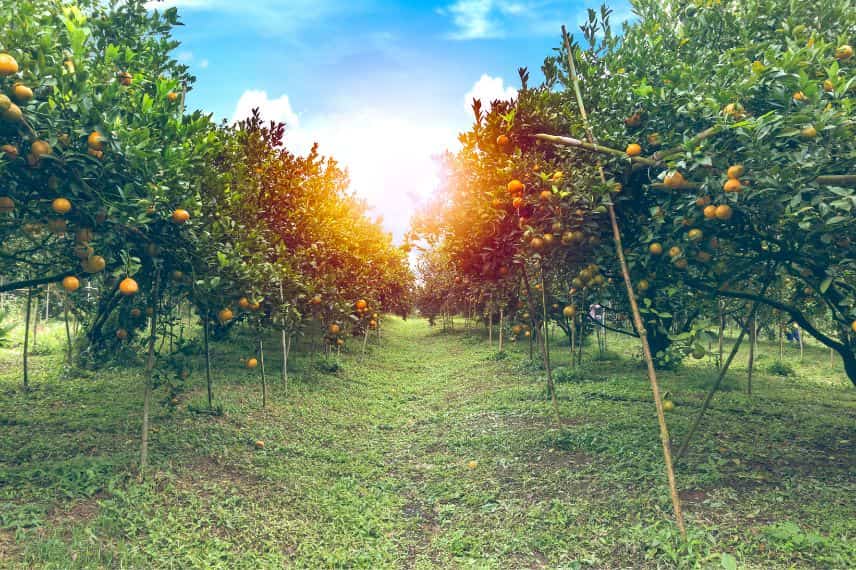
Beyond the various fruit tree varieties, a conservatory orchard helps to preserve local traditions, ancestral techniques, or know-how related to arboriculture and pomology. It is a way to perpetuate grafting techniques, the art of pruning a fruit tree, and to produce a typical beverage (like cider) using traditional methods…
Anyone can create a conservatory orchard as long as they have a sufficiently large area to accommodate fruit trees. Thus, a private gardener, a business, a school, a farmer, a municipality, or a local authority… can establish a conservatory orchard. However, an orchard will only be entitled to the designation of “conservatory orchard” if it hosts varieties that are inventoried and authenticated by an association or organisation.
A conservatory orchard is also about passing on knowledge.
One can obviously create a private conservation orchard. For many, maintaining fruit trees is a pleasure and a passion. However, making it public, even occasionally, allows one to share this passion.
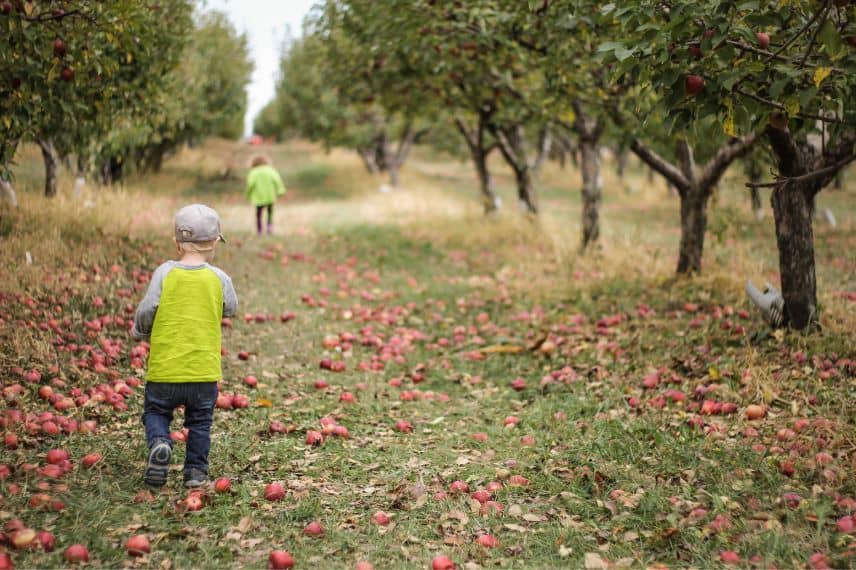
A conservation orchard can thus open to the general public through specific events or be completely accessible. It is therefore a place of transmission to share knowledge, a space for sharing and discovery for the uninitiated, where children (and adults!) can (re)discover the cycle of the seasons, the natural development phases of a fruit, the principle of pollination, the taste of good things…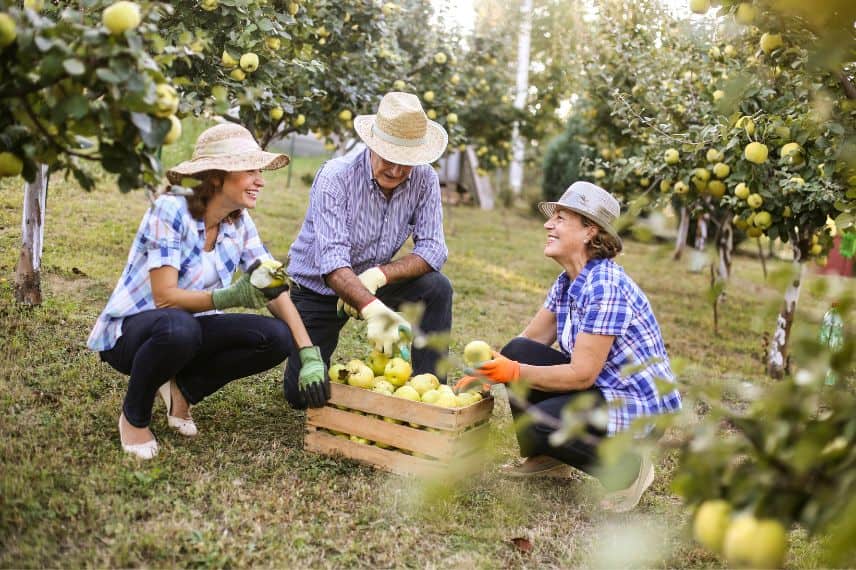
The conservation orchard is thus a learning space for all generations, a place for intergenerational exchange and training. Workshops, guided tours, planting, grafting, or pruning sessions can be organised there, sharing a passion.
Finally, a conservation orchard must be a place for the preservation of the environment and biodiversity.
Given all these dimensions, a conservation orchard can be challenging to manage, maintain, and sustain. This is why it is sometimes preferable to form an association to bring together a few enthusiasts and to seek support from recognised associations in the field, networks, or organisations such as Les croqueurs de pommes® or Fruits oubliés. This is to appeal to local authorities, which often have grants available to develop such projects.
Discover other Ancient and local varieties
View all →
Available in 1 sizes
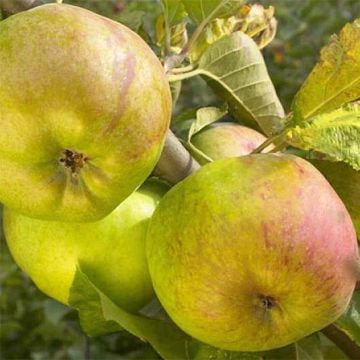
Available in 4 sizes
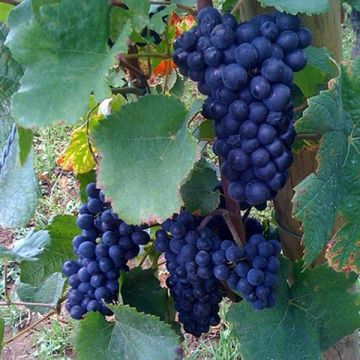
Available in 1 sizes
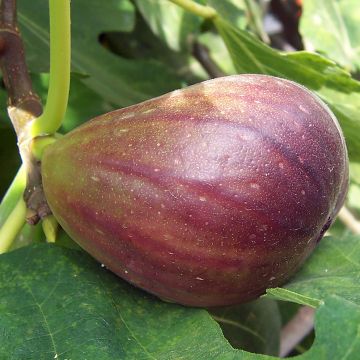
Available in 4 sizes
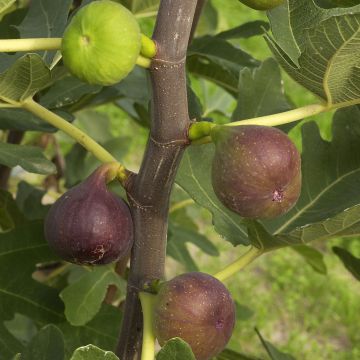
Available in 3 sizes
Available in 5 sizes
Available in 2 sizes
Available in 2 sizes
Available in 1 sizes
Available in 1 sizes
How to create your conservation orchard?
To establish a true conservation orchard, you will certainly need to adhere to a precise specification document, issued by a local authority (often the County Council) in conjunction with a recognised organisation. This specification generally includes the planting of a collection of varieties of fruit trees that were historically cultivated, characteristic of a specific terroir and landscapes. It often also involves local engagement and development.
Beyond this specification, establishing a conservation orchard requires:
- A sufficiently large plot governed by a title of ownership or a long-term lease to ensure the sustainability of the conservation orchard. No minimum area is required, but you will need to consider the shape of the fruit trees and consequently the planting distances between each tree. Thus, so-called “free” or “open” forms (standard and half-standard) require less maintenance but a lot of space, around 6 to 10 metres apart for each tree. In contrast, directed forms such as low-stem (spindle, pyramid, goblet) reduce planting distances but require regular pruning. As for espalier forms (mainly for apple and pear trees), they can be interesting for smaller plots surrounded by walls. In any case, a rigorous plan must be established.
- The chosen plot must have the necessary sunlight specific to each species of fruit tree and the appropriate soil type. This is why it may be beneficial to conduct a physico-chemical study and a soil profile, as well as a climatic study.
- The choice of plant material should be made from grafted shoots or suckers from perfectly healthy trees. Generally, a record of introduction must be maintained. Again, it is advisable to consult an association or organisation that has catalogued the recommended local varieties for a particular terroir. Once the orchard is established, each tree must be identified with a metal label.
To assist you in the creation of this conservation orchard, do not hesitate to reach out to local authorities who can provide financial support through grants or project calls, as well as logistical assistance and guidance.
Similarly, each region has passionate nurserymen who can advise you on the choice of varieties.
Read also
Pollination of fruit treesChoosing Fruit Trees
Apple trees, pear trees, cherry trees… The choice is yours depending on the terroir where you are located. To refine this choice, it may also be wise to ask yourself questions about the use you wish to make of the fruits. Do you want apples for juicing, cooking, or eating fresh? Do you prefer fruits with sweet, tangy, mild, or juicy flavours? Cherries for jam or for preserving? Do you want to store your fruits or eat them right away?
Also consider planting or grafting early, mid-late, or late varieties to stagger the harvests.
Mix in your conservatory orchard self-sterile varieties and self-fertile varieties, along with pollinator varieties.
However, the profitability of the trees is not a priority since the conservatory orchard is not primarily intended to be productive or to exploit the fruits. It is merely a “living memory.”
→ Discover our article: Choosing an old and local variety of fruit tree
A conservation orchard to preserve biodiversity
A orchard, whether conservatory or not, must primarily produce fruit. This is a fact, but it is not everything. A conservatory orchard is a tool for preserving biodiversity and the environment.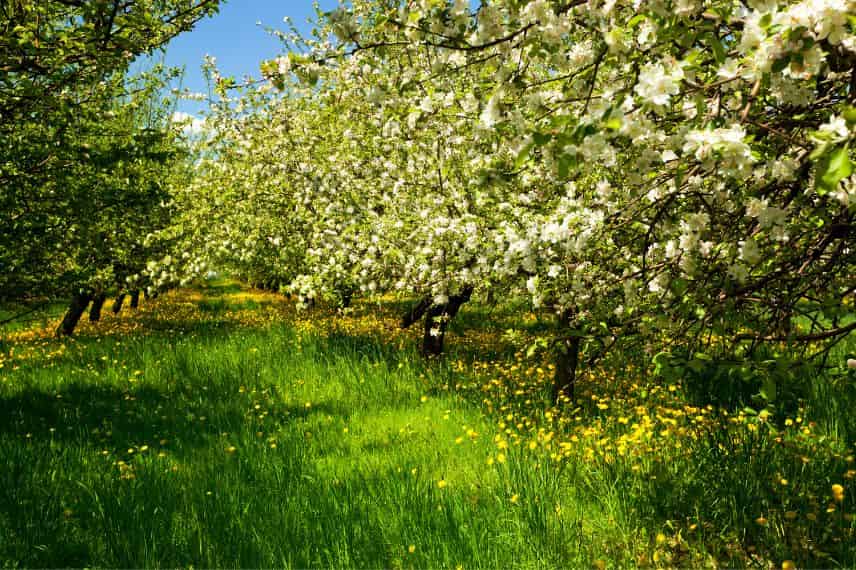
Logically, all plant protection products will be banned. This is why it will be essential to establish a biological balance between the different species in the territory, including plant, animal, and microscopic species. How?
- Introduce resource plant species (sowing of green manures or fallow and flowering meadows of melliferous plants, planting roses as relay plants, establishing fruit hedges) to attract foraging and pollinating insects or beneficial auxiliary insects in biological control
- Set up insect shelters, birdhouses, and bird feeders, as well as walls or piles of stones to provide habitat for insects, birds, and predatory mammals. You can also create a pond or a spiralled herb garden.
Inspiration ideas
Some conservation orchards across France:
- The conservation orchard of the Maison de la Figue in Vézénobres, Gard, offers over 100 varieties on a 2-hectare site.
- The Domaine des Terres Rouges near Caen features over 150 varieties of cider apples, 250 varieties of dessert apples, and a few varieties of pears.
- The Vegetal Conservatory of Aquitaine, located in Montesquiou, Lot-et-Garonne, showcases 1,800 varieties of all regional fruit species across 7 hectares.
- The conservation orchard of Villeneuve-d’Ascq in the Nord department (59) boasts over 1,700 varieties of apples, pears, plums, and cherries.
- The conservation orchard of Tours-sur-Meymont in Puy-de-Dôme features 470 high-stem trees representing 238 Auvergne varieties of apples and pears.
All departments or regions have conservation or educational orchards. Often, all it takes is to open the door, and you will always find enthusiasts.
- Subscribe!
- Contents
Comments