


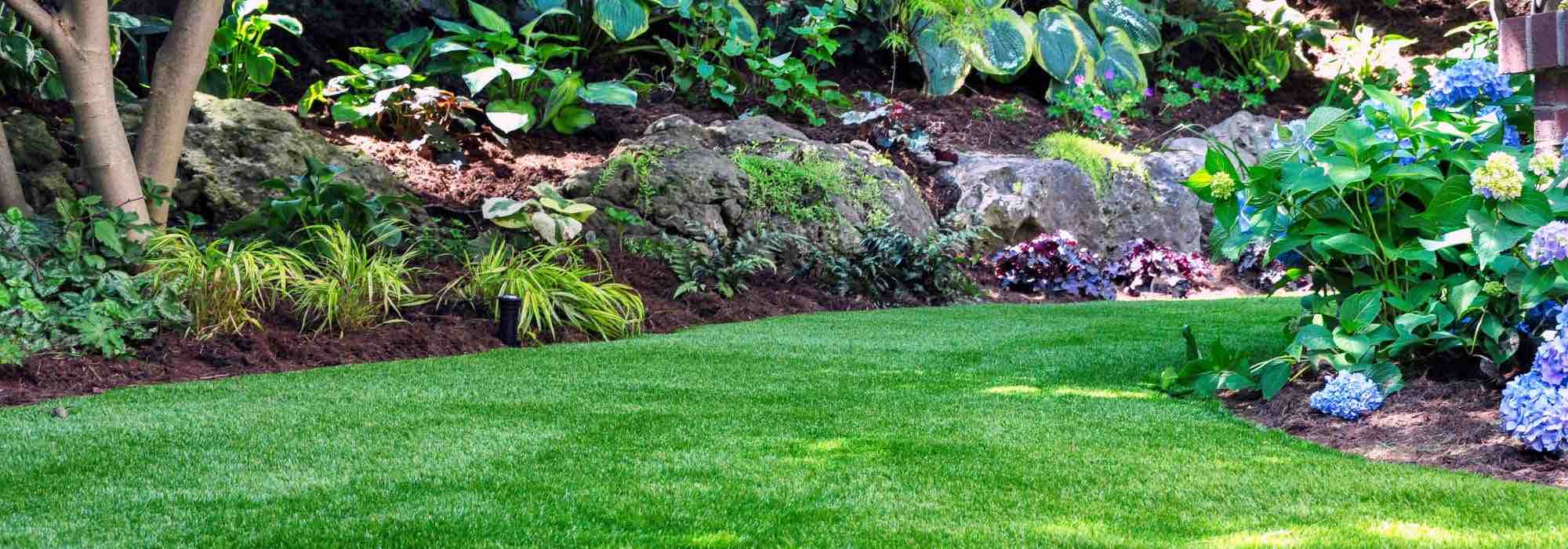
How to create a shade and cool corner in the garden?
Choosing the right plants and planning your layout to cope with heat
Contents
Our summers are becoming increasingly dry and hot. In these heatwave times, the need to enjoy shaded and refreshing places is growing. The good news is that sometimes all it takes is a few well-thought-out adjustments to create a real little oasis. In towns as in the countryside, anyone fortunate enough to have an outdoor space can make use of it in this way. This, on the one hand, helps us better cope with the rising temperatures we are increasingly facing, and, on the other hand, also provides a refugium for biodiversity.
Here are our tips for designing a true, cool and airy relaxation space where you can rest, unwind or entertain.
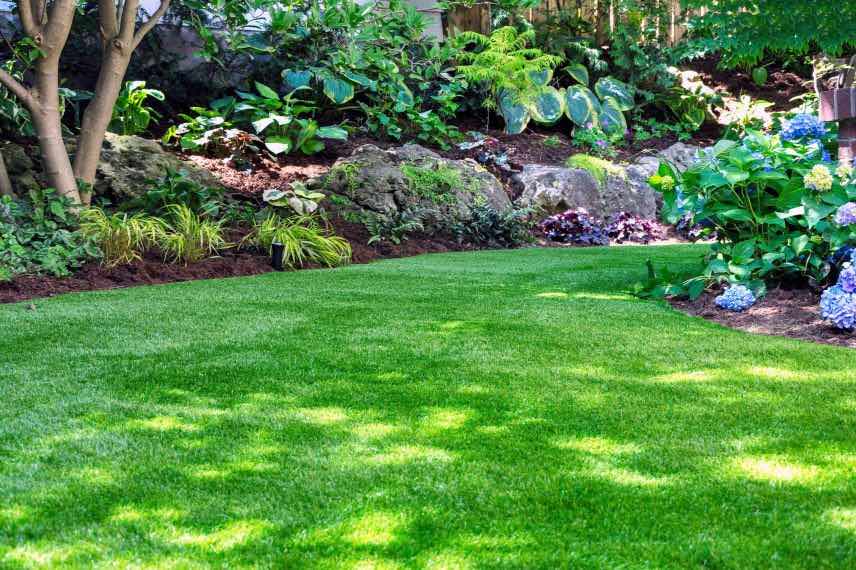
Objective: provide shade and coolness

Some preliminary observations and identifications
As usual, we recommend taking the time to observe a few things to design an outdoor space that remains cool for longer.
At the outset, observe the sun’s path throughout the day and determine which areas of your garden, terrace or balcony:
- receive light all day (south-facing).
- are partially shaded (receive 3 to 4 hours of sun per day).
- are in constant shade.
- are affected by reflections from walls or other structures.
Wind exposure will also help you choose the most suitable spot: windy areas are more prone to evaporation, so they stay cool for shorter periods.
Finally, it is important to understand the soil type and climate conditions even outside the summer months, so you can then choose suitable plants.
The ideal is to draw up a to-scale sketch to identify the area to be developed and planted. Be sure to take legal planting distances into account. Calculate the number of plants required, taking into account their height and mature spread to envisage the shade they will provide. Also consider the maintenance that will be necessary : fallen leaves, pruning…
For more information: Light in the garden: exposure, sunlight, shading and brightness, and Hedges, shrubs, trees: Which planting distances?
Read also
7 trees to shade a terraceOpt for shade-providing landscaping
The first step to creating a real oasis of freshness is to opt for the right outdoor arrangements. There are options to suit all tastes and budgets, from the most modern and imposing to the most minimalist.
If you have space, you can install different structures, which can then be vegetated, such as gazebos, arbors or pergolas. Awnings are also a reliable classic. For smaller spaces or tighter budgets, opt for a shade sail, a parasol or a reed canopy.
It is also possible to make your own outdoor features to provide shade and coolness. Discover, for example, our step-by-step tutorial for how to build your own shade structure.
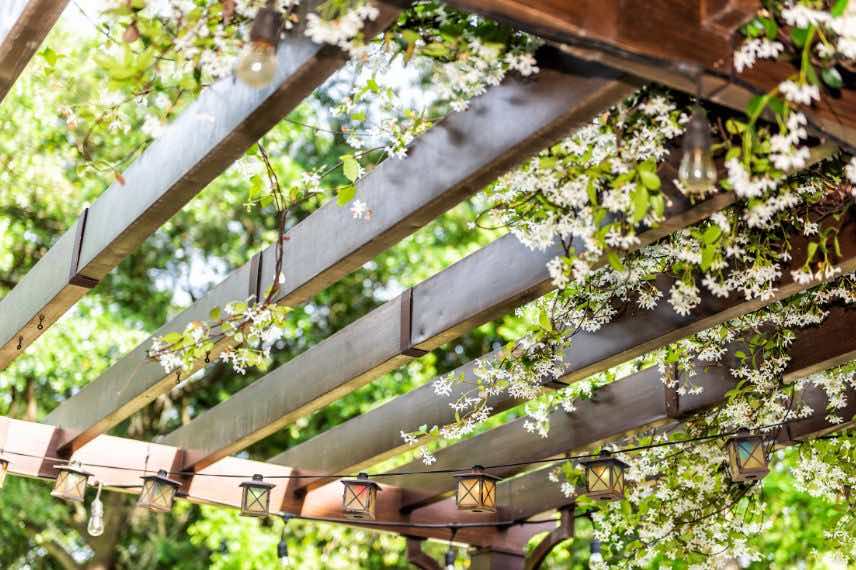
Add tall structures, such as pergolas and gazebos, which you can easily plant up
Choosing the right coverings to preserve freshness
Choice of materials and finishes is just as important for creating a cocoon of coolness. We see it clearly in cities; concrete amplifies heat and the sensation of suffocation in summer. But in the garden too, paving slabs or walls can become scorching and radiate heat in the late afternoon.
Prefer natural materials such as wood, terracotta or fabrics. Light colours will also be preferred, as they absorb less heat. Do keep it in mind if you need to repaint an area of your outdoor space or when choosing your garden furniture!
On the other hand, avoid concrete, metals (for example sheet metal) and mineral materials (gravel and stones) as much as possible. Dark colours absorb more heat and release it at night.
If the layout is already in place, it is perfectly possible to simply cover the area for the summer with slatted decking, outdoor mats, or even a patch of synthetic lawn depending on your taste.
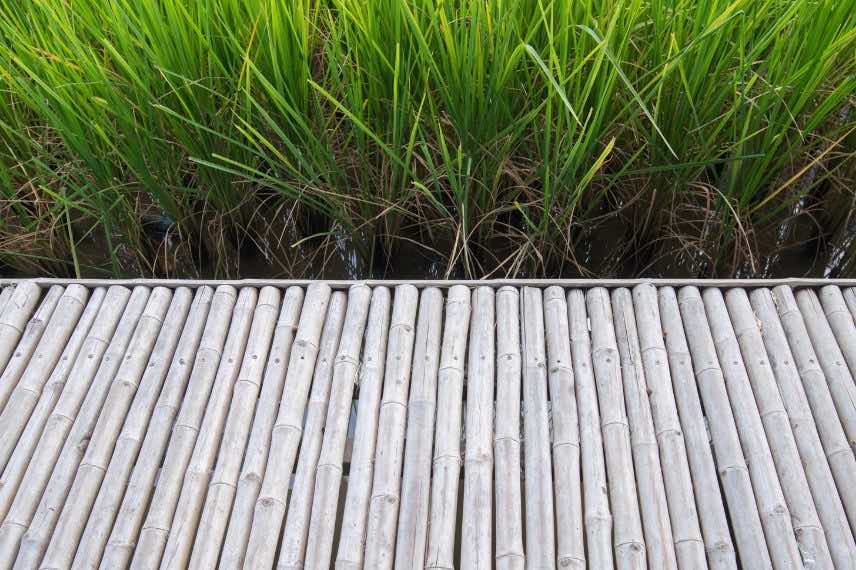
Choose natural materials, in light colours
Play with volumes and heights to shade the space
Greening the space is essential on several levels to create a shaded, cool corner in the garden. First, plants provide natural shade, from light to dense. They also attenuate UV reflection. Plants then contribute to ambient cooling, thanks to the evapotranspiration of their foliage: One mature tree evaporates 450 litres of water per day, roughly equivalent to five air conditioners running for 20 hours. Finally, they obviously bring an aesthetic touch, easily transforming an area into a mini-jungle or forest.
To properly arrange your plantings and bring maximum freshness and shade, the aim is to play with volumes and heights, adding density at all levels. This is explained by Serge Schall in his book Transforming your garden into an island of freshness. Pair trees, bushes, climbing plants, perennials and groundcovers to fill as much space as possible. On the same principle for a terrace, a balcony or in a courtyard, use pots, planters, hanging baskets and climbing plants to bring freshness and shade across multiple levels.
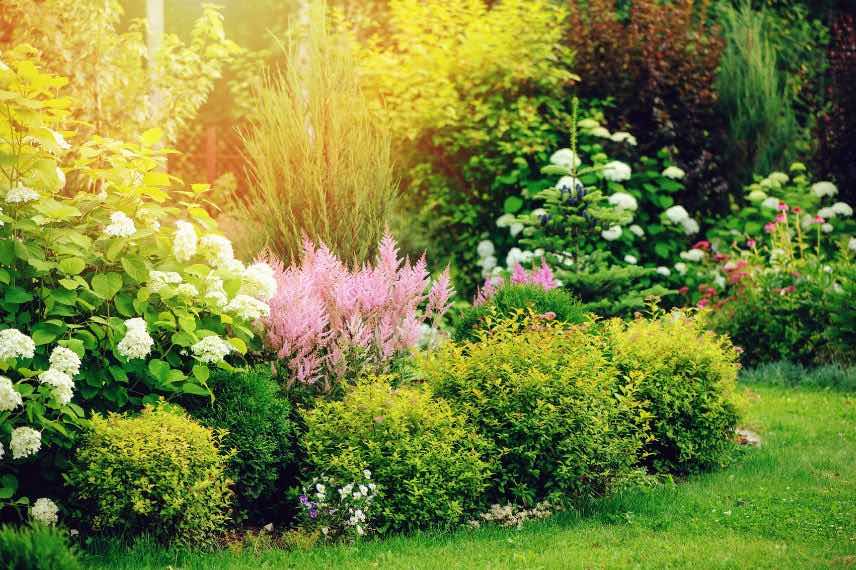
A densely planted garden, with different strata, brings freshness
Choosing different kinds of plants
What to plant to create a refreshing, shady island in the garden? The ideal, especially if you have limited space, is to choose multifunctional plants that offer multiple benefits. Scent, flowering, fruiting, usefulness for insects and birds… It’s up to you to choose according to your preferences!
Choose evergreen foliage if you want a shaded area all year round, or deciduous foliage to let light through in winter. A mix of both is advisable to provide a diversity of foliage on offer.
Note that certain species have drawbacks and should be avoided near furniture and walkways: staining fruit, unpleasant odours, sharp thorns, allergenic pollen, invasive roots, etc. To learn more: Which trees should not be planted near a terrace?
Trees
Planting one or more trees will add height and help form a canopy, like in a forest. You can choose them with a naturally umbrella-shaped silhouette. Opt for fast-growing species, so you won’t have to wait many years to achieve the desired effect.
Turn to, for example, an Umbrella pine, a Weeping willow, a White mulberry, a Pedunculate oak, a Norway maple, a Horse chestnut, a Leyland cypress, a Eucalyptus or a Catalpa.
→ Also read: 8 umbrella-shaped trees, Weeping-habit trees, Trees and shrubs: different habits
Shrubs
Large shrubs or small shrubs, with a weeping or umbrella-shaped habit, deciduous or evergreen foliage… You’ll find them to suit all tastes and needs. Compact, modest varieties can also be grown in pots or large containers.
In shaded or semi-shaded conditions under trees, install hydrangea, camellia, Aucuba, loquat, Umbrella Magnolia, Cercis, Mahonia, Sarcococca or Fuchsia. On their side, Albizia, Lagerstroemia and Acacia boule will require more light and sun.
Climbers
Climbers will help limit the sun’s reflection on mineral surfaces (walls, stone, façades…) and thus provide effective protection against heat. Choose them with dense foliage to obscure the sun’s burning rays. Climbers with a self-clinging attachment system (twining stems, suction cups…) will be easier to install, as they do not require a bulky trellis. But you can also guide them on an existing structure, such as a pergola or a gazebo.
Opt, for example, for the Virginia creeper, the passionflower, the hop, the star jasmine, the honeysuckle or the trumpet vine.
Large perennials
Placed under taller plants, the chosen perennials should tolerate shade or subdued light. If some foliage lets through the sun and light during the day, it will be possible to opt for plants that tolerate partial shade.
Make your selection from Acanthus, Japanese anemones, Astilbes, Athyrium, Cimicifugas, Dryopteris or Giant Hostas.
Groundcovers
Groundcovers act as a natural mulch: these plants protect the soil from drying out by limiting evaporation.
Grow Carex, Epimediums, Bergenia, Brunnera, Ajuga, Hakonechloa, Heucheras, hardy geraniums, Vinca, Polypodium, Polygonatum, Viola, Asarum, Ophiopogon or Corydalis.
Mention water to emphasise the refreshing feel
For the freshest possible ambience, consider installing water features, such as fountains, cascades or ponds (ideally in a closed circuit). The humidity they provide, together with the pleasant sound of trickling, will refresh the space further. If you can’t or you live in a region where the insufferable Asian tiger mosquito is rife, you can also play with different elements that reference water and appeal to your senses.
- In terms of colour, go with blue and aqua on your pots, your furniture or your small decorations.
- Install wind chimes that, swaying in the breeze, evoke a sense of freshness.
- Incorporate transparent materials (resin, glass, beads…) that recall water and can enhance the sensation of coolness.
- Choose decorations in an aquatic or nautical style: driftwood, shells, bamboo, sculptures, etc.
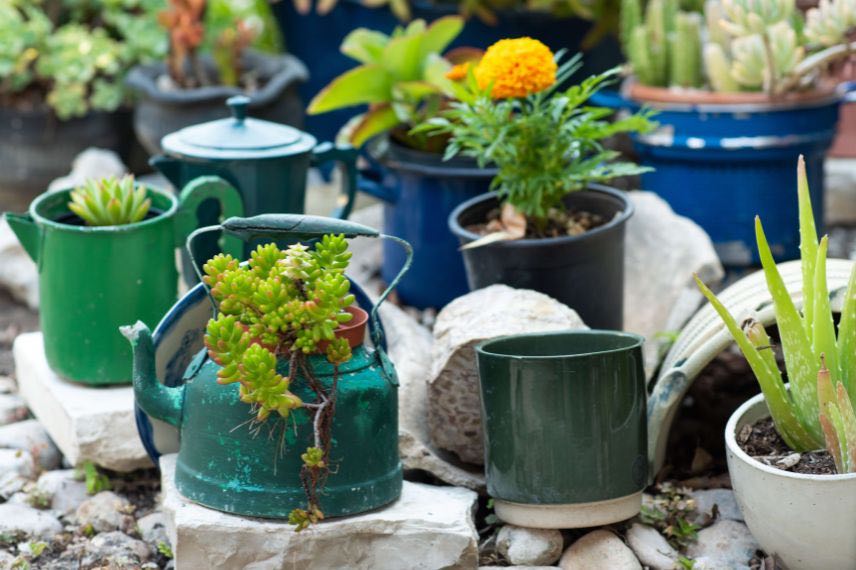
If you can’t bring water to the garden, bring its colour!
Optimise watering to better retain moisture
Freshness depends on water and this resource is increasingly precious. A few simple steps will limit evaporation and help you save water.
- Water at the right time,early in the morning or late in the evening, to avoid the hottest parts of the day.
- If you can, install automatic irrigation at the base of the plants (drip irrigation or porous tubing).
- Test the ollas, which gradually release water into the soil by capillarity.
- Mulch the soil (unless you already have groundcover plants that perform the same function).
- If you have the space, collect rainwater in tanks or barrels.
To learn more:
Watering the garden: how to do it?
Ollas or oyas: an efficient and economical watering system
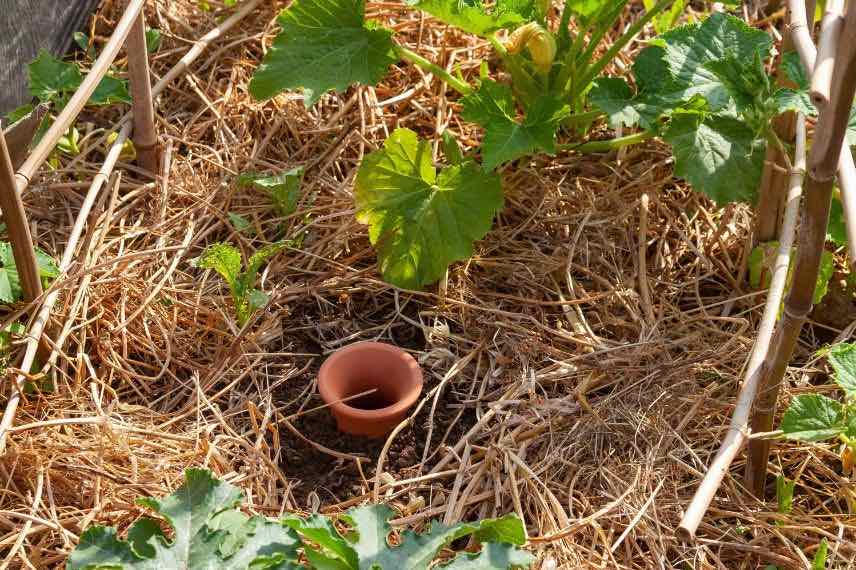
Mulching and ollas are good solutions for optimising water management
More articles on creating a shaded corner
- Summer bulbs that thrive in shade or partial shade
- Subscribe!
- Contents

Comments