





























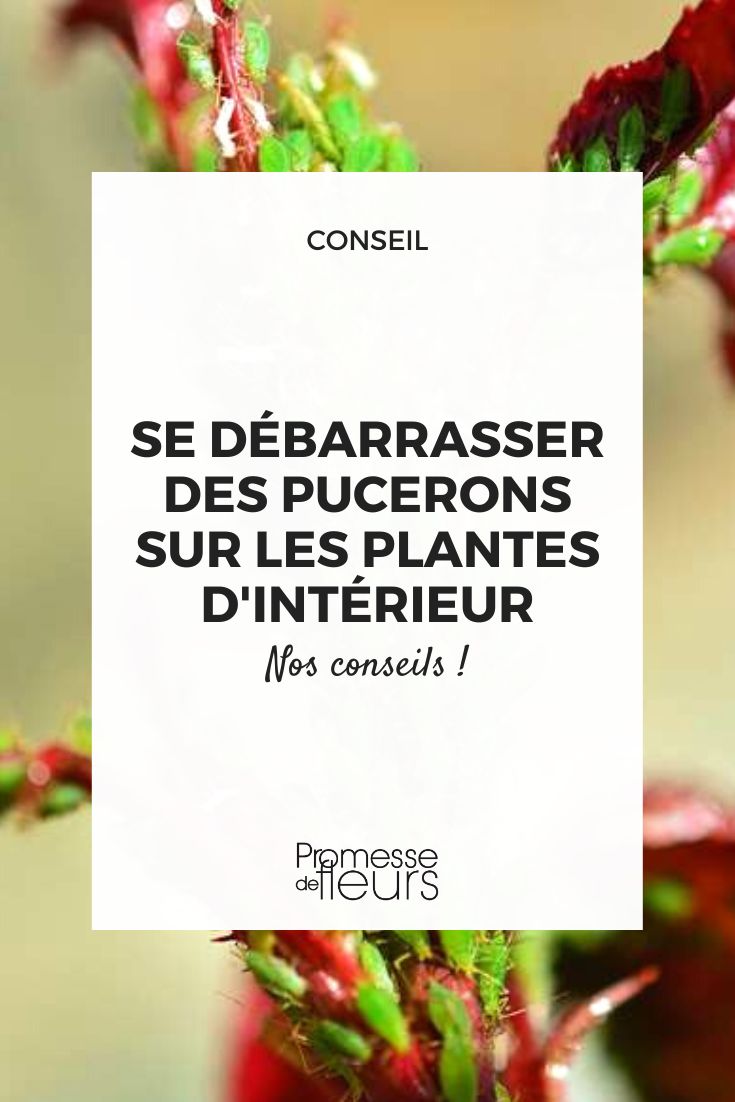
How to get rid of aphids on indoor plants?
Natural aphid control methods
Contents
Aphids are small, well-known pests, not only found in the garden, but that can also invade your indoor plants and cause significant damage. How do they end up on indoor plants? Most often, it’s because the plants have spent time outdoors, in the garden or on the balcony. But even on plants that never go outside, you can find aphids.
In this article, let’s look at how to recognise aphids, understand the dangers they pose to your plants, and provide you with natural solutions to combat them, as well as preventative advice. With proper practices, you can protect your houseplants and keep a thriving home garden.

Identifying aphids
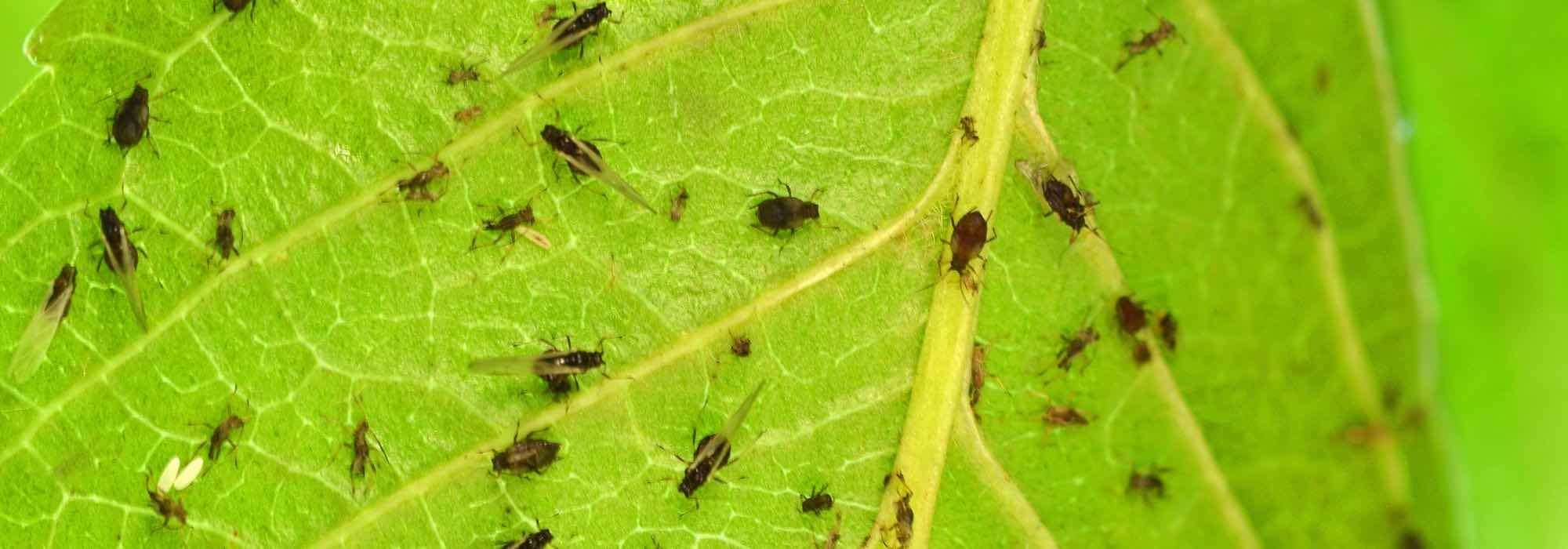
Aphids are very common pests in the garden, but they can also appear on indoor plants. To identify them, colour isn’t a reliable clue, as there are hundreds of different species. However, indoors, it’s usually green aphids or black aphids that are observed. They measure 1–3 mm in length. Aphids typically cluster on young shoots, stems, leaves and even under the leaves.
On indoor plants, you can spot them visually by looking at your plants. Otherwise, their presence can be detected by signs such as a large number of white particles (their exoskeletons), deformed leaves, sticky stems or the presence of black sooty mould on the leaves.
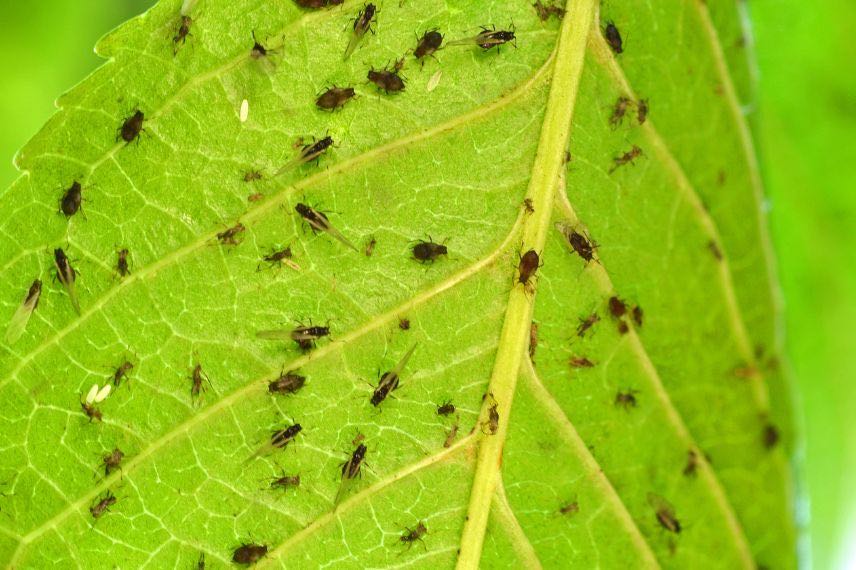
Aphids found on indoor plants are most often black or green
The dangers of aphids to your plants
Aphids are an aesthetic nuisance, but they can cause damage to your houseplants. They feed on the sap of the young plant, thereby weakening its growth and development. Their presence leads to deformed leaves and slower growth. They can also transmit viruses and diseases to plants, beginning with sooty mould (a black, sticky substance on the leaves), the second stage of an aphid infestation.It is their proliferation that is problematic, and it happens quite quickly. An infestation that is too severe can kill the young plant, and aphids do not hesitate to spread to other young plants; they are not very difficult to deal with.
Natural solutions for aphid control
The first thing to do may seem basic, but it’s already a real help. Take your infested plant and bring it to the shower. Thoroughly rinse it with a shower head, making sure to pass the jet everywhere, on the outer and inner surfaces of the leaves. Sometimes this may be enough, by repeating this operation several times, at intervals of a few days to a week.
However it is wise to also use black soap, an economical and non-toxic solution. Choose a pure black soap, oil-based for example, but with no other ingredients. Check the label carefully. There are products marketed as black soap that contain many other substances harmful to your plants, because they are in fact intended solely for cleaning. After showering your plants, spray a solution of black soap and water at 15 to 30 g of soap per 1 litre of water. Same again, ensure thorough spraying everywhere. Do this treatment in the evening and leave the plant in the shower overnight. The next morning, rinse it off. Once dry, remove the plant from the shower, but if possible, keep it in quarantine, while repeating the operation until the aphids are eradicated. To give you an idea, three interventions, or four at most, should deal with the aphids. Do it even if you no longer see aphids; they are often still there, one pass is not usually enough.
These operations should be sufficient. If not, the use of neem oil sprays, a very good insecticidal spray, should eliminate your pests. It is used diluted to 1:10. Proceed on a dry, unwashed plant and repeat the operation at one-week intervals.
Be consistent and don’t give up along the way! Repeating these simple treatments is essential, or you’ll have to start over again in a few weeks or a few months.
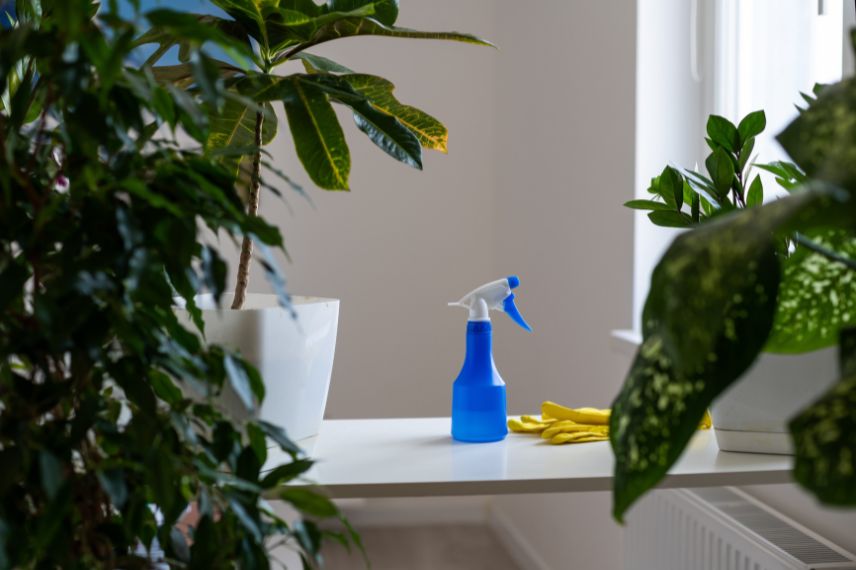
A diluted black soap spray is the most effective method against aphids
Read also
How to repot a houseplant?Prevention
To avoid parasitic attacks, here are some best-practice tips to adopt.
- When you buy a new green plant, inspect its leaves and stems carefully for signs of aphid infestation or other parasitic pests. Keep it in quarantine for a few days, then re-check it a second time, before placing it among other plants.
- In general, it is important to have watering practices appropriate for different plants. Overly damp potting soil, too-dry air or potting soil that is too dry, these varying moisture conditions are a major factor in parasitic infestations of all kinds.
- Remove dead leaves, debris and faded flowers that fall onto the potting soil.
- Carefully and regularly observe your plants to detect any presence of parasites or a fungal disease; this is essential for keeping indoor plants healthy.
Aphids can pose a serious problem for indoor plants, but by being vigilant and adopting preventive methods, you can avoid infestations. By using natural solutions to eliminate them, you protect the environment and promote healthy growth of your indoor houseplants. With this knowledge at hand, you can now act effectively against aphids and enjoy your flourishing indoor garden to the full.
→ Read also: How to clean the foliage of indoor plants?
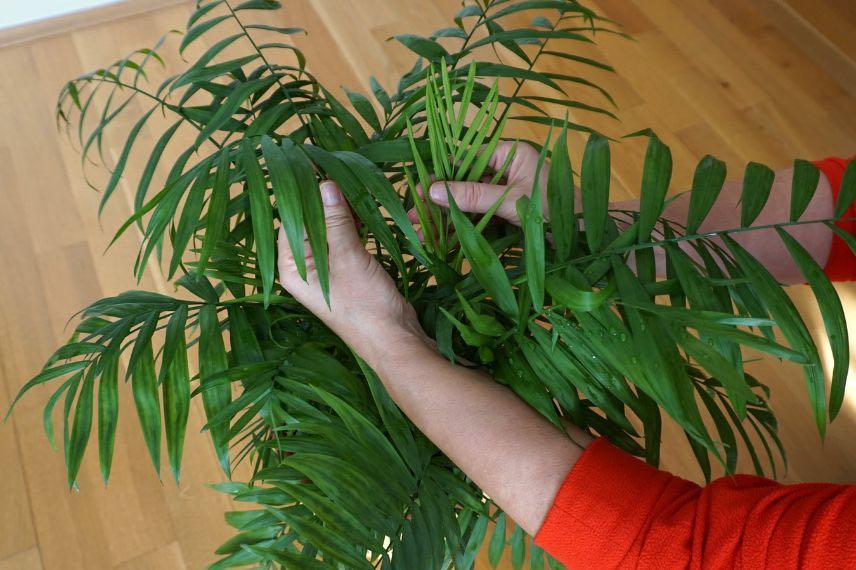
Regularly observe your indoor plants
- Subscribe!
- Contents
Comments