





























How to grow Ranunculus in pots?
How to easily plant and care for this flowering perennial plant
Contents
The buttercups (Ranunculus asiaticus), the best known of the genus, offer us a beautiful diversity of colours and flowers in spring. Easy to grow, these striking perennials brighten the garden and can be used to create magnificent long-lasting cut flower arrangements.
From their Mediterranean origins, these tuberous plants have retained a certain sensitivity to cold. Their hardiness is on average -6°C. But whether you do not have a garden or you live in a region with harsh winters, know that it is perfectly possible to grow these perennial plants in pots.
Discover our tips for successfully planting and caring for your ranunculus of florists in pots, so you can enjoy their flowering for a long time.
For more information: Ranunculus of florists: planting, growing, care and use.

Which ranunculus varieties should you choose for growing in pots?
All florists’ ranunculus can be grown in pots. Their modest silhouette only reaches 30 to 80 cm in height.
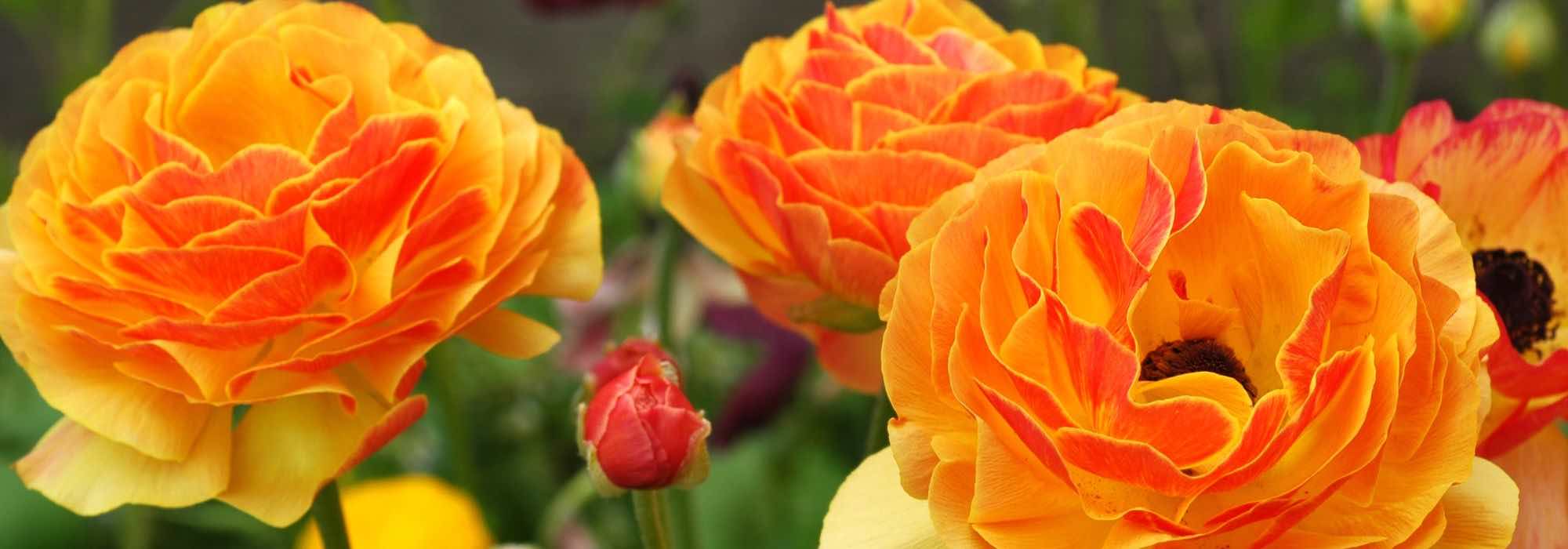
You will be spoilt for choice when it comes to flower colours and shapes. Opt, for example, for double yellow ranunculus, pink, violet, red or orange ranunculus. Their full, globular double flowers are very striking.
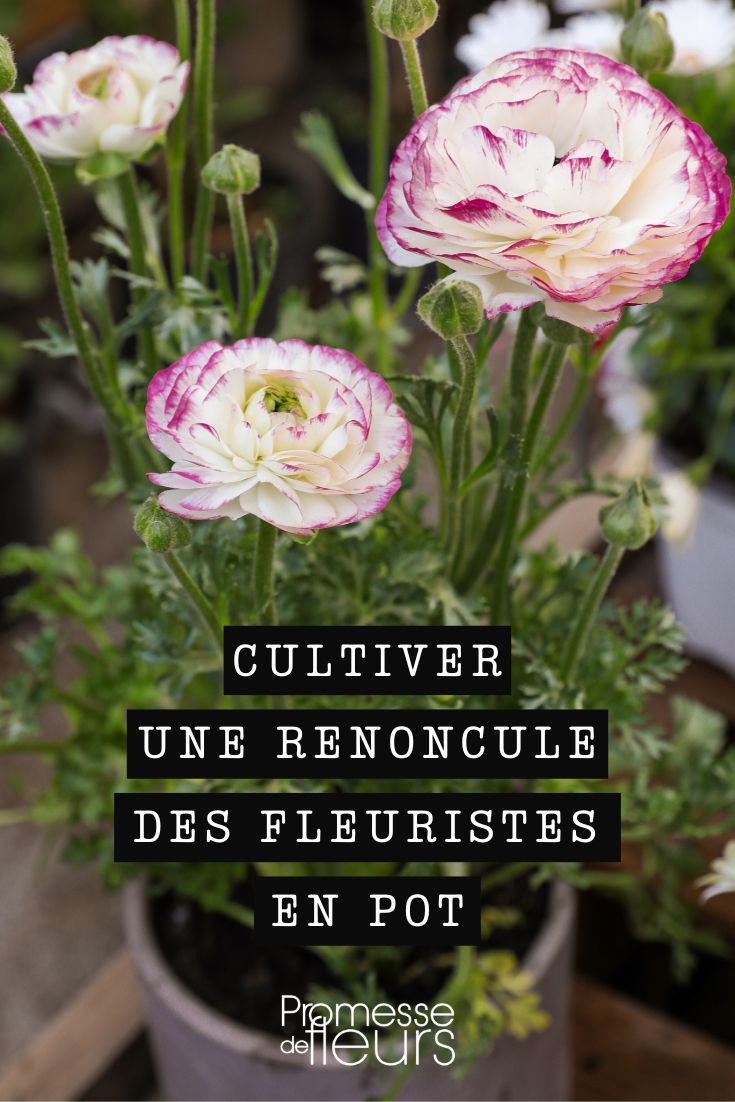
Discover also ‘White Pink Bicolor’, with its delicate white flowers whose petals are striated with violet.
Meanwhile, ‘Picotée Café au lait’ offers a magnificent flowering in warm tones, blending gold, coffee and burnt orange.
And if you can’t make up your mind, you can opt for a mixture of ranunculus in several colours.
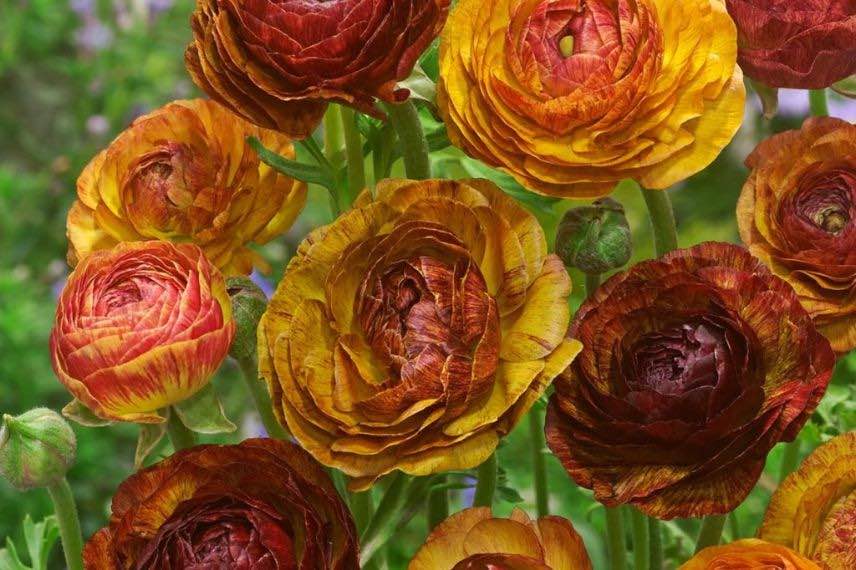
The ranunculus ‘Picotee Cafe au Lait’
Read also
5 easy spring bulbs for beginnersWhen should you plant buttercup in a pot?
Ideally, plant your ranunculus in pots from late summer to late autumn. In regions with harsh winters, you can plant them in spring, once the last risk of frost has passed.
Planting ranunculus in a pot
Container
For your ranunculus, choose a container with drainage holes in the base to allow water to flow away without risking rot of the tubercles. Also avoid pots with a water reservoir.
Choose a window box, a pot or a planter. The size of the container will depend on the number of plants you want to grow. Allow about 15 cm diameter for a single ranunculus.
As for material, terracotta lets the substrate breathe better, thanks to its natural porosity. However, it does require more regular watering, the water evaporating faster than in a plastic container.
Substrate
Ranunculus appreciate humus-bearing soils, rich in organic matter, but perfectly drained. Otherwise, their tubercles can rot.
In stores or online, you can easily find potting compost for window boxes and pots, or compost for perennials and flower beds.
But you can also make your own mix, made up of:
- 2/3 good-quality horticultural compost or non-calcareous garden soil;
- 1/3 river sand to improve drainage;
- 1 to 2 handfuls of home compost or well-rotted manure (optional).
Planting
- Buttercups have small elongated tubercles connected together. This forms a sort of claw, which is their underground storage organ. Before planting, thoroughly rehydrate the claws by soaking them for several hours in a container filled with water at room temperature (prefer rainwater). When the claw sinks, it is a sign that it has rehydrated deeply and that you can move on to the next steps.
- Install a drainage layer 3 to 5 cm thick at the bottom of your container. For this, use clay balls, gravel or broken terracotta pieces.
- Fill the container with the substrate mix.
- Bury the claws at a depth of 5 to 10 cm, with the tips pointing down. If you want to grow several ranunculus in the container, space the tubercles about 15 cm apart (depending on the spread at ripeness of the varieties chosen). You can arrange them in a line or staggered.
- Cover with substrate and firm lightly with your fingers, to bury the ranunculus claws.
- Water sparingly, to moisten the substrate.
Exposure
Ranunculus need a few hours of sun a day to flower well, but they will not thrive in overly scorching conditions. Prefer a semi-shaded or dappled position, sheltered from the sun’s hottest rays, especially in southern France.
Also protect your potted ranunculus from windy exposure, to avoid any risk of breaking the flower stems.
Ranunculus can be placed in the garden, but also on the terrace or balcony.
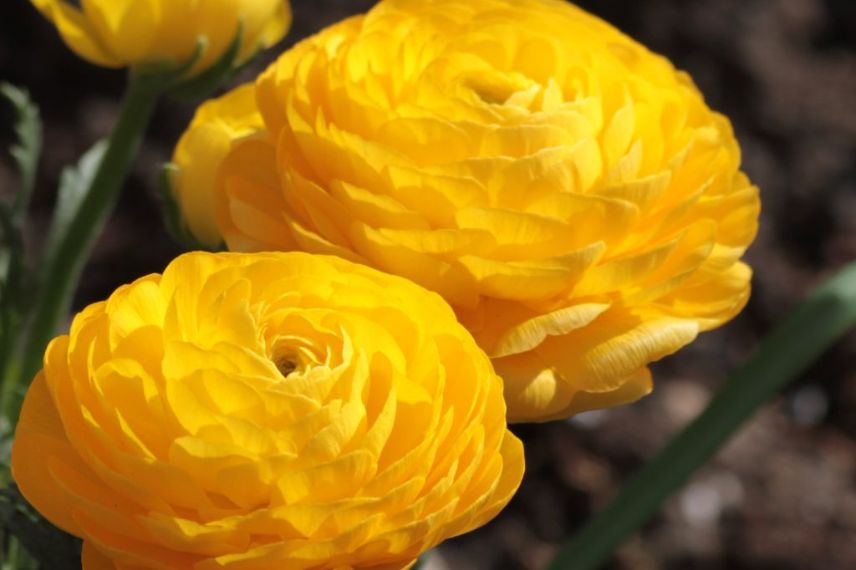
Florist’s ranunculus appreciate a few hours of sun a day, but avoid scorching exposure
Read also
How to grow Naples cyclamen in pots?Caring for potted ranunculus
Florist’s ranunculus are fairly easy to care for plants that do not require a lot of attention. A few simple actions will nevertheless help encourage flowering and keep them in good health.
Watering
Perennial ranunculus appreciate cool soils that are not too wet but never dry out completely.
Water as soon as the substrate is dry at the surface. Watering once a week is generally sufficient. Increase frequency in periods of intense heat and if there is no rain. Favour a generous watering less often rather than small amounts more frequently.
Prefer rainwater, which is less calcareous than tap water.
If you have placed a saucer under your container, empty it about twenty minutes after watering so as not to risk rotting the tubercles.
Feeding
When grown in a pot, the substrate exhausts its nutrients more quickly. To support flowering, you can therefore add fertiliser for window boxes and pots, or a fertiliser that stimulates flower production. Rich in phosphorus and potassium, these fertilisers are conversely lower in nitrogen, which favours foliage.
You can choose between:
- liquid formulas to dilute in the watering water, which provide an immediate boost effect but of short duration;
- solid fertilisers in the form of granules or sticks to mix into the substrate, which act slowly and last longer.
Respect the doses indicated on the products by the manufacturers, as these can vary from one fertiliser to another.
You can also choose to apply an organic fertiliser such as crushed horn, dried blood or even fireplace ashes.
Pruning
Pruning is not essential to keep beautiful ranunculus in pots. But removing faded flowers as they appear helps stimulate the production of new buds.
Do not cut back the foliage at the end of flowering, but let it die back naturally: it allows the underground tubercles to build up their reserves.
Pests and diseases
Ranunculus are susceptible to certain fungal diseases caused by fungi. This is the case, for example, with powdery mildew, which is identified by the whitish, powdery deposit it leaves on foliage, stems or flower buds. Mild, humid conditions favour the development of this disease in spring. Remove affected parts quickly and take them to a household waste centre.
To limit the risk of fungal diseases, a few preventive measures can be taken.
- Do not wet the foliage of your ranunculus. Prefer watering in the morning rather than in the evening.
- When pruning, always use clean, previously disinfected tools, so as not to contaminate your plants with each other.
- Remove plant debris as you go (faded flowers, damaged leaves or stems…).
- Use a horsetail manure as a spray. Find our easy recipe to make your own horsetail manure.
Aphids can also attack ranunculus. If they are few in number, remove them manually. Horsetail manure is also considered a good repellent against these sap-sucking insects. Failing that and in case of heavy infestation, use a natural insecticide based on black soap, to spray on the affected parts. To do this, dilute 1 tablespoon of black soap in 1 litre of warm water. Place the mixture in a spray bottle and wait for it to cool before use.
Finally, snails and slugs can also attack ranunculus, especially in early spring when young shoots are developing. Hand-pick them or use one of the many anti-gastropod solutions: mechanical barriers made from eggshells or ash, beer traps, granules based on ferramol (which do not present a danger to pets and the environment), etc. In addition, discover our article “Slugs: 7 ways to fight effectively and naturally”.
Propagation
Like other bulbous plants, ranunculus multiply by dividing their clump. New tubercles appear over time. You can detach them from the main corm to obtain new plants.
Do this in autumn. Always use very clean cutting tools to avoid spreading possible diseases.
Winter care
Not very hardy, ranunculus generally do not tolerate frosts below -6°C, or -10°C at most. But growing them in pots will allow you to bring them indoors easily in regions with harsh winters.
In autumn, before the first frosts are forecast, place them in a cool, dry place, protected from frost.
If you live in a region that only experiences light frosts, you can leave your ranunculus in their pots outdoors. However, be sure to lay a thick organic mulch at the base of the plants.
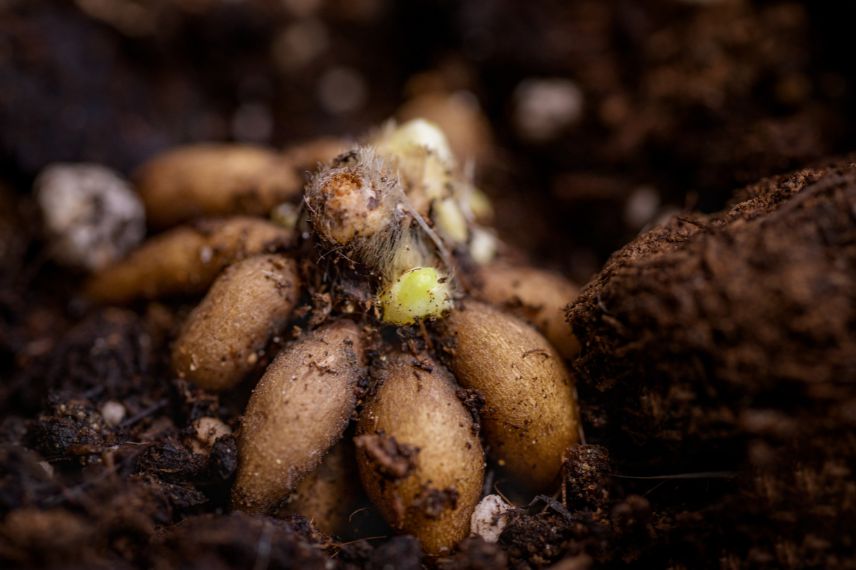
The corms of ranunculus are only slightly hardy
- Subscribe!
- Contents
Comments