


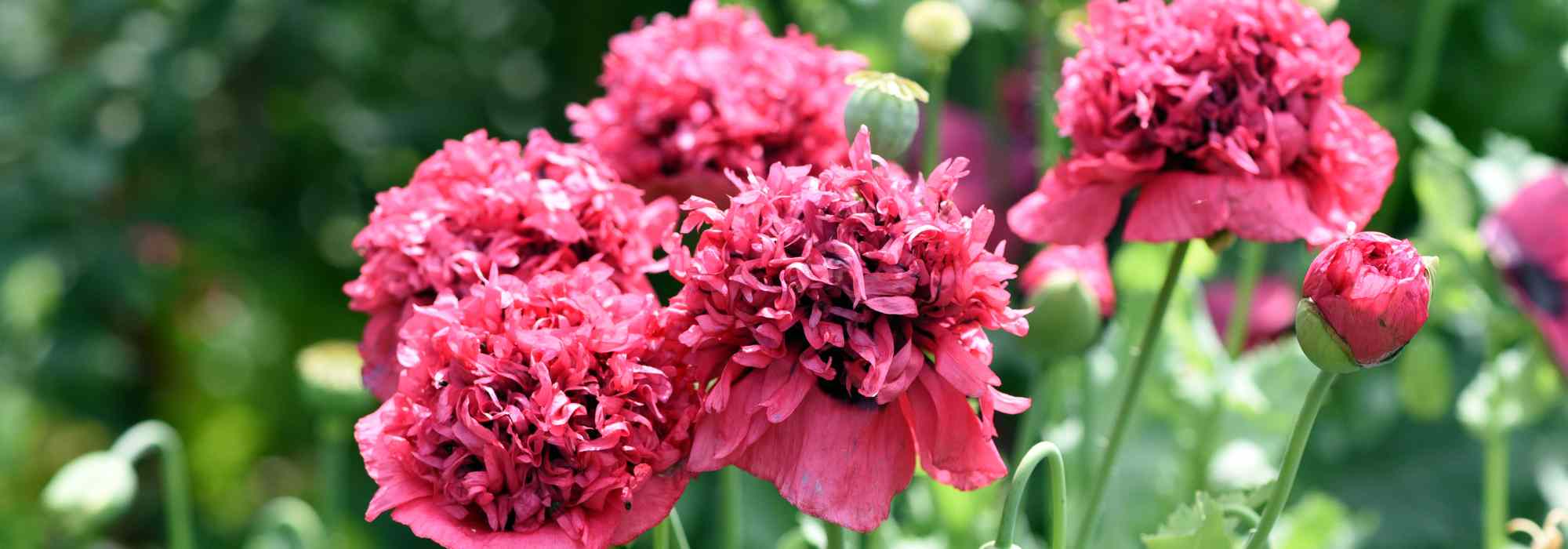
How to grow annual and perennial poppies?
Our secrets for beautiful poppies
Contents
How can you resist the ephemeral beauty of poppies in late spring and summer? Their delicate corollas, crumpled like tissue paper, reveal not only some of the garden’s most elegant flowers, but also a plump bluish seed capsule that is remarkable at the end of flowering, almost as attractive and striking in dried cut flower arrangements. They are perfect in English-style gardens or country gardens.
But we often encounter a few issues when sowing annual species or when planting hardy perennial poppies with very large flowers.
These beauties can indeed give even the most seasoned among us a run for our money.
We’ve got all the gardener’s tips to achieve abundant flowering and growth of your poppies from the very first season!
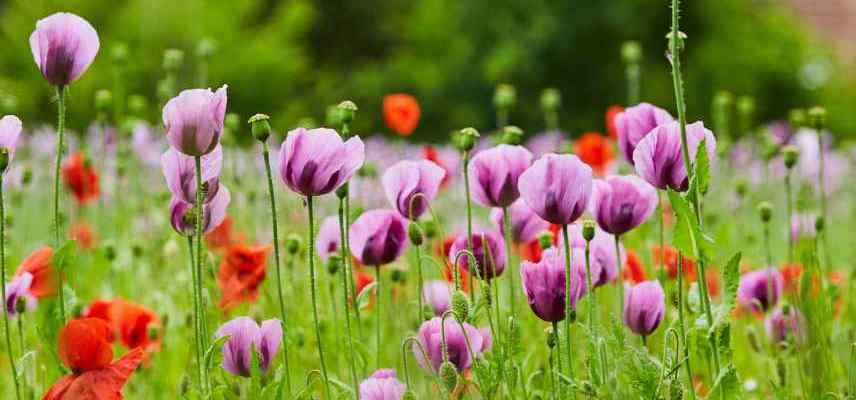

The same golden rule for all poppies: well-prepared and well-drained soil
Whether annual or perennial, poppies have very particular requirements for soil quality. All the same, these hardy plants require well-prepared soil. This largely stems from their fleshy root system, growing vertically deep into the soil: they are among the plants that dislike being moved.
They all particularly appreciate, regardless of species, a loamy soil.
When you want them to grow well in your garden, one of the first secrets is their location, as they need sun (at least 6 hours per day), but the second secret is how you relieve soil compaction.
For poppies, this means a deep, loose, light and humus-bearing soil, and above all well-drained. This implies you will need to work the soil and loosen it to a depth of at least 20 cm, but also add compost or well-decomposed manure and/or a little gravel to ensure good drainage.
Final step in preparation: amend your soil if it is not rich enough when sowing or planting Oriental poppies. However, for annual poppies and California poppies, they prefer poor soil.
Regarding soil pH, it doesn’t matter; all are suitable, with a strong preference for calcareous soils for Oriental poppies.
→ My tip : plan three to five plantings, these flowers thicken as the years go by and have a short flowering period (around two weeks). You should also consider incorporating other perennials or bulbs that will take over to refill the area, as poppies shed all their foliage and go dormant all summer, leaving the area bare.
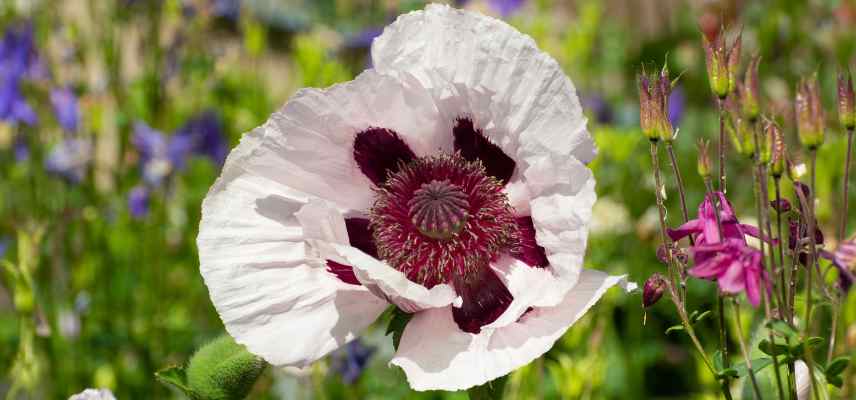
Poppy sowing
It’s not, despite what you might think, the easiest flower sowing.
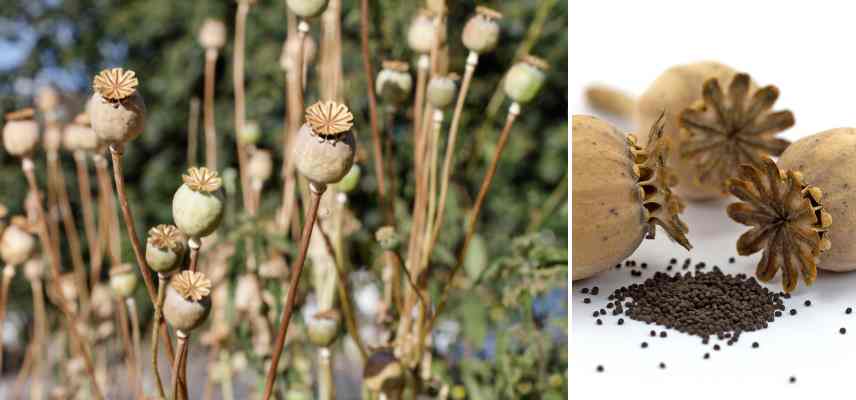
Annual poppies are sown from March to June, or in autumn depending on the region, but perennial poppies as well, taking care to keep a few seed capsules in late summer to harvest the precious seeds.
Annual poppies comprise a wide range of species, including the very popular California poppy (Eschscholzia californica), low-growing and usually orange, but also numerous varieties of poppies (Papaver rhoeas) and garden or opium poppies (Papaver somniferum) in pinkish tones, softer, and some varieties with double flowers.
- The sowing date for oriental poppies, garden poppies, California poppies and Iceland poppies (P. nudicaule): is optimal from mid-March to late April depending on the region, or especially in September in mild climates. Spring or autumn, wait for the soil to be lightly warmed or to stay warm, but poppies appreciate a touch of cold for germination, unlike many other seeds, hence autumn planting is often more effective, as plants will have time to develop their roots better. Planting too late in spring often results in weak plants. Sowing at the very start of autumn, with cool temperatures, helps them to grow sturdier in their growth, with stronger stems (but always in full sun): this applies to all poppies!
- Direct sowing : it is preferable when you have a large quantity of seeds at hand. Poppies are known not to transplant well, even at the seedling stage. To avoid this repotting, sow directly in open soil, not too rich for annuals and richer for perennials. If sowing in pots or in a seed tray, opt for biodegradable pots and place them in a bright location, but not in direct sunlight. Start by lightly dampening the area.
- Sow very shallowly : poppy seeds, being very fine, require light to germinate. If buried too deeply, they will not germinate. Cover them barely with soil or sieved potting compost (2 mm, no more) and press down very lightly by hand.
- Water lightly at sowing, then wait for the surface soil to dry before watering again. The soil must not be waterlogged. Water at least until the seedlings have emerged if it does not rain.
- Germination takes between 2 and 3 weeks at around 15°C.
- Don’t hesitate to cover your in-ground sowings with a glass or plastic cloche to prevent birds disturbing the seeds. You will air them in the afternoon and replace the cloche for the evening. If you sowed in a seed tray, harden off your plants at a minimum before planting them into the ground.
- As soon as the seedlings emerge and have two pairs of leaves, thin them to keep only one poppy every 20 cm, so they do not compete. For sowings done in a seed tray, transplant them as soon as they have formed true leaves.
→ My tip : stagger your sowings to enjoy them over several weeks!
Planting perennial poppies
Easier at first glance than sowing, planting nonetheless requires several conditions and is certainly the most challenging stage. If you get their planting right, poppies will repay you a hundredfold by returning more generously, year after year.
- The planting date for a small godet or a poppy in a pot: remember that poppies hate winter damp at the roots. Prefer autumn, ideally September or October, or later in March–April for areas with wet winters, always outside frost periods.
- Prepare the planting holes, 40–50 cm apart, as they will form handsome clumps and take up a lot of ground space, digging spaces at least twice as wide and as deep as the containers.
- The soil should be richer and more fertile than for annual poppies, that’s the main difference between the two types of poppies: add compost to your soil.
- Soak the root-balls of each pot or plug in a basin of water for a few minutes. Then drain them before transplanting.
- Place the pots or root-balls in the prepared hole, with a layer of potting compost at the bottom, taking care not to bury the collar (the boundary between the stem and the root) of each plant. Fill with soil mixed with potting compost and compost in equal parts.
- Water and mulch to keep the soil cool and moist (with mulch, RCW, etc).
- Place between the poppies perennials or summer bulbs that will fill the space left once their flowering has finished.
Read also
Oriental poppies: how to grow themA few more handy facts about poppies...
- Perennial poppies often take two years to establish their deep root system properly. So patience, patience… especially since they will then live for many years.
- When they thrive, poppies, whether annual or perennial, self-seed naturally : once well established, remove a large portion of the seed heads, otherwise beware of an invasion! (the seeds of annuals will withstand the winter cold).
- It is a plant that requires little maintenance (apart from trimming back the flowering stem to ground level), no fertiliser (if planted in accordance with best practice), or protection in winter, as they are very hardy.
- If you remove faded flowers promptly after flowering, you may see Oriental poppies reflower in September, if the late season is mild.
- Flowering will be more prolific in poor soil for annual poppies and California poppies.
- In southern regions with very hot summers, avoid planting Oriental poppies, which do best in temperate to cool climates, hence their success in England.
- We are talking here only about in-ground planting, where all poppies, especially perennials, will flourish much better. Pot-grown plantings will really only apply to Iceland poppies.
- Some poppies are very difficult to grow, such as Himalayan blue poppy, which have different needs: a partly shaded site, a cool, perhaps damp, yet very well-drained soil (learn more in how to grow Himalayan blue poppy?). As for Iceland poppy, a small plant with warm tones, it is a perennial that tends to behave as an annual or biennial, and disappear after flowering. To remedy this pitfall, plant it in dry, very well-drained, poor and stony soil, which it absolutely needs.
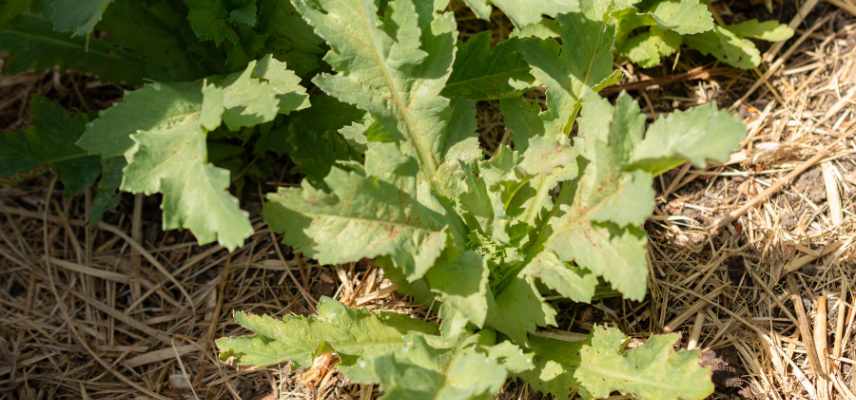
Don’t forget to mulch your Oriental or opium poppies.
- Subscribe!
- Contents
Comments