





























How to grow Euryops in a pot?
To add a touch of colour to your terrace or garden
Contents
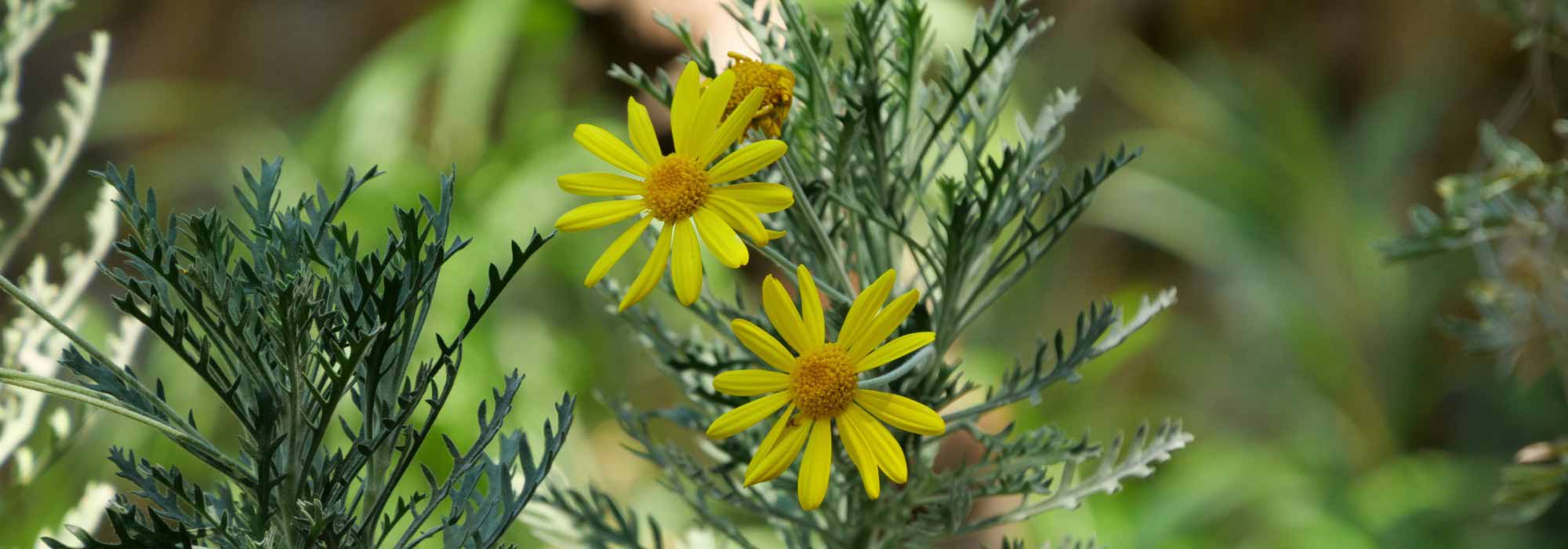
Euryops, also known as Savannah marguerite, is a beautiful woody perennial native to the dry regions of South Africa. There are several species cultivated for their ornamental qualities, notably Euryops pectinatus and the Euryops chrysanthemoides. They produce very beautiful yellow flowers from spring to autumn, resembling daisies, which add a bright touch to gardens and patios. Their foliage is also beautifully cut, green or silvery. These plants form bushy, rounded tufts that can reach up to 1 m in diameter at maturity. They are not very hardy (down to -6°C) but they adapt very well to growing in pots, which makes overwintering them easy. Discover all our tips for successfully growing them in pots, from choosing the pot and substrate to post-planting care.

Which type of pot should I choose?
Euryops, though hardy, prefers well-drained soil and dislikes standing moisture. For this reason, it is recommended to opt for breathable materials that promote good air circulation around the roots and help to remove excess water. Terracotta pots have the advantage of being porous, allowing the roots to breathe more easily, while avoiding moisture accumulation. This helps prevent water-related diseases, such as root rot. Plastic pots can also be suitable, but be careful to manage watering properly, as they retain more moisture. They, however, have the advantage of being cheaper and lighter.
Euryops can reach a height of 60 to 80 cm, or more, and it develops a relatively wide root system. We recommend choosing a pot at least 30 to 40 cm in diameter and depth. Make sure it has drainage holes at the bottom, to prevent water from stagnating around the roots.
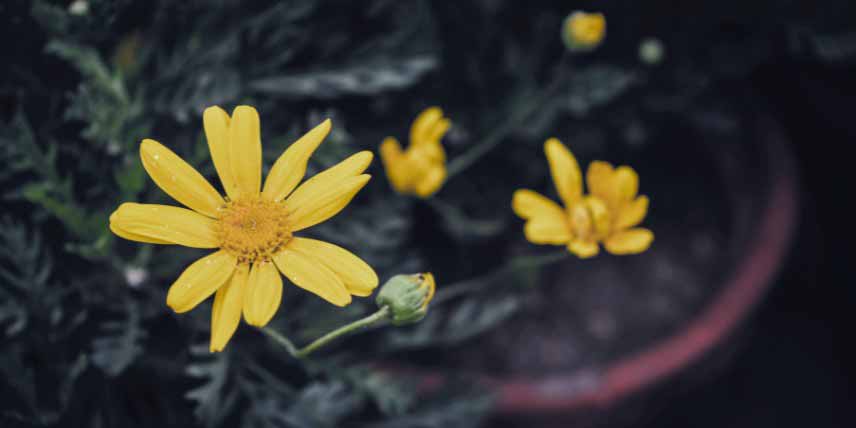
The beautiful yellow flowers of an Euryops pectinatus grown in a pot
Read also
How to propagate Euryops?Which growing medium should I use?
Euryops needs a well-drained, light substrate, but also sufficiently rich to support its flowering. You can either use Mediterranean plant potting compost, or make your own substrate by mixing 1/3 of universal potting compost, 1/3 of coarse sand or perlite for drainage, and 1/3 of compost or garden soil.
Euryops does not tolerate heavy, compact soils. Adding coarse sand or perlite is essential to aerate the soil and prevent water accumulation. If you use compost, ensure it is well-rotted and not too dense, to avoid weighing down the mix.
When is the best time to pot Euryops?
The best time to plant an Euryops in a pot is in spring, between March and May. At that time, temperatures begin to warm up, favouring root establishment and plant growth. Planting in spring helps the Euryops establish well before the summer heat. However, in regions with a mild climate, it is also possible to plant it in autumn, taking care to protect it from the first frosts if winter looks set to be cold.
How to plant Euryops in a pot?
Once the pot and the substrate are ready, let’s proceed with planting. Here are the steps to follow:
- Place a drainage layer at the bottom of the pot (gravel or clay balls) about 5 cm.
- Add a first layer of draining substrate up to halfway up the pot.
- Gently remove your Euryops from its original pot. If the roots are very compact, tease them apart gently with your fingers. This will help the plant establish itself more readily in its new container.
- Place the Euryops in the centre of the pot, ensuring that the collar of the plant (the base where the stems meet the roots) sits just above the soil level.
- Add substrate around the roots, lightly firming to avoid air pockets, but without excessively compacting the soil.
- Water thoroughly after planting to help the soil settle around the roots. However, beware of drowning the plant: too much water can lead to root rot. Thereafter, allow the surface of the soil to dry between two waterings.
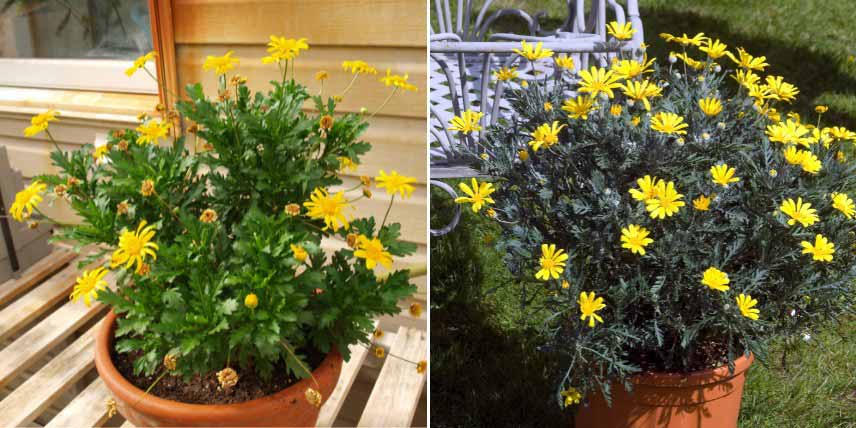
Euryops grown in pots. On the left, the variety Euryops pectinatus ‘Bush Daisy’ (photo: F.D. Richards)
Where should Euryops be placed in a pot?
Euryops is a plant that loves the sun. Place it in a very sunny spot, ideally facing south or west. It needs at least 6 hours of direct sun per day to flower well. Indoors, opt for a bright, well-lit window.
Euryops enjoys mild climates and dislikes temperatures that are too cold. Outdoors, it can tolerate temperatures down to -5°C, but it’s best to bring it indoors or protect it if winters are severe in your region.
If you place your Euryops on a terrace or balcony, make sure to shield it from strong winds that could damage its stems and flowers.

An Euryops grown in a large terracotta pot
How to care for a potted Euryops?
Even though Euryops is a low-maintenance plant, a few regular maintenance tasks are needed to keep it in good shape and continue flowering abundantly.
Watering
Euryops tolerates drought well once established, but it still requires regular watering, especially when grown in a pot, as the potting mix dries out much more quickly than in the ground. Water when the soil surface is dry, but avoid leaving the potting mix waterlogged at all times. In summer, this may mean watering every three to four days, while in winter, watering should be spaced out.
Pruning
To encourage branching and prolong flowering, regularly pinch back the stems after flowering, cutting off faded flowers. This allows the plant to concentrate its energy on producing new flowers. If your Euryops becomes too large or unruly, a light pruning in early spring can also help to maintain its compact shape.
Fertilising
Euryops does not require an extremely rich soil, but to stimulate ongoing flowering you can add a liquid fertiliser for flowering plants about once a month, especially during the flowering season (spring to autumn).
Wintering
Being native to South Africa, Euryops are relatively frost-tender plants that fear temperatures below -5°C. Unless you live in a frost-free area, such as the Mediterranean basin, you will need to bring the Euryops under cover as winter approaches to protect it from frost. You can bring it indoors around September or October, and place it in a bright spot, such as a veranda or an unheated greenhouse. Reduce watering during this period, as the plant is resting and uses less water. You can reintroduce it outdoors in spring, around April, after the last frosts.
Pests and diseases
Euryops is fairly resistant to diseases, but it can be prone to powdery mildew, a fungal disease, especially if the atmosphere is too humid. Ensure you space out watering and do not wet the foliage to avoid this problem. Aphids can sometimes appear, but a simple jet of water or treatment with black soap will be enough to dislodge them.
Also read our tips in Diseases and pests of Euryops.
Repotting
Repot the Euryops every 2 to 3 years, preferably in spring. This repotting allows the plant to benefit from fresh potting mix, richer in nutrients, and gives its roots more space to grow. If you notice roots starting to poke out of the drainage holes or if growth slows, that’s a sign it’s time to repot. Between repottings, you can also simply refresh the top layer of the potting compost (top-dressing) to give it a little freshness without disturbing the plant.
- Subscribe!
- Contents
Comments