





























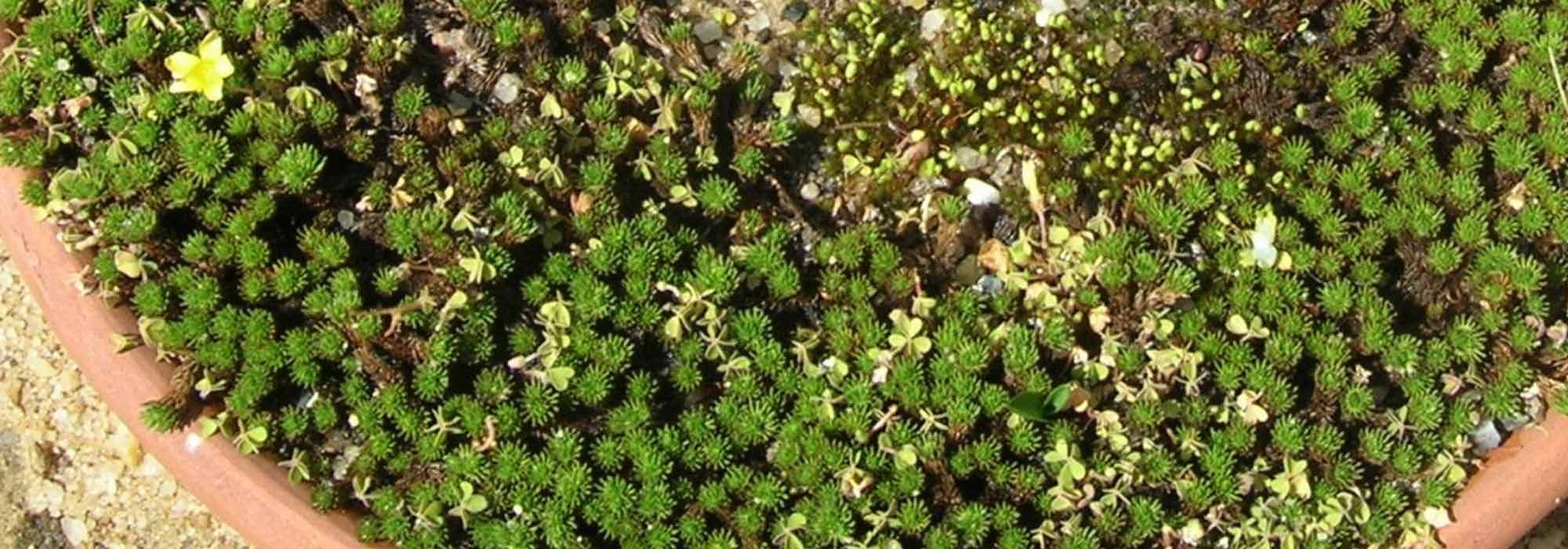
How to grow Leptinella in a pot?
Our tips for successful planting and maintenance
Contents
Leptinellas or Cotulas are delightful little perennial groundcovers. With their leaves resembling mini ferns and their flowering in yellow buds, they are perfect for dressing up semi-shaded areas.
These perennials are used to green the base of trees, fill a cool rockery, in Japanese-inspired beds, or even as an alternative to lawn. Easy to grow and featuring a small spreading silhouette, they also lend themselves very well to pot cultivation, as long as watering is not neglected.
Here are our tips for successfully growing Leptinella in pots.

Which varieties of Leptinella should you choose?
Leptinellas are easy-going perennials that grow effortlessly in pots.
These groundcovers, which reach a height of no more than 5 cm and span about thirty centimetres, are all suitable for container cultivation.
Choose the popular Leptinella squalida (bracteate cotula) or the unique cultivar ‘Patt’s Black’, with its bronze-purple foliage.
The Leptinella potentillina or potentilla cotula is also a great choice, featuring olive-green leaves that turn bronze in autumn and winter.
The Cotula hispida offers a brighter yellow flowering, paired with very fine green foliage that has silver highlights.
The Leptinella dioica ‘Minima’, measuring only 3 cm in height and turning brown in winter, will also thrive in pots.
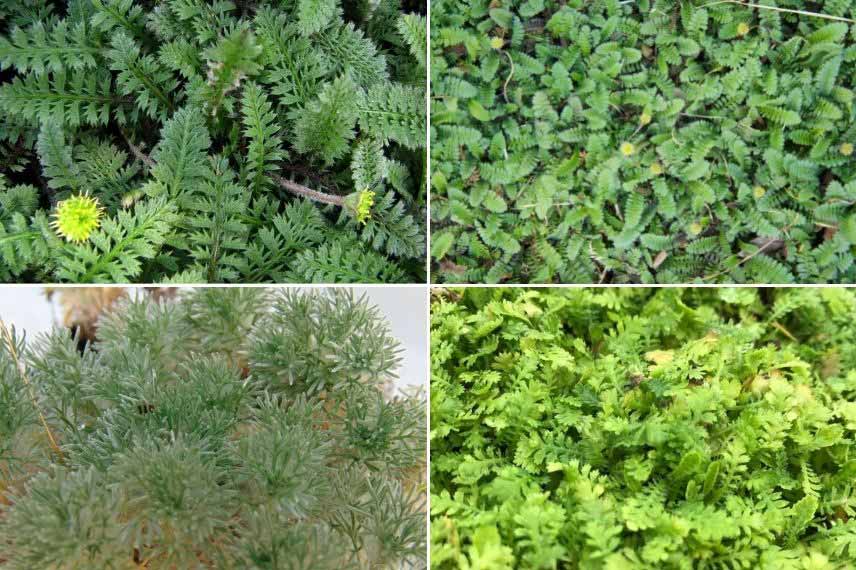
Leptinella squalida ‘Platt’s Black’ (David Eickhoff – FlickR), Leptinella potentillina, Cotula hispida, Leptinella dioica ‘Minima’
When to plant Leptinella in a pot?
Potted Leptinella will ideally be planted:
- in spring, between March and April;
- in autumn, between October and November.
Plants sold in 2 to 4-litre pots can be planted all year round, except during periods of drought or frost.
Discover other Leptinella
View all →
Available in 1 sizes
Available in 2 sizes
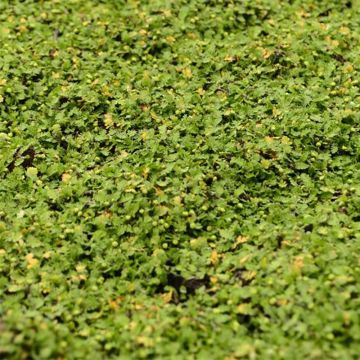
Available in 1 sizes
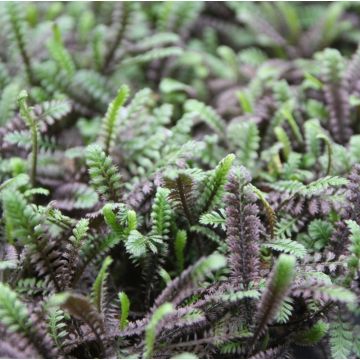
Available in 2 sizes
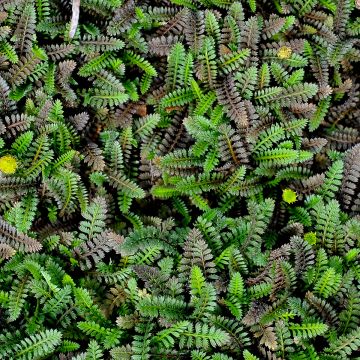
Available in 1 sizes
Planting Leptinella in pots
The Container
Given the small size of our perennial, there is no need to choose a container that is too large.
Opt for a window box, pot, trough, or hanging basket, with a depth of about 15 to 20 cm.
Only consider a larger container if you wish to combine Leptinella with other plants, for example in a flowering pot.
As drainage is essential, make sure to choose a container that is definitely perforated, to which good drainage will be added at the time of planting.
Terracotta or clay containers, which are more breathable than those made of plastic or aluminium, are preferred.
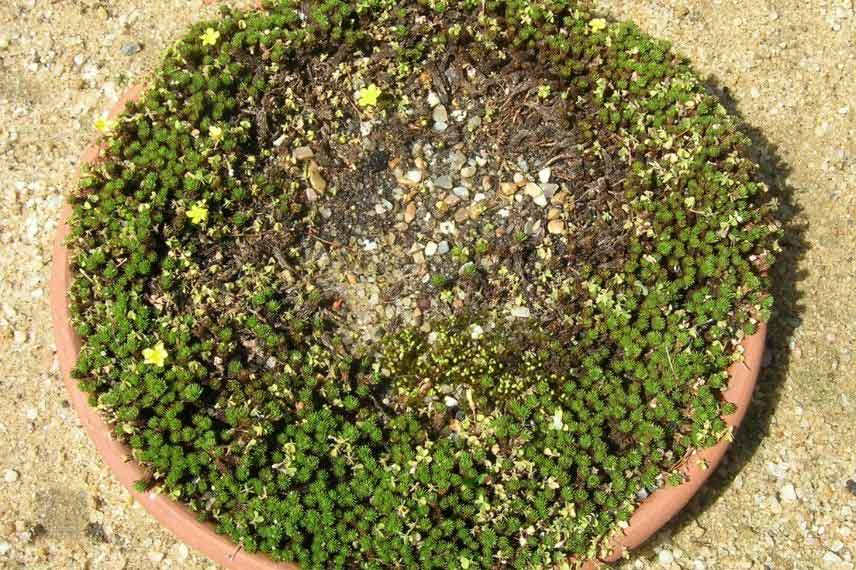 There is no need to choose a container that is too large for your Leptinella
The Substrate
Leptinellas appreciate all types of soils, as long as the substrate remains cool but well-drained, without standing water. They will thrive better in humus-bearing soils rich in organic matter.
For planting, mix the following:
- 2/3 of good quality horticultural compost or garden soil;
- 1/3 of well-decomposed household compost or leaf mould;
- a handful of river sand, vermiculite, or perlite to lighten.
Planting
Before planting, soak the root ball of your Leptinella for about fifteen minutes in a shallow water bath, preferably rainwater, to rehydrate it thoroughly. This will also help facilitate the removal from the container.
- Place a drainage layer of about 3 to 5 cm at the bottom of your container (clay balls, gravel, or broken terracotta, for example).
- Fill with the substrate mix up to halfway in the container.
- Place your Leptinella in the container, add substrate, then gently firm it down with your hands.
- Water generously.
- Apply a mulch to retain moisture longer and reduce the growth of adventive plants (“weeds”).
Exposure
Not very demanding, Leptinellas can be placed in almost any situation, as long as their substrate remains cool. In the north of the Loire, you can certainly grow them in full sun. However, avoid overly hot exposures.
In the warm regions of southern France, prefer a semi-shaded position. Flowering may be slightly less abundant, but the foliage will be more beautiful.
Finally, ensure to protect your pot from drying winds.
Read also
How to combine Leptinella or Cotula?Caring for Leptinella in pots
Resilient, hardy, and low-maintenance, Leptinella requires minimal care to thrive. However, special attention should be given to watering to ensure the substrate remains consistently moist during summer, although occasional drought is tolerated.
Watering
To develop well, Leptinella needs soil that stays moist without becoming waterlogged. Potted plants tend to dry out more quickly than those grown in the ground, so be particularly vigilant about this during the warmer months. Water regularly as soon as the substrate feels dry on the surface.
Increase the frequency of watering during prolonged dry spells and, if necessary, move the pot to a shaded area.
Mulching around the base of the plant at planting time will help naturally reduce evaporation.
To make life easier during absences, you can install an automatic watering system or consider using ollas.
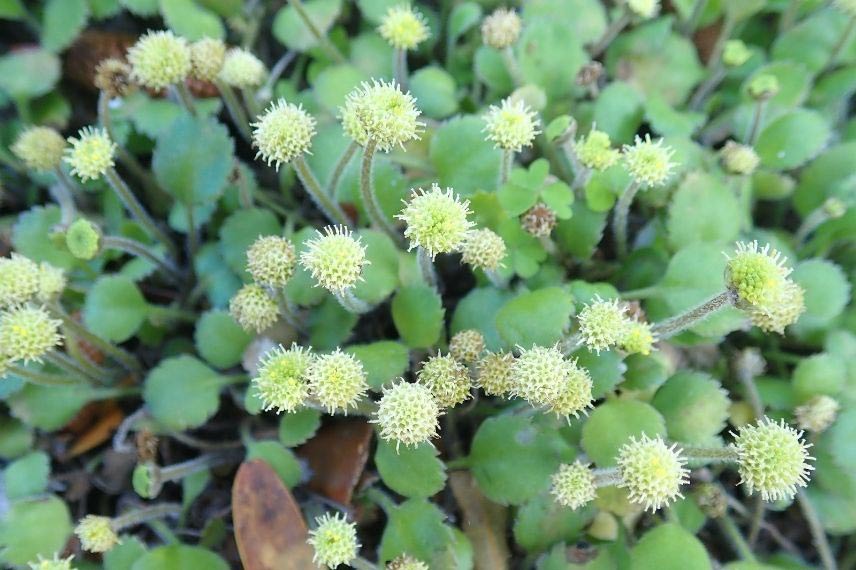
Leptinella rotundifolia (Margaret Donald- FlickR)
Fertilisation
To support the plant’s growth, you can fertilise in spring. Choose a specific fertiliser for containers or a fertiliser to stimulate foliage. However, this step is not essential.
In autumn, you can simply add a handful of well-decomposed compost. Lightly scratch the surface with a fork or tool to gently incorporate it into the substrate.
Pruning
Fast-growing but not invasive, Leptinella in pots will not require any special pruning.
You can simply remove damaged or dried leaves before the resumption of growth at the end of winter.
Repotting
Repotting will not be necessary for our small-growing perennial.
After a few years, typically 3 or 4 years, Leptinella will start to flower less and may become sparse in the centre. Proceed with dividing the clump in spring.
Diseases
Robust, Leptinellas are not very susceptible to pests and diseases.
However, keep an eye out for greedy gastropods, which may feast on young flower buds.
In overly dry conditions, red spider mites may appear, although this does not significantly affect the plant’s health. Spray the foliage to create humidity or shower the aerial parts of the plant to disturb the unwanted guests. If necessary, move your pot to a less dry location.
Wintering
Leptinellas are quite hardy plants that generally withstand cold well, down to at least -15°C.
However, they are sensitive to moisture and waterlogged soils. During a rainy winter, move your pot to a sheltered spot. Also, consider removing the saucer, if you have one, to prevent excess water from stagnating.
- Subscribe!
- Contents
![[plant_container pot_size="small" container_type="planter"]](https://en.promessedefleurs.eu/blogwp/wp-content/uploads/2022/04/Comment-cultiver-la-Leptinella-en-pot-2.jpg "[plant id=\"1234\" care_tips=\"container\"]")
Comments