


How to grow Monstera deliciosa?
Install this beautiful and popular indoor plant at home
Contents
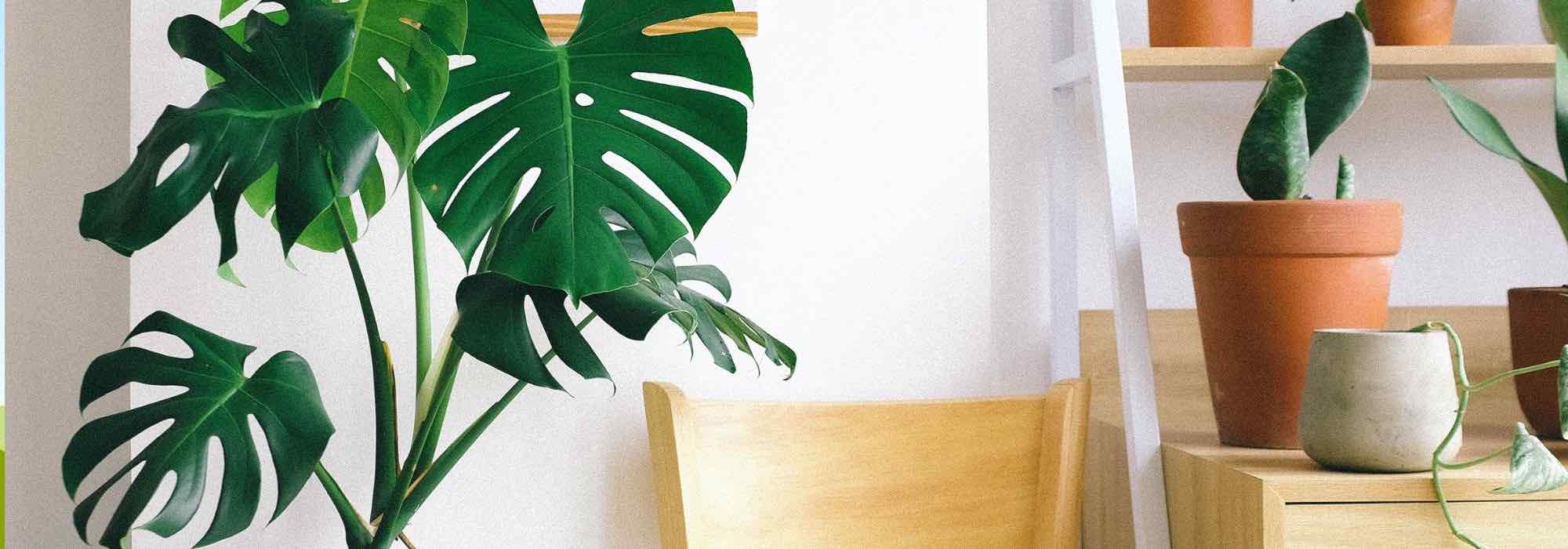
The Monstera deliciosa, commonly called Monstera, is an indoor plant prized for its large, lush, fenestrated leaves, and its ability to add an exotic touch to any indoor space. Originating from the tropical regions of Central America, Monstera has become a very popular houseplant due to its robustness and its characteristic beauty. Let’s detail the essential steps to grow a Monstera deliciosa successfully as an elegant indoor plant.

What type of pot? What size?
When choosing a pot for your Monstera deliciosa, opt for a pot with drainage holes. Terracotta pots are excellent choices, as they are porous and allow excess water to evaporate, thus preventing root rot. However, the Monstera tends to form a large plant with substantial roots, and it quickly absorbs water when watered, so a plastic pot is not problematic and can even be a sensible choice when the plant is large.
Pot size depends on the current size of your plant. Choose a pot only slightly larger than the nursery pot, by a few centimetres in diameter or about 20% wider, as the Monstera prefers to be slightly snug for healthy growth. Make sure the pot is deep enough to accommodate the growing roots.
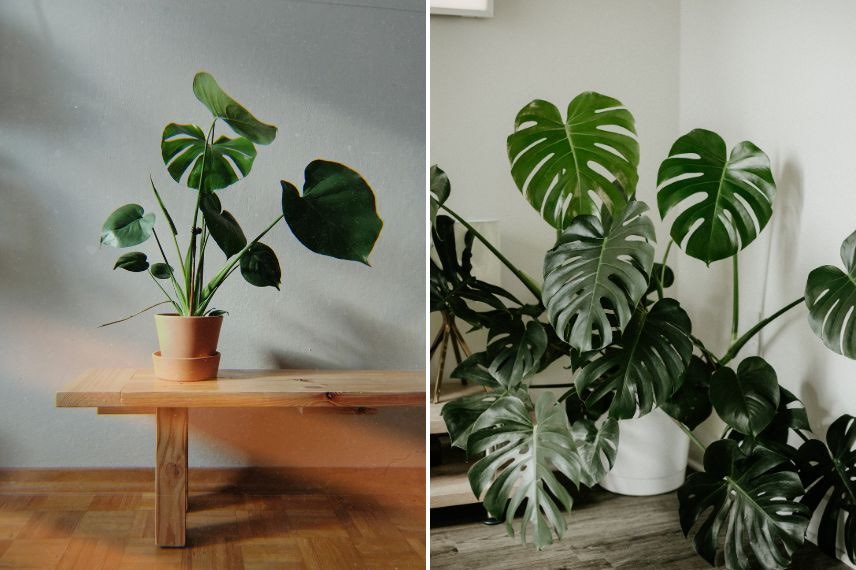
A young plant, with leaves still plump and a mature specimen
Read also
Monstera: growing and caringWhich potting mix?
A well-draining, organic-rich potting mix is essential for the optimal growth of Monstera. Use a blend of high-quality potting soil and perlite to ensure adequate drainage.
How do you recognise a good-quality potting mix? Primarily by its price. Unfortunately, budget potting mixes are often problematic and not at all suited to keeping your plants healthy. Next, a good potting mix has good water retention, indicated on the back of the bag. It typically has a brown colour and a light, fibrous, and loose texture. It is turf-based and sometimes contains coconut fibre.
If you live in a dry indoor environment or in the south of France, you can add sphagnum moss to this mix to increase moisture retention. In the north, it’s possible too, to a lesser extent or by being mindful of watering.
Calibrate your mix as follows:
- 70 to 80% potting soil, 20 to 30% perlite.
- If you use sphagnum moss: 50 to 60% potting soil, 20% sphagnum moss, 20 to 30% perlite.
The drier your interior, the less perlite you should use (not dropping below 20%).
Also have clay balls for drainage in the bottom of the pot.
Turf, sand, perlite, vermiculite, clay balls, pozzolana: find our complete tips
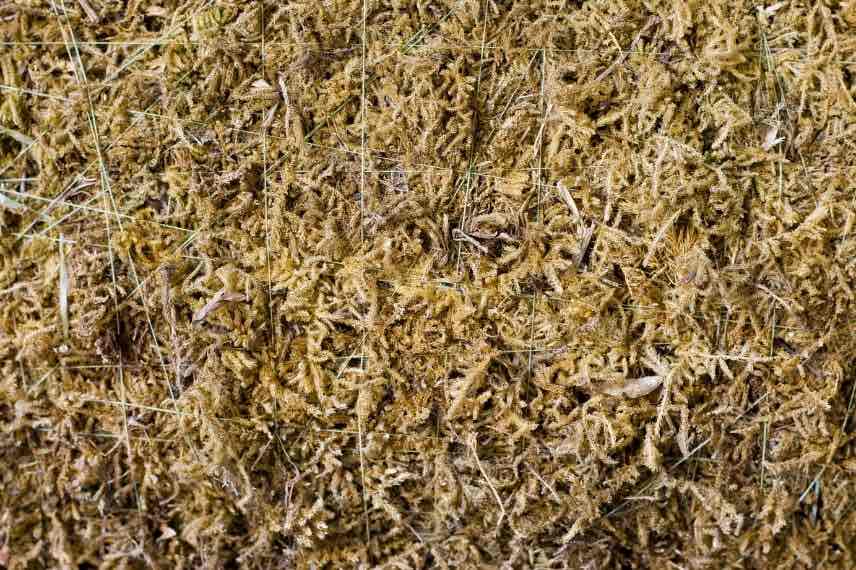
Sphagnum moss, when moistened, has a high water-retention capacity, which can be useful, particularly for large Monstera specimens
When and how to repot?
After purchase, it’s worth repotting to provide the right substrate for the plant and check the state of the roots.
The best season to repot your Monstera deliciosa is spring or early summer, when the plant enters its active growth phase.
However, indoor plants can be repotted almost any time of year.
Then repot annually, every two years or every three years, depending on the plant, with spring preferred.
Monstera shows strong growth; you’ll likely need to repot annually, or at most every two years.
How to proceed?
- If you are using sphagnum moss, first rehydrate it by soaking it thoroughly, then wring it out by pressing with your hands.
- Fill the bottom of the pot with a drainage layer a few centimetres deep in the form of clay pellets.
- Add about one-third of the pot with your substrate mix.
- Place the plant in the pot.
- Pour in the remaining substrate and gradually firm it down.
- Stop 2 cm below the rim of the pot, aligning with the start of the main stem.
- Water thoroughly the first time, over the sink.
- Place a saucer under the pot or put it in a cachepot.
Where should I place a Monstera indoors for good light?
The Monstera plant thrives in bright indirect light. Avoid direct sunlight, as this can scorch the leaves. Place your Monstera near a window facing east or west, or use a light veil to filter direct sunlight if necessary in front of a south-facing window. A north-facing room, but bathed in light from a large expanse of glazing, will do nicely too.
If the light is insufficient, consider using full-spectrum horticultural lighting to support the plant’s growth.
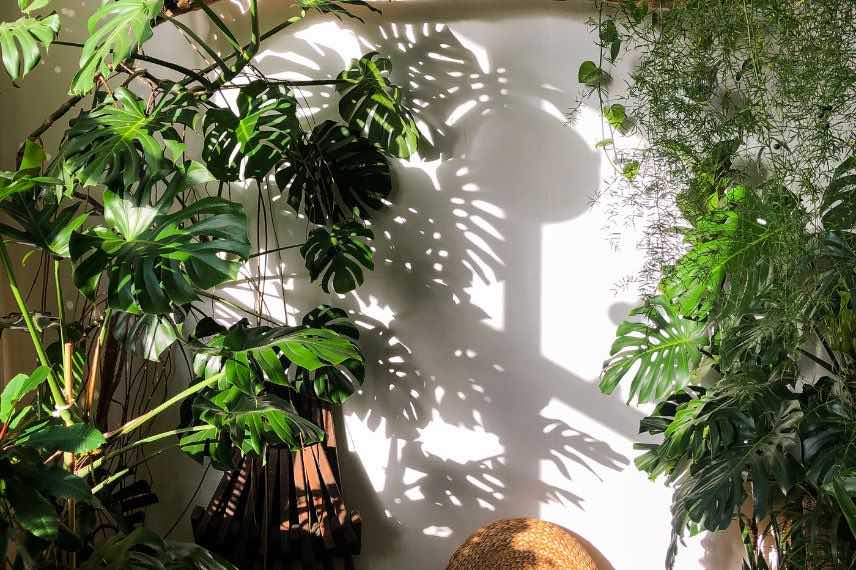
Monstera can tolerate direct sunlight in the morning or late afternoon (east or west-facing)
What temperature does a Monstera prefer?
Native to the tropical forests of Central America, your Monstera thrives in a warm environment between 18 and 25°C. This indoor plant tolerates temperature fluctuations in our homes but fears the cold: never let it fall below 12°C. Keep it away from direct heat sources such as radiators, which could dry the surrounding air. In a well-lit bathroom, it will naturally benefit from a humid atmosphere conducive to its growth. In winter, maintain a stable temperature around 18°C to preserve its lush foliage.
How to water a Monstera?
Watering is crucial for the Monstera. Wait until the top layer of the potting mix is dry to the touch before watering thoroughly. Empty the saucer or the cachepot 30 minutes after watering, or water in the sink. If the plant is very large, in a large pot, these checks are unnecessary.
The fertiliser
During the active growth period, from April to September, fertilise your Monstera every 4 to 6 weeks with a balanced fertiliser, specially formulated for houseplants.
You may also use a slow-release fertiliser at the start of spring. Or use vermicompost-based amendments as a replacement or as a supplement.
How to look after Monstera deliciosa?
Leaf care
Dust-prone leaves should be cleaned from time to time with a microfibre cloth.
Staking
Monstera is a plant that will eventually form a large, imposing specimen and, to boot, heavy. Install a sturdy support for it to climb, as it has a climbing habit. Choose a large coconut coir stake for example or a thick branch. You can also make one yourself. If you do not provide this support, it will sag, unbalance the pot and it will no longer stay up without a hanging system for its largest stems from the ceiling (which may be necessary even with a stake). And yes, Monstera doesn’t mess about with its size, weight and bulk!
Learn more at: Monstera: care through the seasons.
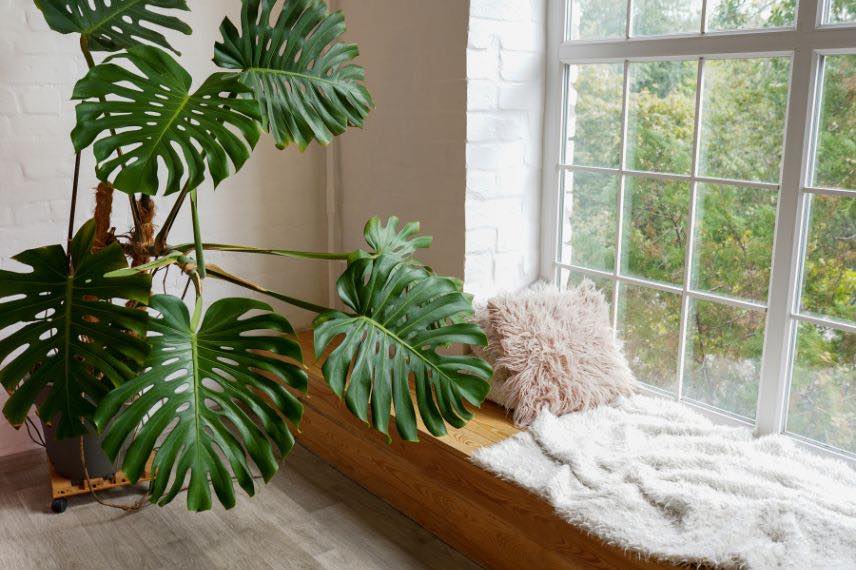
A large specimen occupying substantial space, equipped with stakes
Propagation by cuttings
Monstera propagation can be carried out using stem cuttings. Select a healthy stem and cut just below a node where an aerial root begins, and place it in water until roots form. Once roots have formed, plant the cutting in a pot with an appropriate substrate.
Diseases and pests
Monstera is generally resistant to diseases, but like many indoor plants, it can be susceptible to thrips or fungus gnats. Inspect your plant regularly to detect any sign of infestation and treat promptly with natural remedies.
- Subscribe!
- Contents

Comments