





























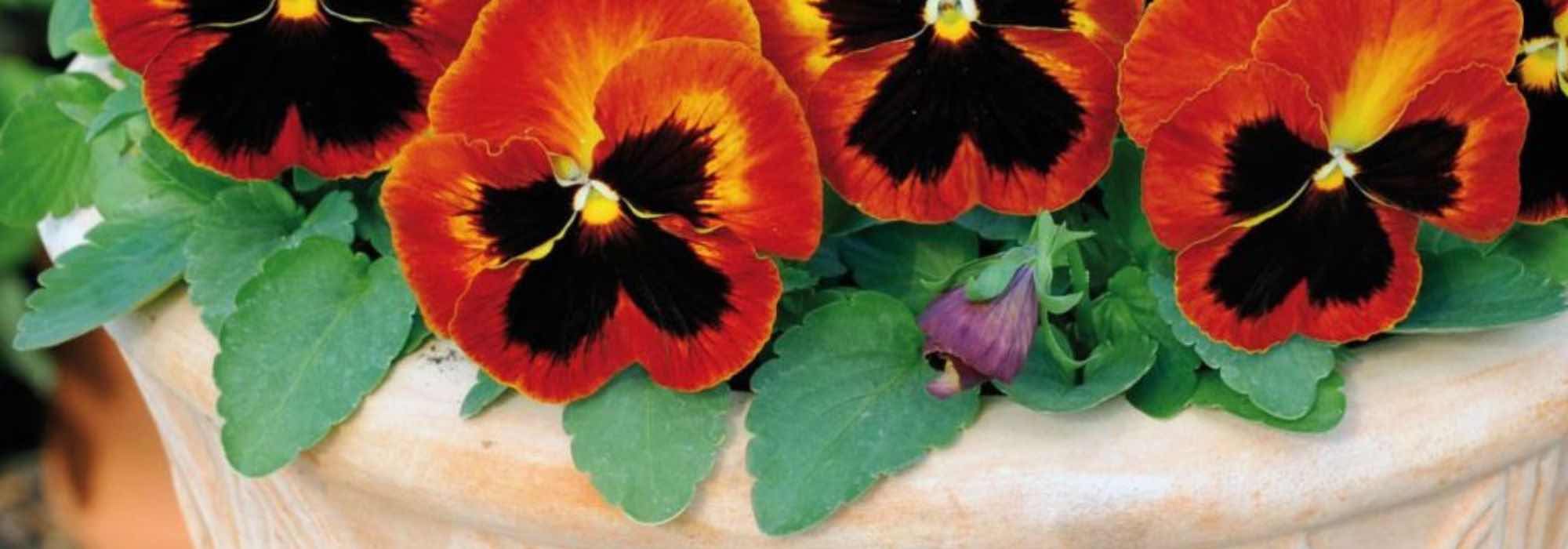
How to grow pansies in pots or window boxes?Our tips
Our tips to get the most out of them
Contents
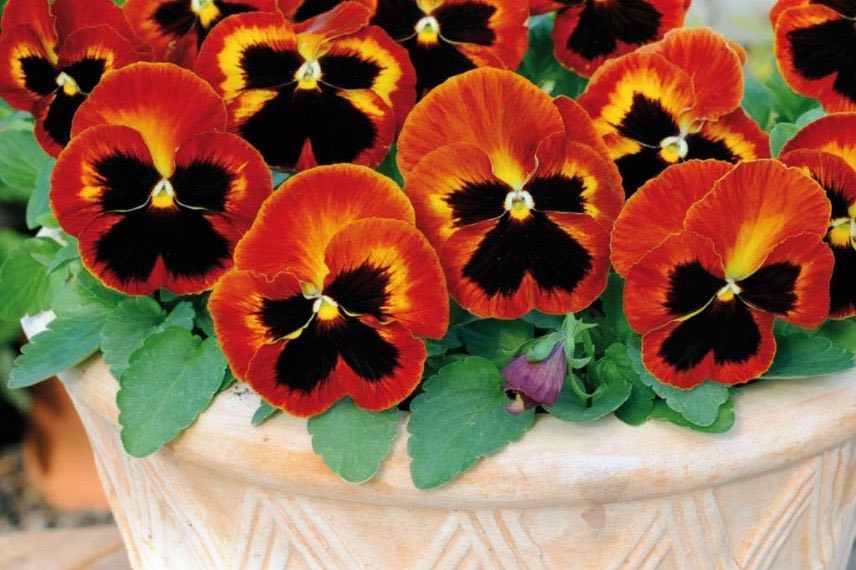
Growing Pansies and Violas in pots or window boxes is an excellent way to bring colour to your balcony or terrace.
These delicate flowers, appreciated for their simplicity and the diversity of colours and single- or double-flowered forms, can bloom year-round depending on the species and varieties chosen.
Pansies are perennials grown as annuals or biennials and are regularly replaced, as flowering is at its best in the first year.
Discover all our tips for growing in pots to make the most of these lovely plants, with abundant flowering.

Choosing pansies for your pots
All pansies are obviously suitable for container planting. Beyond the superb colours, single or double flowering, the differences that come into play when choosing are the flowering season, the decision to plant plug plants or to sow, and the growth habit.
Two methods of planting are available for pansies. You can choose to sow them, but the fastest method is to start from young plants or plug plants.
For more details on the specifics of plug plants, read our advice sheet: Planting biennials in plug plants
Pansies provide flowers over a long period and are generally much appreciated for the colour they bring in late winter, among the first to flower before spring’s renewal. But depending on species and varieties and the planting date, pansies can bloom across the four seasons and every month of the year!
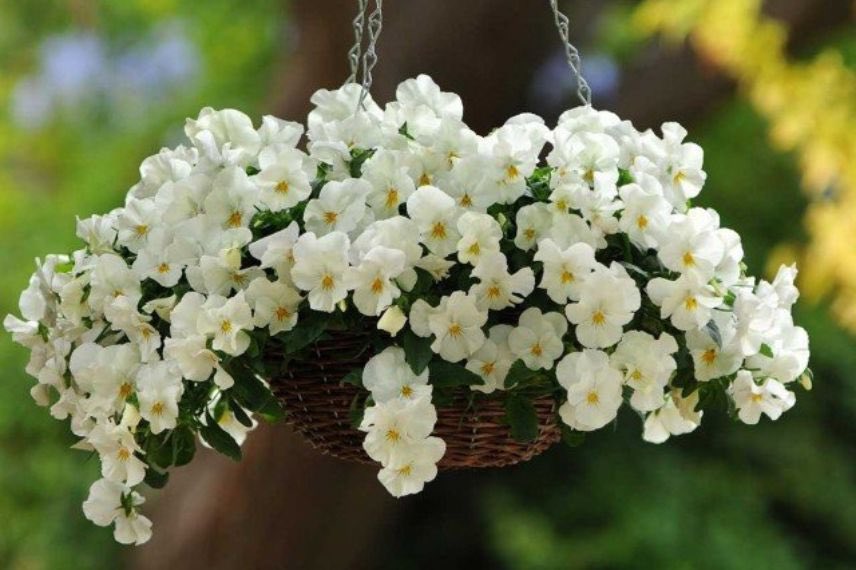
Regarding habit, if pansies are intended for pots and window boxes, there are also trailing varieties, such as the Cool Wave series, ideal for hanging baskets.
What type of pot? What size?
What type of pot?
All pot materials are suitable for these easy-to-grow plants.
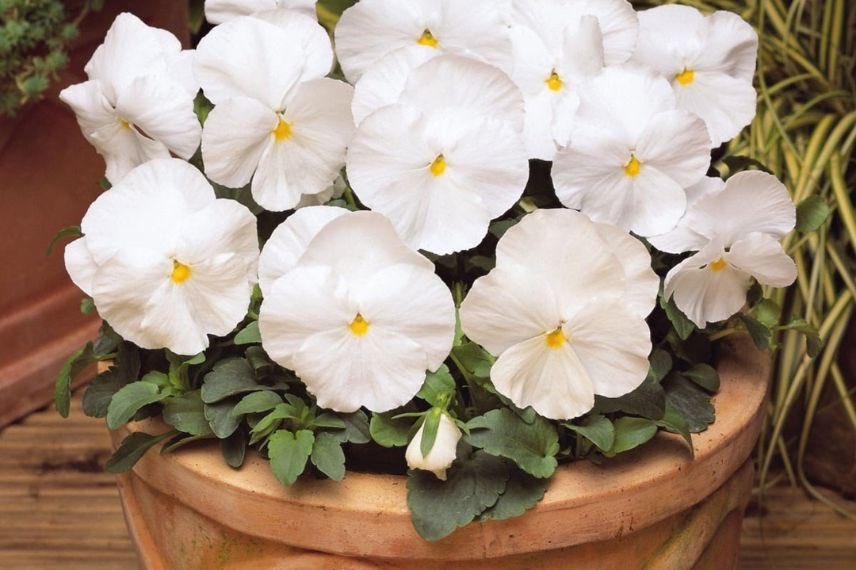
It should be noted, however, that a terracotta pot, being porous, dries out the watered soil more quickly than a plastic pot where water can tend to stagnate. For winter-flowering pansies, late winter or early spring, seasons that can be heavy with rainfall, it may be wise to opt for terracotta.
We also adjust watering according to the pot material.
What size?
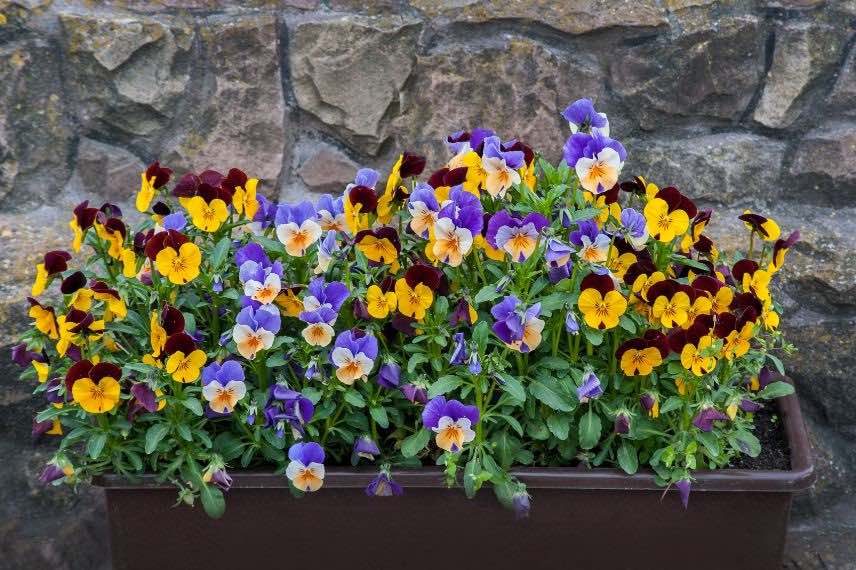
Pansies are small annual or biennial plants with a compact growth habit; there is no need for a large container to plant them. A rectangular planter is ideal, or any shallow pot of any size in which you can accommodate a number of plants.
A pot depth of 20 to 25 cm is sufficient for growing pansies.
Hanging baskets are aesthetically pleasing containers for trailing varieties.
Which substrate?
Pansies appreciate a fertile, humus-rich, light and crumbly substrate. They are grown in a potting mix for flowering plants that provides these elements and this texture, provided you add a drainage layer at the bottom of the pot.
Always choose a quality potting mix, which yields better results in keeping pansies flowering for long months. This means not opting for a cheap, low-priced potting mix.
You can opt for a universal potting mix to which you will add a little sand to improve drainage, or choose a blend specially designed for flowering plants or potted plants, preferably well-drained. Check that it contains drainage-enhancing elements such as perlite or bark, or add them yourself, at a ratio of 10–20% to 80–90% potting mix. Also check that it contains a fertiliser slow-release or incorporate it yourself, as pansies are heavy feeders.
Plan for clay pellets, gravel or broken terracotta pot pieces to place at the bottom of the pot.
Consider optionally an organic mulch to protect winter-flowering pansies from the cold or to retain the moisture from your watering for later flowering.
Read also
Pairing ideas with pansiesWhen and how to plant?
For best results, grow the pansies on as plug plants from September so that they fill out before winter.
If you couldn’t do this in autumn, it is also possible to plant the pansies in early spring, around April.
How to plant :
- Add a drainage layer of a few centimetres deep at the bottom of the pot, in the form of clay pebbles, gravel or broken terracotta shards.
- In a separate container, mix the different components of the potting mix if required.
- Pour potting mix into the pot.
- Place the plug plants of pansies.
- Top up with the potting mix, pressing down lightly and evenly.
- Fill up to a few centimetres below the rim of the pot and press down again.
- Water generously.
- When the water has been absorbed, add a little more potting mix if necessary to fill any gaps.
- After a few minutes, water again.
- Mulch, if desired, to a depth of about 3 centimetres.
If you decide to sow pansy seeds:
Do this between June and August, in summer, for flowering in autumn and winter. Or sow under a cold frame, around February, at the end of winter, for flowering in spring and summer.
- Fill a seed tray or terrine with seed compost, lightly firm and level the surface.
- Scatter the seeds evenly over the surface.
- Gently cover with a little sifted potting mix and press down gently.
- Water with a fine spray, using a spray bottle if necessary.
- Position the seed tray in a well-lit location but sheltered from direct sun. In late winter, place it under a cold frame for better germination.
Water regularly to keep the compost slightly moist, but not waterlogged.
About a month later, the pansies are ready to be repotted into individual pots.
Where to plant pansies?
Plant pansies in a sunny or semi-shaded spot. Avoid exposure to scorching sun.
In southern regions such as southern France, opt for light shade to protect pansies from the summer heat that could compromise their flowering.
These plants prefer relatively cool and mild temperatures for optimal growth.
Watering? Fertiliser?
Water regularly, as the substrate dries out quickly in pots. Be careful of waterlogging, which can cause root rot or the appearance of diseases. In the same vein, avoid wetting the foliage and, if possible, water in the morning.
Winter-flowering pansies require less watering than those flowering in spring or summer, as the substrate remains damp longer in winter. When the substrate is dry at the top few centimetres, water again. If weekly watering is likely to be sufficient in winter or early spring, it may be necessary to water every two days during hot, dry periods.
Very floriferous and fast-growing, they are heavy feeders. Therefore plan to offer them a liquid fertiliser for flowering plants up to once or twice a week during the growth period.
Care
- Add a layer of organic mulch for winter-flowering pansies to protect them from the cold.
- Remove spent blooms to encourage the plant to produce more blooms and extend the flowering period.
- In case of rust or powdery mildew that can attack the pansies, remove the affected parts and spray a horsetail decoction.
- In case of aphid attack, spray a solution of black soap on the foliage.
- If slugs and snails are eating your young plants, you can use Ferramol-type granules or install slug traps.
- They can rebloom each year, but the first flowering is usually the most beautiful. It is therefore often advisable to replace them.
If you leave the spent flowers on the plant, it is possible that pansies self-seed naturally. Over time, these new generations tend to revert to their wild form, characterised by smaller flowers and the absence of maculation.
- Subscribe!
- Contents
Comments