






























How to grow Pilea?
Our growing tips
Contents
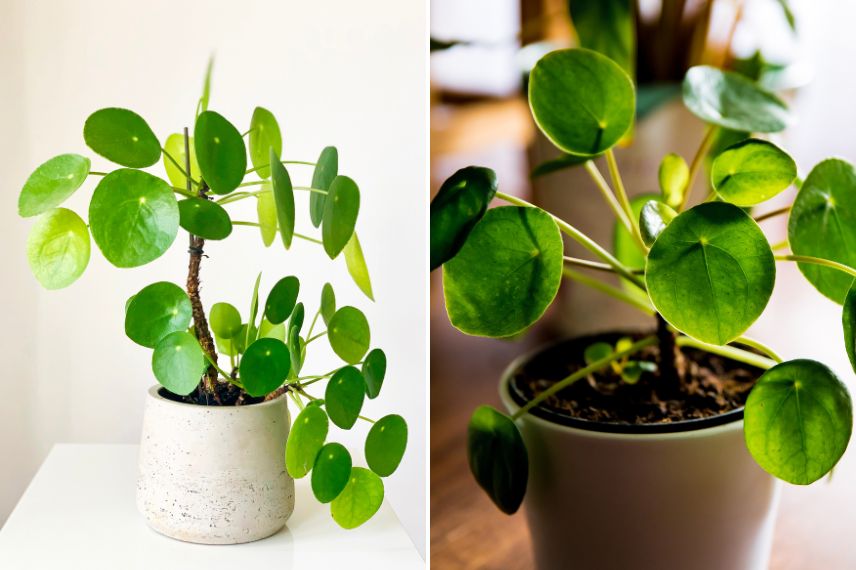
Pilea peperomioides, also known as the ‘Chinese money plant’ or simply Pilea, has become one of the most popular houseplants for its distinctive silhouette and coin-shaped leaves. Originating from China, this easy-to-care-for houseplant is also valued for its low maintenance and its vigorous growth. In this article, we will look at the essential steps to successfully grow and care for your Pilea peperomioides.

What type of pot? What size?
When choosing a pot for your Pilea, the ideal is to choose a terracotta pot with drainage holes to prevent water from accumulating around the root system. Terracotta is porous, and really is the best choice for this plant that needs good drainage and a potting mix that dries fairly quickly.
Pilea is often quite small when purchased, usually sold in pots 9 to 12 cm in diameter. If it can eventually form a fairly substantial specimen, it keeps a modest root system. Repot it gradually into slightly larger pots, each just a few centimetres bigger than the previous one.
Read also
How to repot a houseplant?Which substrate?
Pilea appreciates a well-aerated and well-drained substrate, ideally combining a good-quality potting compost for houseplants with perlite.
Budget potting mixes are not suitable for keeping your plants healthy; they are often sticky and poorly aerated, poorly balanced.
A good potting compost has a light, fibrous and non-compacted texture, usually brown.
It retains water well, as indicated on the back of the bag.
It is formed of turf and, sometimes, coir fibre.
Adjust your mix to 70 to 80% potting compost, 20 to 30% perlite.
If indoor conditions tend to be humid, choose 30% perlite; if they’re rather dry, use 20%.
Also have clay balls for drainage.
When and how to repot?
After purchase, remove the plant from its nursery pot and inspect it. Check the roots. If they are protruding from the pot or forming a root ball, repot the plant into a pot slightly larger. Check the quality of the substrate: if it does not contain perlite and does not feel light, repot the plant to refresh the substrate. Take the opportunity to inspect the plant thoroughly for pests.
Next, repotting of Pilea is generally necessary every year or every two years, or when the plant looks cramped in its pot. The best time to repot is in spring, when the plant enters its active growth. However, indoor plants can be repotted at almost any time of the year.
How to proceed?
- Fill the bottom of the pot with a drainage layer a few centimetres deep, in the form of clay pebbles.
- Add about one third of the pot with your prepared substrate.
- Position your plant.
- Pour in the remaining substrate and gently firm it down.
- Leave 2 cm below the rim of the pot, level with the start of the main stem.
- Water thoroughly the first time, over a sink.
- Place a saucer under the terracotta pot and choose a location that showcases your plant.
Read also
The easiest indoor plants to growWhere to place your Pilea?
Pilea needs bright light, but not direct sun rays, which could scorch the delicate leaves. Place it fairly close to a window. If it is south-facing, diffuse the sun’s rays with a blind or a sheer curtain. Morning or late-afternoon sun doesn’t need to be diffused, as the sun is weaker. A bright north-facing position also works, near a large window or under a Velux skylight, for example.
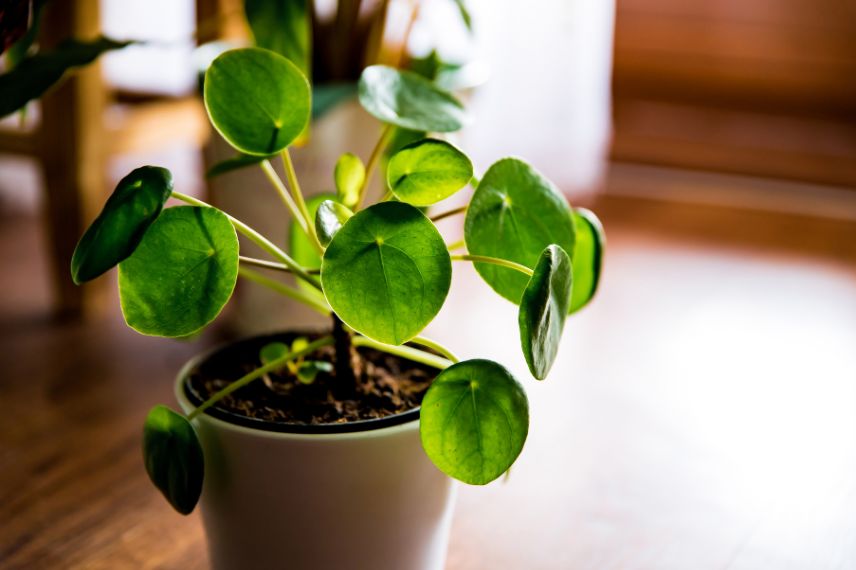
Pilea needs plenty of bright light
Watering and fertilisers
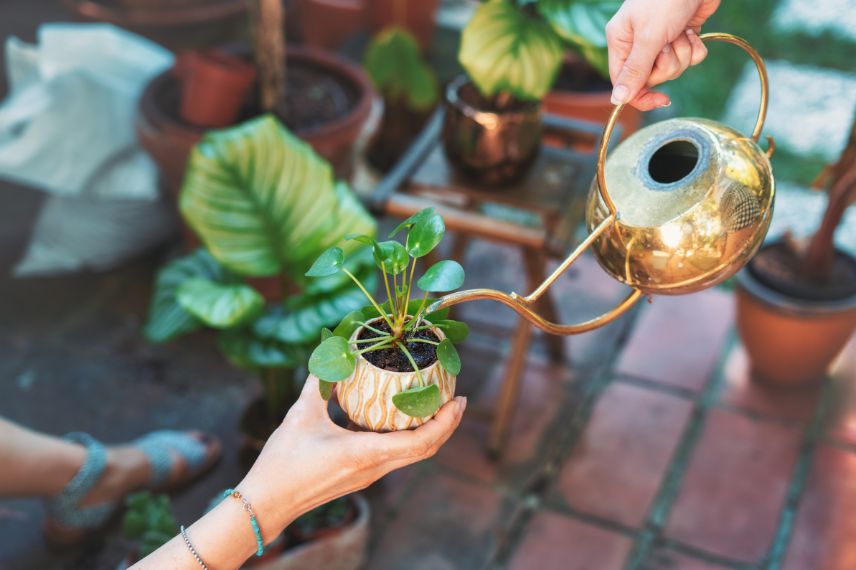
Water your Pilea generously, then wait for the substrate to dry before watering again. During the growing season, from spring to autumn, water regularly, but allow the substrate to dry out between waterings. Start with a watering frequency of about once a week, and adjust according to your environment and observations. In winter, reduce the watering frequency.
Feed every 4 to 6 weeks with a balanced liquid fertiliser, diluted to half the recommended dose.
You can also use a slow-release fertiliser at the start of spring. Or use vermicompost as a replacement or in addition.
Care
Periodically rotate your Pilea to prevent growth from leaning toward light on one side, which upsets the plant’s shape. Gently dust the leaves with a damp cloth to keep them clean and promote photosynthesis.
Provide a stake for the plant when you see the stem starting to lose its straightness.
If you provide your Pilea peperomioides with an appropriate substrate, a terracotta pot, a stake and good light for the entire plant, it will reward you with healthy growth and form a well-grown, well-balanced specimen, with no problems.
Multiplication
Pilea propagation can be carried out using lateral shoots that grow around the mother plant. When they have reached a sufficient size with roots, gently remove them and plant them directly into individual pots with the same substrate as the mother plant.
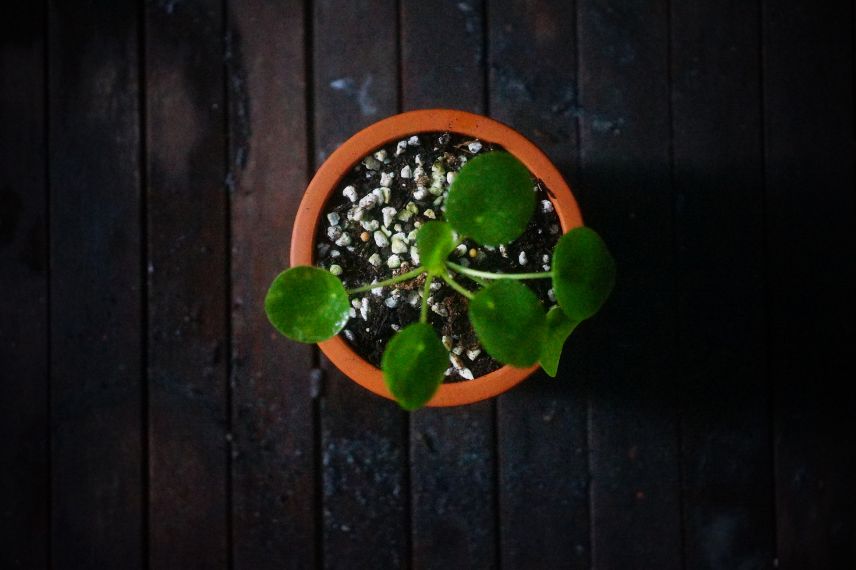
Pilea propagation is particularly easy. Here, a shoot from the mother plant in a perlite-amended substrate
Diseases and parasites
Watch for signs of overwatering, as this can cause root rot. Mites can also be a problem. If you notice yellowing or wilted leaves, inspect the plant carefully for any signs of infestation and act quickly with appropriate measures.
By carefully following these detailed steps, you will create an optimal environment for the growth and prosperity of your Pilea peperomioides. Enjoy its distinctive silhouette and its unique leaves by adding a touch of charming greenery to your living space.
- Subscribe!
- Contents

Comments