






























Growing a water lily in a small pond on a balcony or terrace
Our tips for a mini aquatic space
Contents
Water lilies, with their graceful flowers floating on the water, are desirable jewels of aquatic gardens. Often associated with large ponds, it is, however, perfectly possible to grow them in smaller spaces such as terraces and balconies. This article guides you through the steps to create a small aquatic haven with water lilies in a small basin on your terrace or balcony.
→ Read our Nymphaea, water lily: planting and care

Which varieties?
When it comes to growing water lilies in restricted spaces such as a terrace or balcony, the choice of variety is crucial. Water lilies, or Nymphaea, offer a wide range of varieties, but not all are suited to small ponds, as they are large-growing plants. For a small space, turn to dwarf varieties or slow-growing varieties, which adapt better to a confined environment.
- Nymphaea ‘Pygmaea Helvola’: This variety is highly sought-after for small ponds and containers. It is notable for its small yellow flowers and leaves marbled with green and purple. Its compact size, not exceeding 30 to 60 cm in diameter, makes it an ideal choice for limited spaces.
- Nymphaea tetragona: Known for its small size, this variety produces charming white flowers. It is perfectly suited for small ponds and containers, with a spread typically not exceeding 30 to 60 cm in diameter.
- Nymphaea ‘Aurora’: This variety changes colour as the days go by, shifting from yellow to copper. It remains small in size, which makes it suitable for small terrace or balcony ponds, but it still reaches a spread of 75 cm.
In addition to size, consider the environment of your terrace or balcony. The space should receive plenty of sun.
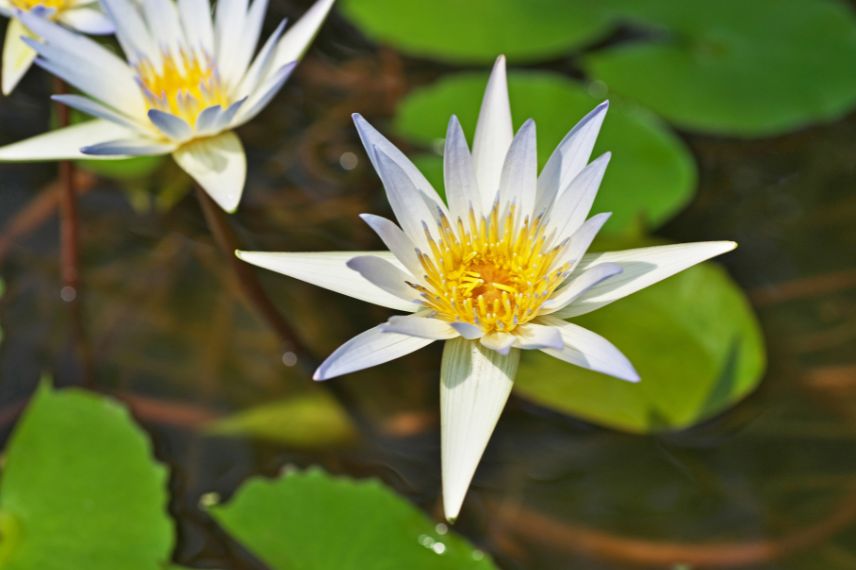
Nymphaea tetragona is a beautiful dwarf species
Which container?
Choose a watertight container that will serve as a miniature garden pond for your water lilies.
Container size
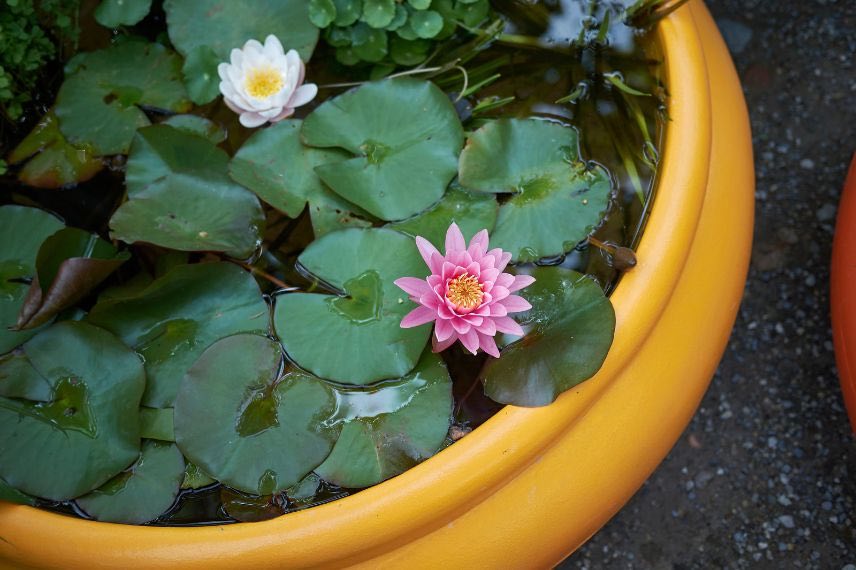
A minimum of 40 to 60 cm in depth is recommended. This depth allows the roots to spread and helps to maintain a stable water temperature, which is beneficial for the plant. The container’s width must be sufficient to allow the plant to flourish. A diameter of at least 45 to 60 cm is recommended for a single water lily. If you plan to plant several water lilies or add other aquatic plants, opt for a larger container; 1 metre in diameter is a good size for creating a mini-pond.
Materials
- Plastic or resin: Plastic containers are lightweight, durable and generally cheaper. Ensure they are UV-resistant to prevent degradation under sunlight.
- Ceramics or glazed terracotta: These materials offer a natural aesthetic and can be very decorative. However, they are heavier and may require additional reinforcement on a balcony or terrace.
- Wood: Wooden containers, such as half-barrels, bring a rustic touch. They should be treated to be water-resistant and to prevent rot.
- Zinc: Zinc is the material of old wash-tubs or garden basins; ensure this container is watertight.
As long as it is watertight, any container will do. A plastic liner can be used to ensure watertightness, particularly for wood.
On a balcony, ensure that the weight of the water-filled container does not exceed the maximum load capacity.
The container must be stable to prevent tipping, especially in windy or high-traffic areas.
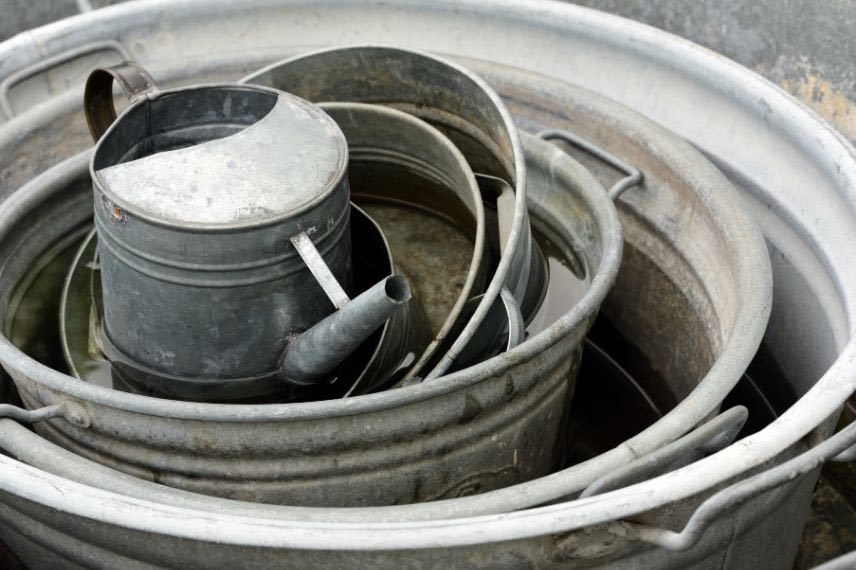
Recycled zinc basins are interesting, provided they are well watertight
Substrate
A good substrate will provide the necessary nutrients and maintain a stable structure for the roots.
If you can, choose a good garden soil, rich and free of stones. Otherwise, buy a special pond potting mix as shown on our site, that is, based on topsoil and pozzolana. Thus, the substrate is fairly heavy and less rich than a horticultural potting mix. Horticultural potting mix encourages the growth of algae. Alternatively, a mix of clay soil and sand also works.
Read also
Wintering of pond plantsWhen and how to plant?
Exposure
Water lilies thrive with good sun exposure, crucial for flowering. They ideally require 4 to 6 hours of direct sun per day. However, the more the pond is exposed to the sun, the more evaporation and algae growth it experiences. It is therefore a balance to strike, particularly to protect the pond from the sun’s rays during the hottest hours of summer.
Wind-exposed areas can damage the leaves and flowers of water lilies. If your balcony or terrace is particularly windy, consider using windbreaks or placing the container in a more sheltered spot.
Protect your water lilies from extreme temperatures. In frosty conditions, you may need to move the container indoors or protect it with insulating materials.
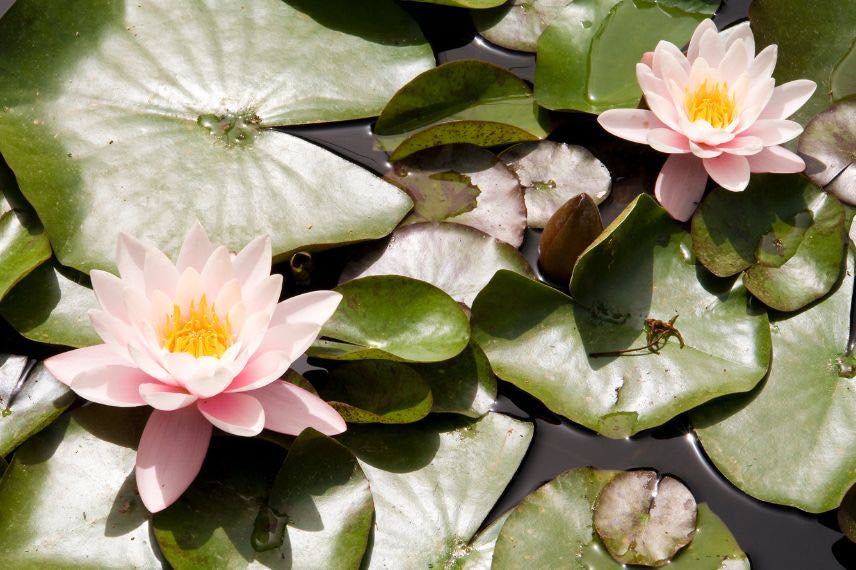
Water lilies thrive in the sun
Maintenance and water quality
Regular maintenance of water lilies and water quality management are essential for your aquatic plant’s health and beauty.
Regular maintenance
- Monitor the growth of water lilies. If the plant becomes too large for the container, consider dividing it or replanting it into a larger container.
- Apply a balanced, controlled-release fertiliser at planting, then each year at the start of the growing season and during the growing period (for example: Osmocote 10-11-18-2 for a duration of 5-6 months).
- During summer, remove leaves that appear in excessive numbers at the centre of the clump, keeping only the most vigorous ones.
- Also remove those that are yellowing or stained, as well as aquatic adventives that emerge at the surface.
Water quality
- You may use rainwater or tap water. If using tap water, allow it to stand for 30 minutes to dissipate any chlorine present. Ensure your tap water is not overly hard, as water lilies prefer water that is slightly acidic to neutral.
- The pH of the water should be kept around neutral, with a pH between 6.5 and 7.5. Use test kits to monitor pH and adjust if necessary.
- Perform partial water changes regularly, especially if algae growth or water turbidity develops. Replace about a quarter to a third of the water to refresh the environment without disturbing the biological balance.
- Avoid excessive fertilisers and fish foods, as they can promote algae growth.
General pond maintenance
- Subscribe!
- Contents
Comments