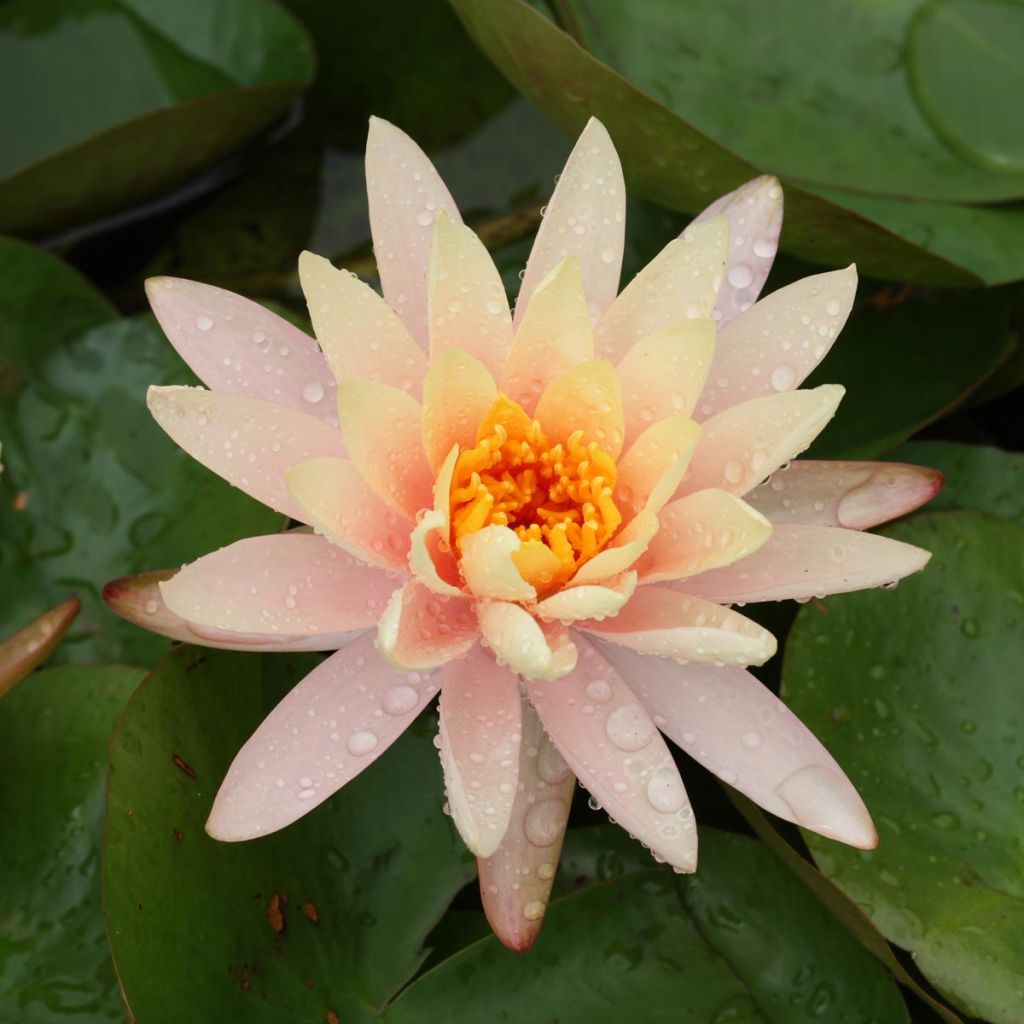
Nymphaea Aurora - Water Lily
Nymphaea Aurora - Water Lily
Nymphaea Aurora
Water Lily
Received a plant without any leaves that appears dead. £30 for this, I regret my purchase. I am closely monitoring the recovery.
Yoann, 11/06/2020
Back-to-school special offer!
Get €10 off for every €50 you spend! And get up to €40 off on a single order.
How does it work?
1. Shop your favourites
Add your favourite plants to your basket. For every €50 you spend (excluding delivery charges, store credit and the plastic-free option), you’ll receive a €10 voucher.
€50 spent = €10 voucher
€100 spent = €20 voucher
€150 spent = €30 voucher
€200 spent = €40 voucher
2. Place your order
Once your basket reaches one of the spending thresholds, place your order. You can even choose your delivery date!
3. Receive your voucher
As soon as your order has been shipped, you’ll receive an email containing your personal voucher code and its value.
4. Use it on your next order
Your voucher is valid for 90 days from the date you receive it. It can be used once only, on a new order worth at least the value of the voucher, excluding delivery charges.
Please note: Vouchers can be combined with other offers, but cannot be split or refunded.
Home or relay delivery (depending on size and destination)
Important: You may be charged customs duties by your country’s customs authorities upon delivery.
Schedule delivery date,
and select date in basket
This plant carries a 6 months recovery warranty
More information
We guarantee the quality of our plants for a full growing cycle, and will replace at our expense any plant that fails to recover under normal climatic and planting conditions.
Description
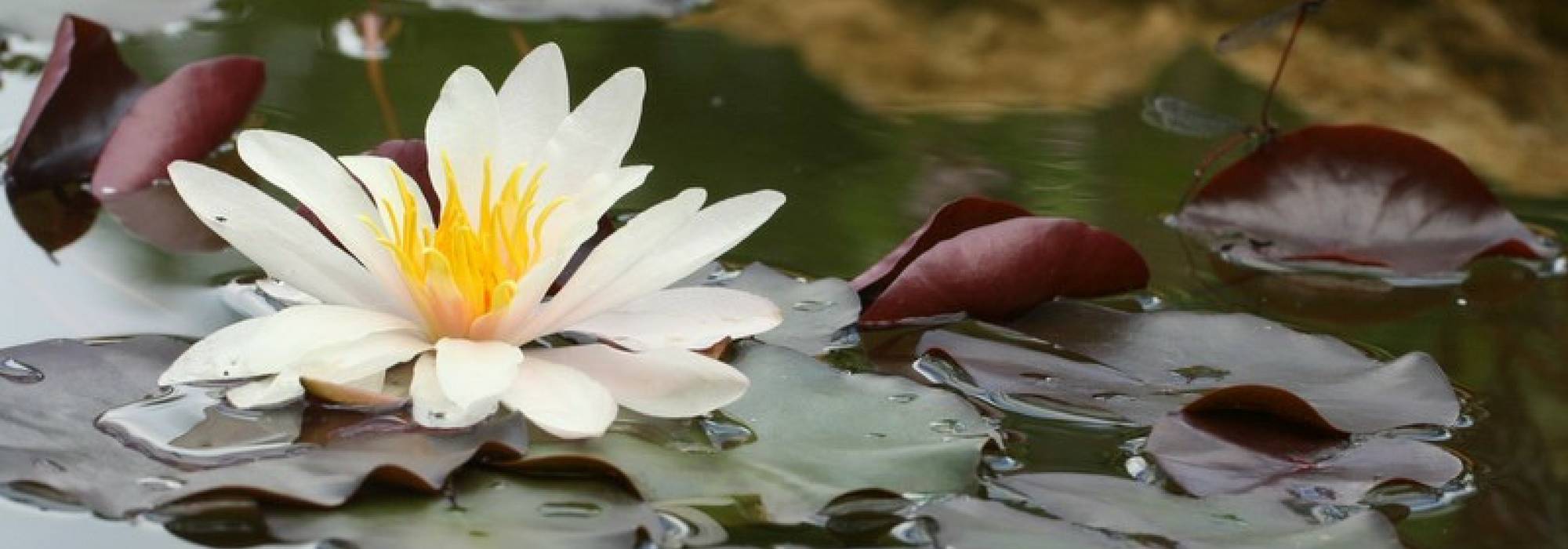
Nymphaea 'Aurora' is a moderate-sized hardy hybrid water lily. It bears semi-double star-shaped flowers which transition from cream to yellow, orange, and eventually blood red as they age, and olive green leaves. Its changing summer flowers are tender and vibrant until autumn. It is an old variety that is well-suited to small ponds or aquatic containers on the terrace.
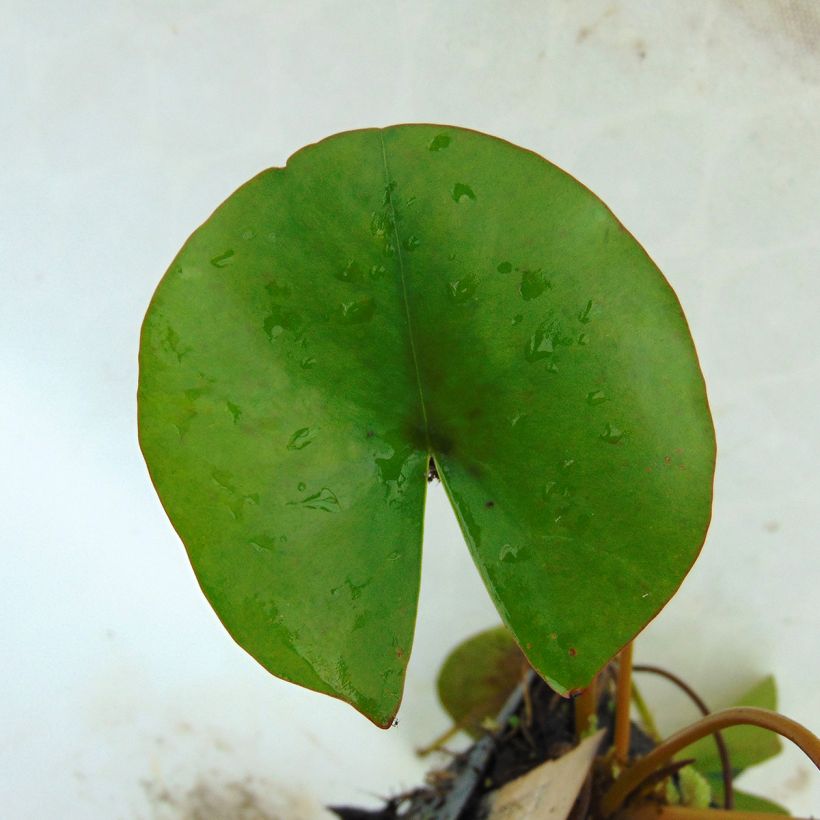
Nymphaea 'Aurora' is a deciduous rhizomatous aquatic perennial with peltate leaves belonging to the Nymphaeaceae family. It is a hardy hybrid, obtained through cross-breeding various European and North American species, including Nymphaea alba, Nymphaea odorata, and Nymphaea mexicana. It develops large floating leaves from spring. The leaves can be erect, large, heart-shaped or peltate, entire, smooth, or toothed. The plant reaches 15 cm (6in) high when in bloom and spreads to 75 cm (30in). Flowering begins in June and continues until autumn. The perfectly shaped flowers, 5 cm (2in) in diameter, are solitary and float on the water's surface, opening in the morning and closing in the evening. They change from cream to deep red with orange stamens. Flowering is followed by fruits containing numerous seeds. The fruit matures underwater and releases floating seeds, which eventually sink and germinate in the mud.
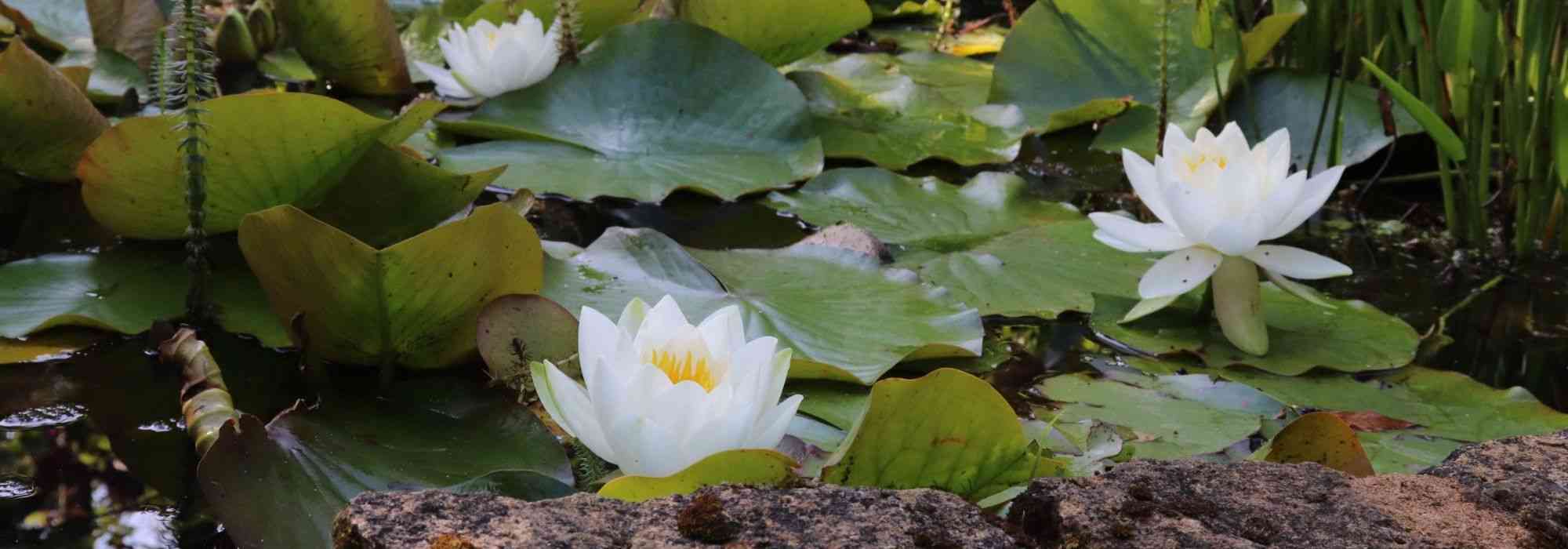
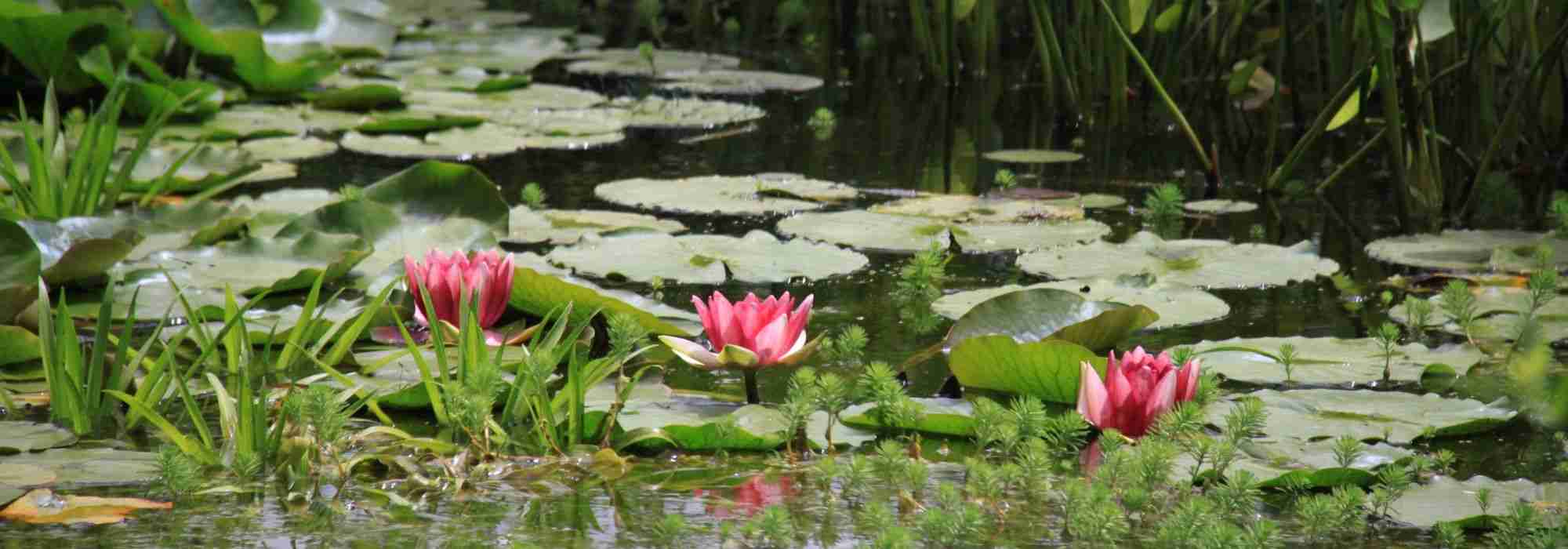
Choose easy and floriferous varieties, proportionate to your pond. Water lilies will be the main attraction in your pond with their spectacular and diverse flowers. Most of them bloom from spring until early autumn. Water lilies are essential oxygenators for maintaining a healthy balance in a garden pond. Their leaves provide shade and shelter for your fish, which in turn protect them from predatory insects such as aphids.
The genus name comes from the Greek "nymphaia" and the Latin "nymphaea," which means "water lily". They were inspired by the nymphs of Greek and Latin mythology. Nymphaea produces flowers that are sometimes diurnal, sometimes nocturnal, and occasionally fragrant.
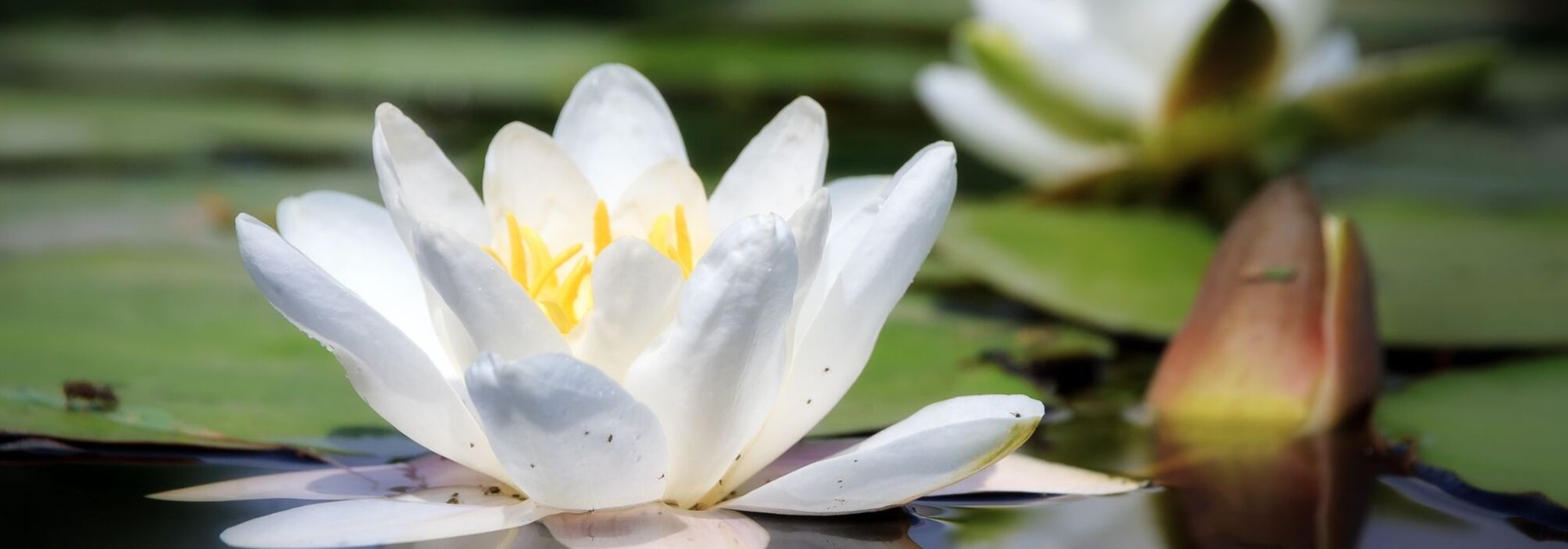
Nymphaea Aurora - Water Lily in pictures
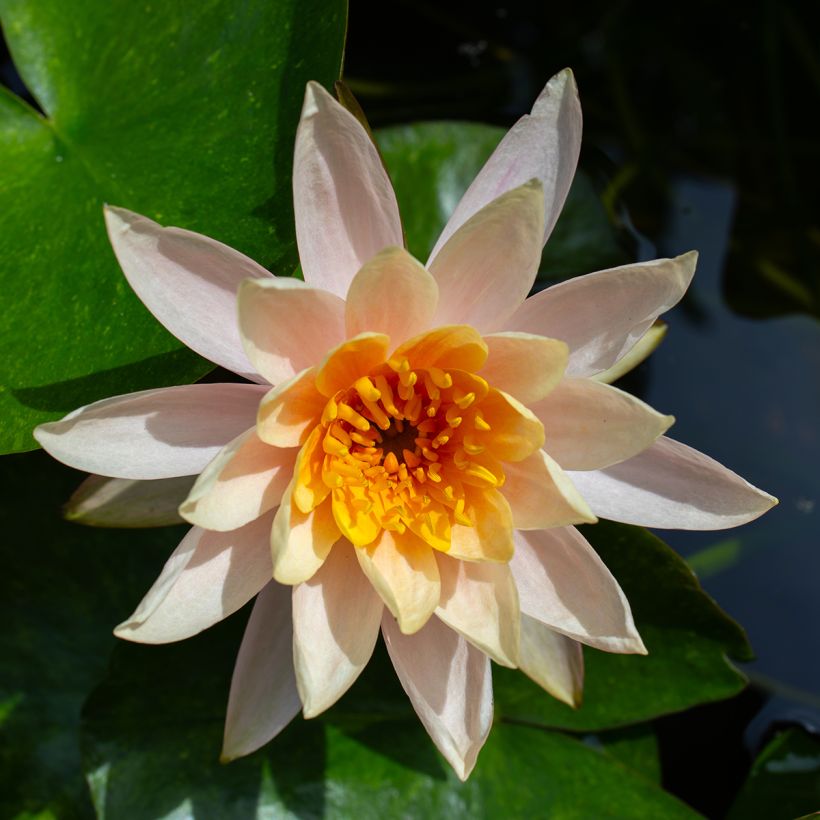
Flowering
Foliage
Plant habit
Botanical data
Nymphaea
Aurora
Nymphaeaceae
Water Lily
Cultivar or hybrid
Planting and care
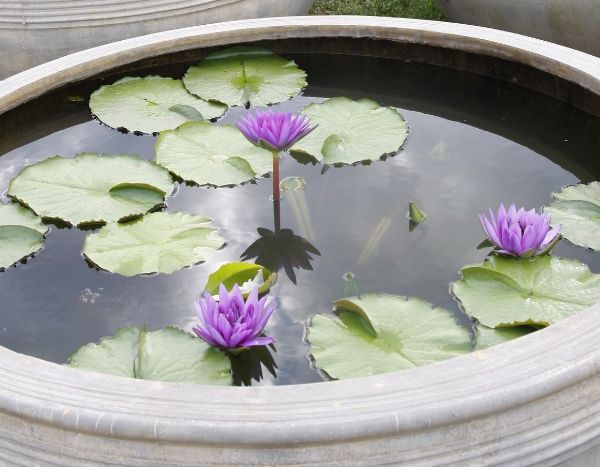
Hardy water lilies can withstand winter if the pond is at least 50 cm (20in) deep. They should be planted from March to June at a depth of 30 to 80 cm (12 to 32in), except for dwarf water lilies, for which 20 cm (8in) will be enough, and small rhizomes, which should initially be submerged only 10 cm (4in) deep, gradually moved deeper as the plants grow. Plant the rhizomes in good, stone-free garden soil (never use potting soil, as it is too rich and promotes algae growth) in the sunniest spot in the pond. Space each rhizome at least 1.50 m (5ft) apart and plant them in the soil up to the collar. In a natural water feature (pond or lake), make sure the water level remains fairly stable and that the water is neither too acidic nor too alkaline (desired pH between 6.5 and 7.5). Rhizomes can be planted in a wicker basket or a fine wire mesh basket that can be sunk into the desired location. For classic hardy water lilies, use a pot with a diameter of 40 cm (16in) (wider than it is tall). For shallow ponds, planting in a bowl is possible, but you will need to overwinter the rhizomes in damp sand, protected from frost. If the bottom is muddy, simply attach a stone to the rhizome and throw the whole thing into the desired location. Never leave Nymphaea rhizomes exposed to the sun or air which will dry them out; plant them upon receipt or purchase. If you have fish in your pond, spread a thick layer of large gravel on the surface of the planted pot to discourage them from digging into the soil and dirtying the water. Water lilies will develop best if they are planted in containers suitable for their growth. Water lilies are nutrient-demanding plants, so distribute balanced slow-release fertilizer when planting and at the beginning of each growing season (e.g., Osmocote 10-11-18-2 with a 5-6 month duration). During the summer, remove excessive leaves from the centre of the clump, leaving only the most vigorous ones. Also remove yellowed or stained leaves, and emergent roots.
Planting period
Intended location
Care
Planting & care advice
-
-

-

-
-
-
-
-
-
, onOrder confirmed
Reply from on Promesse de fleurs
Recently viewed products
Haven't found what you were looking for?
Hardiness is the lowest winter temperature a plant can endure without suffering serious damage or even dying. However, hardiness is affected by location (a sheltered area, such as a patio), protection (winter cover) and soil type (hardiness is improved by well-drained soil).

The flowering period indicated on our website applies to countries and regions located in USDA zone 8 (France, the United Kingdom, Ireland, the Netherlands, etc.)
It will vary according to where you live:- In zones 9 to 10 (Italy, Spain, Greece, etc.), flowering will occur about 2 to 4 weeks earlier.
- In zones 6 to 7 (Germany, Poland, Slovenia, and lower mountainous regions), flowering will be delayed by 2 to 3 weeks.
- In zone 5 (Central Europe, Scandinavia), blooming will be delayed by 3 to 5 weeks.
In temperate climates, pruning of spring-flowering shrubs (forsythia, spireas, etc.) should be done just after flowering.
Pruning of summer-flowering shrubs (Indian Lilac, Perovskia, etc.) can be done in winter or spring.
In cold regions as well as with frost-sensitive plants, avoid pruning too early when severe frosts may still occur.
The planting period indicated on our website applies to countries and regions located in USDA zone 8 (France, United Kingdom, Ireland, Netherlands).
It will vary according to where you live:
- In Mediterranean zones (Marseille, Madrid, Milan, etc.), autumn and winter are the best planting periods.
- In continental zones (Strasbourg, Munich, Vienna, etc.), delay planting by 2 to 3 weeks in spring and bring it forward by 2 to 4 weeks in autumn.
- In mountainous regions (the Alps, Pyrenees, Carpathians, etc.), it is best to plant in late spring (May-June) or late summer (August-September).
The harvesting period indicated on our website applies to countries and regions in USDA zone 8 (France, England, Ireland, the Netherlands).
In colder areas (Scandinavia, Poland, Austria...) fruit and vegetable harvests are likely to be delayed by 3-4 weeks.
In warmer areas (Italy, Spain, Greece, etc.), harvesting will probably take place earlier, depending on weather conditions.
The sowing periods indicated on our website apply to countries and regions within USDA Zone 8 (France, UK, Ireland, Netherlands).
In colder areas (Scandinavia, Poland, Austria...), delay any outdoor sowing by 3-4 weeks, or sow under glass.
In warmer climes (Italy, Spain, Greece, etc.), bring outdoor sowing forward by a few weeks.
Shipping country and language
Your country of residence may be:
Your country of residence is:
For a better user experience on our website, you can select:
Your shipping country:
-
 Austria
-
 Belgium
-
 Bosnia & Herzegovina
-
 Bulgaria
-
 Croatia
-
 Cyprus
-
 Czechia
-
 Denmark
-
 Estonia
-
 Finland
-
 France
-
 Germany
-
 Greece
-
 Hungary
-
 Iceland
-
 Ireland
-
 Italy
Italy
-
 Latvia
-
 Liechtenstein
-
 Lithuania
-
 Luxembourg
-
 Malta
Malta
-
 Netherlands
-
 Poland
-
 Portugal
-
 Romania
-
 Serbia
-
 Slovakia
-
 Slovenia
-
 Spain
Spain
-
 Sweden
-
 Switzerland
Language:
-
French
-
 English
-
Spanish
-
Italian
-
German
-
Portuguese
-
Dutch
-
Finnish
My Account
Hello
My wish lists
My cart
Log in / Register
Existing customer?
This form is protected by reCAPTCHA - the Google Privacy Policy and Terms of Service apply.
New customer?
Create an account to track your orders, access our customer service and, if you wish, make the most of our upcoming offers.