





























Lilac diseases and parasitic pests
Identification, prevention and natural remedies
Contents
Lilac, also known as Syringa, is a bush much loved in gardens. It produces large clusters of fragrant flowers, from April to June, adding touches of colour in white, pink, mauve or purple. There are around twenty species, the most widespread being Syringa vulgaris or common lilac. Very hardy, lilac can however sometimes be affected by a disease or parasitic pests. Discover diseases and parasites that can affect lilac, how to identify them, prevent them and treat them naturally.

Powdery mildew
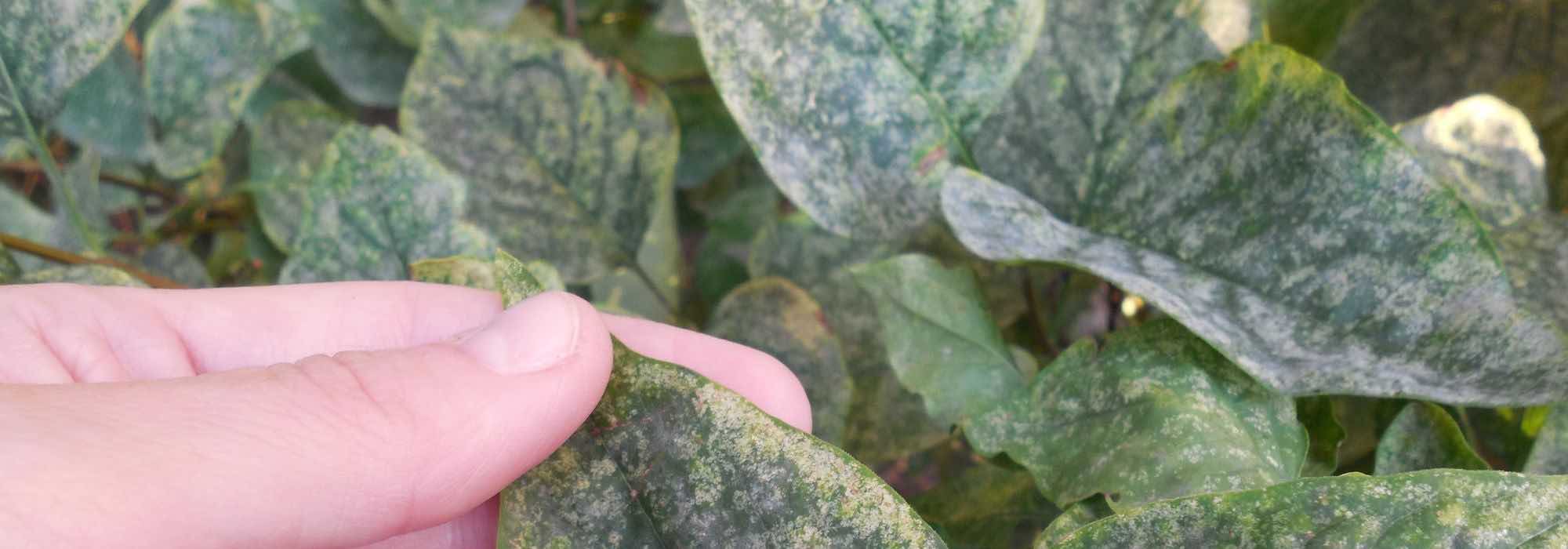
The lilac can be affected by a fungal disease called powdery mildew. It covers the leaves with a characteristic white powdery coating, usually in late summer when the weather is warm and humid.
Symptoms
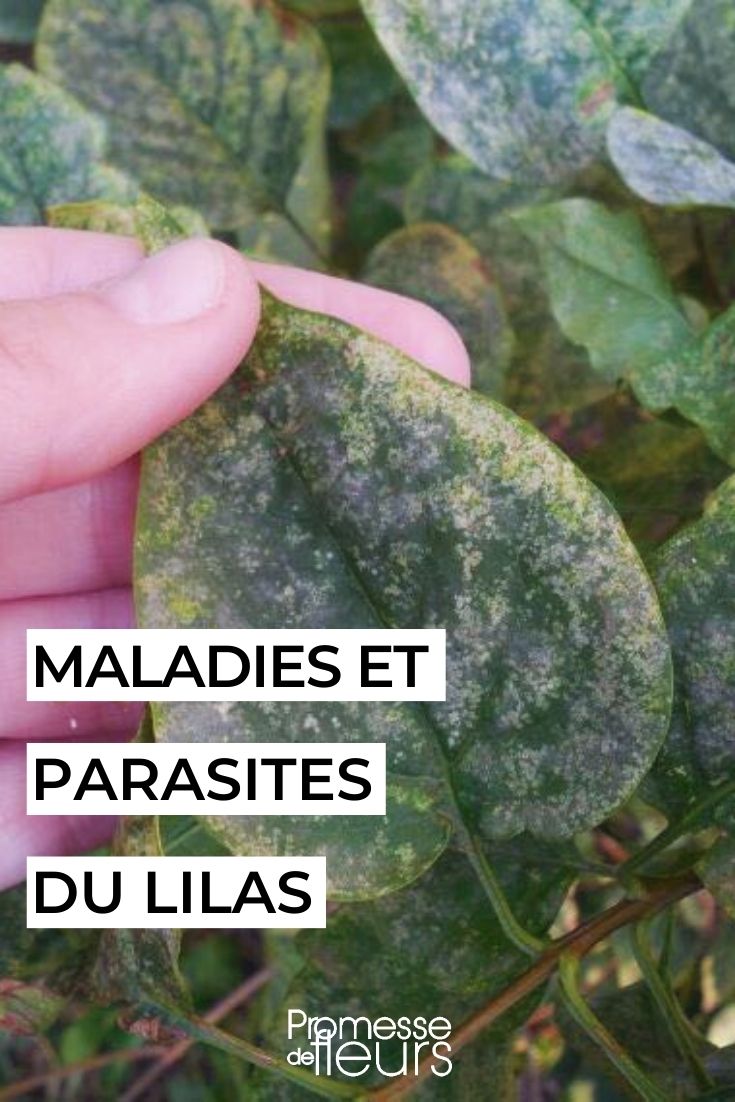
Powdery mildew appears as a white, powdery felt appearing on the leaves, stems and sometimes the flowers. The leaves may become distorted and drop prematurely, weakening the bush.
Prevention
To prevent powdery mildew, it’s important to properly space lilac bushes to promote air circulation. Avoid overwatering and favour watering at the base of the plants. Regular pruning of the branches to remove the affected parts is also recommended. You can also spray horsetail decoction.
Treatment
Start by cutting the affected branches with a sterilised pruning shear with alcohol. Then spray a sulfur-based fungicide, nettle manure or treat with Bordeaux mixture.
For further reading, see our fact sheet: “Powdery mildew or white disease.”
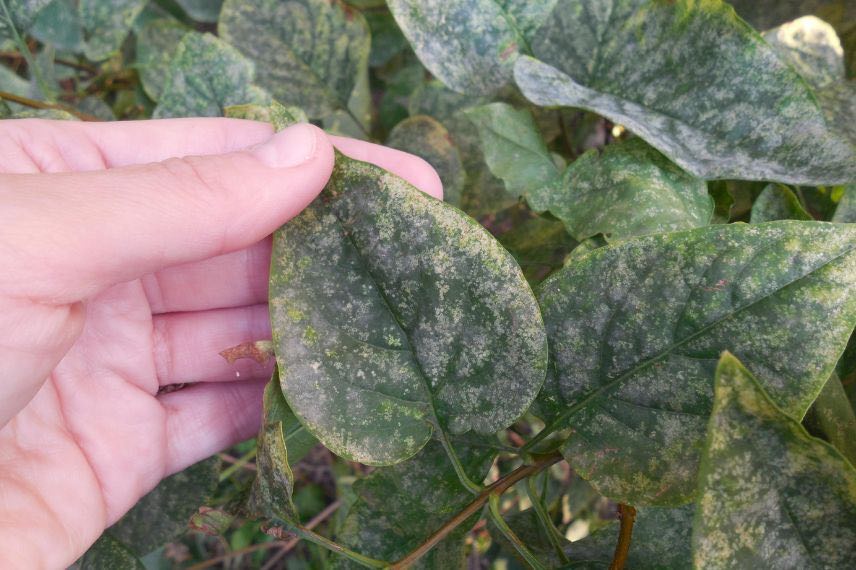
Powdery mildew on lilac leaves
Root rot
When lilac is planted in very damp or waterlogged soil, it may develop Phytophthora root rot, a cryptogamic disease causing the bush’s roots to rot.
Symptoms
Phytophthora root rot manifests as root rot, bark peeling and sometimes the appearance of white patches on the trunk.
Prevention
To prevent root rot, ensure good drainage of the soil in which your lilac is planted.
Treatment
There is no treatment; only prevention of the disease can help keep lilac healthy.
Fire blight
Fire blight is prevalent in some regions and is a serious disease that can quickly kill lilac within a few weeks. The cause is the bacterium Erwinia amylovora, which spreads in warm, humid weather, at temperatures between 25 and 30°C.
Symptoms
The bush appears to have been burnt. The disease appears in spring as the flowers wither. Subsequently, the branches appear burnt and cankers may form.
Prevention
Remove all affected parts and dispose of them at the waste disposal site. In spring, you can spray as a preventive measure Bordeaux mixture or a horsetail decoction. If the bush is affected entirely, dig it up and take it to the waste disposal site.
Treatment
There is no curative treatment; prevention is key to preventing its spread. In the event of a fire blight outbreak, you must inform your local council or the Regional Plant Health Service.
For further reading, see our advicesheet: Fire blight – identifying and combating this disease
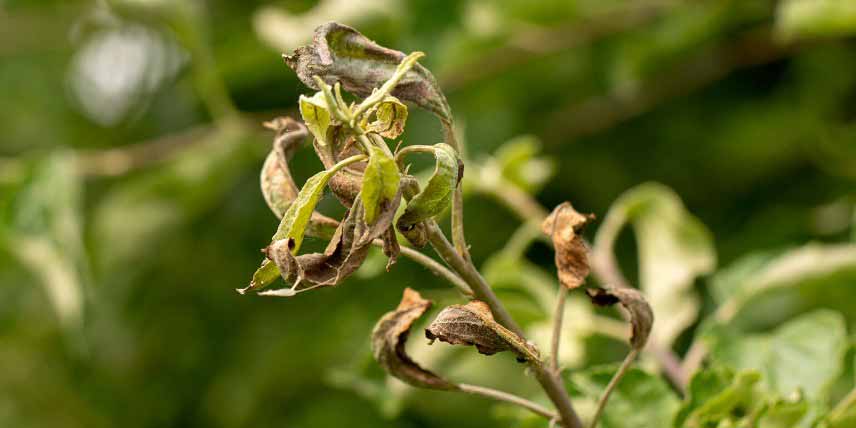
Symptoms of fire blight
Mealybugs
Mealybugs are small insects that cannot be seen with the naked eye. They suck the sap from the plant and thereby weaken it. They thrive in a confined environment, in warm and humid conditions.
Symptoms
Mealybugs signal their presence through small white, cottony clusters on the leaves and the branches.
Prevention
Ensure the bush is not confined and that it is well ventilated. You can also introduce natural enemies into your garden such as ladybirds, lacewings or blue tits.
Treatment
Take a cotton wool ball or cloth soaked in 90% alcohol and use it to remove the mealybugs. If they are too numerous, try to get rid of them by blasting a strong jet of water on the affected branches and leaves.
You can also make sprays based on liquid black soap and rapeseed oil.
In 1 litre of water, dilute:
– 1 teaspoon of liquid black soap
– 1 teaspoon of denatured alcohol
– 1 teaspoon of rapeseed oil
Repeat the operation every 8 days until all mealybugs have disappeared.
For more information, see our advice sheet: Mealybug: identification and treatment
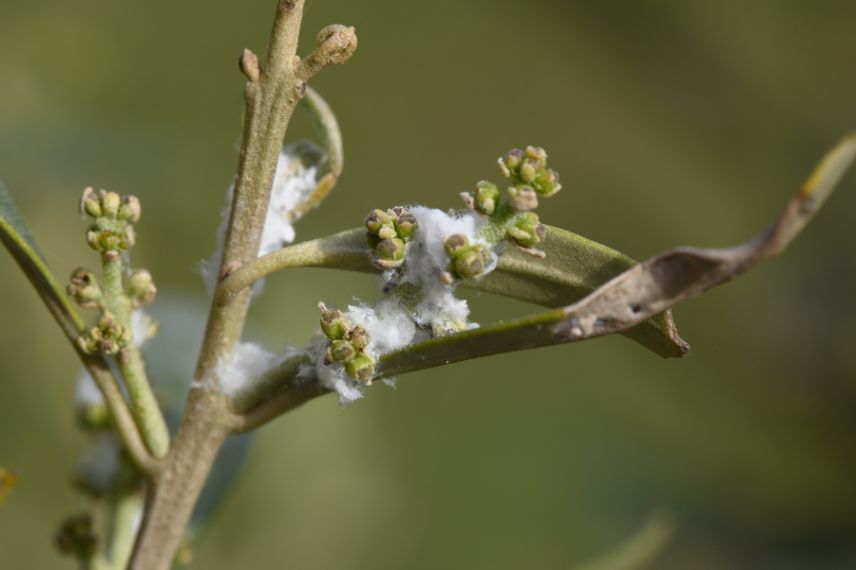
Mealybugs
Vine weevils
The vine weevils are small beetles that nibble the edges of lilac leaves. They resemble small weevils and come out at night. Their presence is favoured by hot, dry summers.
Symptoms
The leaf edges are punctured or dentate. Small beetles can sometimes be observed on the leaves, but they drop to the ground and are difficult to catch.
Prevention
Encourage the introduction of beneficial animals into your garden such as the hedgehog.
Treatment
Spray the bush with a tansy decoction or apply nematodes and mulch the base of the bush to prevent vine weevil attacks.
For more information, consult our advice sheet: “How to get rid of vine weevils?”
In addition, discover our guide: “Identify the main pests and diseases of plants”, as well as our complete guide on lilac planting and maintenance.
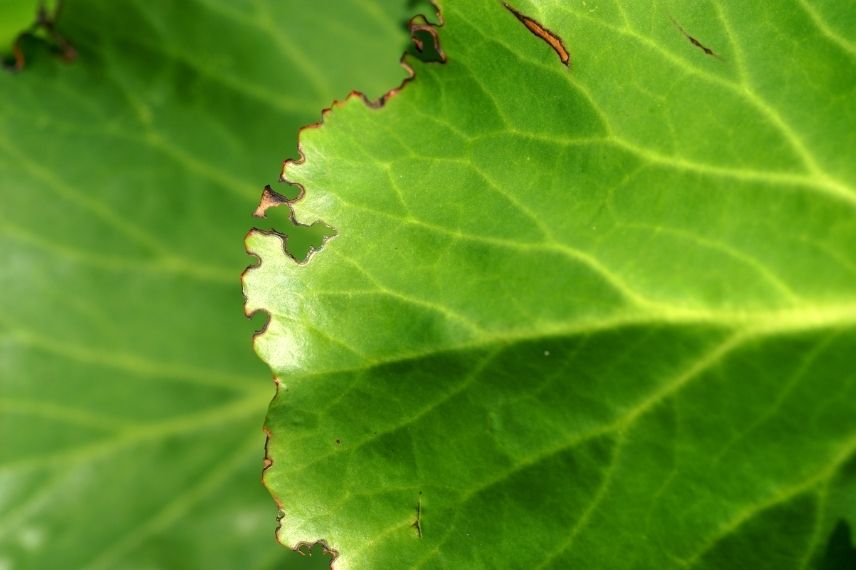
Vine weevils leave distinctive markings around the margins of the leaves
- Subscribe!
- Contents
Comments