


























Mediterranean young plants: how to grow them in the North?
Our tips and tricks for bringing a touch of Provence to northern France
Contents
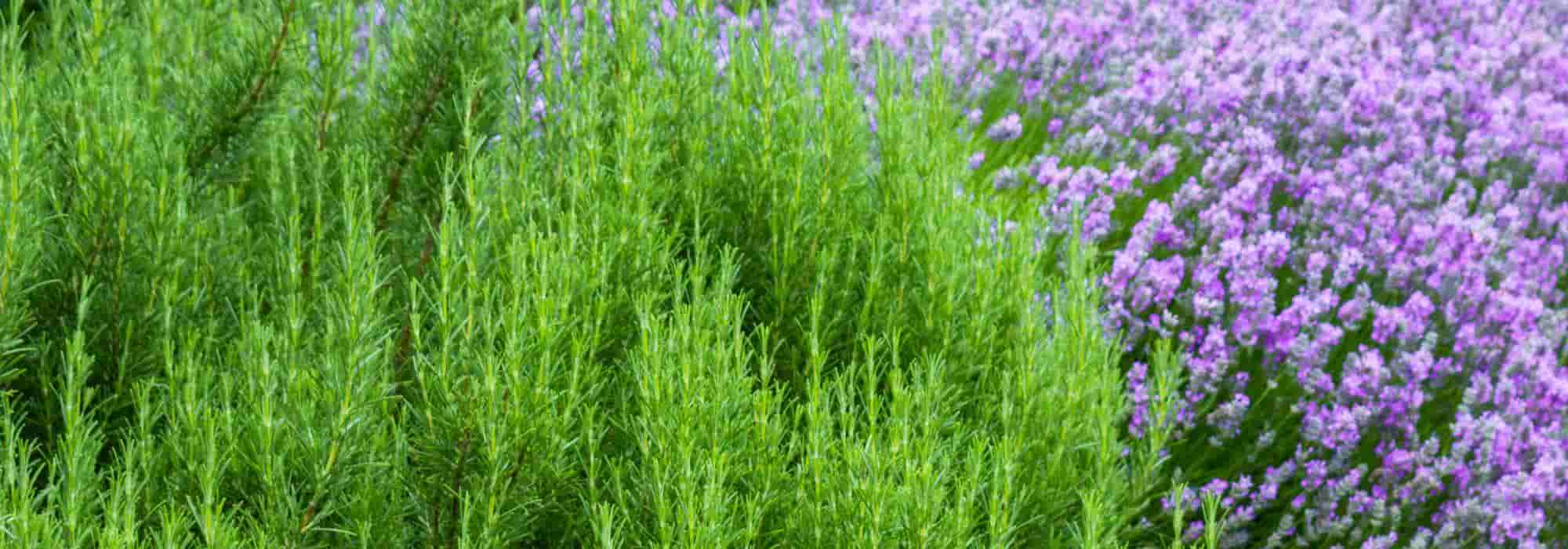
Who said that Mediterranean charm was reserved for sunny regions? If you dream of the scents of lavender and rosemary, or the beauty of the olive trees in your garden, and you live in northern France, it’s not impossible! Admittedly, growing them in northern France can pose a few challenges, but it is entirely possible to create a Mediterranean oasis at home, even in colder, wetter climates. In this article, we will guide you through the best practices for selecting Mediterranean plants suited to your soil and climate, along with tips for planting and maintenance. Follow the guide to a successful Mediterranean garden, even in northern France!
→ Also discover our Garrigue garden range in our online catalogue.
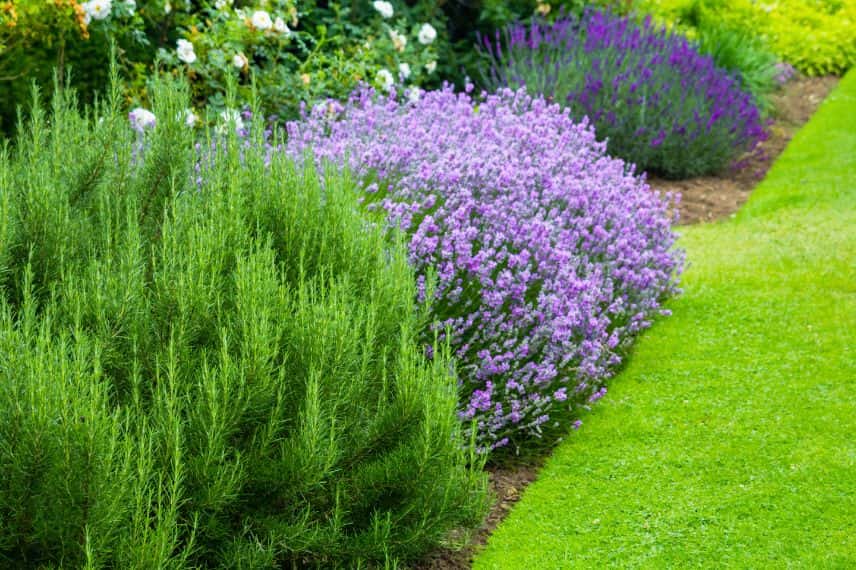

Mediterranean plant craze
Mediterranean plants captivate with their aesthetic appeal and beguiling fragrances. These plants also evoke sunny holidays spent in the south, the scents of Provence and well-deserved rest. Incorporating Mediterranean plants into one’s garden is a bit like bringing a piece of these precious memories home.
On the other hand, these attractive plants are also known for their resilience. Many of them are suited to harsh conditions, requiring little maintenance and, above all, tolerating the drought that is increasingly prevalent, even in northern France. They are perfect for beautifying a sunny terrace or a flowering balcony.
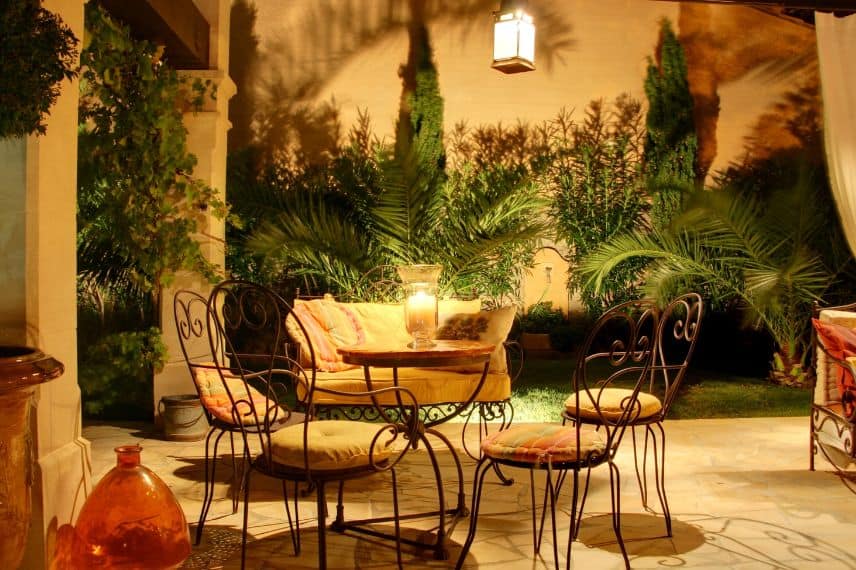
How could you not think of holidays when Mediterranean plants are planted around the terrace?
Northern culture vs Southern culture
Growing Mediterranean plants in northern France is not an easy task, but it’s far from impossible. The cooler and wetter climate can pose challenges, notably with regard to cold hardiness and humidity. Climatic differences between the north (USDA hardiness zones 6a to 8a) and the south of France (USDA hardiness zones 9a to 10Bb) can affect the growth and flowering of these plants, requiring adaptation measures. However, with the right plant choices and proper preparation, you can recreate a Mediterranean ambience in your own garden, even under a grey sky.
Know your hardiness zone to choose suitable plants
To create a successful Mediterranean garden in northern France, the choice of plants is crucial. Certainly, you may crave the scents of lavender or the same bush you saw in Saint-Tropez last summer, but quickly curb that frenzied enthusiasm! It is important to select varieties that are not only beautiful and fragrant, but also hardy to tougher climate conditions.
Start by checking your hardiness zone. In France, there are ten hardiness zones, ranging from zone 5 (montane climate) to zone 10 (very hot and dry climate). These zones are based on the average minimum temperatures recorded over the last 20 years in each region. Here is an approximate map of hardiness zones in France to help you find yours:
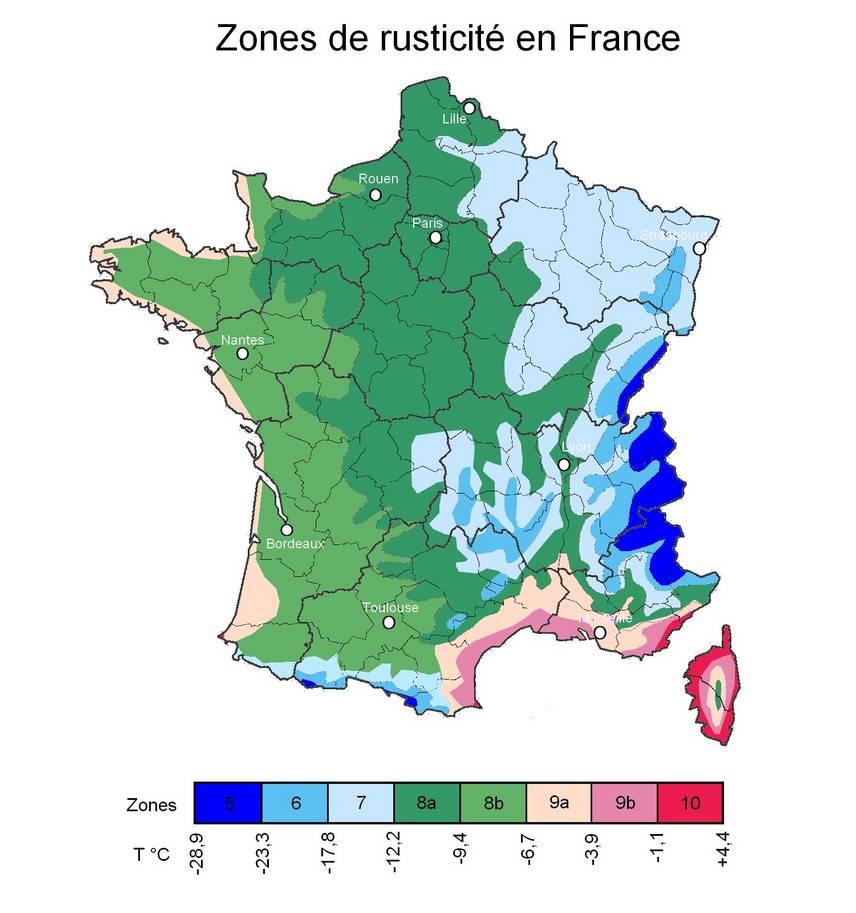
Hardiness zones in France
In northern France, we are in hardiness zone 8b to 7, i.e., extreme minimum temperatures of -6.7°C to -17.8°C. And what is your hardiness zone?
→For more information, read our article: Climate zones and USDA zones in France
Astuce : to refine or find your true hardiness zone based on your municipality, don’t hesitate to use our Plantfit tool. The symbol, shaped like a small shoot, is located at the very top of our website, beside your name when you are signed in. Then select “Create a garden” and choose the weather station closest to you; you will then see your hardiness zone appear. Read also our article: Plantfit: our new tool for tailored gardening.
Once you know your hardiness zone, you will have an idea of the minimum temperatures recorded in your region. Thus, you can choose a plant that tolerates those minimum temperatures. We often refer to the plant’s hardiness.
Let’s take an example:
- I live in the city of Lille in the Hauts-de-France region. My hardiness zone is zone 8A, i.e., a minimum temperature of -9.4°C to -12.2°C.
- I want to plant an olive tree. I check the hardiness of olive trees and find that the stem olive (Olea europaea) has hardiness to -12°C. It is therefore suitable for my climatic region!
- As with all young plants, I will need to follow planting guidelines (see next chapter) and be vigilant during the first two years after planting.
Read also
Lavender: which one to choose?Examples of beautiful varieties suited to the north of the Loire
Lavender
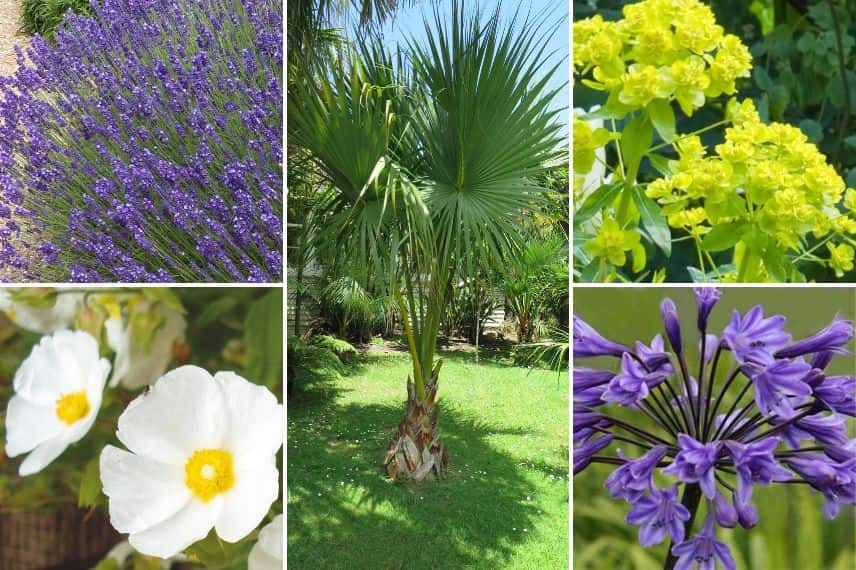
Some varieties, such as Lavandula angustifolia ‘Munstead’ or the famous true lavender (Lavandula angustifolia ‘Hidcote’), are particularly frost hardy, able to tolerate temperatures down to -18°C. Lavender also offers its characteristic scent that instantly recalls the South. And to bring a touch of originality to the garden or balcony, why not opt for the white colour of the Lavandula intermedia ‘Edelweiss’ or the softness with the Lavandula angustifolia ‘Rosea’.
Olive tree
With its rough bark and silvery foliage, the olive tree is the symbol of Mediterranean climates and cicadas. Although it dislikes excess moisture, the Olea europaea adapts to cold regions (down to -12°C), provided it is well protected from frost and planted in a well-drained spot.
Agapanthus
The Agapanthus is often associated with milder climates, but some varieties, such as the Agapanthus ‘Glacier Stream’ or ‘Black Buddhist‘, are particularly frost hardy, able to tolerate temperatures down to -15°C in the ground. It also grows very easily in pots to brighten terraces and balconies with its long flowering stems, crowned by a globe of blue or white flowers, adding a touch of elegance and vertical presence to the garden.
→ Discover our article on Agapanthus: the 7 hardiest varieties
Euphorbias
The Euphorbias are particularly frost hardy, able to tolerate temperatures down to -20°C (see more!). Euphorbia brings an architectural touch and a contrast of colour to the garden or in pots, while requiring little maintenance. Among the many varieties, notably Euphorbia Euphorbia ‘griffithii Fireglow’ for its lovely red-orange bloom and the Euphorbia palustris ‘Walenburg’s Glory’ which enjoys damp soil.
Yucca
With its rigid sword-like leaves and a formidable flowering spike, the yucca is prized for its exotic look as well as its robustness. While many varieties are not very hardy, there are some that withstand the cold very well, such as the Yucca Filamentosa or the variegated foliage cultivar ‘Colour Guard’.
Rockrose
The Montpellier Rockrose is a particularly resilient plant, capable of tolerating varied climatic conditions, including frost down to -15°C. This evergreen perennial is distinguished by its delicate white or pink flowers and its aromatic grey-green foliage. Ideal in full sun or in a pot, it does require dry soil in summer.
Palms
Palms, though not generally native to the Mediterranean region, are widely planted in Provence’s seaside towns. As a result, they are often associated with sunny atmospheres and holiday vibes. Nevertheless, some varieties can also be grown in cooler regions. For example, the Chinese Palm (Palmier de Chine) can withstand down to -15°C and it prefers the soil to stay slightly moist in summer, just like Sabal minor.
→ Discover our article on 7 hardy palms to plant almost anywhere in France.
Fig trees
The fig tree, typically associated with sunny areas of the Mediterranean, can also find a place in gardens in northern France. Indeed, many varieties, such as ‘Figality’, ‘Icecrystal’ and ‘Jannot’ can withstand temperatures down to -10°C (hardiness zone up to 8a). It offers not only delicious fruit but also large, lush foliage that provides welcome shade and an unmistakable Mediterranean character.
And other mediterranean trees:
You can also consider Wisteria, rosemary, certain Sages, the Strawberry Tree, Spanish Broom, the Virginia trumpet vine (hardiness up to 8a) which is also found around Lille, and bulbs of Crocosmias or Alstroemerias.
Site selection and soil preparation, an essential step.
Site selection
In northern France, sunny days are less frequent than in the Mediterranean, which can affect photosynthesis and flowering of these exotic plants. It is therefore essential to choose a location to compensate for this lack of natural light. Choose a south- or south-west-facing exposure that will allow your plants to benefit from optimal sunlight.
However, it is also important to take winds into account, especially in colder regions. Place your plants close to a wall, a hedge or other structures to create a milder microclimate, protecting the plants from cold winds and frosts.
Soil preparation
Most Mediterranean plants share one trait: they like well-drained soil and do not tolerate excess stagnant moisture. Even though summers are becoming drier in the north, you are never immune to a long spell of heavy rainfall in August. Moreover, heavy clay soils are common in these regions. Well-drained soil is essential for the success of your Mediterranean garden.
To improve drainage, add one third coarse sand (builder’s sand or river sand). For clay soils, use gravel or perlite. Add also one third well-rotted compost or the Mediterranean plant compost.
Another option is to create raised beds or mounds to raise the planting areas, which facilitates the natural drainage of rainwater.
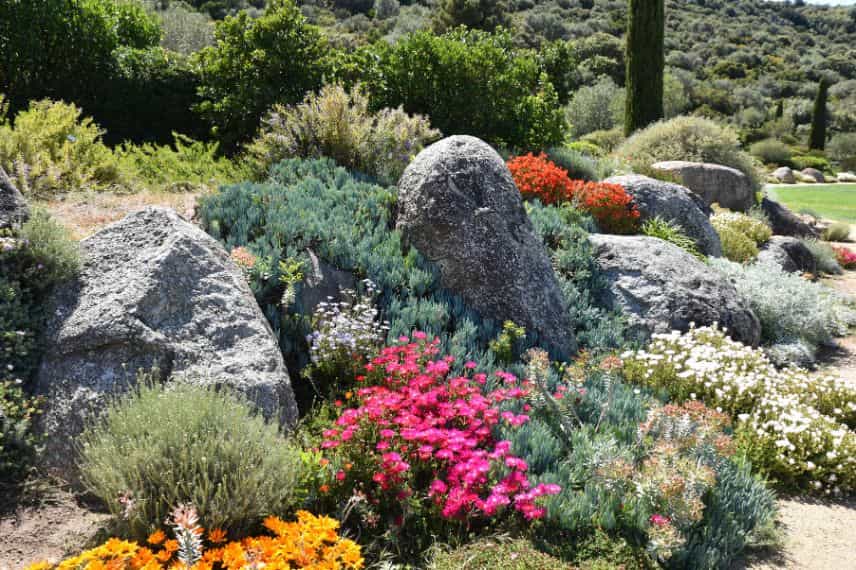
Planting mound to create a Mediterranean-style rock garden
Pot planting
If your soil is very heavy, waterlogged, or if you wish to grow tender Mediterranean plants, you may consider planting them in pots. Thus, you avoid problems with heavy soil and plants that can be moved to shelter during winter and brought out onto the terrace in fine weather. Also, provide a bed of clay pebbles at the bottom of the pot and a potting compost that is both rich and well-draining.
Planting period and maintenance
Choosing the right time to plant
Spring and early autumn are the ideal times for planting your Mediterranean garden. This gives your plants time to establish their roots well before extreme temperatures, whether hot in summer or cold in winter. For potted plants or those that are particularly frost-prone, choose spring planting.
Watering
Watering should be moderate, as these plants are generally used to drier conditions. Overwatering can lead to root rot. A drip system or deep, infrequent watering is often recommended.
Fertiliser
Using a fertiliser rich in phosphorus and potassium can stimulate flowering and strengthen frost resistance. Avoid fertilisers that are too high in nitrogen, which promote leaf growth at the expense of flowers.
Protection against the cold
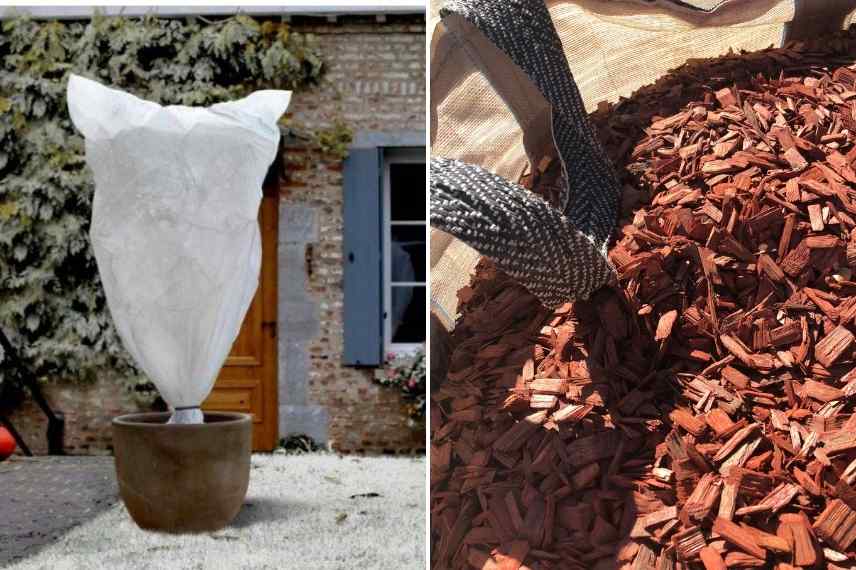
Remember to protect your most sensitive plants during winter and during the first two years after planting for those that are less hardy. You can use winter shields and covers or bring the pots indoors into a greenhouse or conservatory during frosty periods.
Also install mulch (mulch) (straw, hemp, pine bark, dead leaves, etc.) to retain soil warmth and protect plant roots. This method also helps retain soil moisture and reduces evaporation in summer.
- Subscribe!
- Contents
Comments