





























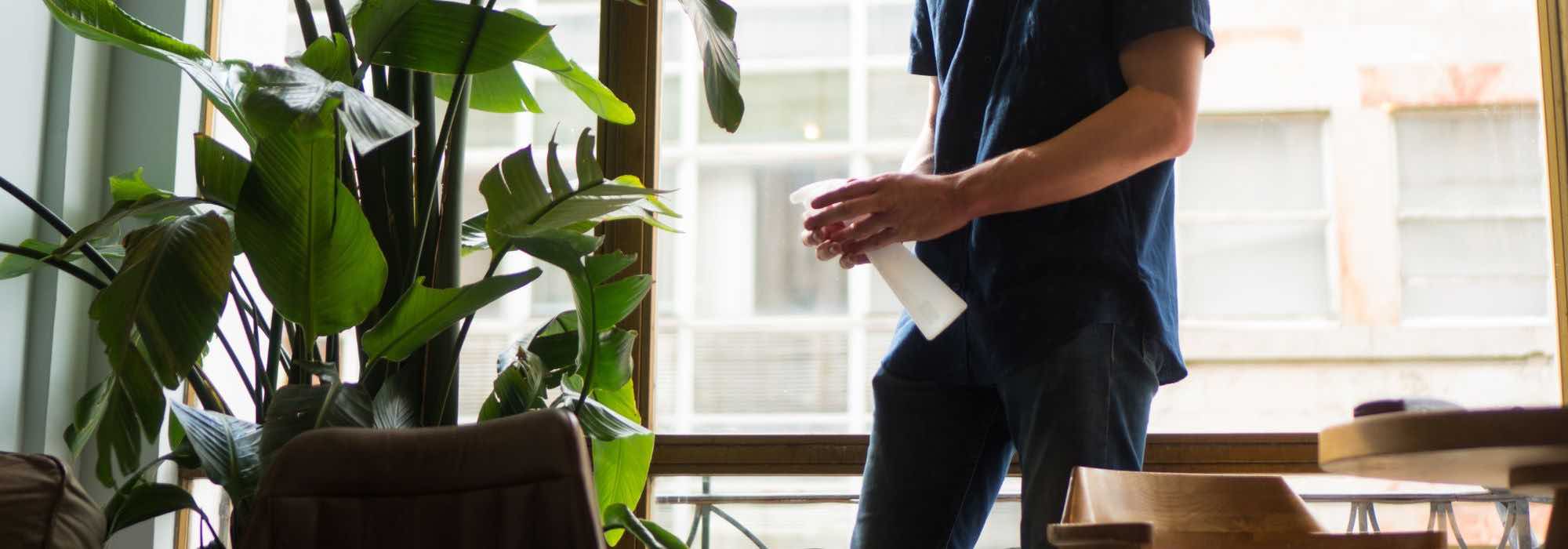
Misting indoor plants
Misting tips: Which plants? When? How?
Contents
Houseplants are most often tropical in origin and thrive in their natural medium, in humid environments. Our indoor conditions are far removed from those humid environments. Misting our houseplants is often advised in addition to the usual care to provide an extra humidity boost for our lush houseplants. In this article, let’s explore our tips for misting your houseplants properly, and the advantages and disadvantages of this practice.

What is misting?
Misting is a plant-care technique that involves spraying water directly onto foliage. This method is intended to simulate the natural humidity found in the native habitat of many indoor plants, particularly those originating from tropical or subtropical environments. Misting should help to maintain a beneficial ambient humidity level for plants, especially in indoor environments where air can become excessively dry due to heating or air conditioning.
The theoretical benefits of misting for indoor plants are numerous. It helps to increase the humidity around the plants, which is essential for their respiration and transpiration. A humid environment promotes better uptake of nutrients and water by the roots, and helps plants maintain their vital physiological processes. In addition, misting can also help remove dust from the leaves, thereby enabling better photosynthesis and promoting healthy and vigorous growth.
It is important to note that misting does not replace watering. It is complementary and should be used in conjunction with regular watering tailored to the specific needs of each plant. Misting is particularly useful for plants that thrive in high humidity, which is the case for many indoor plants originating from tropical environments.

Tropical-origin plants appreciate this extra humidity boost
Can all plants be misted?
Not all plants appreciate misting. From the outset, it should be avoided on velvety-leaved plants, such as those in the Marantaceae family.
Many Calatheas or Marantas have velvety-looking foliage: do not mist these plants.
It is also important to consider the specific needs of each plant. Some indoor plants, such as succulents and cacti, prefer drier conditions. For these plants, too humid an environment can promote rot or fungal diseases. Do not mist any succulent plants.
Plants native to humid tropical environments are those that respond best to this practice. These plants have evolved in environments where high humidity is a constant, and therefore misting can help recreate those conditions indoors.
Araceae family tropical plants, such as Philodendrons, Monsteras, Syngoniums, and Anthuriums, are known for their preference for humid environments and respond well to misting. These plants, often grown for their lush foliage, benefit from increased humidity on their leaves, which are often large.
Ferns are another example of plants that thrive with regular misting. Native to shaded and humid regions, they depend on ambient humidity for their growth and well-being. Ferns such as Nephrolepis are particularly receptive to misting.
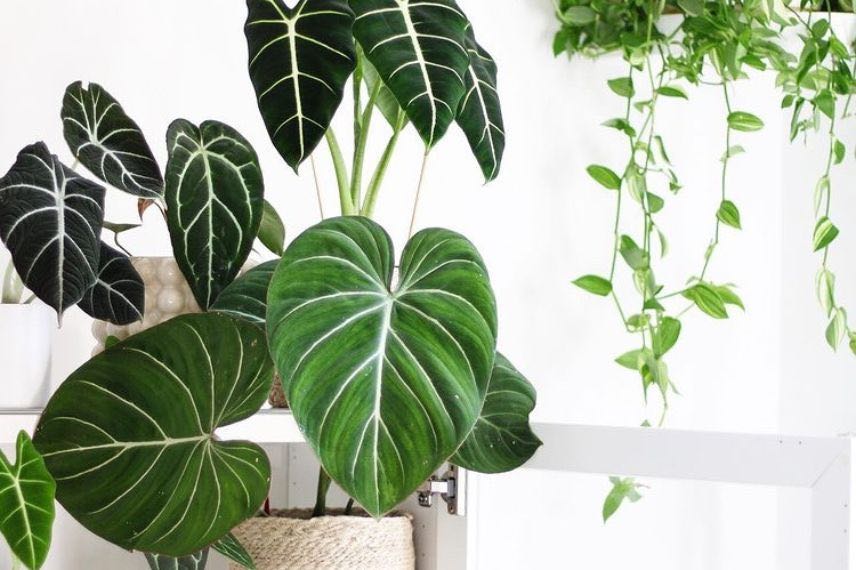
Do not mist velvety-leaved plants, even those in the Araceae family
When to mist?
During the winter months, when indoor heating is often used, the air becomes drier. It is during this period that misting becomes particularly important for houseplants. A light and regular misting can help compensate for the lack of humidity and maintain the well-being of your plants.
In summer, natural air humidity can reduce the need for frequent misting, especially in regions with a humid climate. However, in air-conditioned environments where the air can become dry, light misting is often beneficial. In this case, adjust the misting frequency according to the temperature and humidity of your living space. In hot, dry summers, consider this boost for your plants too.
It is best to mist your plants in the morning. This allows the leaves to dry throughout the day, reducing the risk of fungal diseases or rot. Avoid misting your plants in the evening, as residual humidity during the night can create an environment conducive to fungal problems.
It is also important to monitor your plants’ response to misting. Some plants may require a different misting frequency. Be attentive to signs that your plants are receiving too much or too little humidity, such as wilting leaves or brown spots.
Read also
7 trailing indoor plantsWater choice
The different types of water used can have varying effects on plant health, so it is important to choose wisely.
Tap water is the most accessible and commonly used for misting. However, it can contain chlorine and minerals which, over time, can accumulate on leaves and potentially harm the plant. Some plants are sensitive to it, including Marantaceae mentioned above, Dracaena, and carnivorous plants.
Tap water, if it is hard, should be avoided. Replace it with demineralised water or filter it in a filter jug.
Demineralised or distilled water is an excellent alternative to tap water. It is free of minerals and chlorine, which makes it ideal for misting, especially for plants sensitive to mineral deposits.
Rainwater is another beneficial option for misting. Naturally soft and chlorine-free, it mimics the humidity plants receive in their natural habitat. If you have the option to collect and store rainwater, your plants will greatly benefit.
Whichever type of water you choose, it is important to ensure it is at room temperature. Using water that is too cold or too hot can stress plants and cause damage.
What to mist with?
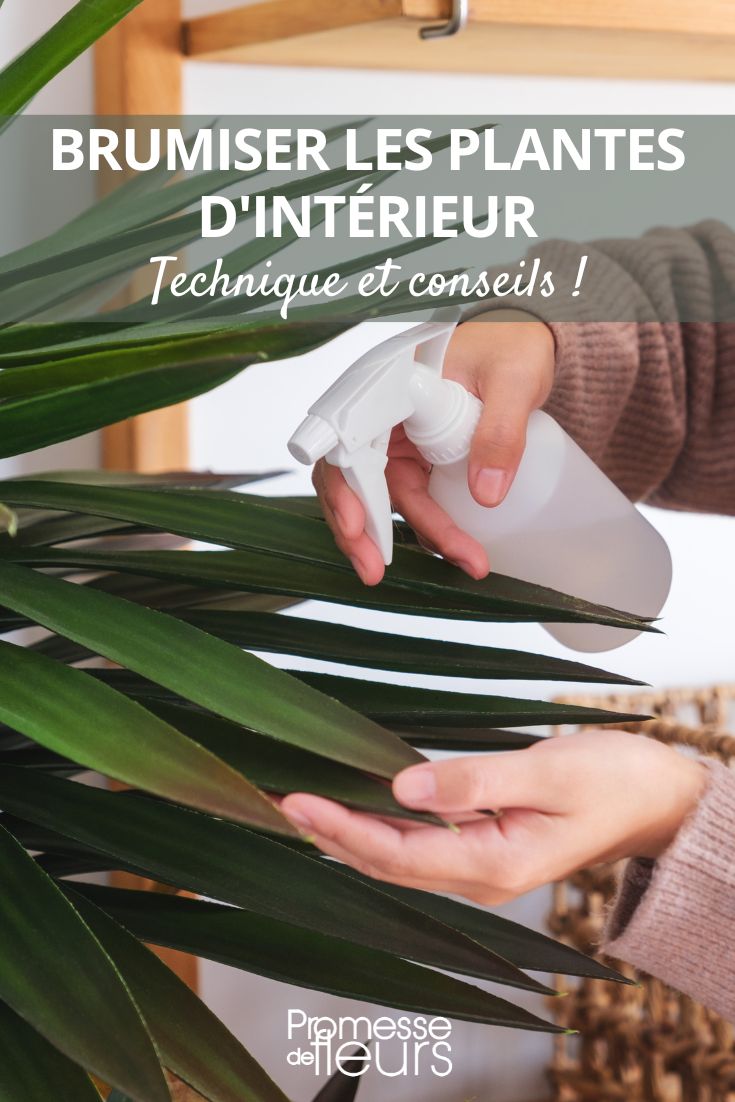
A single manual mister is the most common tool for plant misting. For fine, even misting, opt for a mister with a quality spray nozzle.
Electric misters are another option, particularly useful for large plant collections or for plants that require a consistently high humidity. These devices can mist automatically at regular intervals, ensuring constant humidity without manual effort. They are especially recommended for indoor greenhouses or large rooms with many plants.
Air humidifiers can also be used. They increase the humidity of the entire room, which is beneficial for indoor plants, especially in winter. If you opt for a humidifier, ensure it is adjustable to control the humidity level according to the needs of your plants.
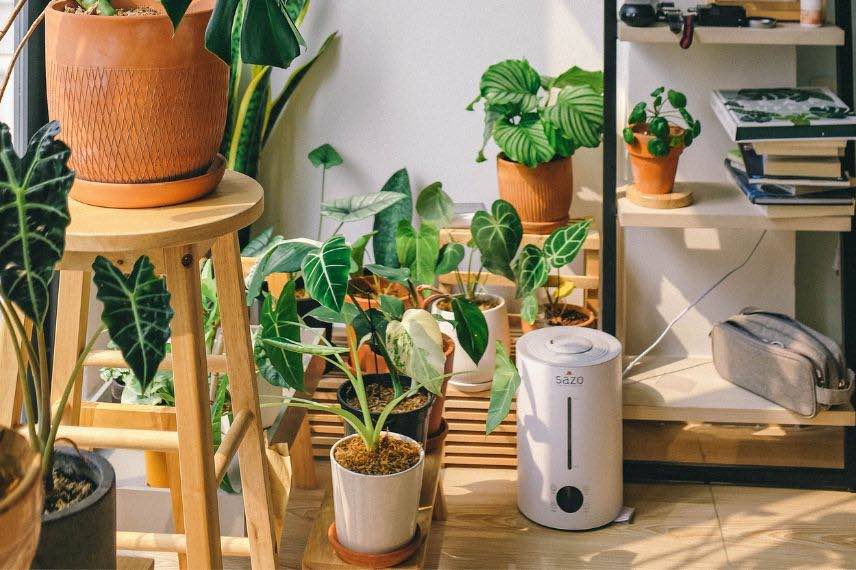
Electric misters are often used by people who own a lot of plants
Some tips
Misting is a simple technique, but a few tips can make it even more effective for the well-being of your indoor plants.
When using a mister, keep it at a distance of roughly 15 to 30 centimetres from the plant’s leaves. This ensures even coverage without saturating the plant with moisture.
Be careful not to mist the flowers if the plant bears flowers. Moisture can damage the flowers or promote the growth of diseases.
Watch your plants for signs of excess moisture, such as mould or rot. If you notice these symptoms, reduce the misting frequency.
Misting can also help remove dust accumulated on the leaves, which improves photosynthesis. Use a soft cloth to gently remove the dust after misting.
Each plant has unique moisture needs. Adapt the frequency and intensity of misting to the specific needs of each plant.
Disadvantages
Although misting is beneficial for many indoor plants, it is important to recognise that it can also have drawbacks. Here are some points to consider:
Excessive misting can lead to root rot or stem rot, especially if the substrate is already moist. It is important to balance substrate moisture with that in the air.
Using hard water or tap water can leave mineral deposits on the leaves, affecting photosynthesis and the plant’s appearance. Using demineralised or distilled water helps to avoid this problem.
Finally, The question of the effectiveness of manual misting is often asked. Its actual impact is questioned, with criticisms that it serves no purpose. It is indeed possible that a few sprays of vapourised water have only a very limited effect indoors. People who are convinced that this enhances the beauty, growth and health of their plants are usually “serial misting enthusiasts”, not hesitating to sometimes make it a daily activity. Others opt for regular showers, and collectors invest in misters or electric humidifiers. So the question of its effectiveness seems very closely linked to its dosage! It’s a serious and regular commitment to see benefits for your plants.
- Subscribe!
- Contents
Comments