





























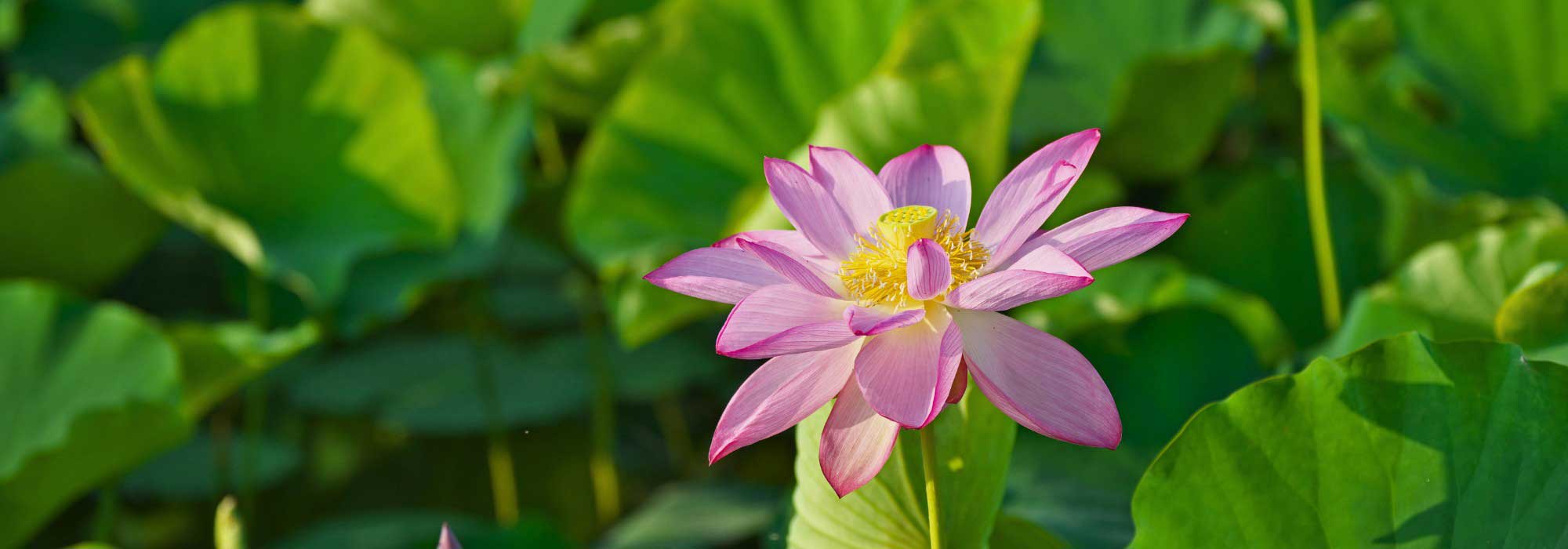
Nelumbo - Lotus: planting and care
Everything you need to know to successfully cultivate and care for your lotus
Contents
The lotus or Nelumbo is an iconic aquatic plant with decorative round leaves and delicate flowers emerging above the water throughout the summer. This stunning pond perennial requires a specific environment, combining warmth, light and a nutrient-rich substrate. Whether you have a large pond, a small basin or a simple tub on the terrace, follow our tips to ensure your lotus achieves optimal growth and abundant flowering.

Lotus needs
Lotus cultivation requires particular considerations. Indeed, for the lotus to flower satisfactorily, it needs at least six hours of direct light per day. Insufficient sun exposure would result in slow growth, sparser foliage and, above all, a significant reduction in flowering. The lotus is also very sensitive to temperature. It prefers water temperatures regularly above 20°C during the growing season. In cooler conditions, the plant may survive, but it will be far less vigorous and will flower little, or not at all.
Lotus grows best in a rich, heavy, clay-rich substrate, capable of retaining water and essential nutrients. This substrate provides good root anchorage, preventing the plant from being uprooted by water movement or disturbed by fish. It prefers calm water, which helps its roots stabilise and its flowers to flourish in tranquillity. Water too rich in decomposing organic matter could foster algal growth, which would compete with the lotus for light and nutrients. Finally, Nelumbo is generally hardy in USDA zones 4 to 10, able to withstand cold winters, although protection measures are necessary in the coldest regions.
When is the best time to plant lotus?
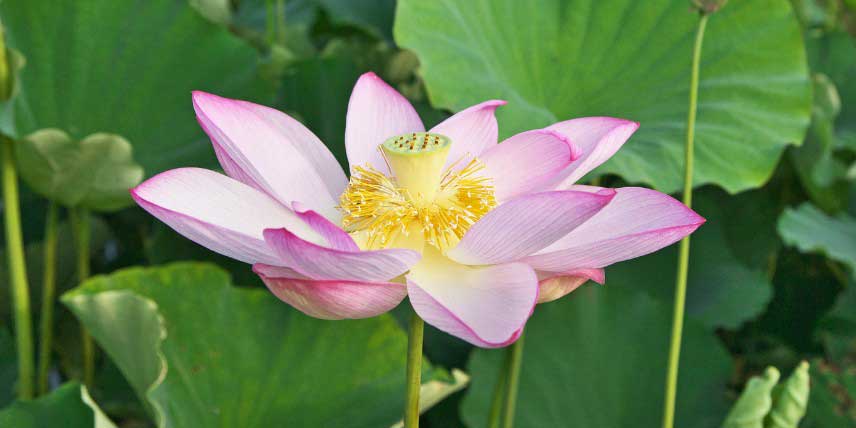
Best time to plant a lotus is in spring, when temperatures begin to warm up. Rootstocks are planted from March to June. Water must be kept at a constant temperature of at least 15°C to encourage growth of the rootstock. Lotus grows best when water temperature is between 21°C and 30°C.
Where to plant a lotus?
The lotus, as it develops, thrives in still water features such as ponds, garden ponds, or watertight containers, where the water is shallow, ideally between 30 and 60 cm deep. There are also miniature lotuses (bowl lotus) that are particularly suited to mini containers (basins, barrels, tubs and watertight pots) to brighten the terrace or balcony. Choose a site that is sunny and sheltered from strong winds where it will receive plenty of light while being submerged to the correct depth.
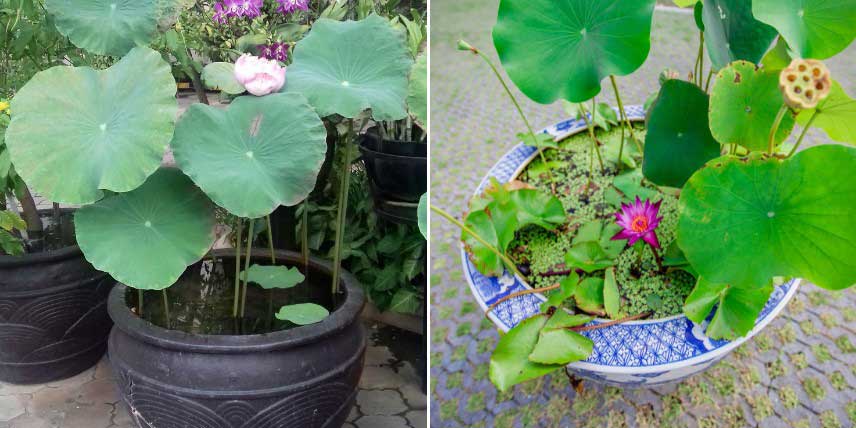
The lotus can be planted in a pond or basin, but also in a large watertight pot.
How to plant a lotus?
- Choose a perforated pot (planting basket for aquatic plants, fine mesh basket…) of at least 40 to 60 cm in diameter and depth. This will allow the rootstock to develop properly. If you are not planting directly in water, opt for a large non-perforated container.
- Use a aquatic potting compost that is specific or prepare a homemade mix with water and garden soil, heavy and muddy, rich in clay, to retain nutrients. Avoid lightweight potting composts that float. A layer of gravel or a few pebbles on top of the substrate can help to keep the soil in place.
- Fill the pot three-quarters full with the clayey substrate up to about 10 cm from the rim.
- Plant the rootstock horizontally in the substrate, with the buds pointing slightly upwards. Gently cover it with soil, leaving part of the rootstock visible to prevent rot. Place a few pebbles if needed.
- Fill the container with water until it just covers the rootstock. The water level should be gradually adjusted to reach a height of 5 to 10 cm above the rootstock. The water should lightly cover the rootstock, but must not submerge it completely at first; it should remain well exposed to allow growth of the buds.
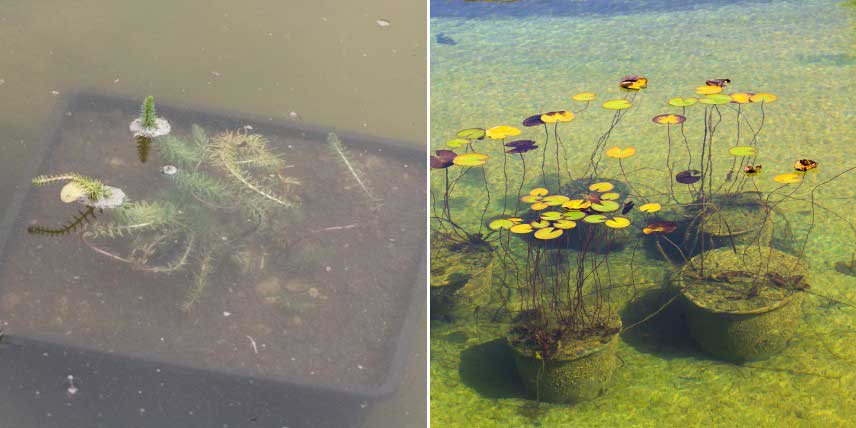
Like most aquatic plants, Lotus can be planted in perforated pots, filled with clayey substrate and submerged in pond water.
How do you care for lotus?
Maintain a constant water level, ensuring the rootstock is always submerged (about 20 to 30 cm of water above the soil). Add water regularly to compensate for evaporation.
The lotus is a hungry plant. Use fertilisers specifically for aquatic plants (for example: Osmocote), at a rate of 3 cones inserted into the soil every month during the growth period, from May to August.
Regularly remove yellowing leaves and spent flowers to encourage new flowering. This also helps to prevent the development of diseases.
How do you overwinter a lotus plant?
Winter protection for lotus depends largely on the climate in your region. In regions with mild winters, the lotus can stay in the water. The recommended depth to prevent frost from damaging the rootstocks is at least 30 to 40 cm below the water’s surface. Before winter, raise the water level if necessary. If temperatures fall below -10°C, it is best to bring the pots indoors into a cool and humid place, as an unheated garage or a cellar or to protect the rootstocks by covering them with mulch. This, though a bit tedious, involves burying the rootstocks in the soil, in a deep trench, and covering them with a thick layer of mulch or straw to protect them from extreme cold. If you do not wish to remove the rootstocks from the pond, you can also insulate the pond itself, when possible, with a floating cover, such as an insulating tarp, to prevent water from freezing at the surface.
- Subscribe!
- Contents
Comments