





























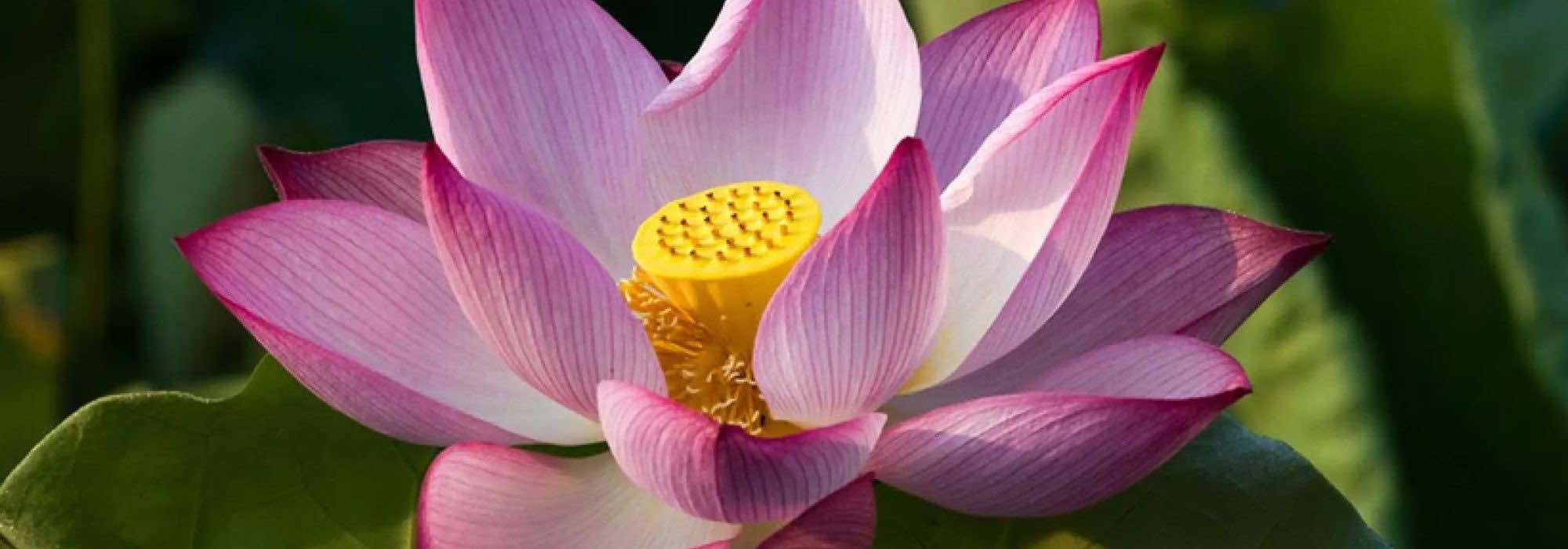
Our selection of dwarf water lilies and dwarf lotuses for small ponds
A single watertight tub on the terrace is enough!
Contents
Dwarf water lilies and lotuses are sumptuous aquatic plants that bring a touch of grace and serenity to any pond, even a very small one (30 cm in diameter). Water lilies (Nymphaea) and lotus (Nelumbo) are distinguished by their floating leaves and their magnificent flowers. Renowned for their adaptability, they are easy to care for, floriferous and often hardy, guaranteeing flowering for many weeks. Dwarf lotuses differ by their slender flowers and emergent leaves that rise above the water. For a harmonious pond, it is important to choose varieties whose size is proportionate to your aquatic space.
→ Note : in terms of hardiness, the lotuses in this selection are hardy down to around -12°C, while water lilies are hardy throughout France, except for Nymphaea colorata, not hardy, whose cultivation conditions are specified in the article.

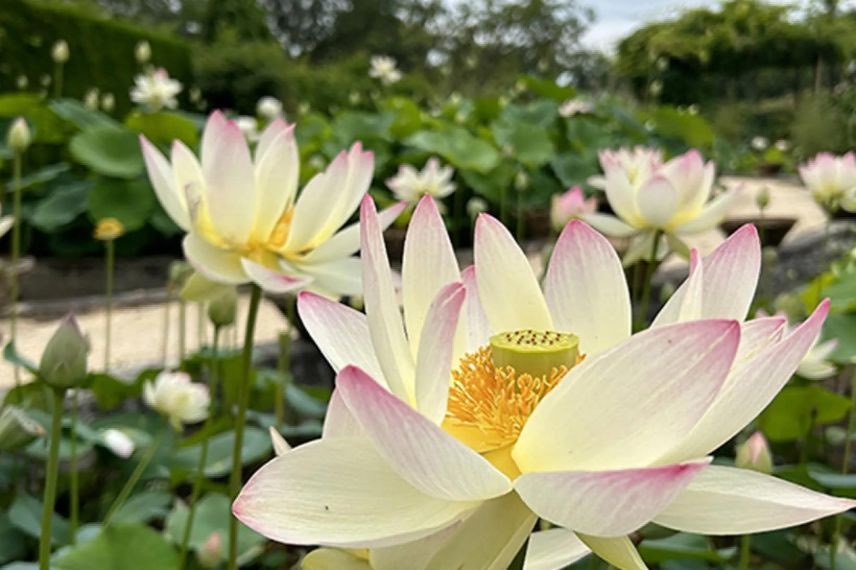
Dwarf lotus - Nelumbo 'Tricolore'
The Nelumbo ‘Tricolore’ is a dwarf lotus with charming flat-cupped flowers, which appear early in June and last long, through the end of summer in good conditions. Featuring attractive, round, emerging foliage, it is a proud representative of the sacred lotus of India, with the advantage of a compact growth habit, well suited to small patio ponds and container cultivation. Its flowers measure 10 to 12 cm in diameter and unfold in a white colour softly washed with pink at the tips, before turning to pale yellow, without losing its distinctive pink edging.
Lotuses differ from water lilies in that their foliage and a flower rise above the water. The type species, Nelumbo nucifera, is native to Southeast Asia and northern Australia.
This lotus ‘Tricolore’ is ideal for small water features and adapts to cultivation in a variety of watertight containers for terraces or balconies. The number of flowers produced depends on the size of the cultivation tub, which can range from 30 cm to 80 cm, and it will adapt to any size.
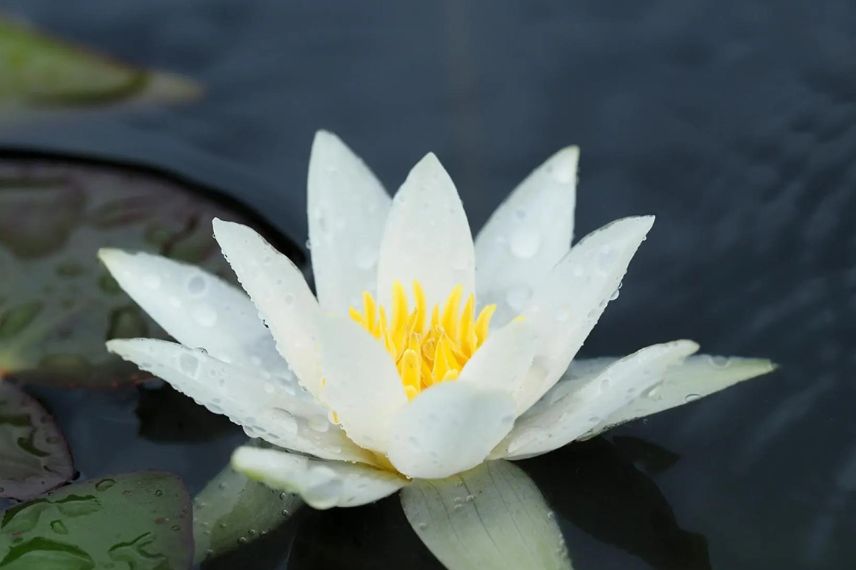
White Dwarf Water Lily - Nymphaea tetragona
The Nymphaea tetragona is the smallest botanical species of water lilies, perfectly suited for small ponds, tubs and barrel planters on the terrace. This dwarf water lily develops star-shaped semi-double flowers, 5 to 8 cm in diameter, with a beautiful bright white colour, and yellow-orange stamens. Its leaves are highly decorative, a green leaning towards olive, with brown-purple blotches.
The Nymphaea tetragona originates from a large portion of the northern hemisphere: it is found in northern Europe, in temperate to tropical Asia, and in North America. It is present in calm, shallow waters.
Water lilies generally flower from spring to early autumn and are the jewels of pond plantings. They are essential for maintaining the balance of your garden pond, helping to oxygenate the water. Their leaves provide shade and shelter for fish, which, in turn, protect the plants from predatory insects such as aphids.
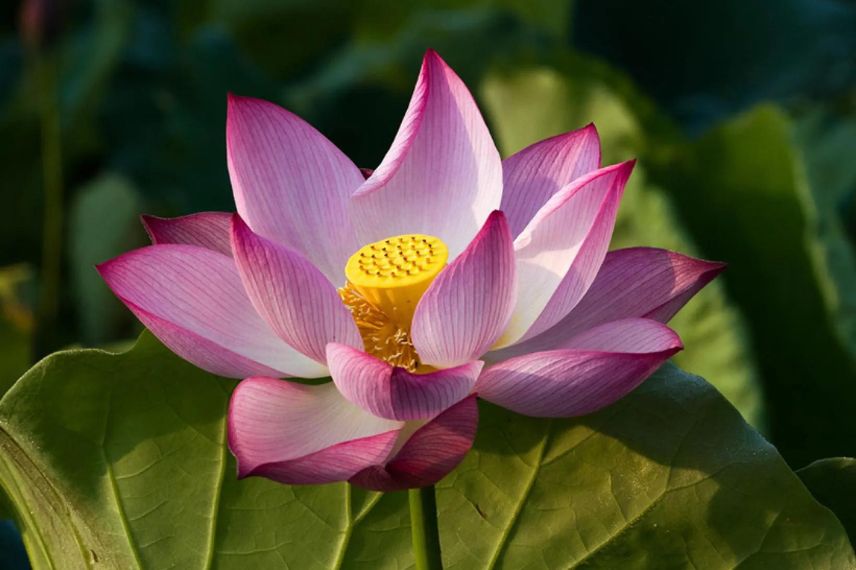
Indian lotus - Nelumbo nucifera 'Chawan Basu'
Nelumbo nucifera ‘Chawan Basu’ is a cultivar closely related to the botanical species, but fortunately less vigorous for your small pond! Its broad bluish-green leaves are carried well above the water surface, a characteristic of Indian lotus. Its 15 cm-diameter flowers, abundant throughout the summer, display veining and a pink to pink-fade border on an ivory-white background. The plant rises 60 to 80 cm above the water surface, in ponds that should be at least 30 litres.
Nelumbo ‘Chawan Basu’ is a Chinese horticultural cultivar, simple and stunning, that can withstand our winters if its rootstock is not frozen. The flowering period runs from June to September, with each flower lasting three to five days before giving way to new buds.
‘Chawan Basu’ is perfectly suited to small water features and can also thrive in a watertight container of at least 45 cm in diameter, ideal for decorating a terrace or balcony. The rootstock should be planted in a muddy substrate and submerged to a depth of 20–50 cm. It should be kept frost-free. For overwintering, you can lift the rootstock from the water in autumn and store it in slightly damp mud.
Read also
Nymphea, water lily: planting and careBlue tropical water lily - Nymphaea colorata
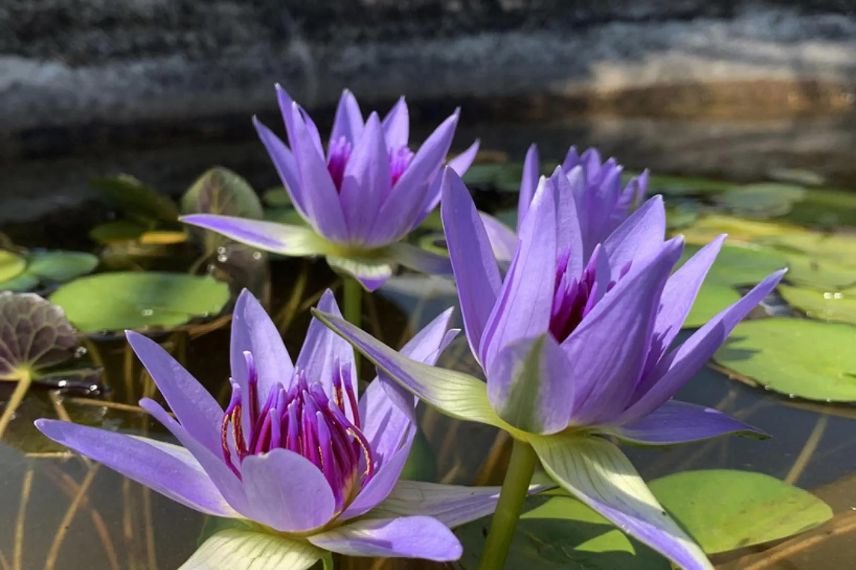
The Nymphaea colorata is a small, floriferous botanical species with superb bluish-violet to blue-mauve flowers opening to beautiful yellow stamens tipped with blue. These, 8 to 12 cm in diameter, appear from May to October and rise above the water surface among round leaves 10 to 15 cm in diameter, typical of water lilies. The plant reaches 20 cm in height when in flower and spreads to 60 cm.
Also known as Nymphaea nouchali var. zanzibariensis, this water lily is tender. It should be installed for the entire growing season in a tub on the terrace or in a container submerged in a pond, but it must be brought indoors before frosts and overwintered in a room between 12 and 15°C. Plant one rootstock per container of 14 to 20 litres, in water 20 to 60 cm deep.
This tropical Nymphaea, very exotic, which flowers longer than a hardy water lily, requires a little more care. To flower abundantly, it needs 6 to 7 hours of direct sun per day at a minimum and water around 20°C during the growing season.
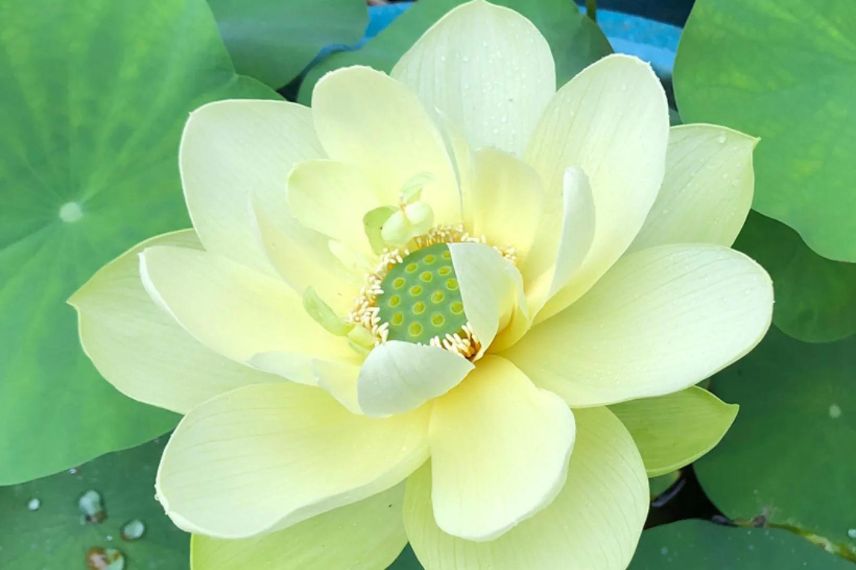
Dwarf Yellow Lotus - Nelumbo 'Pygmaea Yellow'
The Nelumbo ‘Pygmaea Yellow‘ is a dwarf lotus with charming semi-double flowers in a butter-yellow shade. Its bluish-green foliage, 15–20 cm in diameter, sits flat or slightly concave, with edges that gently undulate. The plant rises about 55 cm above the water, providing abundant flowering from June to autumn. Its solitary flowers, perfectly formed, reach 10 cm in diameter. After flowering, the plant produces very decorative fruits, resembling watering-can heads pierced with tiny holes through which the seeds escape as they ripen. These seeds, numerous, then sink to germinate in the mud. This characteristic makes the plant attractive not only in the garden but also in dried cut flower arrangements where its fruits are often used.
As with the others, plant it in a small pond or in a watertight tub on the terrace. In a very small container of 30 cm in diameter, for example, it produces between 3 and 8 flowers.
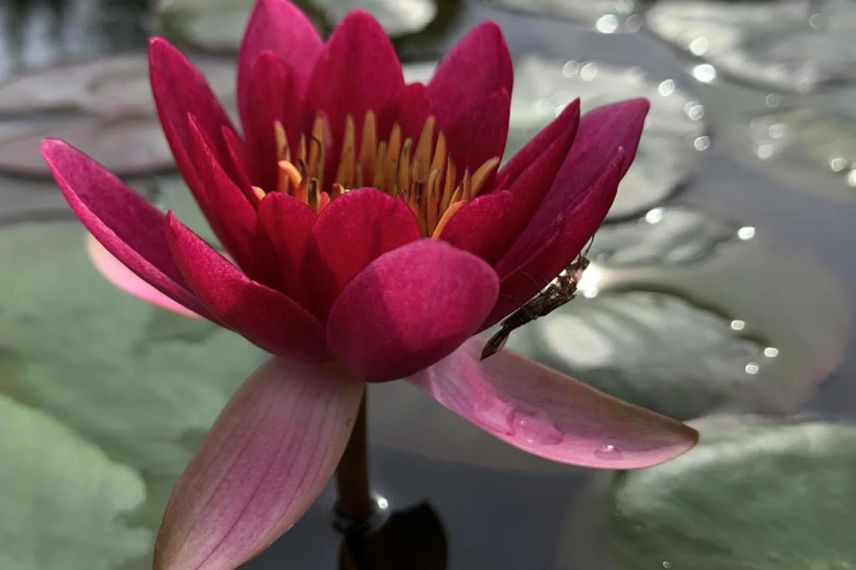
Hardy dwarf water lily - Nymphaea Froebelii
Nymphaea ‘Froebelii’ is a hardy dwarf water lily variety that is less floriferous in hot climates. Its flowering extends from June to September with flowers 5 to 6 cm in diameter, in a colour ranging from deep blood-red to wine-red, intense and rich. Its orange stamens are pleasantly fragrant. The plant reaches 8 cm in height when in bloom, and spreads to 60 cm.
Water lilies are hardy (except tropicals) provided that their rootstock does not freeze in winter. Make sure the water does not freeze at the depth where they are planted. Its rootstock should be planted shallowly, between 20 and 40 cm below the surface (up to 60 cm). This variety is one of the best in cool climates for ornamental use in small ponds and tubs.
Dwarf lotus - Nelumbo 'Angel Wings'
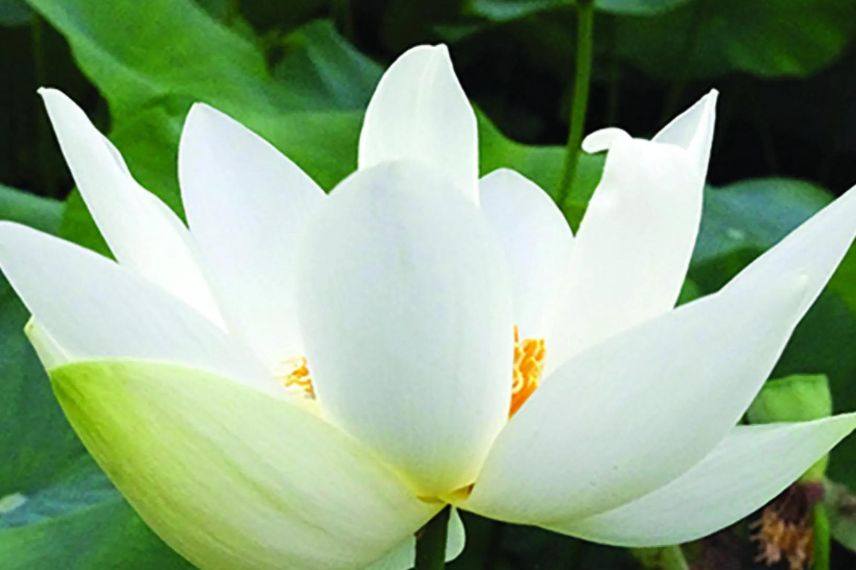
Nelumbo ‘Angel Wings’ is a dwarf lotus with flowers unique in their dancing form. The petals are slightly twisted, pure white, around a golden-yellow heart with a faint anise fragrance. The flowers measure 10 cm in diameter and bloom from June or July until the end of summer, depending on conditions. The leaves of Indian lotuses are dark green, round and undulated, with a water-repellent lamina on which water droplets bead on their surface.
Dwarf lotus - Nelumbo 'Double Happiness'
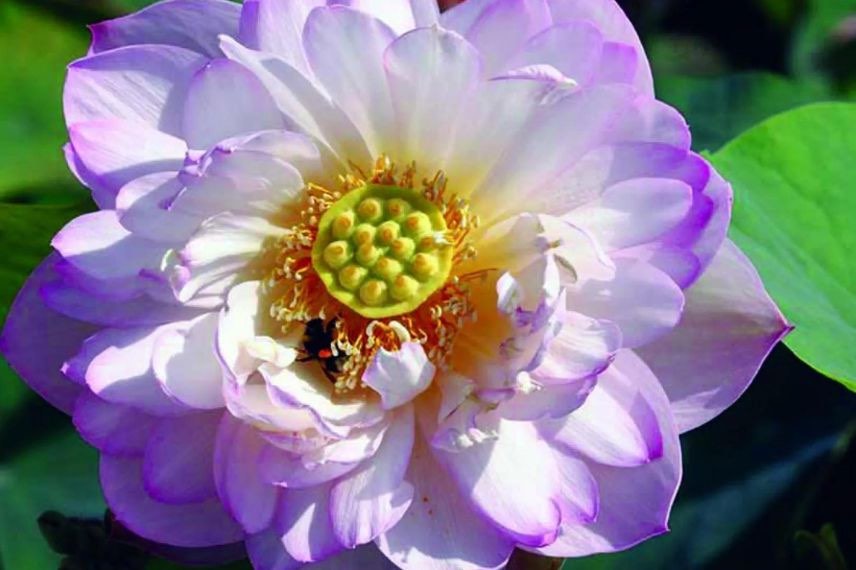
Rare in cultivation, the Nelumbo ‘Double Bonheur‘ is a small lotus with lush double flowers. The corollas, 10 cm in diameter, with a crumpled silk-like appearance, display white petals edged with mauve pink. The blue-green foliage with an entire lamina and peltate leaves, measuring between 10 and 15 cm in diameter, attaches to the very brittle rhizome by a slender spiny petiole, fixed beneath the centre of the leaf. The plant grows vigorously and flowers prolifically.
‘Double Bonheur’ rises to around 35–40 cm above the water surface. Aquatic lotuses are entirely edible, offering various culinary and medicinal uses. The seeds are often consumed candied, while the rhizome serves as a nourishing starch. In Vietnam, the yellow stamens are used to flavour tea. In Chinese cosmetics, the rhizome and seeds are valued for their anti-ageing properties. They also find a place in medicine and in the fragrance industry, underscoring the cultural and functional importance of this plant.
- Subscribe!
- Contents
Comments