





























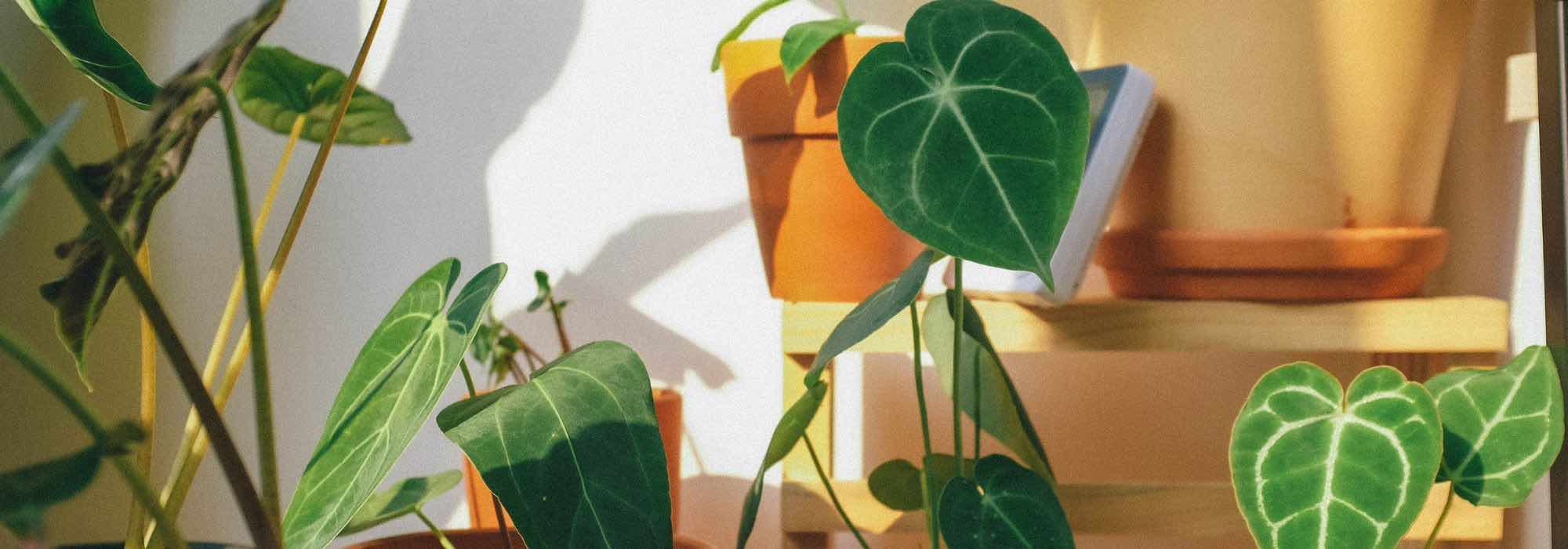
Our care tips for Alocasia through the seasons
Care, watering and tips
Contents
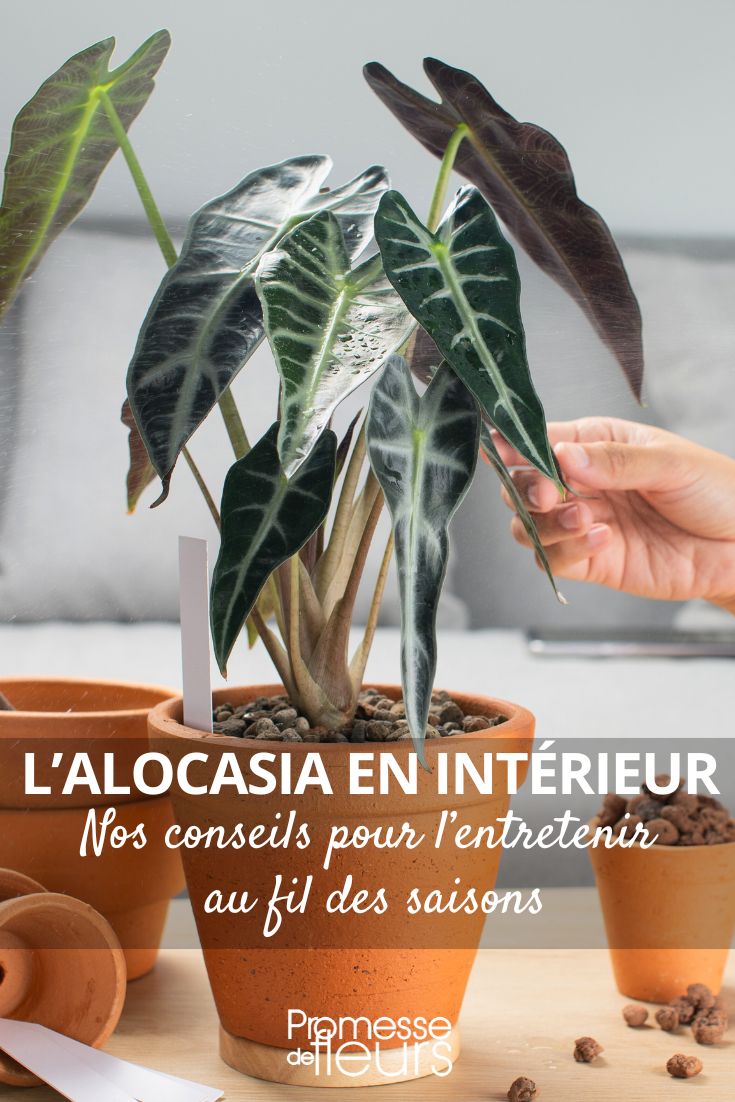
Alocasia, often nicknamed “Elephant Ear” because of the shape and texture of its large leaves, is a true star of indoor plants. With its exotic appearance and uniquely designed leaves, it turns heads. Each Alocasia variety has its own charm: the deep velvety texture of Alocasia ‘Black Velvet’, the bright, veined green of Alocasia ‘Frydek’, the graphic look of Alocasia ‘Polly’, or the scaly, mystical texture of Alocasia ‘Dragon Scale’, making them exceptional plants. Each of these varieties has similar needs, but their care should evolve with the seasons.
Indeed, as with many tropical plants, Alocasia follows an active growth cycle in spring and summer, then slows its pace in autumn and winter. This change in its cycle affects its light, water and nutrient needs. The key is to know where to place your Alocasia, when to water it and how to spot signs of thirst or stress. In this article, discover the essential steps for Alocasia care through the seasons.
All you need to know about Alocasia in our comprehensive guide!
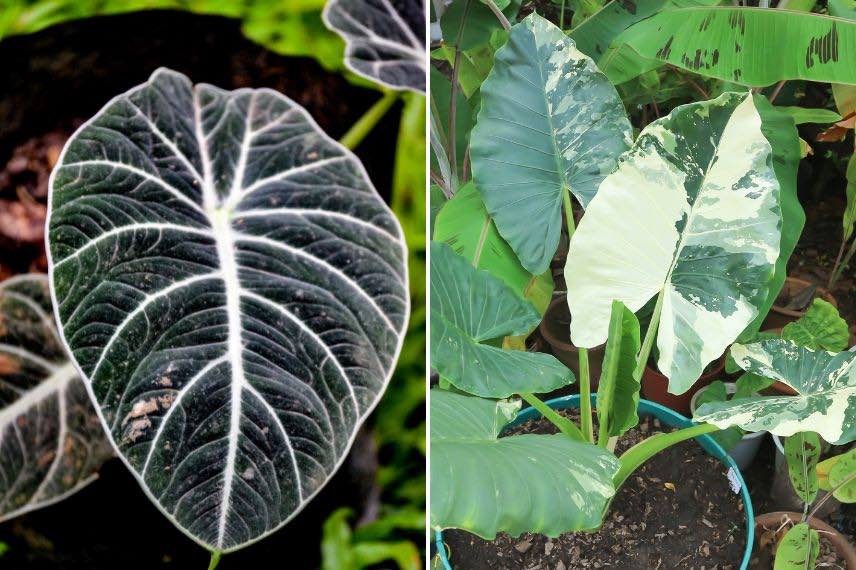
Alocasia ‘Black Velvet’ and Alocasia macrorrhizos: varied foliage, always elegant and incredibly exotic for the Alocasia

Alocasia in spring: the plant's awakening
In spring, Alocasia comes out of its winter dormancy and restarts growth. New leaves appear, often curled up on themselves before unfurling. To support this restart, it’s essential to adjust its placement, review the watering frequency, and provide the necessary care to ensure healthy growth.
Where to place an Alocasia?
The plant needs bright light, but it must be protected from direct sunlight which can scorch its leaves. Ideally, place it in a bright room near a window. A window facing east or west, or north if the room is sufficiently bathed in daylight, or a south-facing spot with a light veil, is perfect.
Note that some Alocasia varieties tolerate medium light. On our site, this is always specified on the product page.
When and how to water an Alocasia in spring?
As growth resumes, the Alocasia has higher water needs than in winter. However, avoid overwatering. The aim is to keep the potting mix slightly moist, without excess water.
- When to water? Wait until the top 2–3 cm of the potting mix dries before watering.
- How to tell if it’s thirsty? If the leaves soften or curl, that indicates a water shortage.
- How to water? Water until the water drains through the drainage holes, then empty the saucer. Do not leave the Alocasia standing in water, as its roots may suffer from this excess moisture.
For dry rooms, increasing ambient humidity can be helpful. Misting the leaves and using a humidifier are effective solutions. Alocasias need a minimum of 60% ambient humidity, and for the less demanding varieties a range of 60–80% is ideal.
General spring care
Spring is the ideal time to assess the plant’s condition and provide the care it needs to grow.
- Repotting If the roots protrude from the drainage holes or the plant looks cramped, it’s time to repot the Alocasia. Choose a pot slightly larger with a well-draining substrate. Avoid a pot that’s too large, as Alocasia prefers a snug space for its roots. For more information, also read our article: When and how to repot an Alocasia?.
- Fertilising After winter, nutritional needs increase. From the end of March or early April, you can start applying fertiliser. A liquid fertiliser for green plants, diluted in the water used for irrigation, is ideal. Apply it once a month to stimulate leaf growth. Choose a formulation such as NPK 20-20-20 or 10-5-5, diluted to half the recommended dose.
- Leaf cleaning Leaves accumulate dust, which can hinder photosynthesis. Wipe them with a damp cloth to keep them clean and glossy. Avoid leaf shine products, which clog leaf pores.
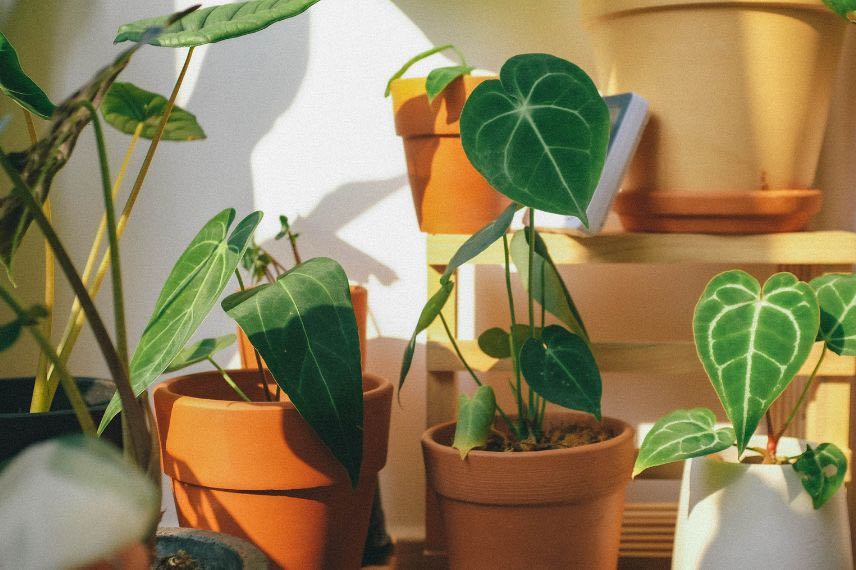
Alocasias require bright light filtered from direct sunlight, which becomes stronger from spring.
Alocasia in summer: the plant's full growth
Summer is the period when Alocasia is at the peak of its growth. Its leaves grow more quickly and its water and nutrient requirements increase. This is also the season when you may consider moving the plant outdoors (for some varieties), provided you follow certain precautions.
Can you put an Alocasia outside in summer?
It may be possible to move the Alocasia outdoors during summer, but the transition should be gradual. Place the plant in a shaded and wind-sheltered spot away from wind and heavy rain. A covered terrace or a shaded corner of the garden are ideal spots. Outdoor temperatures should be a minimum of 15°C, even at night, and daytime temperatures should ideally not exceed 28°C.
If you want to acclimatise it to more light, acclimatise it for a few hours in the morning or late afternoon when the sun is less intense. This gradual exposure allows the leaves to adapt without scorching.
At the end of summer, you will need to bring the plant indoors before the nights grow cool, as Alocasia does not tolerate temperatures below 15°C.
When and how to water an Alocasia in summer?
In summer, heat speeds up water evaporation, which requires more frequent watering than in spring. The frequency depends on the temperature and the ambient humidity.
- When to water? Water as soon as the potting mix dries to a depth of 2 cm. In summer, this can mean 1–2 waterings per week, or more if the plant is outdoors or if it is hot.
- If the air in the room is dry (notably due to air conditioning), it may be useful to increase the humidity around the plant. Misting is possible, but the ideal is to use a humidifier.
General summer care
Summer is the period of active growth, so it’s important to provide the plant with everything it needs to thrive. This includes nutrient supply, pest prevention and regular checks on the condition of the leaves.
- Fertiliser application The rapid growth of the leaves requires regular nutrients. Apply a liquid fertiliser every two weeks. This fertiliser, diluted in the water used for watering, supports the production of new leaves. Be careful not to over-fertilise, as too many nutrients can burn the roots.
- Pest monitoring Heat, humidity or drier air promote the appearance of pests such as the mealybugs, the aphids, the thrips or the red spider mites. Check the undersides of the leaves once a week, as these pests often settle there. If you notice yellow spots or black specks, fine spider webs or small white clusters, it’s likely an infestation is in progress. (To see our articles on getting rid of these pests, click on the pest concerned).
- Protect the plant outdoors If the Alocasia is outdoors, it needs protection from wind, heavy rain and direct sunlight. Damaged or torn leaves do not regenerate; you will have to wait for new leaves to form.
Alocasia in autumn: the transition into dormancy
Autumn marks a period of transition for the Alocasia. Its growth slows progressively, and the plant is preparing to enter winter dormancy. Light, water and nutrient needs decrease, which means adjusting watering, reducing fertiliser applications and reorganising the plant’s placement.
Where to place an Alocasia in autumn?
With the decrease in light levels, if you notice the light conditions dropping drastically, consider adding a horticultural lamp. If your plant is away from a window, bring it closer.
It is also important to protect the plant from draughts and keep it away from heat sources such as radiators. Sudden temperature changes can cause leaf drop.
If the Alocasia was outdoors during summer, it’s time to bring it indoors before temperatures fall below 15 °C, as it cannot tolerate the cold.
When and how to water an Alocasia in autumn?
As growth slows, water needs gradually decrease. Overwatering at this time risks causing root rot.
- Let the potting mix dry out further before watering. The frequency of watering decreases compared with summer. It’s difficult to give precise instructions; it depends on your indoor conditions. Do not let the potting mix dry out completely, only to about half the pot.
- Drooping or wilting leaves can indicate underwatering, but be careful not to confuse this with yellowing of leaves, which is sometimes normal in autumn, as Alocasia may shed a few leaves before winter.
If you’re unsure about the frequency, it’s better to water less often than too often. Alocasia tolerates a light underwatering better than overwatering.
General autumn care
Autumn is the ideal time to prepare the Alocasia for winter. This involves adjusting its maintenance routine and reducing interventions to the bare minimum.
With the decrease in growth, the Alocasia no longer needs fertiliser. Summer regular feedings should be gradually stopped. If you wish to continue feeding the plant, you can space feedings to once a month, but it’s often unnecessary.
Inside, beware radiators. Hot, dry air can stress the plant. Ensure you continue to provide the Alocasia with suitable ambient humidity, which you may need to adjust.
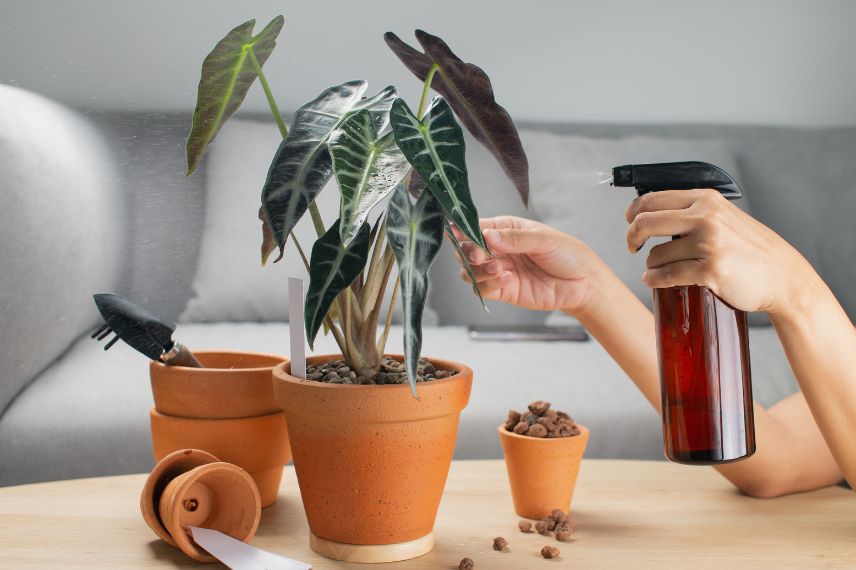
Misting of the Alocasia helps increase ambient humidity for the plant
Alocasia in winter: the plant's rest
In winter, the Alocasia enters a dormant phase. Its light, water and nutrient requirements decrease significantly. This is a period when the plant becomes more vulnerable to stress from lack of light, cold and the dry air from indoor heating.
In winter, natural light diminishes considerably. It is important to protect the plant from cold drafts and keep it away from radiators. Avoid placing it near a door or a window that is often open, as temperature fluctuations can cause the leaves to drop.
When and how to water an Alocasia in winter?
In winter, water requirements are very low. The plant absorbs almost no water, as it is in vegetative rest. Excess moisture could cause root rot, one of the most common problems in winter.
- Wait until the potting mix is dry halfway down the pot before watering. This may mean watering every 1 to 3 weeks depending on the room temperature.
- Water very sparingly, just enough to moisten the potting mix without overwatering. Absolutely avoid water stagnation in the saucer. In winter, Alocasia is more susceptible to root rot.
If the air in the room is too dry because of the heating, it may help to mist the leaves or to use a humidifier. However, misting alone is often not sufficient to maintain a good humidity level. If the air becomes too dry, you may see the edges of the leaves turning brown.
General winter care
Winter is a period when Alocasia requires little care, but you must be mindful of certain details to avoid maintenance mistakes.
- During winter, the plant no longer needs fertiliser. Applying fertiliser while it is not actively growing risks stressing the roots and causing burns. Resume fertiliser applications in spring, when growth restarts.
- Pests such as red spider mites are more common in winter, as the dry and warm indoor air suits them perfectly. Continue to check the undersides of the leaves regularly and intervene at the first signs of infestation.
- Subscribe!
- Contents
Comments