





























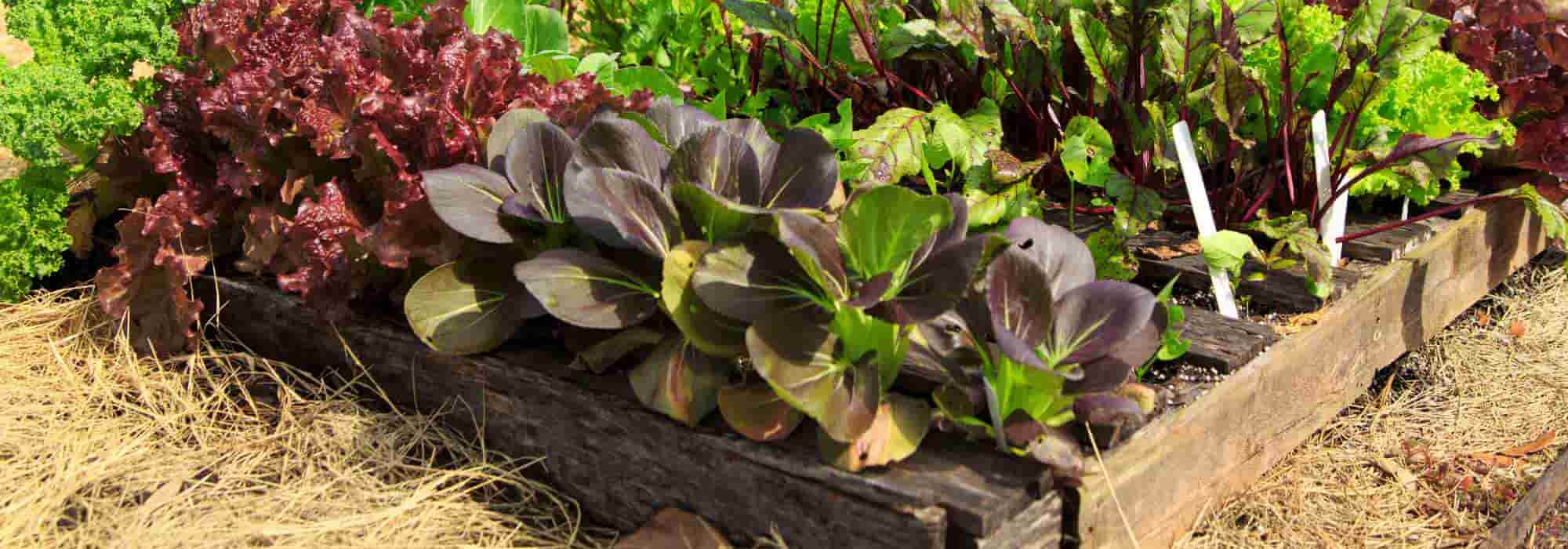
Permaculture and a small garden, is it possible?
Practical guide and tips
Contents
Permaculture is often perceived as a gardening method reserved for large plots and farms. Especially when you hear about “creating a pond”, a “high stratum” (that is, a part of the garden formed of tall trees), etc. You then wonder whether permaculture is possible in your small garden? The answer is yes! But you must practise permaculture at its scale and adapt the elements to the size of your green space. Admittedly, you should not aim for food self-sufficiency, but you can grow healthy fruit and vegetables to improve your diet and contribute to biodiversity! Let us see what is feasible or not, and how to set up permaculture in a small garden.

A quick reminder about permaculture
Permaculture is an approach to designing agricultural and gardening systems that draws on natural ecosystems. Here are the main principles:
- Earth care: Soil health is at the heart of permaculture. A living soil is a rich soil that will nourish plants and biodiversity. By feeding the soil (compost) and protecting it (decompacting with a biofork rather than turning the soil; mulching…), we promote plant growth and maintain the balance of the ecosystem.
- Care for people: Permaculture is not limited to plants and soils. It also aims to create sustainable and pleasant living environments for people, promoting practices that improve quality of life and the resilience of communities.
- Sharing of resources: This principle encourages sharing (harvests, knowledge or resources) so that everyone benefits (humans, animals, insects…). Permaculture also promotes responsible use of resources.
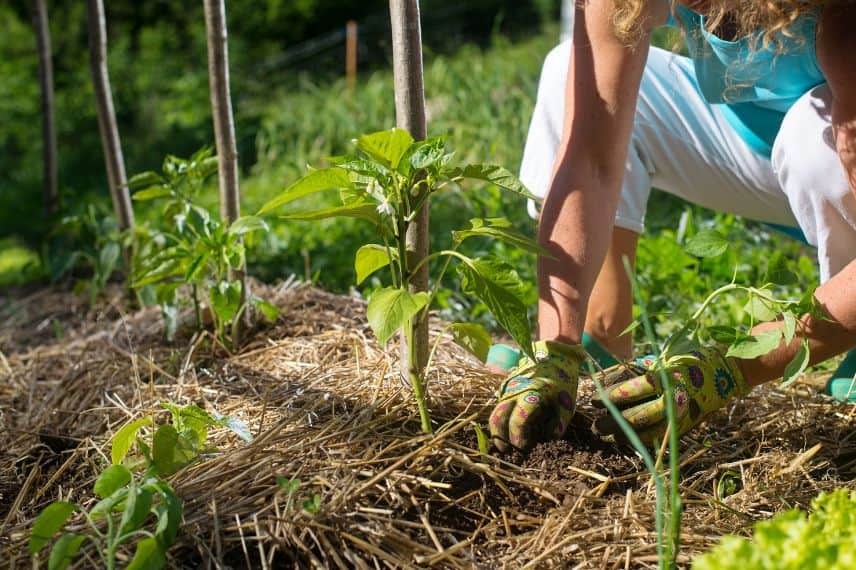
Observing permaculture in a small garden
Before planting anything, it’s essential to know your garden well : Note the sunny and shaded areas of your garden throughout the day. This will help you position the plants according to their light needs. It is said that you should observe your garden over the course of a year to track the sun’s path across the garden through the seasons.
Identify microclimates created by features such as walls, fences and buildings. These zones can offer particular conditions, such as wind protection or extra warmth, which can be exploited for certain crops.
In a small garden, since the ground area is small, you should make the most of every vertical structure you can use to grow climbing plants. Therefore, you need to list them: a fence, a party wall, the front of the house, the roof of the garage or a garden shed, etc. Make sure your neighbour gives their consent if a fence or party wall is involved. Tip: you can create a structure or a trellis alongside these walls and fences if they belong to the neighbour. Similarly, ensure that roofs have extra load-bearing capacity to support the weight of the plantings.
Also test the quality and texture of your soil. Is it sandy, clayey or loamy? Acidic, rather neutral or calcareous? Identifying its nature will help you choose the right plants and amendments to apply. To help you, read the articles: “Acid soil, neutral soil or calcareous soil: how to tell?” and “Determine the texture of your soil: clayey, sandy, loamy”.
This observation then leads to the next step: designing your space.
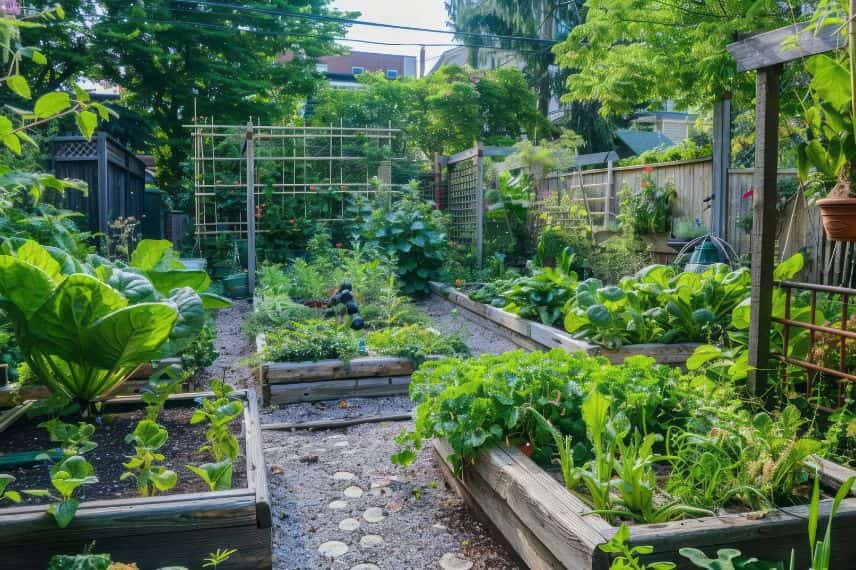
Design in a small permaculture garden
It’s time to plan your garden. You can use a simple sheet of paper (or graph paper) or design software to draw your garden plan to scale.
1- Start by marking the existing structures : Place buildings, fences, paths and other fixed structures. Take the opportunity to think about whether these structures can be put to use: can you run squash vines over the garage roof? Could a grapevine climb along the façade? etc.
2- Add, if you wish, an area for relaxation or recreation.
3- Draw the main paths and secondary ones to ensure easy access to every part of the garden.
4- Depict the structures you want to build to make use of vertical space: pergola, trellis, planter wall, etc. For example, surround the relaxation area with a hazel hurdle fence on which climbing plants will grow (climbing beans, squash, grapevines)…. In this small garden, exploiting height will help you maximise space and grow more.
5- Ideally, install rainwater harvesters, at the bottom of the rain downpipes from houses and outbuildings. This will reduce your consumption of potable water.
6- Place one or more compost bins or vermicomposters in a practical but discreet spot, preferably in partial shade, to facilitate the addition of organic waste and the collection of compost. If you are short of space, opt for a bokashi (small Japanese composting system that uses microorganisms). If you really have no space, dispose of your waste in municipal composters, but you will be depriving yourself of natural fertiliser.
7- Choose and delineate the different cultivation zones, according to what you want and the limits of your garden:
- A small orchard
- A small water feature
- A vegetable garden
- An area for culinary herbs
- A chicken coop if there is enough space
- A greenhouse or cold frames
- Etc
In a small garden, you can adapt these zones as follows:
- Zone 1: Intensive production zone : Near the house, for culinary herbs, leafy vegetables and plants requiring regular attention.
- Zone 2: Moderate production zone : A little further away, for root vegetables, soft fruits and shrubs requiring less maintenance.
- Zone 3: Extensive production zone : On the periphery, for fruit trees, vines and perennial crops.
8- Choose and represent your plants that you will install. Prioritise varieties suited to your region or local conditions and to your soil type.

Allow time to draw your garden and plan your layout
A small orchard or small fruit trees
In small gardens, we often forget the famous “upper stratum” in permaculture, which consists of tall trees of various varieties. If you have enough space to plant a fruit tree, that’s already very good; otherwise, opt for the dwarf fruit bushes or the palmette bushes. These latter have a U-shaped form, or “double U”, and can be planted along a wall, a fence or along the edge of a garden area (including along paths).
Also consider the small fruit bushes, such as the raspberry bushes, blueberry bushes, blackcurrant bushes… There are also dwarf varieties or shorter than others, for example the dwarf repeat-flowering raspberry ‘Lucky Berry’ or the blackcurrant bush ‘Little Black Sugar’, perfect when space is limited.
For the smallest gardens, you can plant strawberries, which can even be grown on a planter wall or in a strawberry tower.
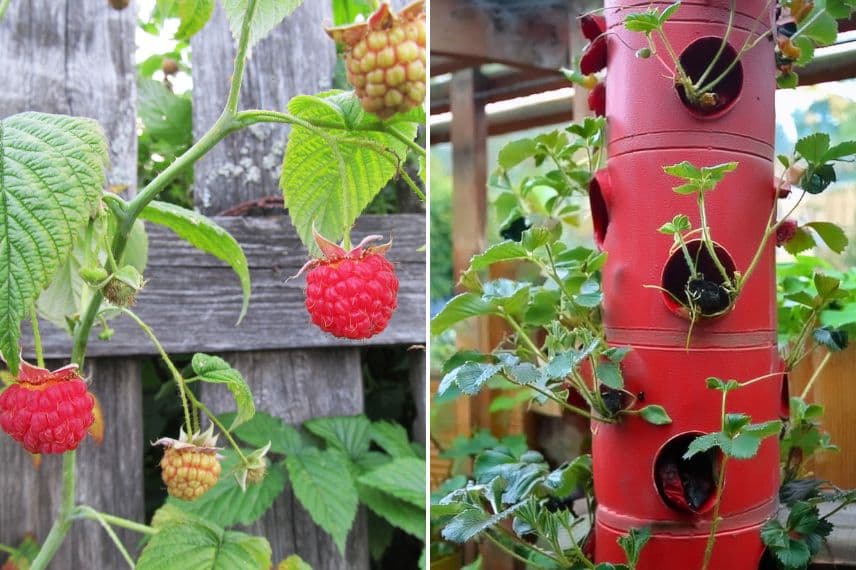
A raspberry bush and a strawberry tower
A small permaculture kitchen garden
If your goal is to harvest vegetables, mark out a vegetable patch in your garden. Ideally, you will need to divide it into four or five zones in order to practice the crop rotation. This helps to maintain soil fertility, reduce diseases and pests, and maximise yields from crops in a sustainable way. If you are short of space, you can grow in a raised bed, in a container or in a trough.
Additionally, in permaculture, the principle is to plant vegetables very closely together which helps save space.
It should also be noted that the raised beds enrich the soil, indeed, but they also take up more space in the garden. These beds also require moisture to help the wood decompose, which isn’t always available in small urban gardens. If your soil is rich and you regularly add compost or green fertilisers, you can do without them, as with container cultivation.
Also here, play with heights! Grow climbing beans, but also squashes (pumpkins, spaghetti squash…), cucumbers, melons, tomatoes, a vine, etc. Plant them at the base of trellises, a pergola, a fence, or any other supports.
Think also of beneficial associations:
- Some plants, such as legumes, fix nitrogen, enriching the soil for other crops.
- Plants can protect each other against pests and diseases, such as marigolds repelling nematodes.
And to limit watering, place mulching around the bases of your vegetable plants. You will reduce water evaporation, while enriching the soil and preventing the growth of unwanted weeds.
For more information, also read our articles:
- Permaculture kitchen garden: everything you need to know about vegetable companion planting
- Permaculture in the kitchen garden: our season-by-season guide
- Permaculture vegetable garden: where to start?
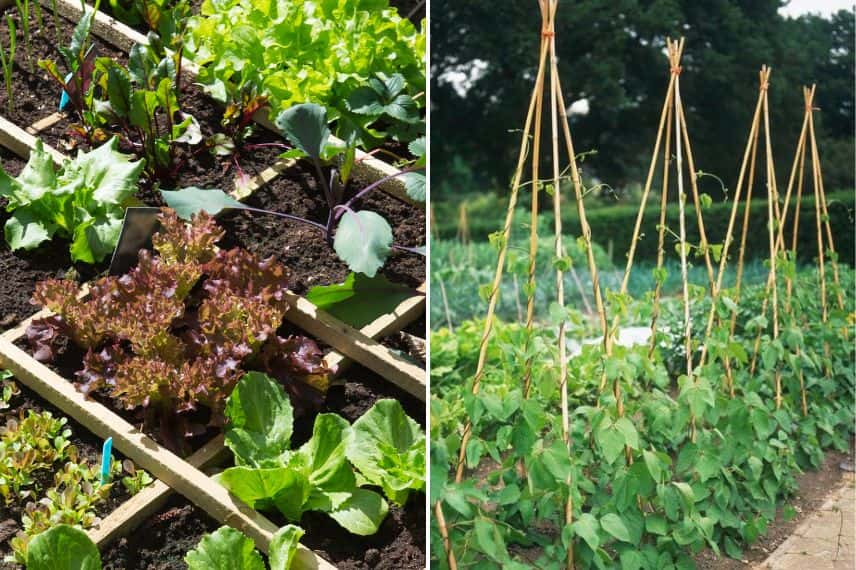
Raised bed and structure for climbing beans
A small water feature to support biodiversity
If you have enough space, consider creating a small pond to promote biodiversity and thus attract beneficial insects: dragonflies, damselflies and diving beetles, for example, are effective predators that feed on mosquitoes, flies and other small pest insects. In addition, this pond will help create a more humid atmosphere in the garden.
If you have little space, you can install a mini pond, as described in this article: “Mini pond: a small water garden for the terrace or balcony”.
And if that is not possible, simply place small bowls of water or a fountain to attract birds and beneficial insects, such as bees or hoverflies, which need to drink. Remember to refresh the water frequently to keep it clean and limit mosquito larvae.
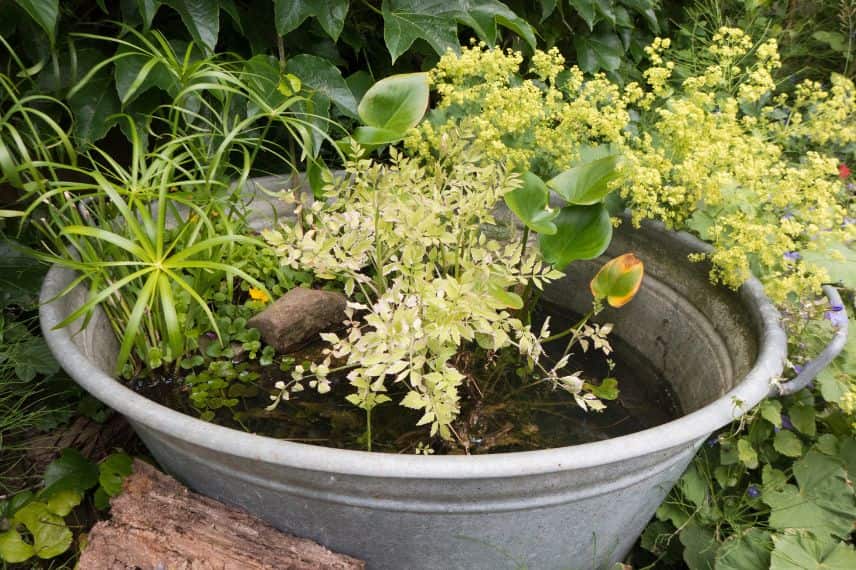
A small garden pond
Create wildlife habitats
Encouraging biodiversity is an important aspect of permaculture:
- Insect hotels: Install insect hotels to attract pollinators and natural predators of pests. Prefer monospecific insect hotels, i.e., each hotel is designed to attract and protect a single species. For example, an insect hotel with hollow wood stems for solitary bees, etc. Small piles of wood are also excellent habitats for biodiversity.
- Nectariferous plants: Plant nectar-rich flowers to attract pollinators, such as bees and butterflies.
- Don’t forget water features (bowls or a fountain) as noted above.
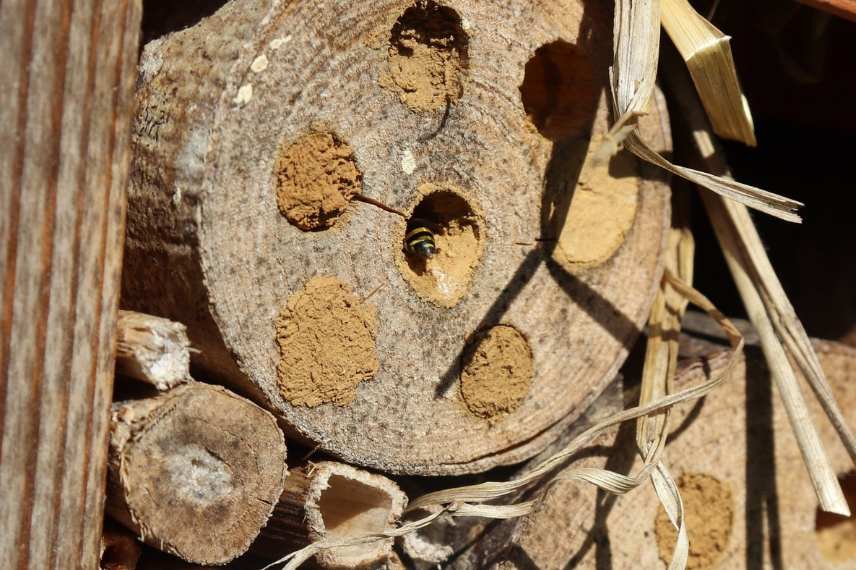
Insect hotel for solitary bee
Have a go!
Creating a permaculture garden in a small space is not only possible, but it is also a rewarding and beneficial endeavour in many ways. Admittedly, you will not achieve food autonomy, perhaps not even a self-sufficient garden (without external inputs), but you will contribute, at your scale, to maintaining biodiversity, while harvesting healthy fruit and vegetables. Don’t hesitate to get started, to experiment and to adapt these tips to your own situation, by observing, experimenting and learning over time. Be patient, and your little permaculture garden will thus become a pleasant living space and an example of sustainable gardening.
Ingrid’s quick note: I would recommend reading (or borrowing) this very inspiring book: “My Little Permaculture Garden”, published by Terre Vivante, which tells the story of Joseph Chauffrey and his small urban garden.
- Subscribe!
- Contents
Comments