





























Pink-flowered herbaceous Clematis: a dazzling selection!
Soft colours or vibrant colours
Contents
Clematis are among the most popular climbing plants among gardening enthusiasts. Herbaceous Clematis, often less well-known, are used as groundcover, low-growing climbers on a trellis, or simply in pots on a balcony and provide a striking floral display from spring to autumn. Among them, the pink-flowered herbaceous Clematis bring a touch of romance and freshness and offer a palette of shades ranging from pale pink to almost fuchsia pink. In this article, we present a selection of pink-flowered herbaceous Clematis, each with its own characteristics and cultivation tips, to help you choose the perfect variety for your garden.

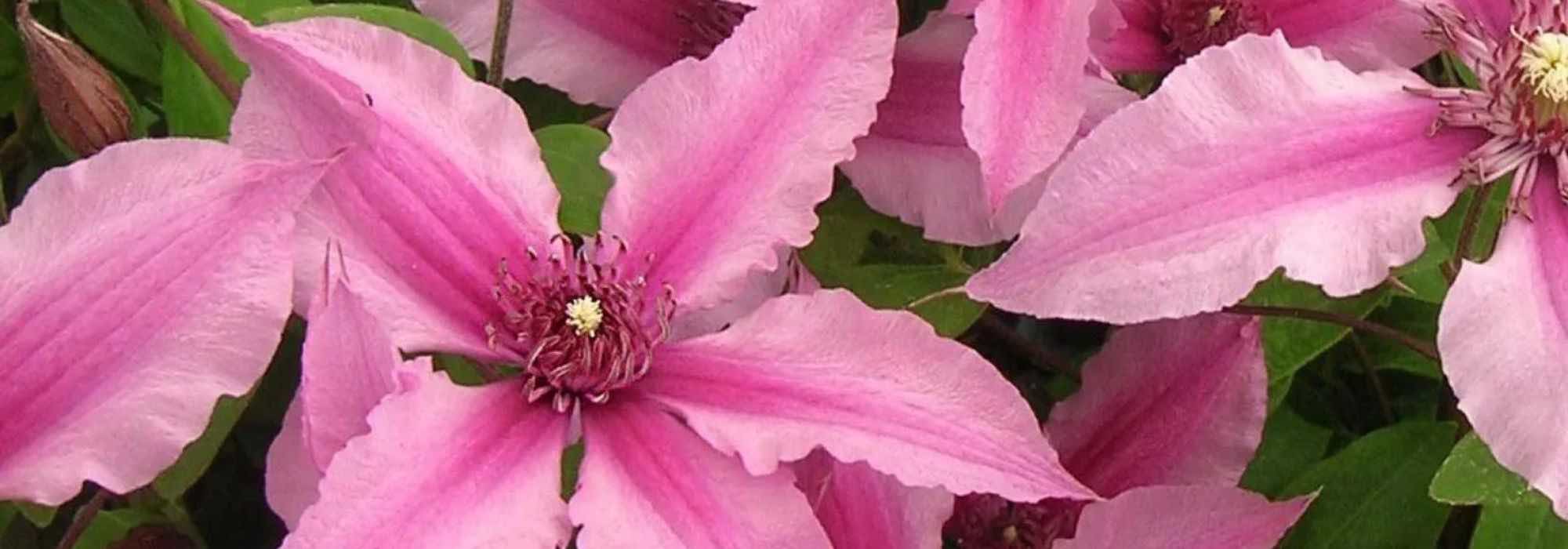
Clematis - Clematis integrifolia 'Rosea'
The Clematis integrifolia ‘Rosea’ is a cultivar with mid-pink, slightly blue-tinged flowers, abundant throughout the summer. Unlike other, more typical clematis, it has a herbaceous growth habit with long, leafy stems that do not exceed 75 cm in height, forming a brushy tuft that dies back in winter and re-emerges in spring. Its flowers, delicate and campanulate, seem porcelain-like and gracefully arch over deep-green, ovate to elliptical leaves.
Originating from central and eastern Europe, the species Clematis integrifolia naturally occurs in meadows and thickets of montane regions on calcareous soil. ‘Rosea’ is a cultivar, awarded by the RHS in England for its outstanding performance in the garden. Its flowers bloom from June to September, in bell-shaped flowers 4–5 cm across, with yellow-anthered stamens hidden in the heart of slightly twisted petals, followed by silver-green, feathery fruiting heads that are highly decorative.
This clematis is ideal for border beds, rock gardens, or even containers thanks to its compact size and low-maintenance nature. It prefers well-drained soils and sunny, not scorching positions. Pair ‘Rosea’ with summer-flowering bushes to create a romantic, bohemian garden. Because of its herbaceous nature, it is perfectly suited to pot culture on a balcony or on a slope, for example alongside Euphorbias.
Read also
Clematis: planting, pruning and careClematis - Clematis Saphyra 'Nancy'
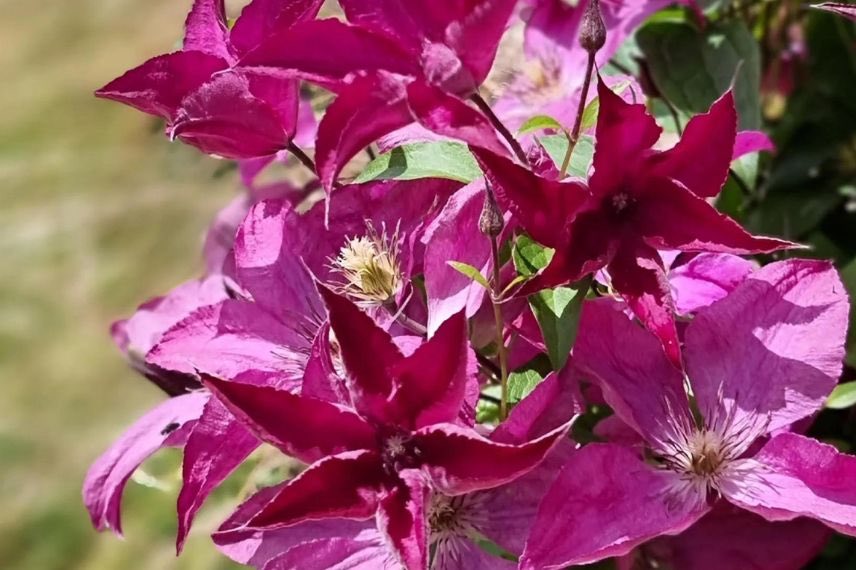
The Clematis Saphyra® ‘Nancy’ is a variety suited to urban environments with its compact habit and high disease resistance. This semi-woody plant, which flowers all summer, can reach 1.75 m in height or spreading if grown as a groundcover. Every spring, it produces an abundance of shoots from its base, bearing in summer star-shaped flowers, 10 cm in diameter, in a vivid pink and slightly glossy, with a centre of yellow stamens turning white.
This clematis is particularly prized for its abundant summer flowering, making it an excellent choice for brightening terraces and patios, or even smaller gardens. The flowers, solitary or in cymes, are supported by dark green three-palmate leaves. It is a top choice for gardeners seeking a low-maintenance plant.
‘Saphyra Nancy’ pairs perfectly with roses to enhance walls and trellises, extending the flowering period through to the end of summer. Moreover, thanks to its compact habit, this clematis is well suited to pot culture, whether on a balcony, beside a front door, or above a low wall, where it provides continuous flowering throughout the summer. It can also be used as a groundcover in a shrub border, paired with Deutzias or Spiraeas for a romantic, bohemian-look garden.
Clematis - Clematis heracleifolia 'Pink Dwarf'
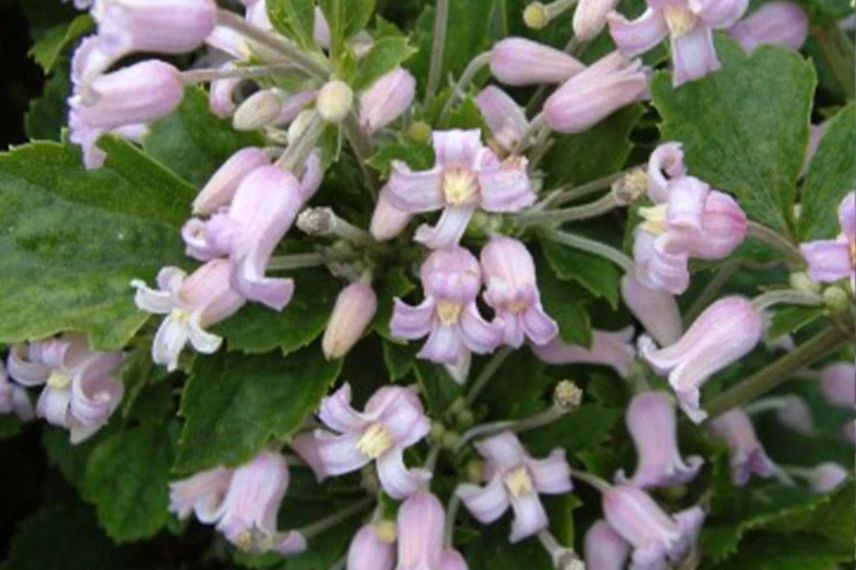
The Clematis heracleifolia ‘Pink Dwarf’ is a dwarf form of the large-leaved Clematis, a species native to China. It develops a bushy habit and pale pink flowers in clusters, reflexed and slightly scented, reminiscent of hyacinths. This perennial forms a dense clump 40 cm tall and as wide, with large dark-green, slightly downy leaves. Flowering extends from mid-summer to autumn, attracting a multitude of pollinating insects.
Particularly suited to partially shaded situations and cool soils, ‘Pink Dwarf’ is ideal along paths, at woodland margins, or even in pots on balconies. It offers a continuous floral display thanks to its inflorescences arranged in verticils of small elongated bells. These flowers, 1 to 2 cm long, rise slightly above the foliage and feature four pastel pink petals, rolled back at their tips, surrounding pale yellow stamens. After flowering, the fruits form green and silver plumes, enhancing the decorative effect.
Although establishment is somewhat slow, ‘Pink Dwarf’ shows fairly vigorous growth once established. This clematis is an excellent option for small spaces, blooming particularly well in pots or in borders, accompanied by plants such as ground-cover roses, ground ivy, and dwarf asters.
Clematis - Clematis integrifolia 'Jessica'
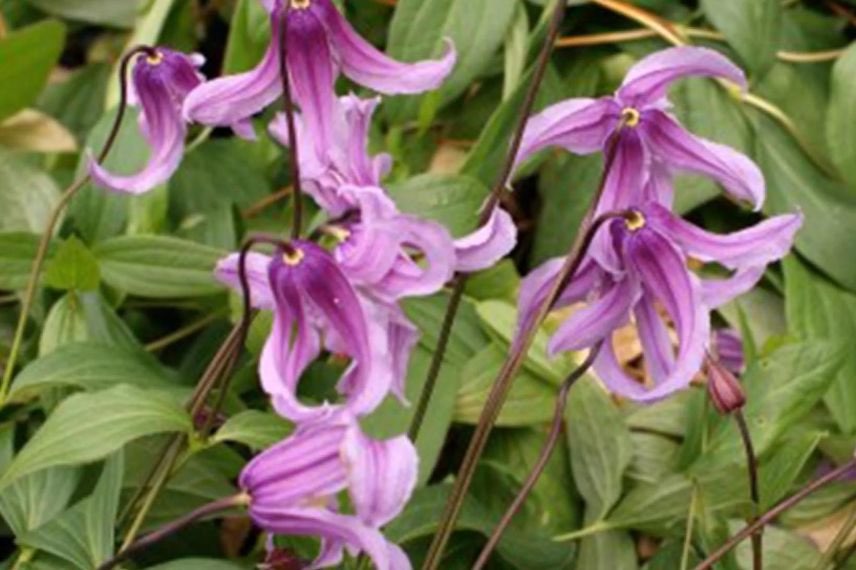
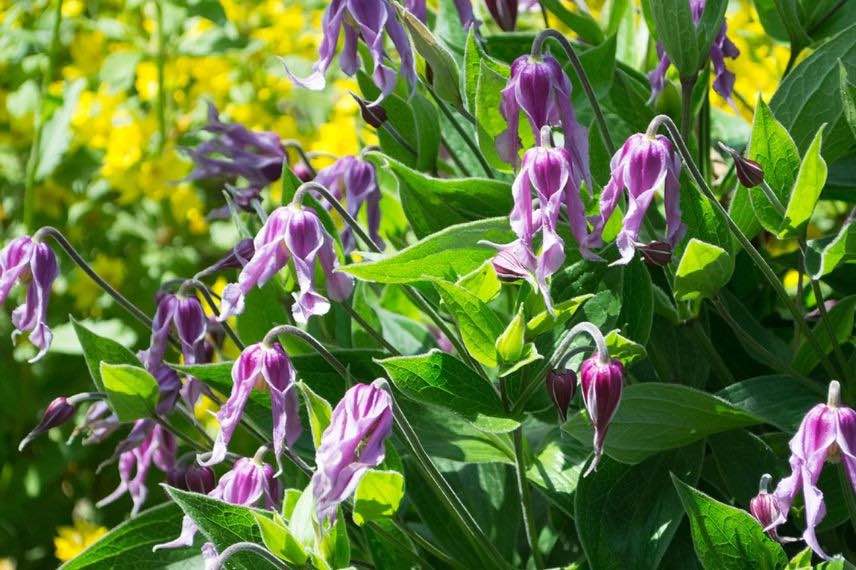
The Clematis integrifolia ‘Jessica’ is a charming pink-purple variety of the small herbaceous clematis. Less climbing than its sisters, it prefers to bloom in a spreading, brambly tuft, covering the soil and blending harmoniously with neighbouring plants. Its flowers, bell-shaped and slightly reflexed and nodding, offer abundant and extended flowering from June–July to September, providing colour and grace over a long summer season.
This clematis tolerates calcareous soils and sunny positions, but not in scorching sun. ‘Jessica’ reaches a height of 80–90 cm with a spread of around 1.2 m. Its growth, though slow at first, speeds up in subsequent years. Its small ovate to elliptical leaves, a deep glossy green, accompany campanulate flowers 4–5 cm wide, with short stamens bearing yellow anthers.
Clematis ‘Jessica’ is perfect for enhancing borders of a mixed border, rockeries, walls or even pots and hanging baskets. On a balcony or a slope, it coexists perfectly with perennial salvias, valerian and Nepetas, creating a vibrant and welcoming display throughout the season.
Clematis - Clematis integrifolia Saphyra 'Duo Rose'
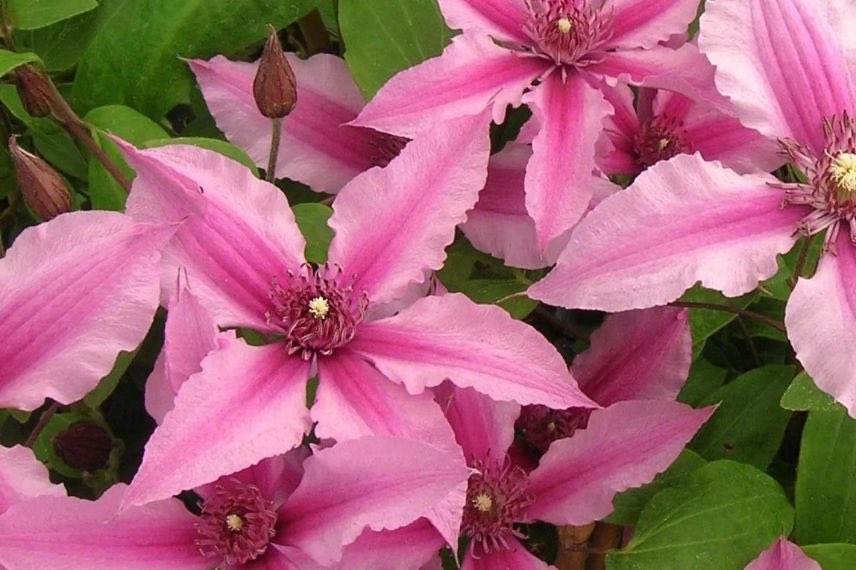
The Clematis Saphyra® ‘Duo Rose, a horticultural variety developed by INRA, is the product of a cross between the Clematis integrifolia ‘Olgae’ and the robust cultivar ‘The President’. This variety is distinguished by its herbaceous, non-climbing habit, making it a perennial plant ideal for pots or as a companion at the base of shrubs. It flowers in June with a September rebloom, producing star-shaped flowers 10–12 cm across in two shades of pink, a pale tone and an almost fuchsia.
‘Duo Rose’ emerges each spring from a sturdy crown, forming a bushy tuft that does not exceed 1.5 m in height with a spread of 70 cm. Its leafy stems bear oval leaves, slightly olive-toned, which highlight the undulated star-shaped flowers edged along the border, centered with deep pink stamens. This clematis adapts to many soils and climates and is fairly drought-tolerant once established.
Ideal for sunny positions, but not scorching, ‘Duo Rose’ forms a charming pairing with Caryopteris, or it spreads as groundcover on slopes, accompanied by Sollya heterophylla in mild climates. Its romantic appearance and ease of cultivation make it a popular choice for adding a bohemian touch to your balcony or garden.
Clematis - Clematis fusca
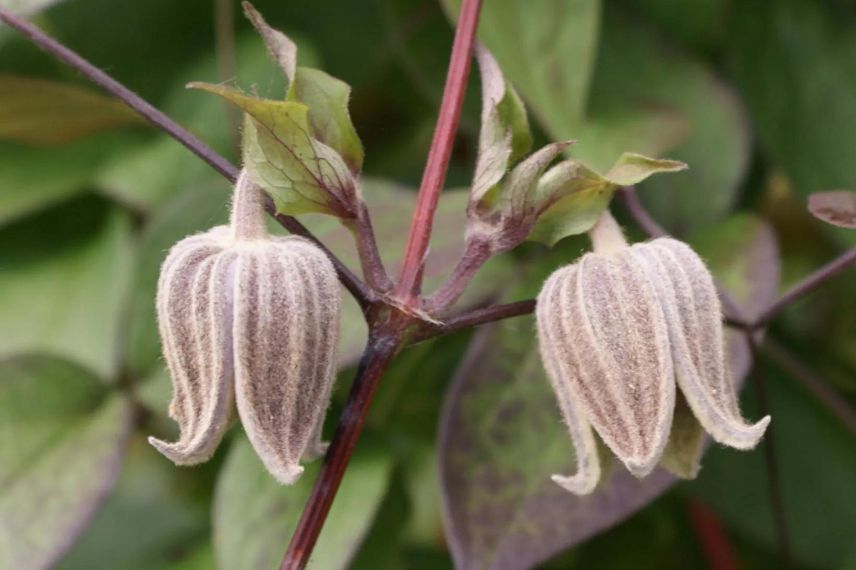
Clematis fusca is a fascinating botanical species native to temperate Asia, notably China, Japan, Korea and Russia. Not really pink, this clematis is distinguished by its small pendant bell-shaped blooms in brown-purple colour, which bloom from June to September. The flowers, 1.5 to 2.5 cm in diameter, are composed of four fleshy tepals, externally adorned with short hairs and internally with a white silky membrane and creamy-yellow stamens.
Suitable for partial shade, Clematis fusca can be trained on a support or left to sprawl on the ground, which makes it perfect for gardens of all sizes, including small urban spaces. Its foliage is deciduous, composed of oval leaflets slightly acuminate. In winter, the plant nearly disappears, only to re-emerge vigorously in spring, reaching a height of 1.5 to 2 metres at maturity.
Easy to grow, Clematis fusca fits harmoniously into an English garden or a more contemporary setting. It is ideal for adorning walls, trellises, pergolas and arches, and also well suited to container growing to brighten balconies, terraces or patios. In partial shade, pair it with Japanese maples, or other shrubs such as the Leucothoe. Medium-height perennials, such as white-flowered daylilies (Hemerocallis), are perfect for shading the base of Clematis fusca and highlighting its brown-violet flowers through their foliage or flowering.
- Subscribe!
- Contents
Comments