





























Pruning trees in transparency
Aesthetics and good health of the tree
Contents
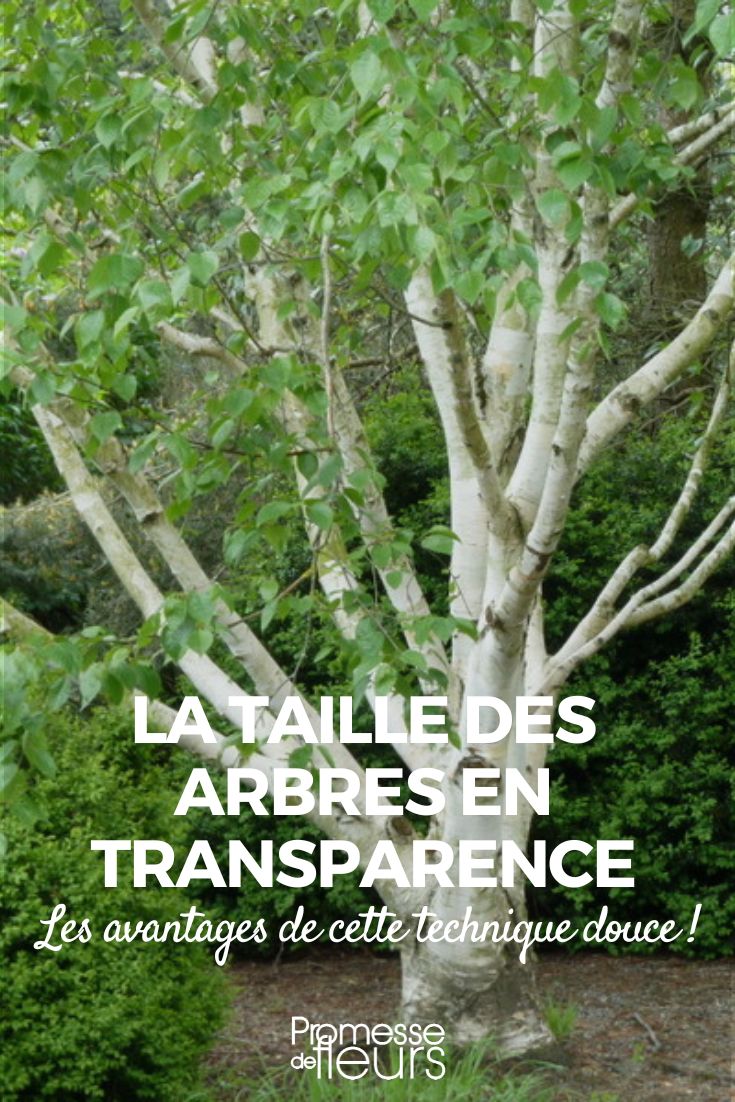
Transparency pruning is a gentle pruning technique that preserves the natural habit of trees and bushes. It involves pruning from within the branches by removing dead, diseased, or poorly placed wood. The benefits of transparency pruning are numerous: it improves the silhouette, reveals the bark and elements at the back of the tree, and aerates the branches, which reduces the risk of breakage or disease… Furthermore, when pruned this way, the branches of a tree only filter rainwater and sunlight. Trees and bushes can, in this case, host plants at their feet.
→ How and why should you prune for transparency? We explain everything in our article.

Pruning in transparency: what is it?
Transparency pruning, or pruning for transparency (both terms are used), is a gentle and natural method of pruning trees and bushes. This technique is carried out within the tree, unlike other types of pruning, prioritising the preservation of the tree’s natural shape. Although it has been practiced for centuries, transparency pruning was perfected by Princess Greta Sturdza throughout her life in her garden at Vasterival in Upper Normandy.
In observing trees in nature, she realised that as trees age, they gradually thin out by losing some of the branches located at the centre of the ramure, as well as the lower branches of the trunk. This “transparency” of the ramure allowed both rainwater and sunlight to filter through, enabling a whole flora to establish at the base of the tree.
Transparency pruning is therefore a way to somewhat imitate nature by accelerating this process.
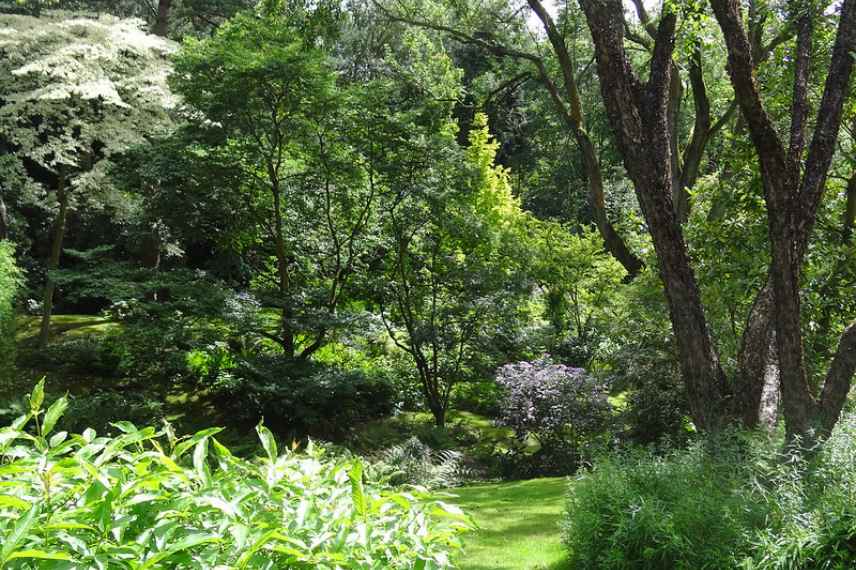
The Garden of Vasterival in Normandy (France) provides a fine example of transparency pruning of trees (© Ester Westerveld)
Read also
Fruit trees: pruning of a young shootWhy practising such a pruning?
An aesthetic concern
Thinning the bushes and trees’ branches lightens a garden that may be too dense. Moreover, trees that are pruned reveal elements that were once hidden from view. The garden then gains several layers of interest: foreground, centre stage, background…
Transparency pruning also allows for the discovery of the silhouette and bark, which can be quite admirable in certain species. The twisted form of a Salix matsudana ‘Tortuosa’, the beautiful bark of a Heptacodium miconoides, the almost tiered structure of a Cornus kousa…
Trees and bushes pruned for transparency appear older, more mature… somewhat like bonsais.
Welcoming life under the trees
Removing excess branches will allow sunlight and rainwater to filter through the thinned branches. Previously inhospitable due to excessive darkness and dryness, the base of the trees becomes a lovely understorey to be planted.
Maintaining good health for trees and shrubs
Removing dead and diseased wood helps to maintain the health of the trees. Simplifying the branches will ensure good ventilation through the branches, which will prevent many fungal diseases and pest attacks.
A transparency pruning on a woody plant that is no longer growing or is barely growing will improve the regeneration of shoots and increase the vigour of the tree or bush.
Lastly, removing weak branches in favour of strong ones will limit breakages during storms or snowy episodes.
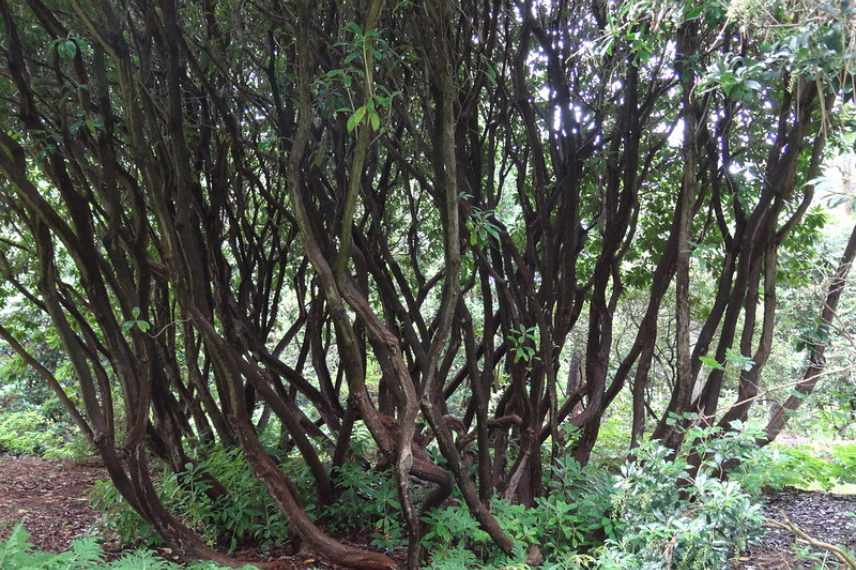
The branches are completely showcased, here at the Jardin du Vasterival (© Ester Westerveld)
Discover other Large specimen trees
View all →
Available in 3 sizes
Available in 4 sizes
Available in 5 sizes

Available in 6 sizes
Available in 6 sizes
Available in 3 sizes
Available in 4 sizes
Available in 3 sizes
Available in 5 sizes
Available in 4 sizes
How to prune for transparency?
Firstly, it is important to remember several key points:
- Pruning should be carried out during specific periods for each type or species of trees and bushes: for example, from August to October for maples or from May to June for lilacs or weigelas. However, pruning in autumn or late winter, when it is not freezing, is somewhat of a general rule;
- Pruning is a stressful operation for plants. Avoid pruning everything at once! Take the time to let your trees “breathe” and consider what needs to be pruned or not. A thinning cut can be done over several years if necessary;
- Additionally, do not prune more than 1/3 of the branches, primarily in the lower part of the tree;
- Keep in mind that the tree or bush should maintain its natural habit. Do not hesitate to step back to regularly observe the results of your pruning. This will help you avoid removing a branch that could completely unbalance the structure of the tree.
The main points of thinning pruning
It is difficult to generalise the steps of thinning pruning, as each case is unique, but here are the points to consider:
- Remove dead, dry, or diseased wood down to a healthy part;
- Eliminate the twigs and weak branches in the centre of the ramure;
- Cut all poorly placed branches, crossing branches (keep the best one!), and those that distort the silhouette of the tree;
- You may also, unless it looks better to leave them, prune the branches at the base of the trunk to raise the ramure slightly.
Oli’s little tip: if, like me at the beginning, you are afraid of making mistakes while pruning your beloved trees and bushes, try practising on native (and free!) trees and bushes that won’t suffer too much from a bad cut or severe pruning: Goat willow, Black elder, Dogwood, Guelder rose, Field maple… This way, you can gain experience and avoid mishaps on your finest trees. Moreover, it will also help to showcase them in your garden. All plants are beautiful, even the most common ones!
Do all trees and bushes undergo transparent pruning?
Shrubs flowering on this year’s wood that require short pruning to bloom well should not be worked in transparency (not stricto sensu in any case): this includes buddleias, crape myrtles, Vitex, and Caryopteris…
Let’s also forget about shrubs that regenerate at the base such as Physocarpus or Forsythia.
For the rest, you can prune in transparency: deciduous trees and shrubs, evergreen shrubs, conifers, hydrangeas, and even bamboos.
For further reading...
Ulmer Publishing has released an excellent book on the subject: “The Transparency Pruning” by Dominique Cousin: 25 examples are described for a better understanding of transparency pruning (in French!).
And don’t forget to use well-sharpened, cleaned, and disinfected cutting tools. Moreover, prune properly! Do not leave any branch stubs (or chicons), and on the contrary, do not cut too close to the trunk or branch, as this would hinder proper healing.
- Subscribe!
- Contents
Comments