





























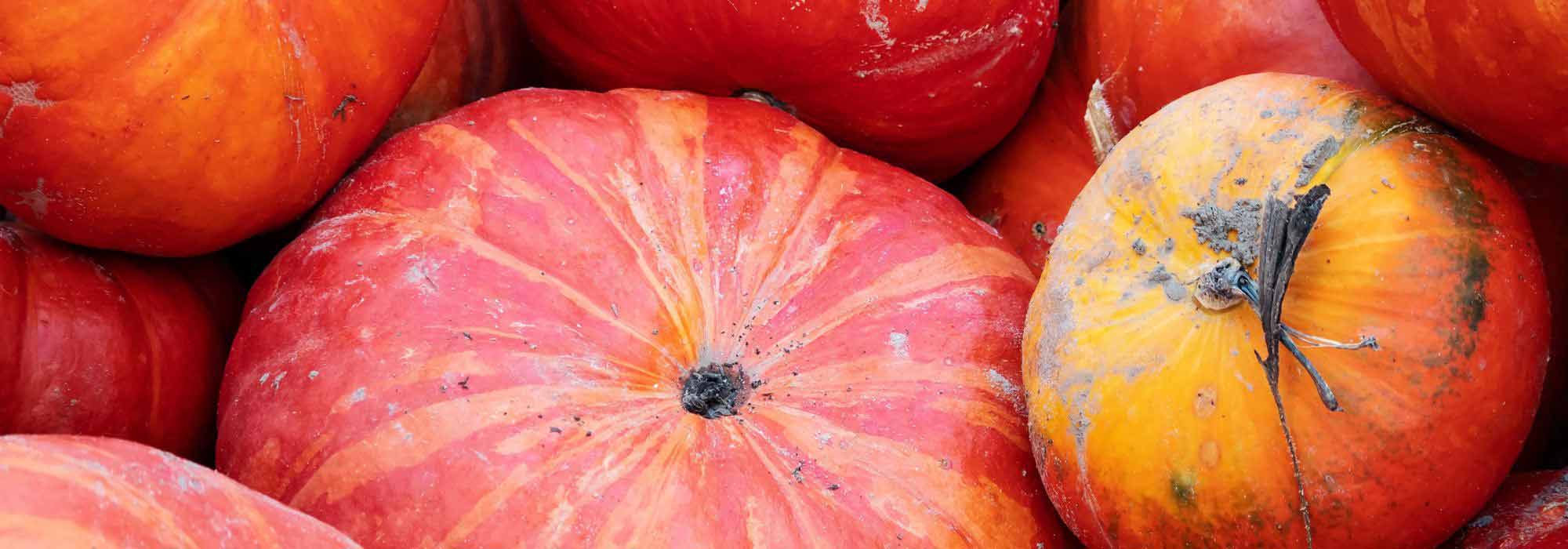
Pumpkin: harvest and storage
Our tips for making the most of your pumpkins all winter long
Contents
Pumpkins are one of those highly appreciated squashes: easy to grow and cook, they are essential vegetables for autumn and winter.
While pumpkin can be consumed immediately once ripe, it also has the advantage of being able to be stored for many months. To achieve this, simply follow a few simple steps at harvest time and store it under the right conditions.
Here are our tips for properly harvesting and storing your pumpkins, so you can enjoy them for a long time.

When to harvest pumpkins?
Harvesting occurs 4 to 6 months after spring sowing, depending on the varieties. It takes place between late summer and mid-autumn, generally from September to the end of October.
We advise against rushing the harvest of your pumpkin. The longer the squash ripens, the better it will keep, developing its flavours and nutrients.
There are two ways to know when your pumpkin is ready to be harvested:
- if the plant’s foliage is completely brown or yellowed, with dried stems (in this case, the squash will no longer ripen as the plant is dead);
- if the peduncle (the “stem”) of the pumpkin has turned yellow, woody, and dry, even cracked, ready to detach; the vegetable will then normally have taken on a beautiful colour, reached its ripeness size (variable depending on the varieties), and the skin will be hard and thick.
The weather should also be taken into account: if frost is forecast, remember to harvest your pumpkin in advance. While squashes can withstand rain and wind, they do not survive negative temperatures.
Before harvesting, in case of damp and rainy weather, we recommend isolating your pumpkin from the soil to avoid any risk of rotting. Simply place it on a tile, slate, brick, crate, or thick mulch.
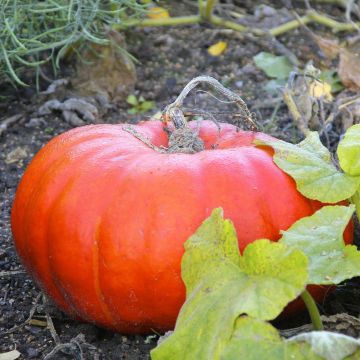
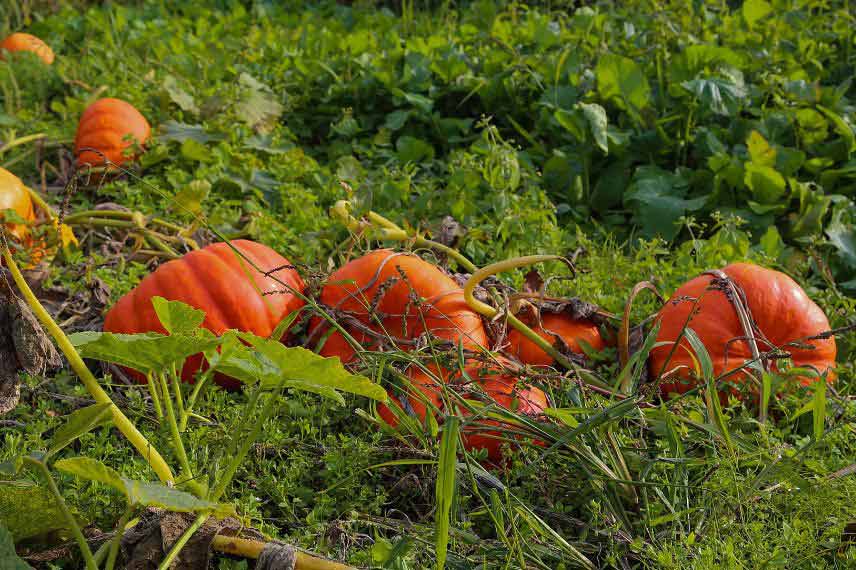 Wait for the foliage to wither or the peduncle to be dry before harvesting your pumpkins</caption]
Read also
Pumpkin: planting, sowing, growingHow to harvest pumpkins?
Ideally, harvest on a dry, sunny day.
To do this:
- using a pruning shear or a previously disinfected knife, cut the pumpkin at the neck, leaving a length of about 5 to 10 cm;
- leave the pumpkin to dry on dry soil for 1 to 2 days, ideally in the sun;
- using a brush or cloth, gently clean the squash to remove dirt, insects, or any impurities;
- check that the vegetable is well dried and shows no signs of wounds, which could compromise its storage (by encouraging bacteria and causing early rotting).
Even if the vegetables are mature, they can be fragile. Be therefore gentle during the harvest by avoiding knocking, damaging, or worse, dropping your pumpkins. Do not hold them by the neck to prevent it from breaking.
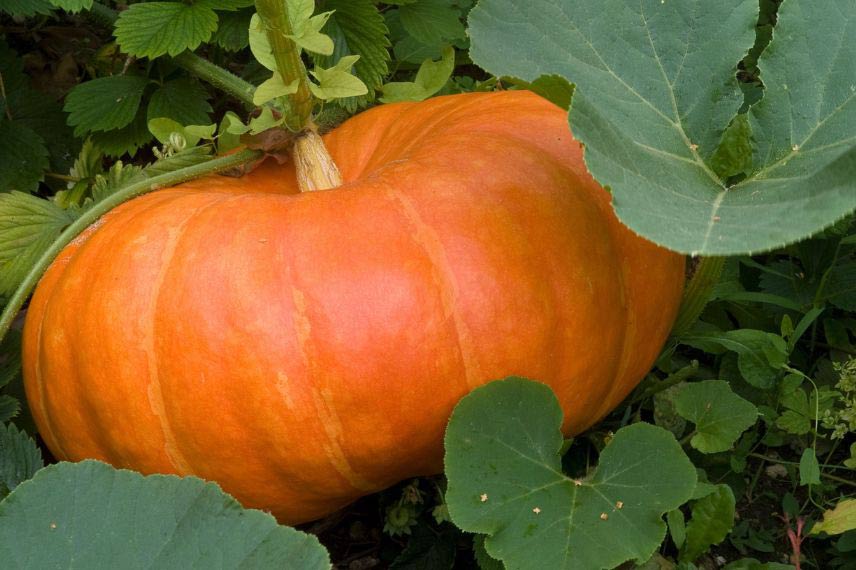
Check that your pumpkins are well dried and undamaged before storing them for winter
Discover other Pumpkins
View all →
Available in 1 sizes
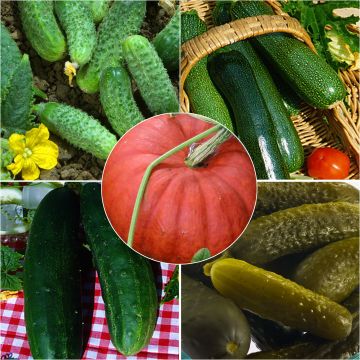
Available in 0 sizes
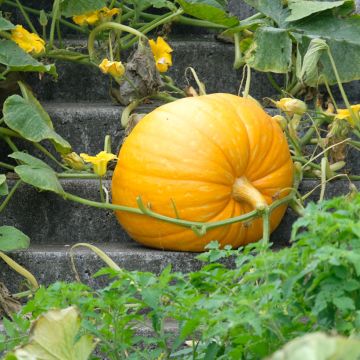
Available in 1 sizes
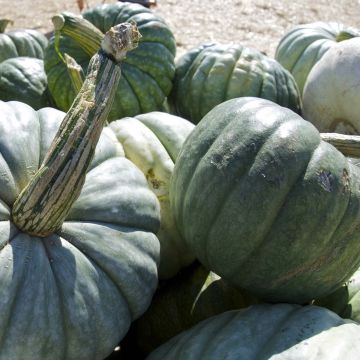
Available in 1 sizes
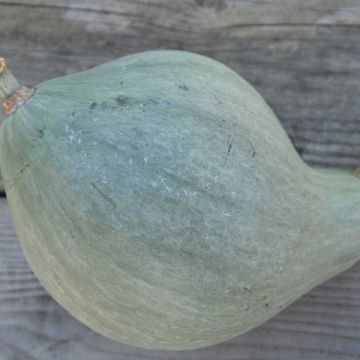
Available in 1 sizes
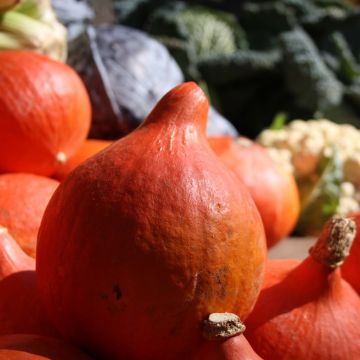
Available in 1 sizes
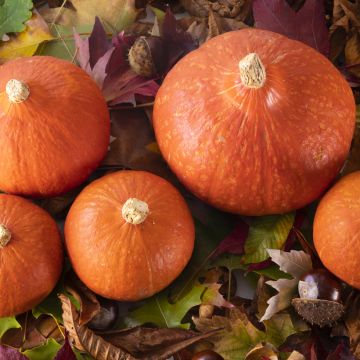
Available in 1 sizes
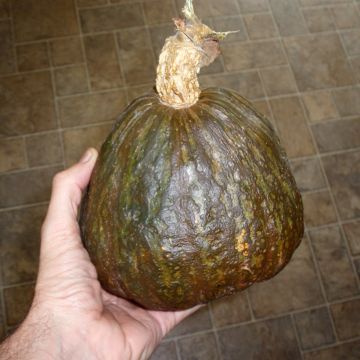
Available in 1 sizes
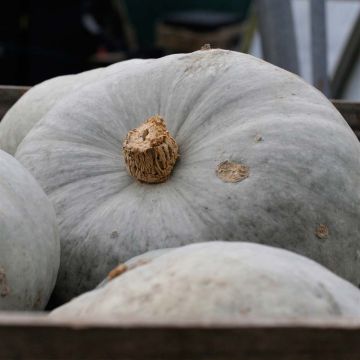
Available in 1 sizes
Available in 1 sizes
How to store pumpkins?
Pumpkins can be consumed immediately after harvest. If the vegetable is damaged or cracked, it cannot be stored properly.
However, to enjoy them throughout the winter and consume them later, there are several long-term preservation methods.
Storing a whole squash
All varieties of pumpkin can be stored whole for several months, such as:
- the famous Halloween pumpkin ‘Jack O’Lantern’, as tasty as it is decorative;
- the ‘Blue Ballet’ pumpkin, a small top-shaped squash with blue-grey skin;
- the giant squash ‘Atlantic Giant’, which can weigh several hundred kilos;
- the ‘Galeuse d’Eysines’ pumpkin, a variety with an astonishing “bumpy” skin and tender, sweet flesh;
- the ‘Giraumon Turban’ pumpkin, very decorative with its variegated skin of red, yellow, green, and white;
- the potimarron, valued for its flesh with a delicious chestnut flavour.
Once harvested, cleaned, and dried, pumpkins should be stored in a ventilated room, away from moisture and cold. The ideal storage temperature is between 10 and 15°C, but they can also be kept at room temperature. It is not necessary to completely shield the squashes from light.
For optimal storage, arrange your squashes so that air can circulate well:
- place them on a crate, a shelf with some straw, or wooden battens, always with the peduncle facing upwards (they can also be hung in nets);
- space them a few centimetres apart to prevent the vegetables from touching (do not store them on top of each other).
We recommend inspecting your squashes from time to time to ensure there is no mould, damage, or new spots. For consumption, of course, choose the pumpkins that appear less vigorous or are damaged.
Pumpkins can be stored for between 3 and 6 months, sometimes longer depending on the varieties.
Freezing
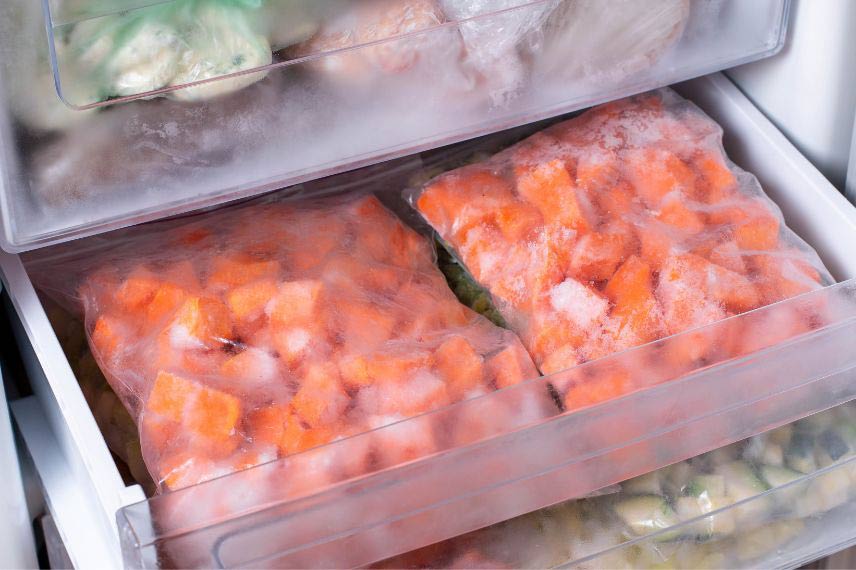
Pumpkin can also be frozen for preservation over several months. In this case, we recommend cooking it first.
The flesh can be stored cut into slices or cubes, then blanched for a few minutes in salted boiling water. The pumpkin can also be frozen once cooked in soup or purée.
Simply place your cooked squash in a freezer bag. Frozen pumpkin can be stored for about 1 year.
Lacto-Fermentation
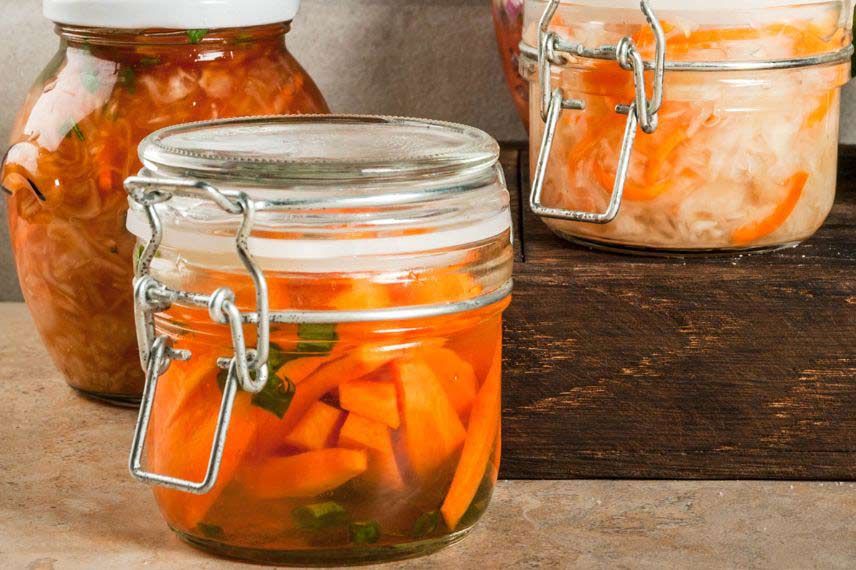
Lacto-fermentation is a very old food preservation technique, natural and without cooking. Among the most well-known lacto-fermented foods are sauerkraut and pickles.
In simple terms, it involves allowing foods to ferment in an airtight jar filled with a mixture of water and salt. The preserving juice becomes acidic due to the action of lactic bacteria, preventing any mould development.
Squashes lend themselves very well to this type of preservation. Once fermentation is complete after 15 days, lacto-fermented pumpkins can be stored for about 1 year in a cool, dark place.
Discover all of Ingrid’s tips and the complete recipe in the dedicated article on lacto-fermentation.
Read also
Sowing of squashes and courgettesCooking pumpkins
Pumpkin can be used in many ways in the kitchen, whether savoury or sweet. You will therefore have plenty of options to cook your pumpkins without getting bored throughout the cold season: gratins, purées, soups, curries, pies, fries, stuffed versions, and more.
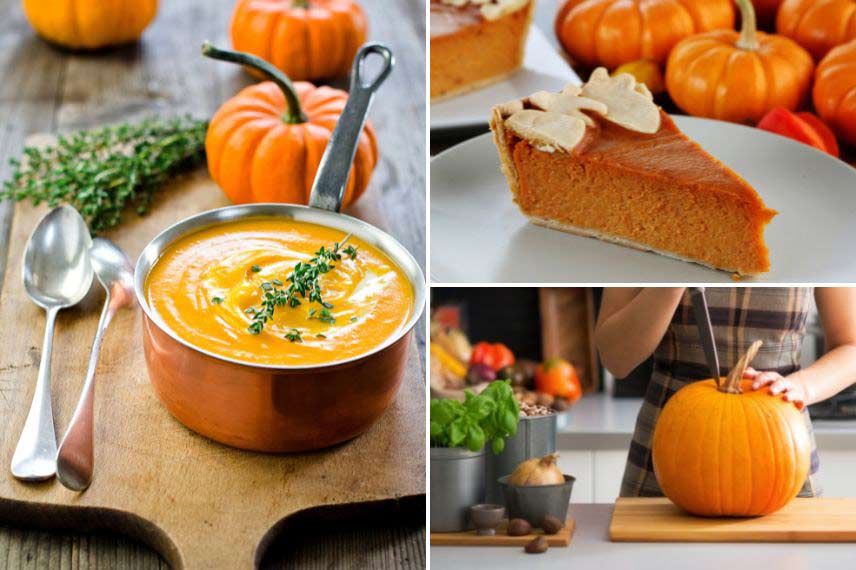 Savoury or sweet dishes: there are countless recipes for cooking pumpkins!</caption]
- Subscribe!
- Contents
Comments