





























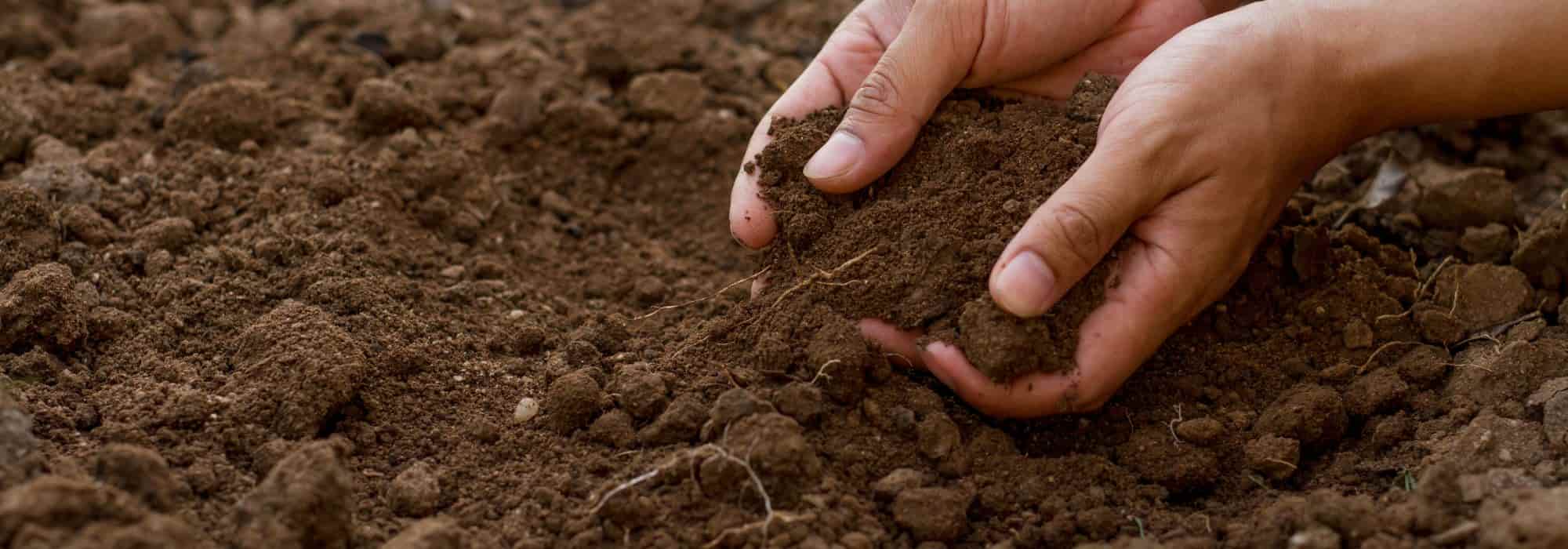
Should you dig the soil in winter?
To dig or not to dig, that is the question?!
Contents
In the vegetable garden, many tend to believe that the arrival of winter marks the end of work for a well-deserved (gardener’s) rest. Far from it! The period between the end of autumn and the beginning of winter is the best time to prepare the soil for future sowing and planting in spring. In this regard, there are two schools of thought: gardeners who dig vigorously to turn the soil, and those who advocate permaculture and organic farming, preferring to work the soil gently without turning it. Whichever method is chosen, this work on the soil is essential for structuring and aerating it. But the winter labour doesn’t stop there, as it will certainly be necessary to cover the soil to prevent the growth of adventive plants and leaching. It’s safe to say that it’s not yet time for the gardener to lounge in front of a nice fireplace…

Why is soil cultivation necessary?
After a growing season in the vegetable garden, the soil has suffered, it has become exhausted, impoverished, compacted, and has been trampled by the repeated passage of the gardener(s). The greedy vegetables have drawn all the nutrients and trace elements they needed. In short, after a productive summer, the earth is tired and less nourishing. It has given a lot and craves a bit of attention!
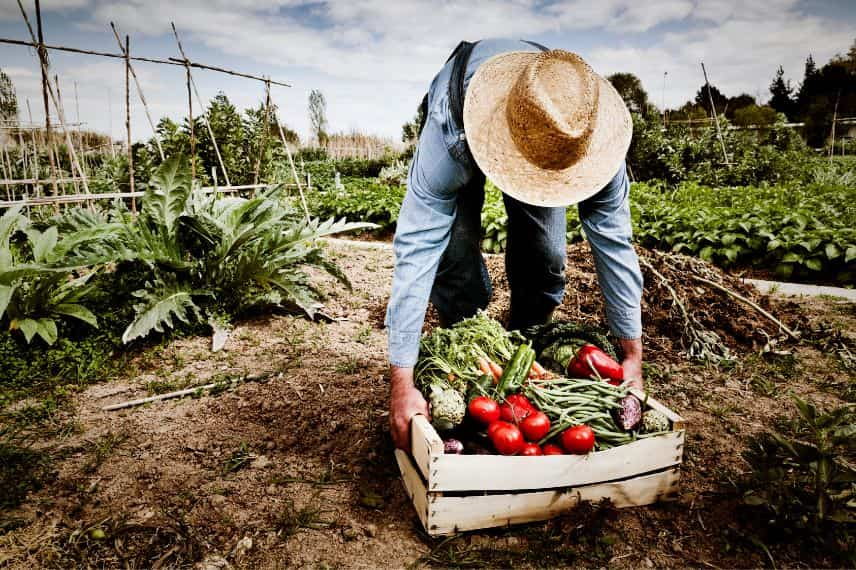
After a productive summer, the soil is exhausted and depleted of its nutrients
This is where the gardener must intervene to work the soil, prepare it to welcome the sowing and planting of spring, and enrich it to achieve significant production. Sowing vegetables in poor, compacted, leached soil is not necessarily a recipe for success!
In practical terms, working the soil meets several needs and objectives:
- Working the soil allows you to decompact it, making it more friable to facilitate water penetration and retention. Indeed, in compacted soil, rainwater runs off and does not penetrate deeply.
- To develop, a vegetable plant expands its root system to draw water and mineral salts from the soil. However, the roots also need air, that is, oxygen, for the plants to grow and bear fruit! Therefore, working the soil allows you to provide air to the roots, enabling them to explore a larger volume of soil. The work of the soil primarily aims to create an aerated structure, conducive to the proper development of the root system and, consequently, of the plants. An aerated, loosened soil is significantly more fertile than compacted soil that “suffocates.”
- This supply of oxygen is also essential for the survival of living beings that inhabit this soil, such as earthworms, bacteria, or fungi. These organisms are very useful for digesting and assimilating the organic matter we provide.
- Working the soil also aims to eliminate adventive plants that, despite all your efforts in mulching, hoeing, or weeding, have nonetheless proliferated in your vegetable garden. In particular, tough rhizomatous plants like couch grass or bindweed…
When should you work the soil?
The period between the end of autumn and the beginning of winter is ideal for working the soil deeply, that is to say between mid-October and early December. Of course, these dates are not set in stone and depend greatly on the climate of your region. Nevertheless, during this time, the work will be deeper and therefore more effective. In contrast, in spring, soil work will be done on the surface, making it more superficial before creating the ideal conditions for sowing.
Similarly, to work this arable land deeply, it is necessary to intervene before the severe cold and frosts. At this time, the soil is still warm and the autumn rains have moistened it without saturating it with water.
However, it is essential to work the soil on a day without rain, frost, or snow, meaning neither too wet nor too dry.
How to prepare your soil in winter?
If all gardeners agree that working the soil in winter is essential, the methods used are divisive. Some are advocates of the traditional (and almost ancestral) method of digging with turning, while others swear by the gentle method, the queen of permaculture and organic farming, of digging without turning the soil.
However, apart from perhaps in very large vegetable gardens, the use of a rotavator or any other motorised equipment is recognised as disruptive to the soil. Indeed, the tines of the rotavator tend to grind the earth too finely, causing the opposite effect. Once wet, the soil clumps together, reducing aeration. Furthermore, the rotavator genuinely disrupts the life of the fauna, particularly earthworms, which are ground up along with the soil. It disturbs the topsoil and risks bringing clay to the surface. If, for any reason, you cannot do without the rotavator, use it judiciously at the machine’s minimum speed.
Without wanting to stir tensions or open debates, perhaps we can discuss the two digging techniques.
Digging with soil turning
This soil work with a spade is the most exhausting for the back, arms, and shoulders! Indeed, the soil is lifted to be turned and thus aerated, to a depth equivalent to the height of the flat blade, approximately 20 to 25 cm. Thus, the soil is decompacted, particularly in areas where the soil has been compacted by foot traffic.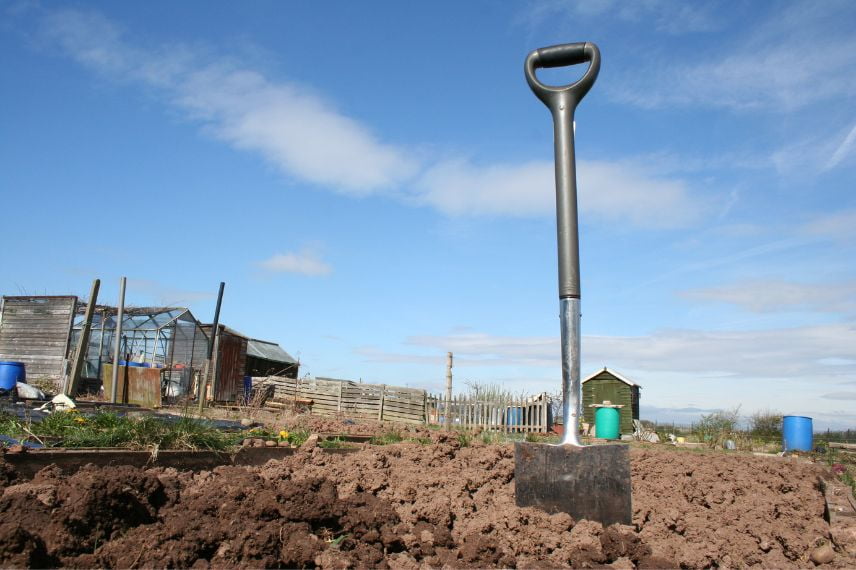
Manual digging is also very beneficial for heavy clay soils as it allows for breaking up clods. Over the winter, the frost will finish the job by crumbling and fragmenting these clods. In the case of very heavy, compact, and stony ground, a digging fork is preferable, as it penetrates the soil more easily. The broadfork, a flat spade with a fine and sharp blade, is more suited to very clayey and sticky soils.
Digging with a spade is also very useful for burying and integrating amendments provided to the soil, such as compost, manure, or green manures that have been sown and mown.
Similarly, it is more effective for eliminating persistent weeds. Even though, for certain adventive species like couch grass, it is preferable to use the digging fork as it breaks the roots less.
Disadvantages
If this method is criticised, it is because it has some drawbacks:
- It disrupts soil life, particularly that of microorganisms (bacteria and fungi) found in the top layer of soil (10 to 15 cm) that end up buried deeper
- It kills by cutting through the endogeous earthworms that dig horizontal galleries at shallow depths (10 to 20 cm on average) as well as anecic ones that live deeper
- It strains the back and is exhausting for the shoulders. Guaranteed aches and back pain!
Digging without turning
This digging with a broadfork or aerating fork allows for working the soil deeply without turning it, thus without disturbing anything. Thanks to the tines of these tools, the soil is simply lifted and stirred, the different layers are not mixed, and the soil is aerated. Thus, microorganisms and earthworms continue to live their lives and contribute to soil fertilisation.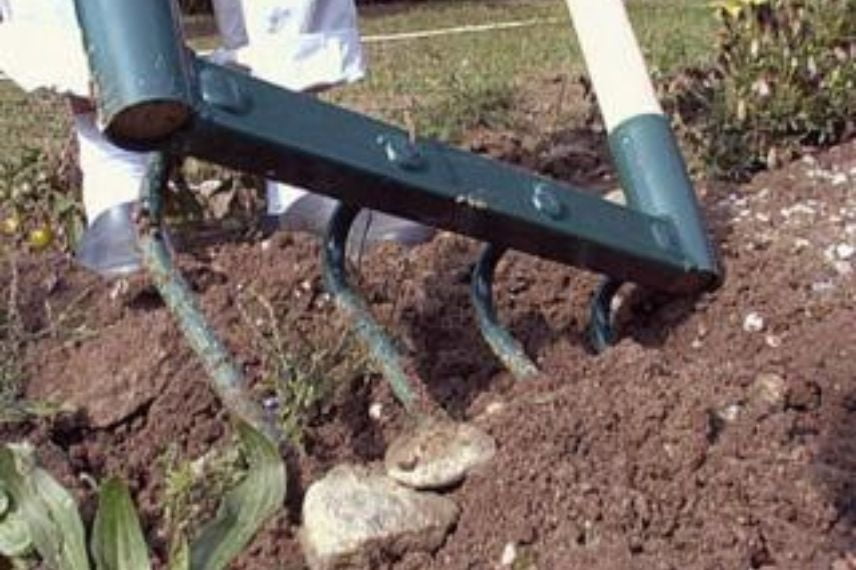
And you tire less because broadforks, aerating forks, and other bio-forks are used with a back-and-forth motion, without lifting. No intense effort is required.
Disadvantages
As interesting as it is, this digging without turning still has some drawbacks. Indeed, you cannot bury the amendments added to the soil with this method. After using the broadfork, you must absolutely use a rake to bury the manure or compost.
Similarly, you will likely need to make another pass with a rake to finely decompact the soil, for example, for sowing. Especially in heavy and clayey soil.
For further reading:
Read also
Can you compost "weeds"?How to enrich the soil in winter?
The onset of winter is the ideal time to enrich the soil and maintain its fertility. There are various ways to achieve this by adding natural amendments:
- Compost provides nutrients while lightening and aerating the soil and retaining water
- Manure, richer in nutrients than compost, fertilises and improves soil structure
- Leaf mould
- Wood ash is rich in mineral elements
If you were proactive, you would have sown green manures in autumn, which would enrich and aerate the soil while limiting the proliferation of weeds. However, it is now a bit too late for the seeds to germinate.
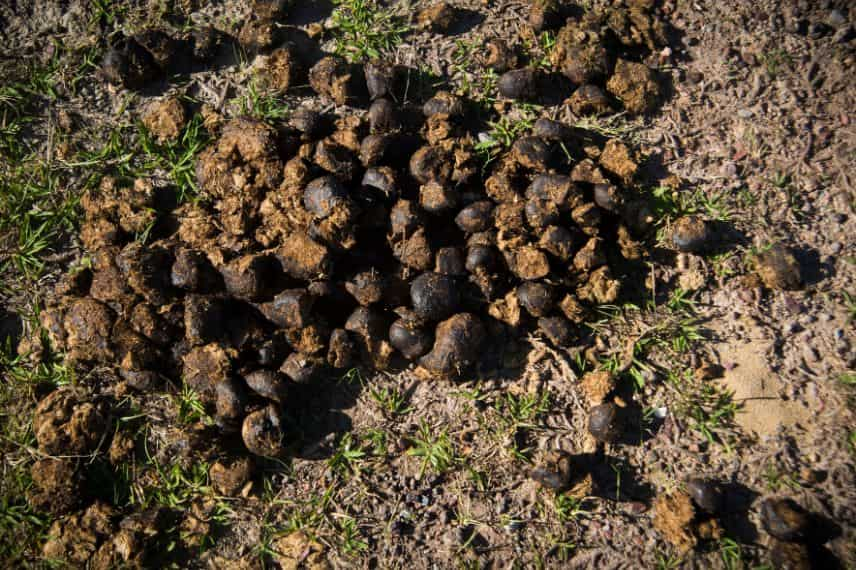 Horse manure is excellent for the soil in winter
Once you have incorporated your amendment into the soil, it is wise to cover it during winter to limit the proliferation of weeds. While they grow more slowly, they still grow. Moreover, they patiently await the return of spring. To cover the soil, you can use:
- Cardboard (without ink) on the soil
- Dead leaves
- Chopped hedge and bush trimmings
- Straw…
The best approach is to mix everything together to create a rich cover that will decompose over winter due to the weather. This cover also has the advantage of preventing soil leaching due to the impact of rain and snow.
Beneath this thick cover, microorganisms will continue their decomposition work. When spring returns, it will be enough to incorporate what remains to warm the soil.
Should you hoe in winter?
Why not? This hoeing has the advantage of bringing some larvae, lurking in the soil, to the surface, making them available to the hungry birds in the sky during this period.
If you have chickens, don’t hesitate to let them loose in your previously hoed vegetable garden. They will also feast on these larvae, particularly those of the click beetles and chafers.
- Subscribe!
- Contents
![[plant-care id="winter-work" title="Should you work the soil in winter?"]](https://en.promessedefleurs.eu/blogwp/wp-content/uploads/2022/11/faut-il-travailler-la-terre-en-hiver.jpg "[faq question=\"faut-il travailler la terre en hiver\"]")
Comments