





























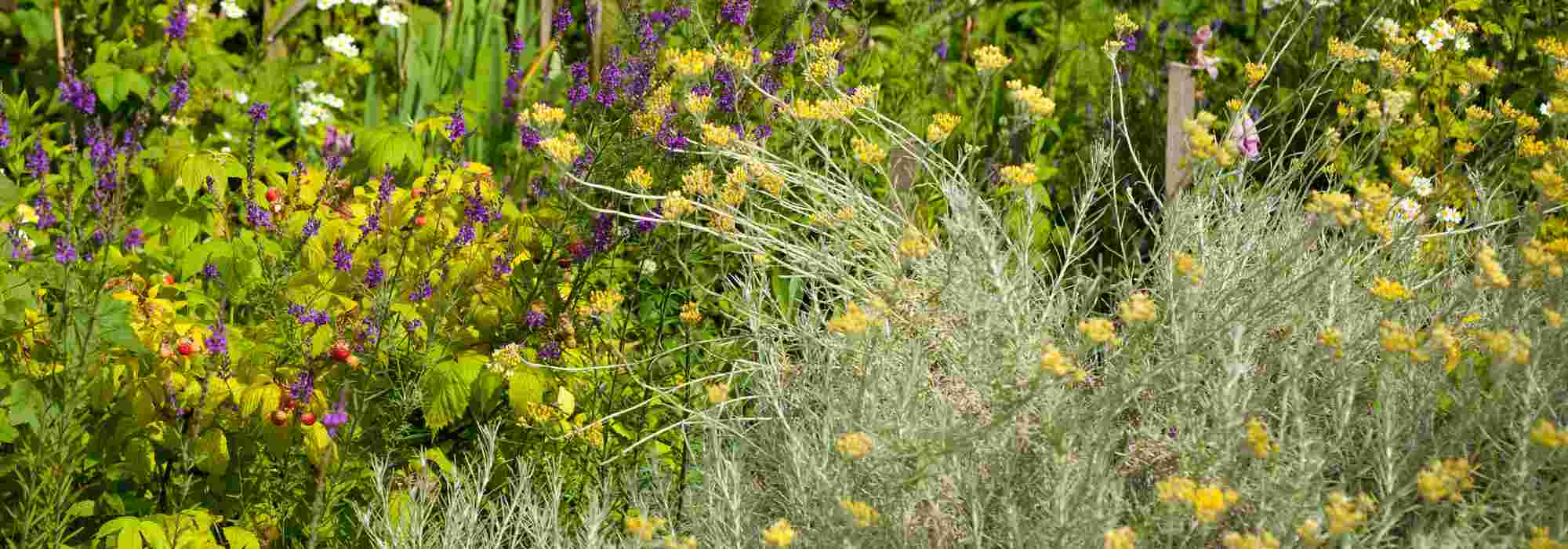
Slow gardening
For a pleasurable and responsible garden
Contents
A new anglicism has arrived in the gardening world… We are indeed starting to hear more and more about slow gardening, which one might spontaneously want to translate as a celebration of slowness in the garden, but that is not the case!
This new trend is actually a true philosophy of life in the garden, inherited from various ‘slow‘ movements, and revolves around several key principles: a close connection to nature, a refusal to view gardening as a source of stress, and an eco-responsible way of gardening.
Let’s discover slow gardening, this new approach to gardening that we are happily adopting more and more!

Slow gardening: where does it come from?
This movement originates from the Slow Food movement, which began in Italy in the mid-1980s as a counter to fast food, the quick-service dining synonymous with “junk food” that was very much in vogue at the time. It gradually conquered the gastronomic world over the following decades up to today, promoting a seasonal cuisine that is simple and tasty, based on local ingredients.
In fact, the acronym SLOW comes from English, and in this context, it does not refer to slowness but to ecological values:
- S for sustainable – durable, with no impact on the environment,
- L for local,
- O for organic,
- W for whole, referring to unprocessed raw products in the case of slow food
This ‘slow’ movement has gradually branched out into several trends, such as slow travel, which promotes more responsible travel, slow fashion, a higher quality fashion produced locally… up to slow life, which calms the frantic pace of our lives.
Although the notion of slowness is important in this concept, which stands as a counter-proposal to a world where everything is speeding up, slow gardening remains more of a state of mind. It was inspired by a certain Felder Rushing, an American horticulturist living in Mississippi, who published a book titled Slow Gardening in 2011 (not yet translated), which advocates pleasure as the driving force in our approach to gardening. He has championed a more environmentally attuned attitude, for example, highlighting our own plantings from sowing, the pursuit of a productive and nourishing garden, based on local resources… In short, it’s a bit of a return to the roots of gardening.
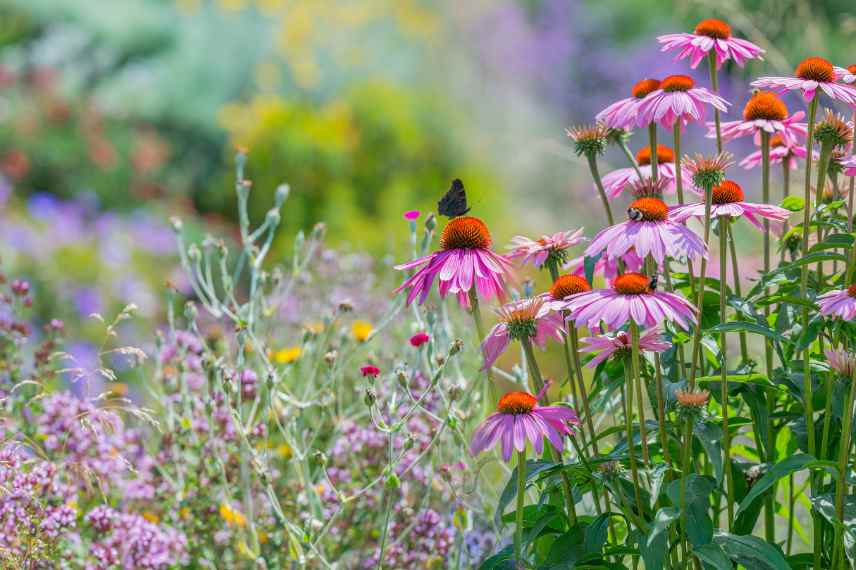
Drought-resistant perennials for a resilient garden, adapting to climate changes… among other things
Gardening with nature
… and not against… This is the whole point of this slow gardening movement that aims at reconnecting with Mother Nature!
One might think that it perhaps wasn’t worth giving a name (a somewhat marketing term?) to this gardening approach, which ultimately reflects the mindset of many of us, concerned as we are about current ecological and biodiversity issues, not to mention climate change. However, it certainly helps to shine a light on simple actions that can be implemented:
- align with the rhythm of nature and the seasons, while being fully aware of our activities in the garden and their impacts
- change our mowing habits, which are time-consuming, by opting, when feasible in large areas, for late mowing or a considerate mowing
- welcome garden wildlife wherever possible, using simple means: making or installing bird feeders and water sources, creating insect hotels, providing piles of branches for hedgehogs, voles, and other small inhabitants, and using melliferous plants to attract pollinators and butterflies, which are essential for the pollination of many flowers
- use local and native species for better hardening
- wild the garden again (this is also referred to as renaturation more broadly in larger spaces and cities) for a diverse and vibrant garden
- utilise the garden’s gold (dead leaves, branches, mowing and pruning residues) to create a virtuous cycle from everything nature gives us for free!
- appreciate the company of both birds and plants
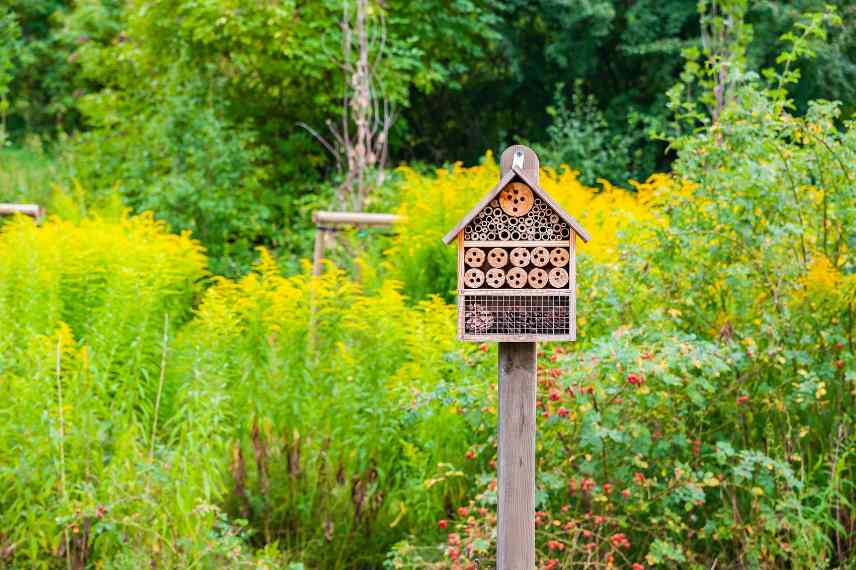
The concept of biodiversity in the garden is an integral part of the slow gardening philosophy
Discover other Perennials
View all →
Available in 1 sizes
Available in 1 sizes

Available in 1 sizes
Available in 1 sizes
Available in 1 sizes
Available in 2 sizes
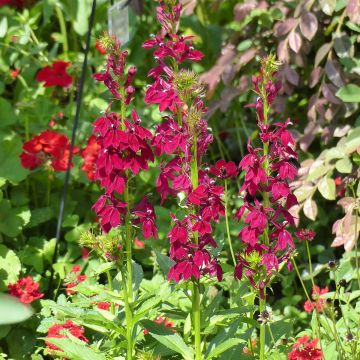
Available in 1 sizes
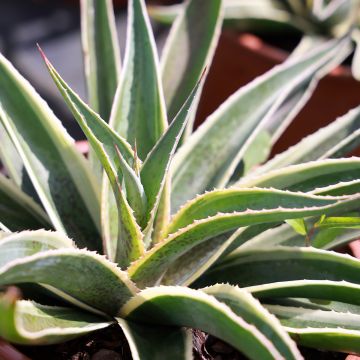
Available in 1 sizes

Available in 1 sizes

Available in 1 sizes
Gardening without stress and pressure
Far from the idea of gardening for the lazy and an unkempt outdoor space, slow gardening is more of a philosophy that avoids the notion of a chore garden, where the tasks at hand take up so much space that the pleasure one should derive from it is pushed so far away that gardening becomes a headache rather than a relaxing moment.
To achieve this and enjoy one’s garden to the fullest, we become more serene about the tasks to be done, rediscovering the virtues of patience, and we allow ourselves healthy breaks between various tasks throughout the year. By adopting instinctive gardening rather than rigid gardening, we will:
- reduce lawn areas, which are time-consuming, and implement a reasoned gardening approach in different spaces of the garden, much like a local authority would do across various zones (from prestigious to natural)
- accept that weeds may disrupt our plans, or that pesky gastropods are part of the garden experience
- observe our garden regularly, meaning allowing ourselves moments of relaxation and breathing in our garden, for example, by making it a habit to stroll there in the early morning or at the end of the day
- garden with all our senses and take the time to savour: sight, as well as our sense of smell and touch, play a significant role in the pleasure derived from the garden
- create a garden that reflects our personality, by planting primarily the flowers, fruits, and vegetables we enjoy, without succumbing to the dictates of an increasingly prevalent garden trend
- prioritise sowing, to understand and appreciate the rhythm of things in the garden
- learn to unlearn as Eric Lenoir suggests in his treatise on punk gardening, but he is not the only one to say this…
- take as much pleasure in watching our vegetables and new plantings grow as in tasting or maintaining them
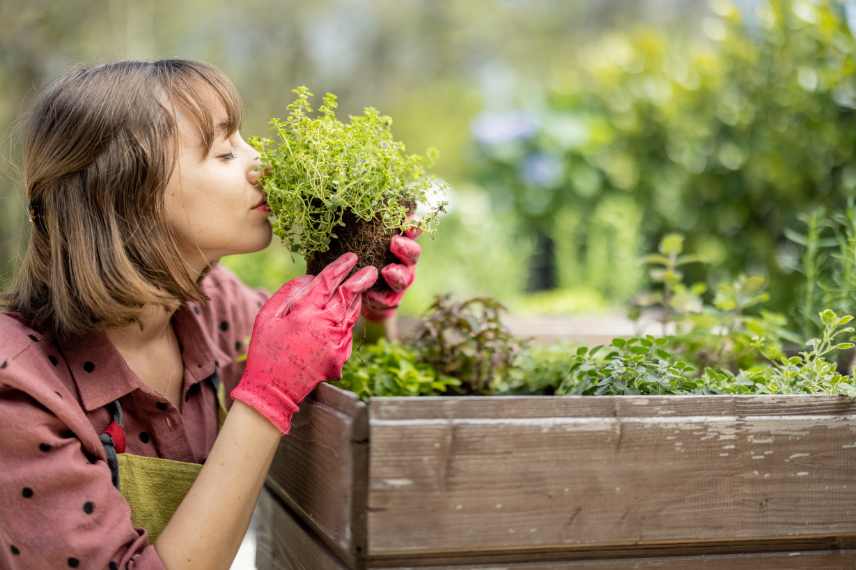 Savour and take pleasure in the garden rather than trying to control everything</caption]
Read also
Recycling in the gardenResponsible gardening
Among the key principles of slow gardening, we unsurprisingly find eco-friendly gardening, where reducing our carbon footprint goes hand in hand with anti-waste practices.
Slow gardening thus highlights the great return of the productive garden, as the vegetable patch is no longer seen solely as an activity for retirees, but as a way to eat well and healthily.
We also adhere to virtuous principles for ourselves, for the plants, and for the planet:
- The use of organic fertilisers, manure, and homemade compost, or leaf mould as the only accepted materials in our plantings
- The reduction, if not the abolition, of plastic (replaced by turf pots, with emphasis on bare root plants or plug plants)
Note: At Promesse de Fleurs, we have implemented 100% plastic-free shipping to support this eco-friendly approach, as the gardening and nursery sector is significantly impacted by this issue - A more sustainable garden, by planting less water-hungry plants, now favouring those that can withstand repeated droughts
- A garden that takes its time to grow: we plant small, in pots, allowing the plants to settle in well without any inputs, or whenever possible, directly from sowing or propagation by cuttings, to appreciate the growth and development of our plants: the satisfaction derived from this is priceless!
- Recycling in all its forms in the garden: making your own mulch, which avoids trips to the tip, upcycling old materials, pallets, chairs, pots, bottles, old stumps…
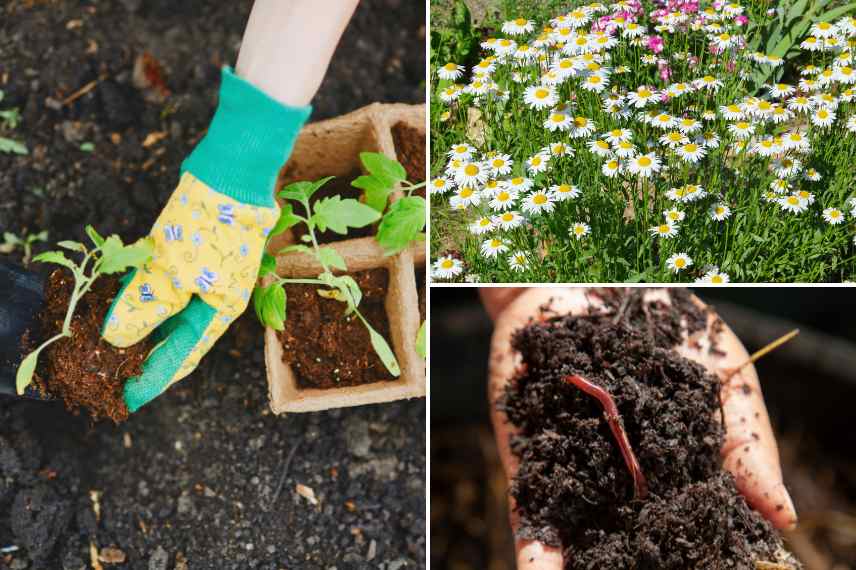
A more responsible garden: homemade sowing and compost, and plants accustomed to dry summers (here, Leucanthemum vulgare)
Gardening locally and seasonally
Respecting the cycle of nature is just as important in the garden and vegetable patch as it is on the plate, and it’s a way to garden in close harmony with the endemic species of the region where we live. Local plants will always be suited to the local climate and soils for better survival, often requiring less water.
Forcing the issue by trying to plant agaves in the Massif Central, hydrangeas in the Drôme, or citrus trees in the ground in Hauts-de-France is, to be frank, more of a whim than a genuine need, as the variety of the plant world allows us to satisfy our desires.
We must admit that when it comes to the concept of local and seasonal gardening, most of us have been considering it for quite some time, as we know well that raspberries and tomatoes do not grow in January... And that salads or tomatoes from one’s own vegetable patch are incomparable to those from shops or even markets.
In line with slow food, this local gardening allows the more motivated to move towards food self-sufficiency, while those in a hurry or with limited space can simply enjoy growing and harvesting fruits and vegetables with unmatched flavours. It also offers the opportunity to grow old and forgotten varieties or species from our regions!
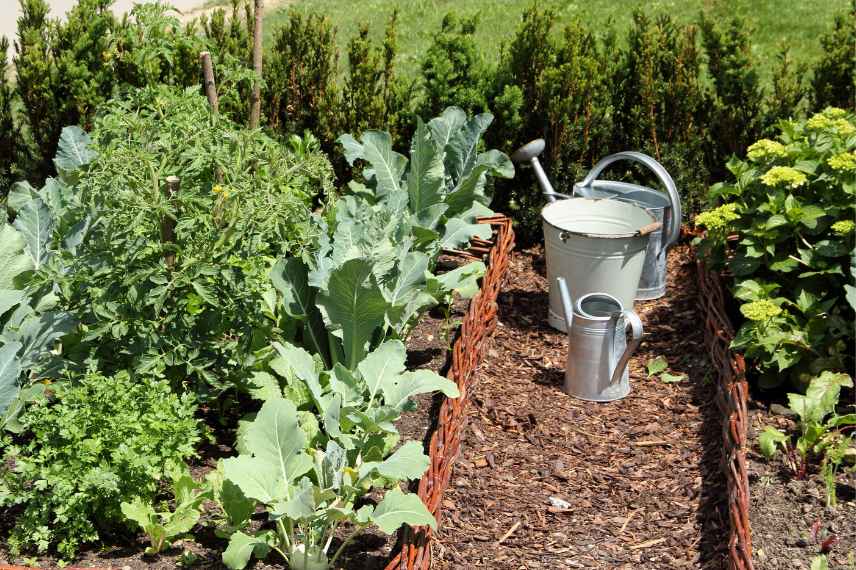
A vegetable patch where the vegetables will thrive, as they are suited to the soil and climate
For further reading
The number of publications released each year on the theme of slow gardening encompasses many concepts, as we have seen. Here are some examples of this useful library:
- A Garden Without Plastic. Elke Schwarzer. Editions du Rouergue
- Compost and Mulching: Recycling Your Biowaste to Nourish the Soil. Denis Pépin. Editions Terre vivante
- A Short Treatise on Punk Gardening: Learning to Unlearn. Eric Lenoir. Editions Terre vivante
- Living with Weeds. Guylaine Goulfier. Editions Massin
- Native Plants for a Nature Garden. Dominique Brochet. Editions Terran
- Solutions for a Resilient Garden. Jean-Paul Thorez. Editions Terre vivante
- Naturalistic Plantings: Introducing Nature into Green Spaces. Nigel Dunnet – Editions Ulmer
And in English, you can follow Felder Rushing on his American blog.
- Subscribe!
- Contents
![[shortcode identifiant="title" title="Slow gardening: natural gardening"]](https://en.promessedefleurs.eu/blogwp/wp-content/uploads/2023/01/Le-Slow-gardening.png "Slow gardening")
Comments