


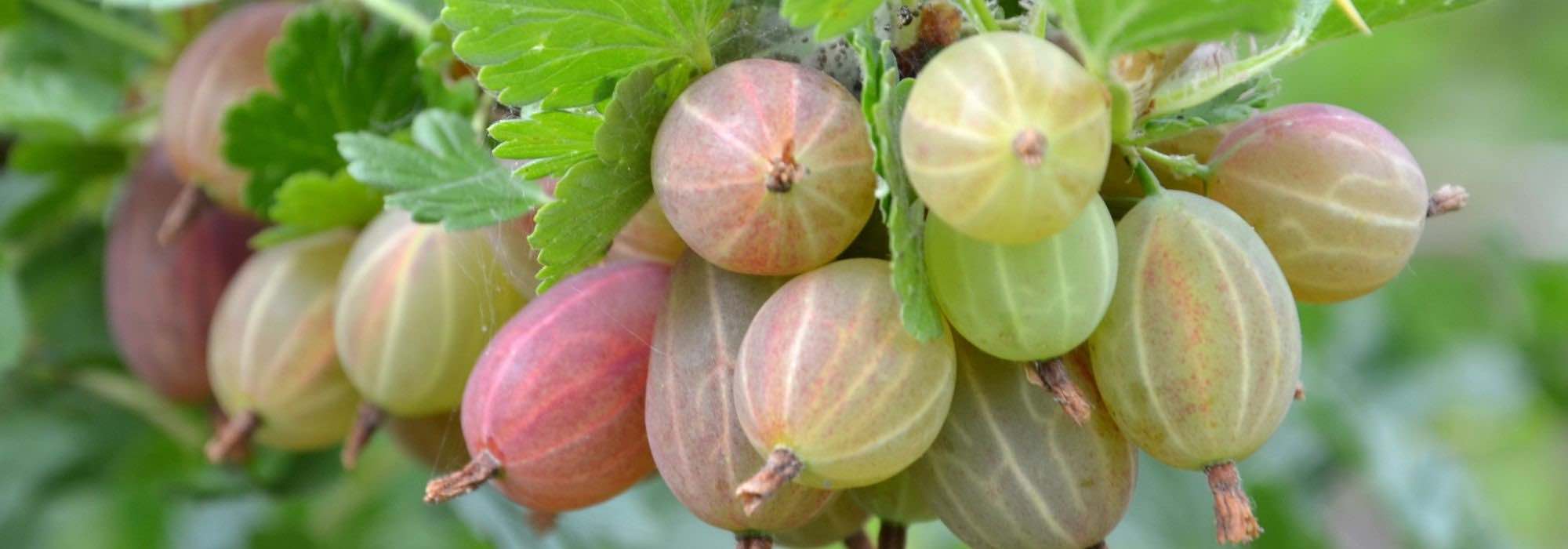
Bare-rooted small fruit trees: cheaper plants for a quick harvest
The advantages of bare rooted plants rather than in pots or root balls
Contents
Whether to create an edible hedge, to integrate into the vegetable patch, or to grow in a pot on the balcony or terrace, the small fruit plants will be perfect candidates. They are often bushes with a somewhat wild look, but also herbaceous or climbing plants, which you can even find naturally in our forests.
If you want to grow these edible plants, you’ll be able to choose between different packaging options: bare roots, potted or as a root ball, depending on the time of year. If you’re looking for an economical investment that becomes productive quickly, we recommend opting for bare roots, which are planted in autumn. Discover the advantages of this packaging and how to succeed in planting your small fruit plants as bare roots.

Plants with bare roots: what are they?
These are plants that may surprise unwary gardeners at first glance: they are indeed devoid of aerial growth (leaf, flowers, fruits) and their roots are exposed to the air. They are therefore not in a container or surrounded by a protective net.
Bare-root plants are lifted from the ground during their winter dormancy period, before shipping or purchase. They are available from October–November to February–March, depending on the weather. Indeed, temperatures need to cool to trigger the loss of leaves, indicating the onset of dormancy.
Note: deciduous trees and bushes (which lose their foliage in autumn) are the most commonly available as bare roots, but you can now also find on our site bare-root perennials.
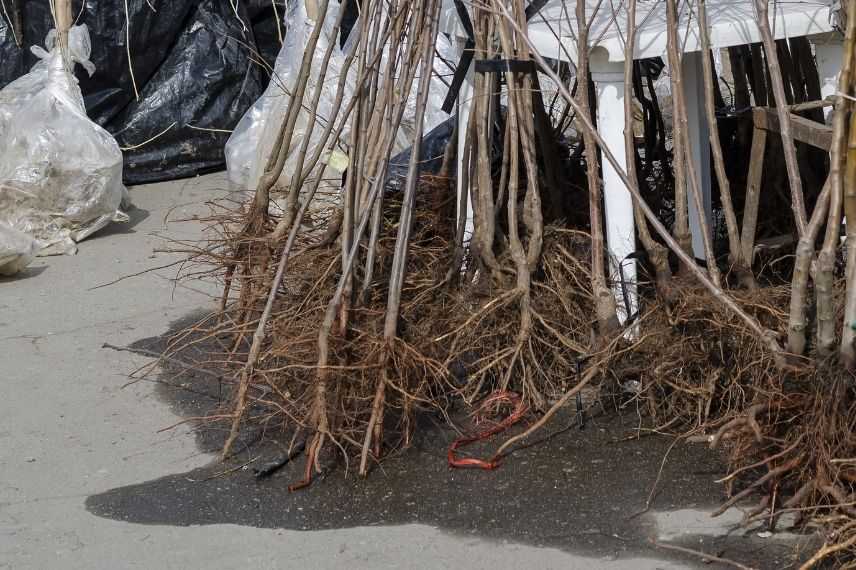
Bare-root fruit trees
A cost-effective solution
Buying fruit trees with bare roots offers the best value for money, especially if you buy in bulk, for example to create a hedge or an orchard.
These bushes will indeed be considerably cheaper to buy than plants in containers (pots), since they cost less to produce.
- They do not require much care in the long term (watering, fertilisation, heating).
- They require less labour, whereas a plant in a pot requires, for example, almost daily attention.
- They do not require any additional container.
- They are lighter and less bulky, which allows savings on storage and transport.
The savings made by choosing a small fruit tree with bare roots, rather than one in a pot, can therefore range from 10% to nearly 30%.
Packaging that favours recovery
As we have seen, these plants first grow in the ground before being lifted during their period of dormancy: the plant is therefore no longer developing its roots or its above-ground parts. It will thus be transplanted without interruption during its vegetative period, which causes less stress, promotes establishment and the natural growth of the plant in spring.
In addition, these plants have grown naturally in open ground. The roots were able to develop without constraint, to branch out and to balance, making them more resistant and vigorous. For small fruit trees, this facilitates rapid fruiting. The plants are also accustomed to seasonal weather variations, which can make them hardier.
Unlike small fruit trees in pots, there is also no risk of a root-bound condition. This happens when roots become tangled after spending too long in a confined space and small volume of soil. Root binding reduces the chances of establishment, weakens plants that have been compressed and makes them generally less resilient.
Rootball packaging, for its part, also favours plant establishment. But it is considerably less common than plants with bare roots and is often more expensive to buy.
Finally, with the roots visible, you can immediately check their health, which results in fewer unpleasant surprises.
Read also
How to plant a fruit tree?Which types of small fruit trees should you choose?
Most small fruits can be planted as bare roots, whether they are bushes, climbers or herbaceous plants.
Opt for example:
- Blueberry bushes;
- Strawberry plants;
- Raspberry plants;
- Blackberry bushes;
- Redcurrant bushes;
- Blackcurrant bushes;
- Cranberries;
- Lingonberries;
- Fig trees;
- Goji berry bushes;
- Grapevines;
- etc.
Also try original cross-breedings, such as the raspberry–blackberry ‘Boysenberry’ or the ‘Buckingham Tayberry’ blackberry ;
For more information:
- Planting gooseberries from bare roots
- Planting raspberries from bare roots
- Planting strawberries from bare roots.
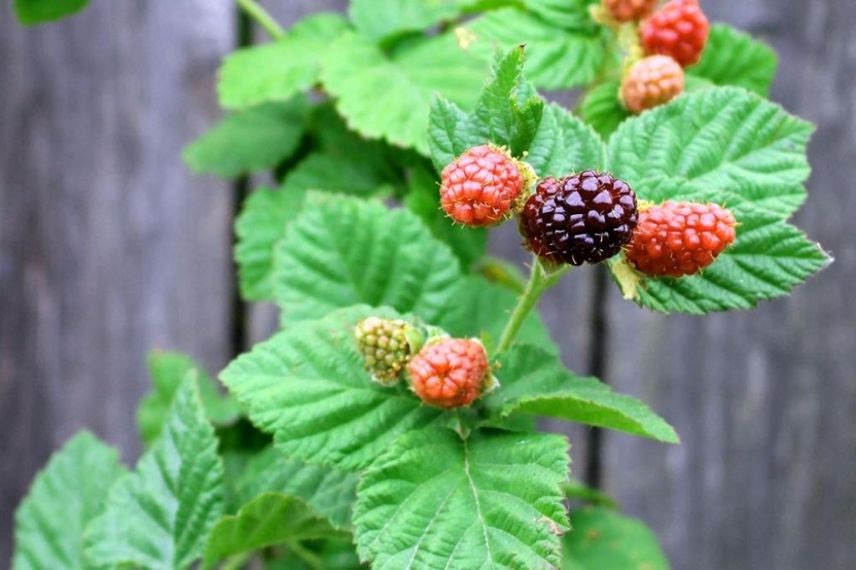
Try the ‘Boysenberry’ raspberry
How to successfully plant small fruit trees from bare roots
Planting period
Planting small fruit bushes with bare roots takes place in autumn or at the end of winter. It must be carried out strictly outside periods of frost, snow or when the soil is particularly waterlogged. These conditions can indeed compromise the chances of successful establishment. The plant should have dropped its leaves, but should not yet have started producing buds.
Since the root system is not protected, these plants are more prone to drying out, which is why they must be planted very quickly after purchase (within 3 to 4 days at most). If you need to keep them waiting, due to lack of time or favourable weather, plan to keep your bush in a holding bed. For this, place it in a very light substrate, generally based on river sand. Position it in a shaded spot protected from wind, frost and other bad weather.
Coating the roots with pralin
Planting bare-root plants is not complicated, but requires a little prior preparation: pralin coating, or dressing, of the roots. This coating step helps increase the chances of successful establishment, offers protection to the roots, speeds up their healing, and also prevents the formation of harmful air pockets.
Pralin takes the form of a sort of paste, muddy and sticky in appearance. You can make your own pralin from soil, clay, rainwater and cow dung or compost. But there are also ready-to-use solutions, easy to find online or in specialist stores.
Using a previously disinfected pruning shear, begin by removing any roots that are too long, dried out or damaged. Then coat all the roots of your bush with the hydrating, protective pralin. Afterwards, leave to soak, ideally for 24 hours.
For more information: Coating the roots of trees and bushes with pralin.
Pralin coating is not an essential step, but we strongly recommend it.
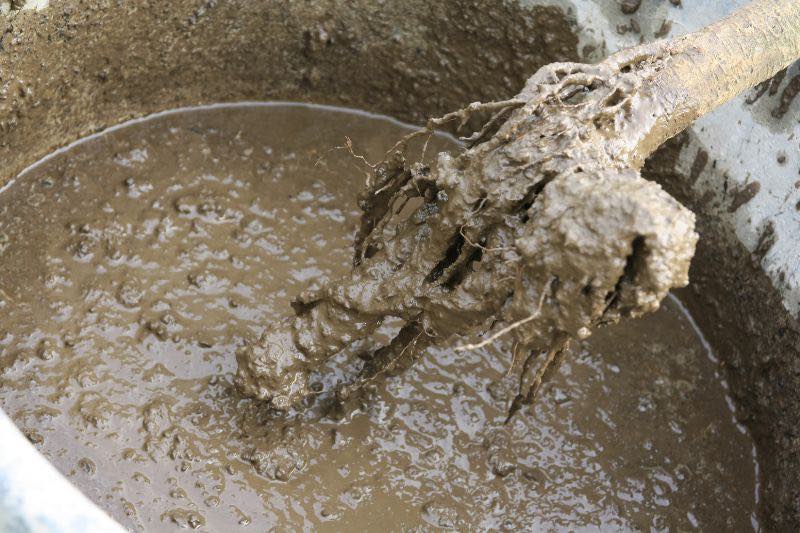
Pralin coating of the roots optimises successful establishment
Planting tutorial
Once the roots of your small fruit bush have been pralin-coated, you can proceed to planting, in the ground or in a pot.
Choose a location that matches the requirements of the small fruit bushes you have chosen: sunny or partly shaded exposure, sheltered from wind, etc.
- Using a spade, dig a hole about two to three times larger than the volume of the roots. Loosen the soil well, remove stones and any grassy areas. If necessary, lighten the heaviest, clayey substrates to make them more free-draining. To do this, mix for example gravel, sand or clay pebbles.
- Place your small fruit bush in the planting hole so that it stands straight, taking care to spread the roots gently.
- Optionally add a stake set at an angle or a support for training (find more information in our dedicated tutorial: How to stake a fruit tree?).
- Backfill with garden soil or suitable potting compost until the roots are completely covered. If there is a graft union, do not bury it (the junction appearing as a collar).
- Firm the soil with your hands or feet to eliminate air pockets and allow the soil to adhere well to the roots.
- Water generously. If necessary, in dry soil, create a basin around the bush to optimise future watering.
- Lay an organic mulch at the foot of the small fruit bush to better conserve moisture and limit the development of adventive plants (undesirable spontaneous plants).
If you plant several small fruit bushes, for example as part of a hedge, remember to respect a minimum distance between each specimen. This depends on the eventual size of the plants at maturity (allow on average 40 to 80 cm).
Caring for small fruit trees with bare roots
Water your small fruit trees regularly to encourage establishment: do not let the soil dry out completely. Watering should be regular for at least the whole first year of cultivation, especially during the summer. Don’t forget to water even those small fruit trees known to be drought-tolerant, such as fig trees. Although they are accustomed to Mediterranean dry conditions, they first need to develop their root system deeply before becoming more self-sufficient.
Carry out an annual pruning at the end of winter. This helps to:
- remove damaged branches
- restore the plant’s shape
- improve light penetration
- promote future fruiting
Renew the mulch at the base of the bushes when it has broken down.
After one to two years, you can remove the stakes put in place at the time of planting.
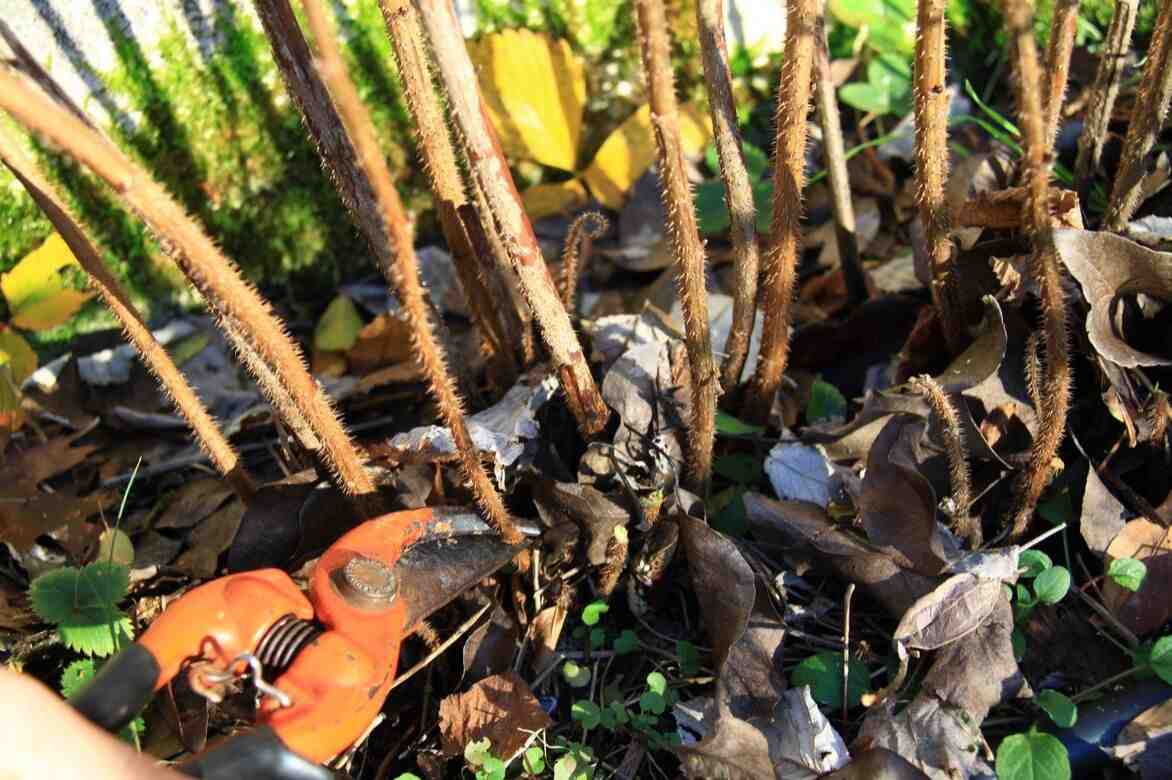
Pruning small fruits, here the raspberry, at the end of winter
- Subscribe!
- Contents
Comments