





























The best indoor plants to decorate your home at Christmas
Incorporate plants into your Christmas decorations
Contents
The festive season is synonymous with sharing and decorating. The use of indoor plants for Christmas decoration offers a multitude of benefits. Indoor green plants, with their lush foliage, and flowering plants, with their vivid colours, become genuine assets for a festive and natural decoration. By choosing to decorate with indoor plants, we also do our bit in favour of the environment. Unlike traditional decorations often made from synthetic, non-recyclable materials, plants are a sustainable and ecological option. They can continue to beautify our homes long after the festive season, offering a solution that is both attractive and responsible.
In this article, we explore a few plants to grow indoors whose appeal is particularly suited to winter and Christmas, and share some creative ideas to incorporate these plants into your decorations.

Must-have indoor plants for festive décor
Poinsettia
Poinsettia, with its vivid red leaves, is an essential plant for Christmas decoration. Native to Mexico, this plant is prized for its colourful bracts that resemble flowers. To maintain its beauty, the poinsettia needs bright but filtered light and regular watering without excess. Place it in a heated interior above 18°C. Allow the potting mix to dry out slightly between waterings. Position it in a well-lit spot sheltered from draughts. After the holidays, with appropriate care, it can remain attractive throughout the year. Gradually reduce watering to allow the plant to rest.
Amaryllis
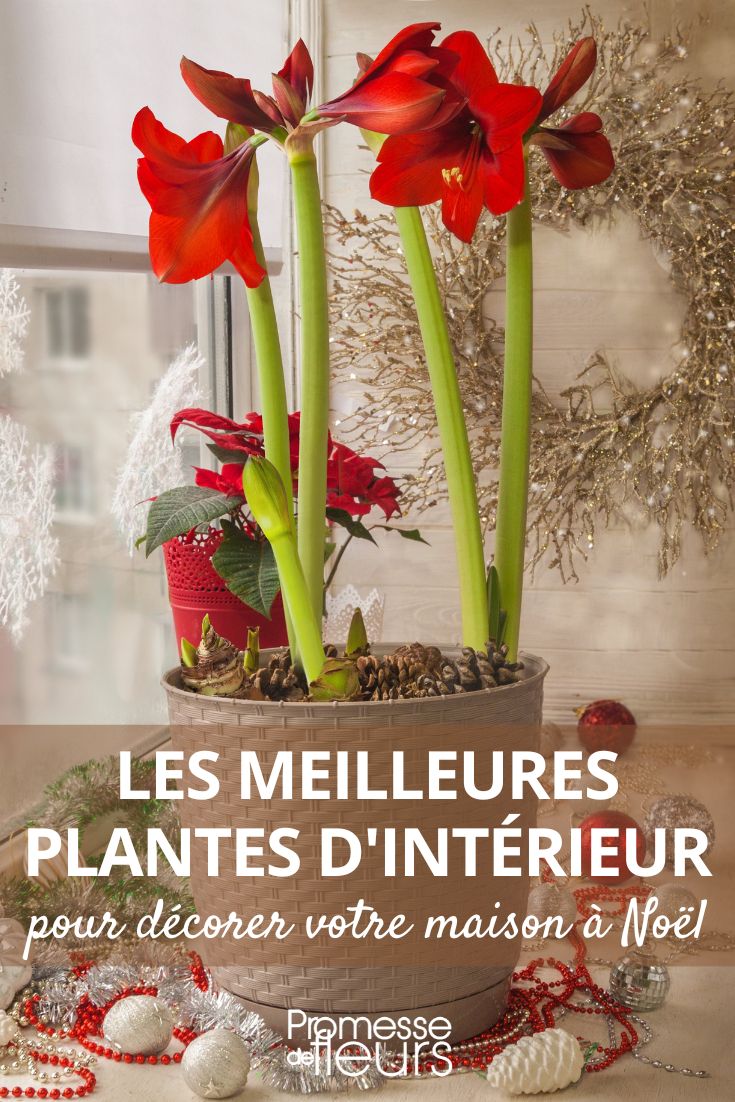
The amaryllis is distinguished by its large trumpet-shaped flowers, available in a variety of colours ranging from vivid red to pure white. This bulbous plant is particularly appreciated for its winter flowering, bringing a touch of elegance and colour indoors during the coldest months. The amaryllis prefers indirect light and moderate watering, and can flower again each year with proper care. For optimal flowering, place the amaryllis in a bright spot and water it regularly, avoiding excess water. Once flowering has finished, cut the stem to encourage leaf growth. Continue to water and fertilise the plant so it can store energy in its bulb for the following year’s flowering.
Cyclamen persicum
The cyclamen is prized for its delicate flowers and marbled foliage. This plant flowers in winter, offering a palette of colours from white to deep red. The cyclamen prefers cool, well-lit environments, and its growing medium should be kept slightly moist. The cyclamen prefers bright but indirect light. A position near a north- or east-facing window is ideal. Avoid direct sun exposure, especially during the summer months, as this can scorch the leaves and flowers. A temperature between 15 and 18°C is ideal for its growth. Avoid placing the plant near heat sources such as radiators or fireplaces, as excessive heat can shorten its flowering period and damage the plant. Watering the cyclamen must be done with care. Water the plant when the potting mix starts to dry. It is preferable to water from below to avoid wetting the corm (the bulbous part from which the leaves and flowers emerge), which could cause it to rot. You can place the pot in a saucer of water for a few minutes, then let it drain.
→ All about growing florist’s cyclamen in Marion’s article
Christmas cactus
The Christmas cactus, or Schlumbergera, is famous for its spectacular flowers that appear in winter. Its flowers, which can range from white to vivid red, add an exotic and colourful touch to Christmas decoration. Unlike most cacti, Schlumbergera does not like very dry environments or direct sunny exposures. Schlumbergera thrives in conditions of indirect or subdued light. A position near an east- or west-facing window is ideal. Keep the plant away from cold draughts and direct heat sources. Allow the potting mix to dry out slightly between waterings. Reduce watering after flowering.
→ Read our care sheet on Schlumbergera.
Araucaria heterophylla
Araucaria heterophylla, also known as the Norfolk Island pine, is an alternative to the traditional Christmas tree. Native to the Norfolk Islands, this indoor plant is distinguished by its pyramidal habit and its regular branches adorned with small soft needles. Its unique structure and dense foliage make it a particularly attractive decorative choice for the festive season, as everything about it evokes a Christmas tree. This plant prefers a bright position, but without direct sun exposure, and requires regular watering to keep the growing medium slightly moist. It is important to avoid waterlogging to preserve the health of the roots.
During the Christmas period, the Araucaria can be decorated with light ornaments and garlands to add a festive touch, as it has a tree-like structure. After the holidays, it continues to play an important decorative role in the home, bringing a touch of greenery and nature throughout the year.
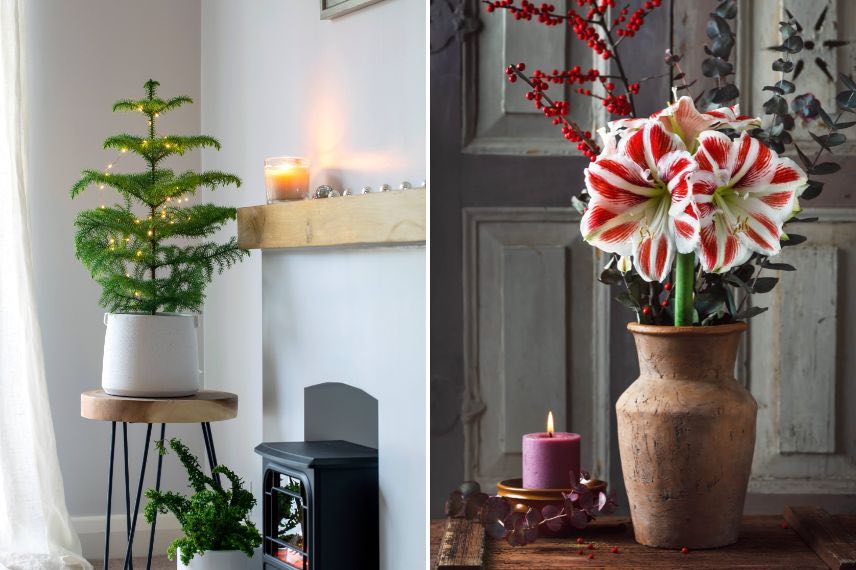
A small Araucaria heterophylla, minimalist Christmas tree; the Amaryllis in all its splendour, adorned with festive decoration
Orchids
Orchids, with their spectacular flowering and elegant shapes, are highly prized indoor plants all year round and well suited to holiday-period decoration. Their refined appearance complements traditional Christmas decorations perfectly. Among the many varieties, Phalaenopsis is one of the most common in home cultivation. Orchids prefer bright but indirect light. A position near an east- or west-facing window is ideal. Avoid cold draughts and extreme temperature fluctuations. Watering is crucial for orchids. Water must drain freely from the pot to avoid stagnation and root rot. Orchid roots need air. Ensure the pot allows good air circulation and avoid compacting the growing medium around the roots.
Phalaenopsis orchids are available in a range of colours that can harmonise with traditional or modern Christmas themes. From pure whites to deep reds, through delicate pinks and variegated patterns, they offer a colour palette that can be matched or contrasted with other decorations. One of their greatest attractions is their long flowering period. With proper care, the flowers can last for several weeks, making them a durable choice for holiday decoration.
Terrariums
Don’t forget all the little terrarium plants to create beautiful terrariums and make an attractive plant-based decoration like a small landscape.
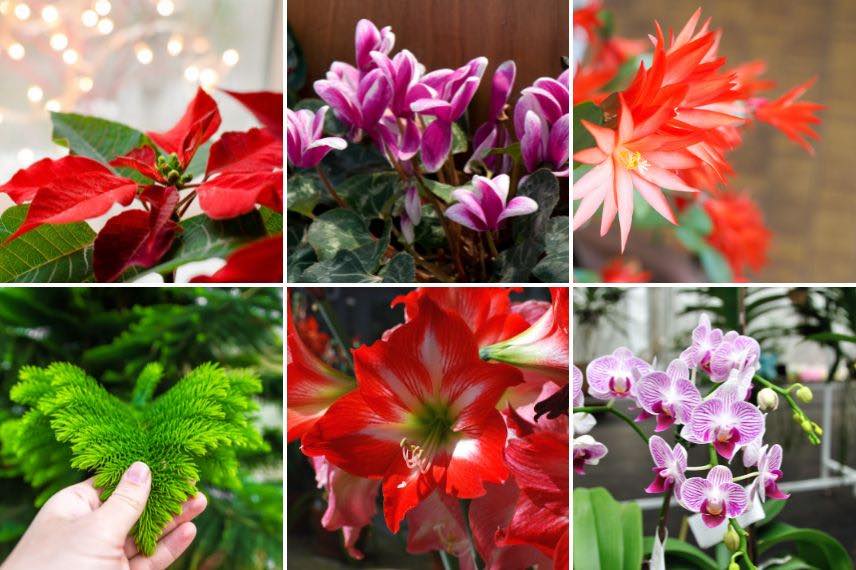
Clockwise: Poinsettia, Cyclamen persicum, Schlumbergeria, Phalaenopsis, Amaryllis, Araucaria heterophylla
Creative ideas for incorporating plants into your Christmas decorations
Here are some ideas for harmoniously incorporating these plants into your festive décor :
Araucaria as an alternative to the traditional Christmas tree
Araucaria heterophylla, or Norfolk Island pine, is an excellent alternative to the traditional Christmas tree, especially for smaller spaces :
- Minimalist decoration : Adorn the Araucaria with delicate LED lights and a few lightweight ornaments for a modern, streamlined look.
- Natural theme : Decorate with wooden ornaments, pine cones and jute garlands for a natural, rustic theme
Arrangements and displays with indoor plants
- Natural centrepieces : Use plants such as amaryllis or cyclamen to create striking centrepieces. Surround them with small fir branches, pine cones and candles for a festive effect.
- Miniature gardens : Create small indoor gardens using a variety of plants such as the Christmas cactus, Araucaria and moss. Add decorative elements like miniature reindeer or sleighs for a playful touch.
- Foliage garlands : Weave holly or fir branches with fairy lights and hang them along staircases or mantelpieces.
- Elegant displays : Pair poinsettias with candlesticks and table linens in gold or silver tones to decorate your table elegantly.
- Orchid garlands : Delicately integrate orchid flowers into Christmas garlands for a touch of sophistication.
- Christmas terrariums : Fill terrariums or glass vases with small plants, coloured stones and Christmas decorations for a modern, chic display.
- Window display : Use orchids to create an attractive arrangement on windowsills. Their long-lasting flowering will bring colour and life throughout the season.
- Themed terrariums : Create terrariums with Christmas miniatures, such as little snowy houses, reindeer or Santa figures, surrounded by small plants like moss or succulents.
- Illuminated terrariums : Add miniature fairy lights inside your terrariums for a magical, luminous touch.
- Mixed arrangements : Combine different indoor plants in large containers or decorative baskets. Include cyclamens, Christmas cacti and orchids for a variety of textures and colours.
Some tips
- Colour palette : Choose plants whose colours complement or contrast with your existing décor. For example, red poinsettias pair well with gold or silver decorations.
- Varied textures : Mix plants with smooth leaves with plants that have more textured foliage to add depth to your décor.
- Lighting : Showcase your plants with carefully placed lighting. Soft lights can accentuate the natural beauty of leaves and flowers.
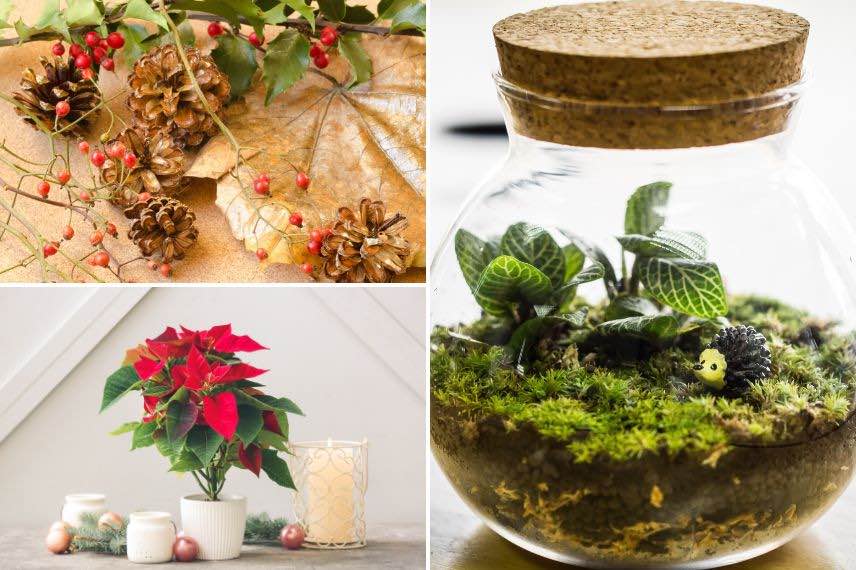
Add foliage, red berries and pine cones. Terrariums are very decorative. The Poinsettia in all its splendour.
Caring for your indoor plants in winter
The festive period can be as demanding for your houseplants as it is for you. Here are tips to ensure their well-being during and after this festive season:
Light and temperature
- Light: During winter, natural light is less abundant. Place your plants near windows to maximise their exposure to natural light. Take care with plants such as the poinsettia or the amaryllis, which require bright but indirect light.
- Temperature: Avoid placing your plants near direct heat sources such as radiators or fireplaces. Sudden temperature fluctuations can stress plants. Most houseplants prefer a steady, moderate temperature.
Watering
- Watering frequency: In winter, houseplants generally need less water, as the potting mix dries more slowly. Check the soil before watering; it should be dry to the touch for most plants.
- Amount of water: Provide just enough water to moisten the soil without saturating it. Stagnant water can lead to root rot, particularly for plants such as the Christmas cactus.
Fertilisation
- Resting period: Many houseplants enter a resting period in winter and do not need to be fertilised until spring.
- Resumption of growth: Begin to fertilise your plants in early spring, when the days start to lengthen and growth resumes. Use a balanced fertiliser suited to each type of plant.
Specific care
- Poinsettia: Avoid cold draughts and remove wilted leaves to prolong its flowering. Prune back hard after flowering.
- Amaryllis: After flowering, cut the stem to encourage leaf growth, which will feed the bulb for the following season.
- Araucaria heterophylla: Maintain a steady humidity level without saturating the substrate, and rotate the plant regularly for even growth.
- Orchids : After flowering, cut the flower spike above the node where the first flower opened to encourage a new flowering. Some orchids, such as Phalaenopsis, can rebloom on an old spike.
- Subscribe!
- Contents
Comments