





























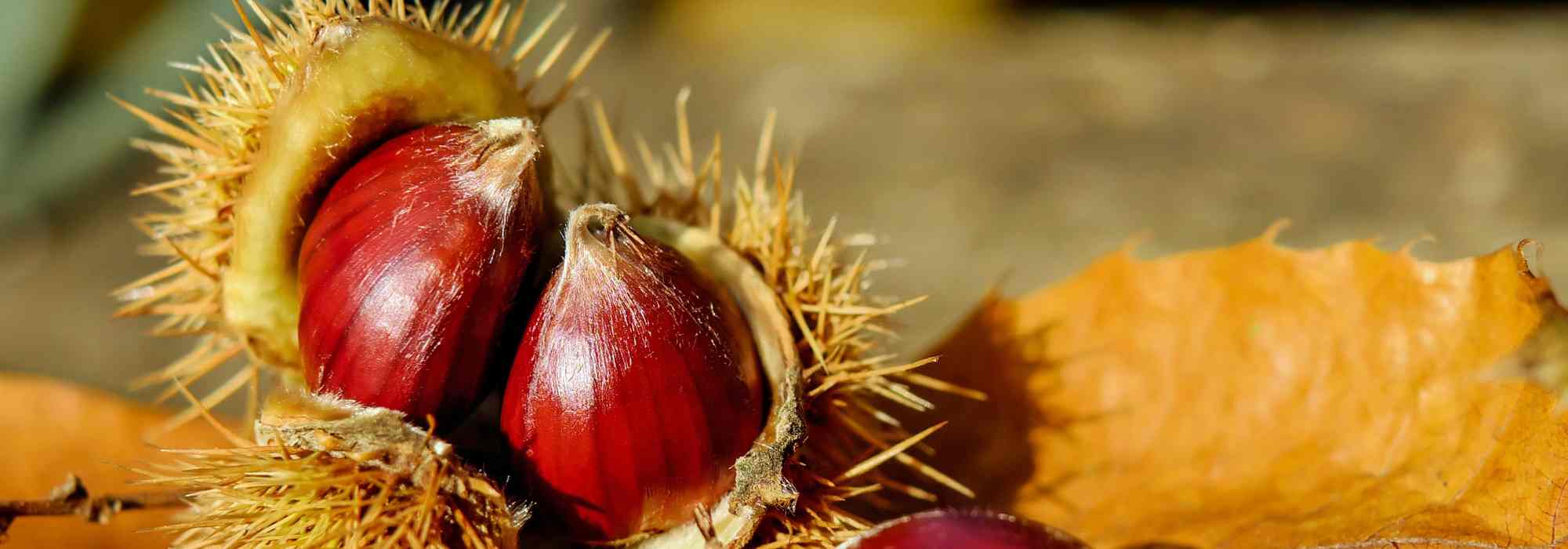
Chestnut: everything you need to know about this autumn fruit
Its history, its benefits, and its delicious recipes
Contents
Chestnuts are an autumn staple, delighting with their delicate flavour and numerous culinary uses. Originating from the Chestnut tree (Castanea sativa), it is not only delicious, but also nutritious. Whether enjoyed roasted in the oven, toasted by the fire or incorporated into sweet or savoury dishes, it readily graces our tables as the first frosts approach. Let us discover together the secrets of this indulgent and comforting fruit: its short history, how to distinguish it from the marron, what its nutritional benefits are, and above all, how to harvest it properly, store it, and cook this true treasure of nature!

Chestnut, fruit of the chestnut tree
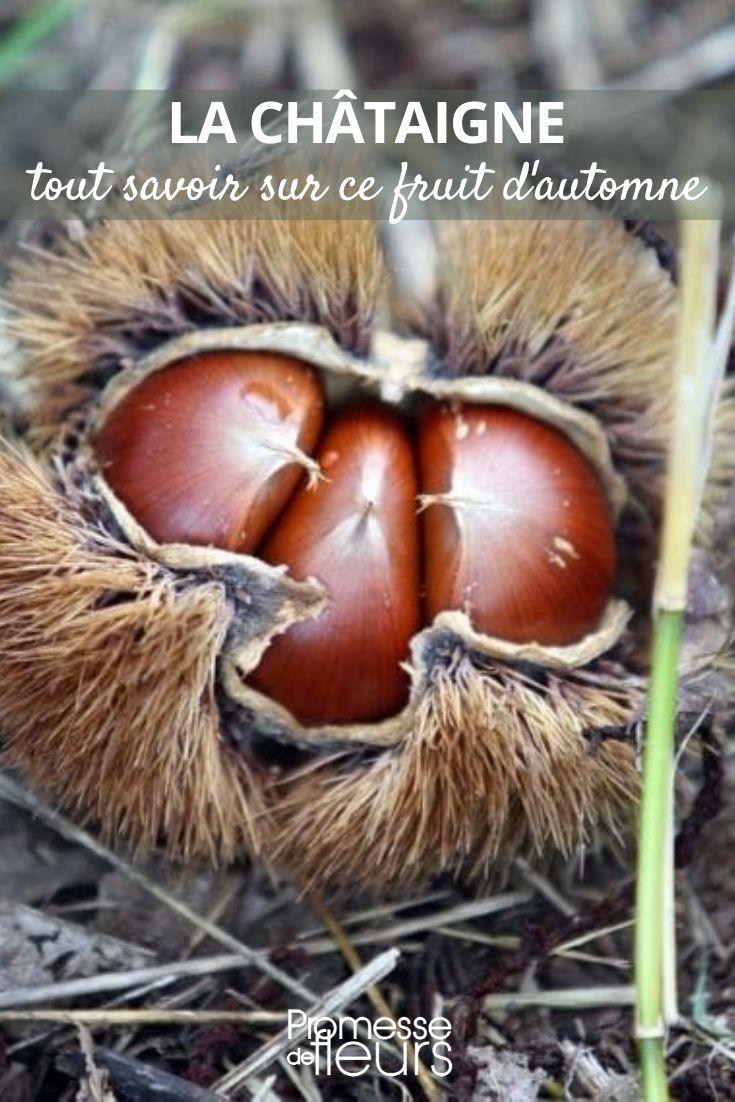
Chestnut tree(Castanea sativa) is a fruit tree in the Fagaceae family, a cousin of the beech and of the oak. Majestic, it is an imposing tree that can reach up to 30 metres in height. Susceptible to early and late frosts, it thrives in Mediterranean and temperate regions and flourishes particularly well in acidic, well-drained soils. The chestnut tree is distinguished by its long, dentate leaves and its long, golden catkins, highly recognisable. The chestnut tree’s summer flowering is appreciated by bees, which relish it to produce honey rich in vitamins B and C, minerals and trace elements. The flowers give way to two or three brown fruits, inserted in a spiny burr: the famous chestnuts, sometimes wrongly called “marrons”, with a sweet taste and a floury texture.
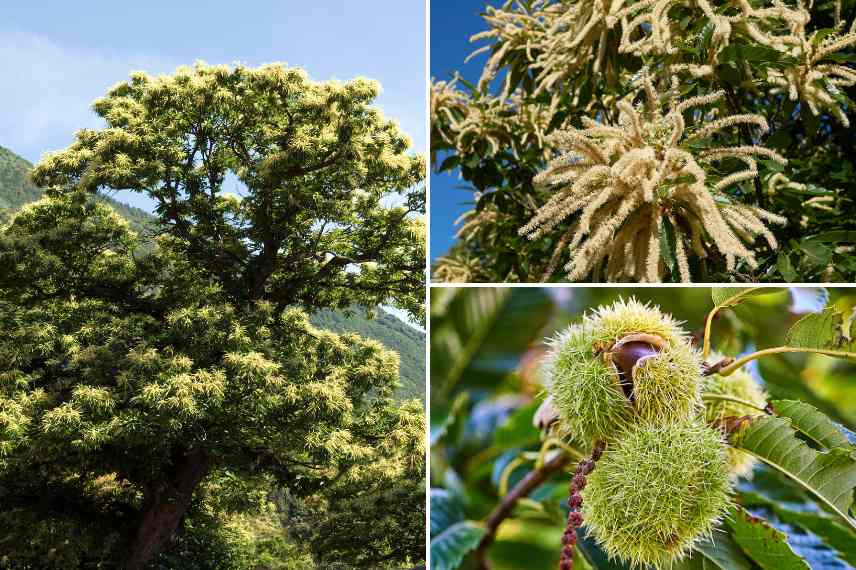
Chestnut tree in bloom and the husks opening in autumn
A short history of chestnut
Chestnuts have long been a vital resource in rural regions of Europe, notably in France, Italy and Spain. In antiquity, the Romans cultivated the chestnut tree for its nourishing fruits, capable of replacing wheat in times of famine. In France, it is mainly in the Cévennes, Corsica and Ardèche that the chestnut has shaped the landscapes and local culture, becoming a staple food for peasants. The chestnut thus earned the nickname “bread of the poor” because, in these regions, it substituted for insufficient wheat harvests and served as the basis of the diet. In the Middle Ages, lords encouraged the planting of chestnut trees, particularly in areas where traditional agriculture struggled to establish itself because of the terrain. In Corsica, chestnut has even given rise to a genuine gastronomic culture with “chestnut flour” used to make breads, cakes or crepes. In Ardèche, it became a symbol of local identity, and the region is today one of the largest producers in France. In autumn, this emblematic fruit is celebrated at chestnut fairs!
Chestnut groves, often called “bread trees”, were tended as family treasures, as they provided subsistence. Over the centuries, chestnut has also been used to feed animals, to make fermented drinks, and even for its medicinal properties. Today, although it is no longer a survival food, chestnut retains a privileged place in cuisine, where it is appreciated for its sweet and comforting flavour. Used in all its forms — boiled, roasted, ground into flour or made into jam — the chestnut is much more than a simple fruit; it is a symbol of resilience and indulgence, essential in autumnal and winter cooking.
Moreover, chestnut wood, strong and durable, is still used today for the manufacture of furniture, fencing, and posts, as well as in traditional construction. It is a sought-after timber, as it resists the weather and the passage of time without treatment.
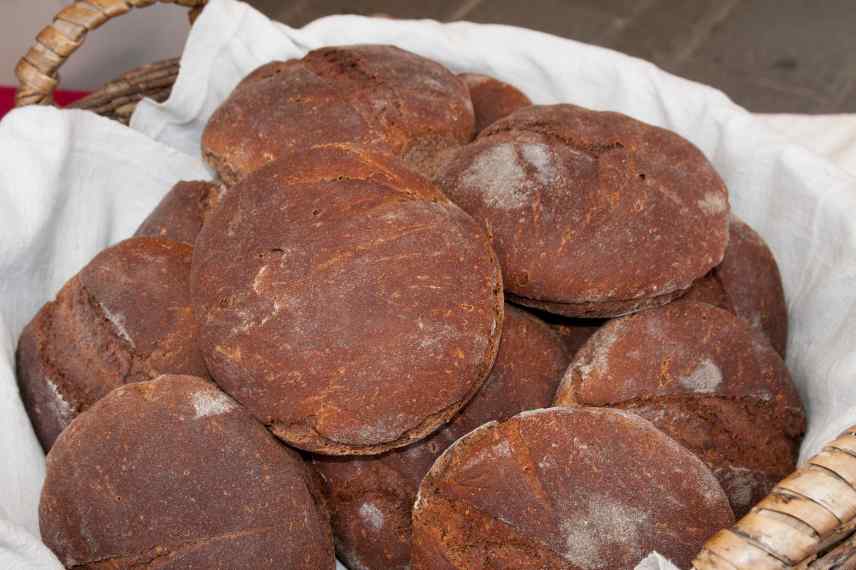
Chestnut-flour breads
What is the difference between chestnuts and horse chestnuts?
It is important not to confuse chestnuts and horse-chestnuts. Although these two terms are often used interchangeably, they actually refer to two different fruits. Chestnuts come from the chestnut tree, a fruit tree, whereas horse-chestnuts come from the horse-chestnut tree (Aesculus hipposcastanum), an ornamental tree. Chestnuts have a flattened shape and several fruits are found in the same burr, whereas the horse-chestnut, being rounder, is single within its burr. Horse-chestnuts are toxic and inedible. However, in cooking, the term ‘marron’ is generally used to refer to large chestnuts, such as those used for candied chestnuts.
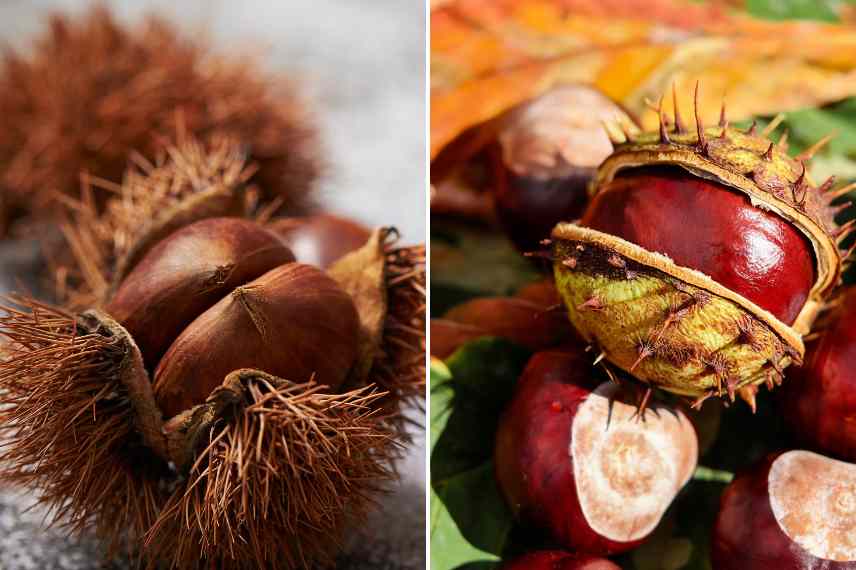
On the left, chestnuts; on the right, horse-chestnuts
Read also
The recipe for chestnut jamHow to choose chestnuts?
The Common chestnut has given rise to several fruit selections, some of which are more cold-sensitive than others, such as:
- ‘Marigoule’ : cold-sensitive, it will thrive particularly in the south-west of our country or in Brittany and yields fine, firm and sweet fruits.
- ‘Marron de Lyon’ : iconic variety, it produces large chestnuts of a reddish-brown colour that are easy to peel, ideal for marrons glacés and refined culinary preparations. Susceptible to late frosts, it is a chestnut tree to adopt in mild-climate regions, in south-west France.
- ‘Maraval’ : modern and hardy variety, it produces fruits of medium to large size, with sweet and tender flesh, particularly valued for grilled and boiled preparations.
- ‘Comballe’ : traditional French variety, highly regarded for its fine and slightly sweet flesh, it is ideal for flour and purées.
- Ardèche chestnut : recognised AOP, this variety produces medium-sized, sweet and tasty fruits, often used for preserves and traditional dishes.
→ Discover our buying guide “How to choose a Chestnut tree?”
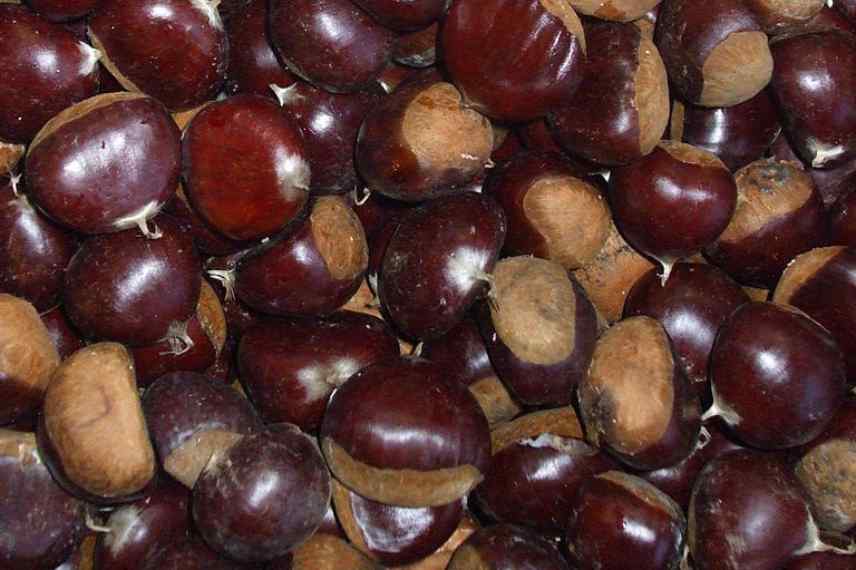
The Marigoule chestnut
When and how to harvest chestnuts?
The chestnut season lasts from autumn into early winter. The harvest takes place between September and November, depending on variety and climate, when the burrs open naturally and drop their fruits onto the ground. That’s when they’re tastiest and most nutritious. Chestnuts can be harvested by hand, or knocked down with a long stick. You can use a rake or a small hand claw to rake the soil. Be sure to wear gardening gloves to avoid punctures from the thorny burrs. Burst the burrs that have fallen to the ground with a stick to open them, or use thick gloves to extract the chestnuts safely.
→ Learn more about chestnut harvest in our tips guide.
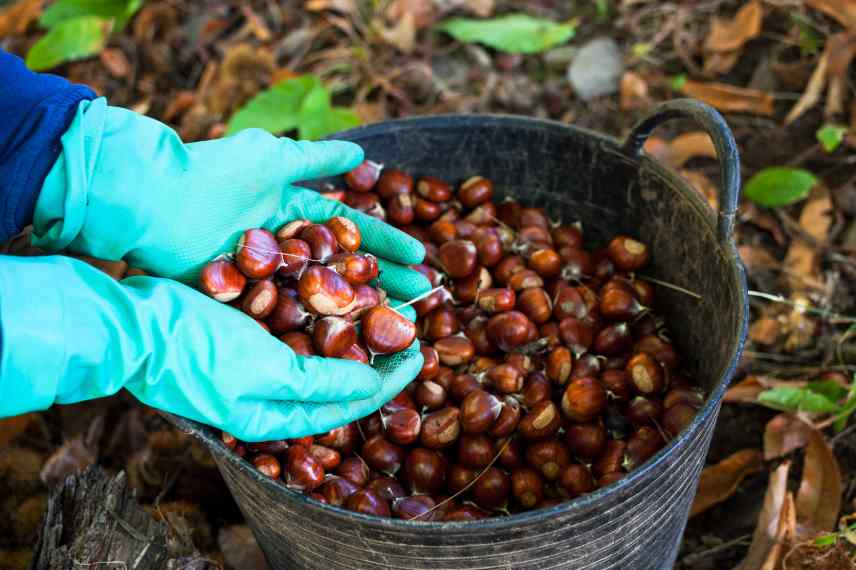
Gloves are useful when harvesting chestnuts
How to store chestnuts?
To store chestnuts, several methods are effective. You can keep them throughout the winter in a cool, dry place. For longer storage, you can freeze them after peeling or after they have been lightly incised. Drying also allows you to turn them into flour, ideal for keeping for several months.
→ Learn more about Chestnut storage in our article.
What are the benefits of chestnuts?
Chestnuts are rich in complex carbohydrates, making them an excellent source of energy. Unlike other nuts such as walnuts, they are low in fat. They are also a good source of vitamins B and C, as well as minerals such as magnesium and potassium. They contain a notable amount of dietary fibre, which helps promote digestion and regulate bowel movements. They can also contribute to a sense of satiety. Moreover, chestnuts are naturally gluten-free, making them an ideal alternative for people with food intolerances.
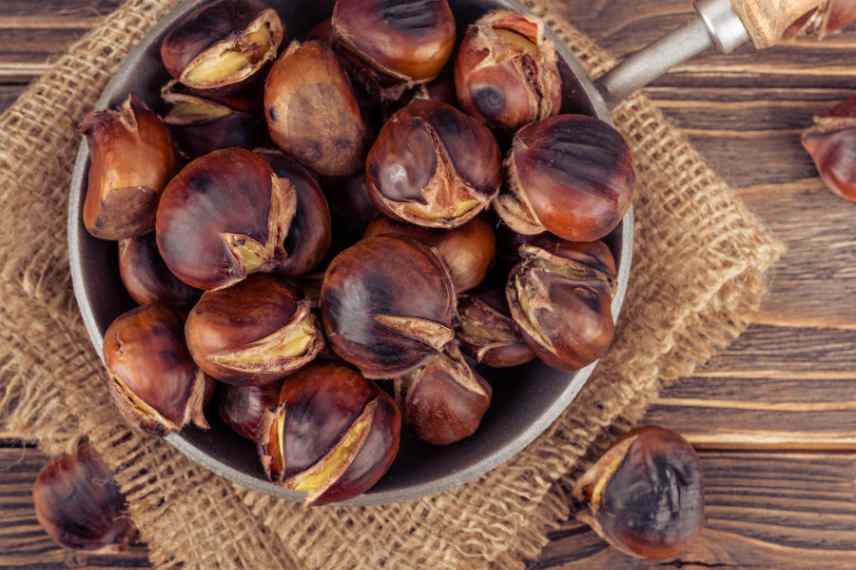
Naturally, chestnuts offer all their nutritional benefits
5 delicious ideas for cooking chestnuts
Chestnuts are a versatile fruit that can be enjoyed in both sweet and savoury versions. To grill chestnuts, make a shallow incision in the chestnuts, then cook them over a wood fire or in the oven. Boiled or steamed, they become tender and pair well with autumn dishes such as stews or purées. They form part of the make-up of many traditional festive recipes. Ground into flour, they are perfect for gluten-free pastries or crêpes. Finally, they can also be candied to make marrons glacés, a delicate and indulgent confection. Here are simple and tasty chestnut-based recipes, perfect for autumn:
- Chestnut soup
Cook chestnuts with vegetables such as carrots and leeks. Blend everything to obtain a creamy soup, to be served with a swirl of crème fraîche or a little chopped parsley for the finishing touch. - Chestnut purée
Mash cooked chestnuts with potatoes, butter and a little milk for a soft and slightly sweet purée. Ideal to accompany roasted meats or autumn dishes. - Roasted chestnuts in the oven
Incise the chestnuts and roast them in the oven with butter and rosemary. They will be crisp on the outside and tender on the inside. Perfect as a snack or to dress an autumn salad. - Chestnut cake
Prepare a moist cake by mixing chestnut flour with melted dark chocolate. A dessert rich in flavour! - Chestnut jam or marron cream
- To make chestnut jam, simmer the incised chestnuts in boiling water, then peel them. Purée them and fold into a sugar syrup. Simmer until a silky texture forms. Flavour with vanilla or rum, then pot in sterilised jars. A jam perfect for spreading on a crepe or for sweetening yoghurt. Ingrid shares with you the best chestnut jam recipe!
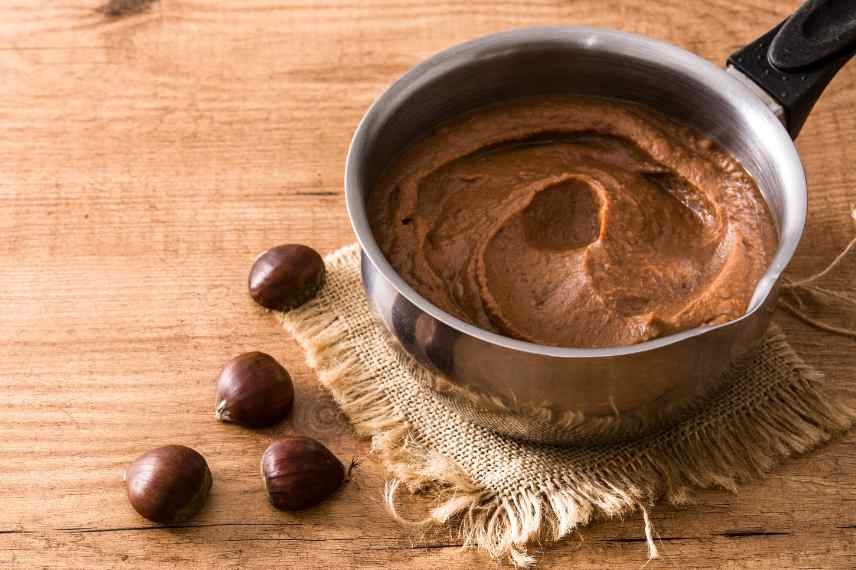
Homemade marron cream, a simple and nostalgic treat!
further reading
- Check out our guide to learn all about the chestnut tree: planting, pruning and care.
- Subscribe!
- Contents
Comments