


























The essential planting tools for the garden
From transplanting trowel to spade, our selection for the garden, kitchen garden and container gardening
Contents
Whether you own a decorative garden with flower beds, hedges and borders, a vegetable garden or even pots and containers on a balcony or terrace, you always take great pleasure in planting perennials, annuals, vegetable plants, or even bushes and trees. That is the essence of gardening. However, these plantings can quickly become tedious and exhausting if you do not have the essential equipment that should save you a good deal of effort and make the task easier. And for every type of planting, there is a tool to suit it!
Discover our selection of essential tools, guarantees of successful planting, time saved and easier work.

Planting tools for ornamental gardening or container growing
When you love gardening year-round, and especially in spring and autumn, there’s always something to plant: perennials or grasses in your border beds, annual or biennial flowers sold in pots, in your window boxes and pots on balconies and terraces… To brighten your garden through the seasons. Nevertheless, these plantings are greatly facilitated if you own the essential gardening tools. Moreover, with the right tools, tailored to each task, you give yourself the best chance of success with your plantings.
For planting ornamental plants, two tools are essential: the dibber and the transplanter. Two tools absolutely indispensable as soon as you set foot in a garden or into the soil. In addition, there is the very specific flower-pot dibber that proves very useful.
The dibber, the versatile planting tool
With its long, conical, pointed head and its handle, the dibber is an extremely simple tool. Yet it proves its worth! While displaying robustness beyond measure. You simply push it into the soil to dig planting holes, typically small and pointed. That is why the dibber is ideal for sowing large seeds such as sunflowers or sweet peas, but also for planting flowering plants, annuals and biennials, or herbs, offered as minimottes. Indeed, the planting hole doesn’t need to be very large for plug plants, and the dibber is more than adequate.
This type of dibber is also used for bulb planting. Although the bulb planter is considerably more practical and suited.
You will also use this dibber in the vegetable garden for transplanting young seedlings of vegetable plants, sown by you or purchased as plug plants.
There are different models of dibbers, from the very traditional to the more luxurious. It all depends on your preferences and budget. But the difference often comes down to grip comfort, ergonomics, sturdiness and thus durability. The simplest dibber is made entirely of steel. Other dibbers are fitted with a curved wooden handle for a better grip, or with a profiled wooden handle which makes them very easy to handle. Finally, some dibbers have a longer handle to save the gardener from bending.
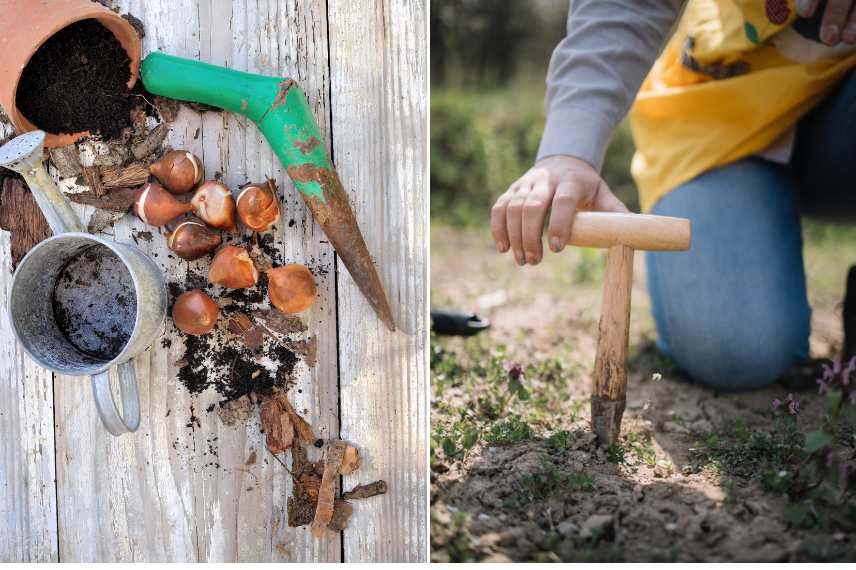
The two most common forms of the dibber
The transplanter, the mini-spade for planting and transplanting
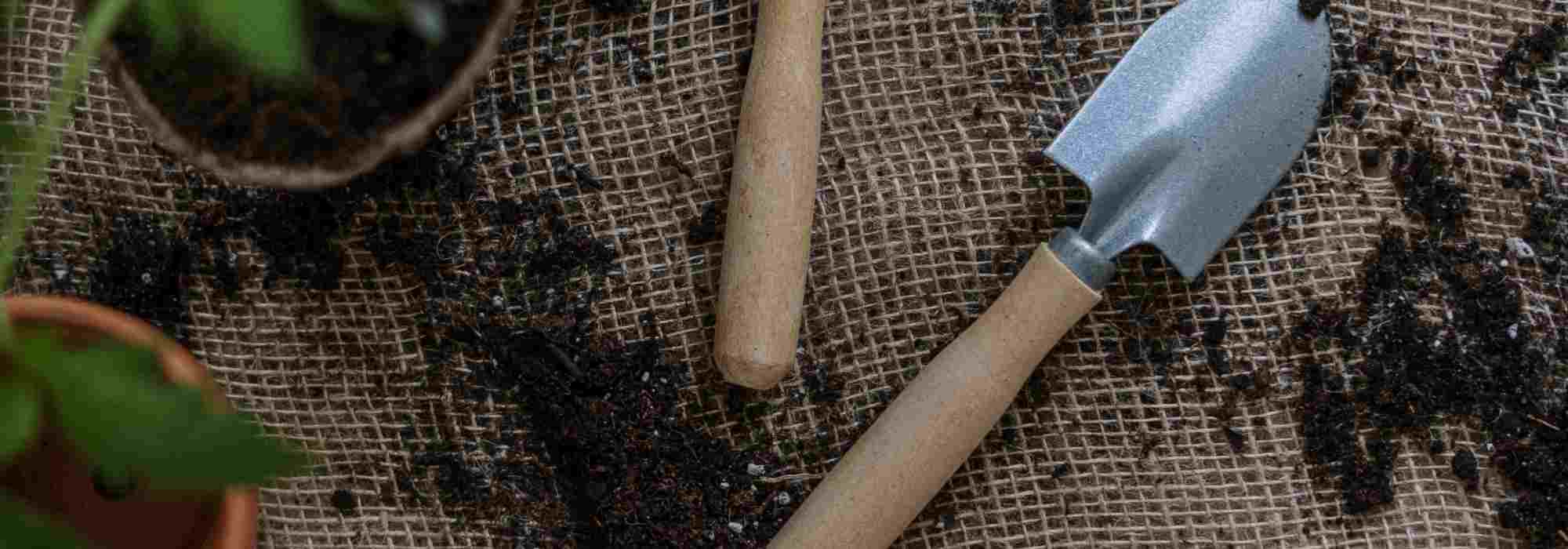
To keep it simple, the transplanter is essentially a mini-spade. Indeed, a transplanter consists of a handle, of varying length, and a small blade, slightly curved. As its name suggests, this tool is used to transplant or plant perennials or grasses, offered in pots. It therefore allows planting of larger plants than a dibber could. It can also be used to mix potting soil or compost into garden soil in pots and containers.
Again, there are different models of transplanters. Some transplanters are made entirely of steel, others feature a wooden handle or a resin handle, more pleasant to grip. There are also long-handled transplanters, very useful to prevent backache.
There are also specialist transplanters on the market, equipped with more unusual blades. Transplanters with a graduated head are handy for estimating planting depth, those with a tulip-shaped head, equipped with teeth, are better suited to clay soils. There are also transplanters with a heart-shaped blade, very handy for potting. Or others with very narrow blades that slip between existing plantings without damaging them. Finally, the traditional transplanting tool with a spork-shaped head is particularly versatile for potting or vegetable plots: it allows planting, but also loosening the soil and weeding.
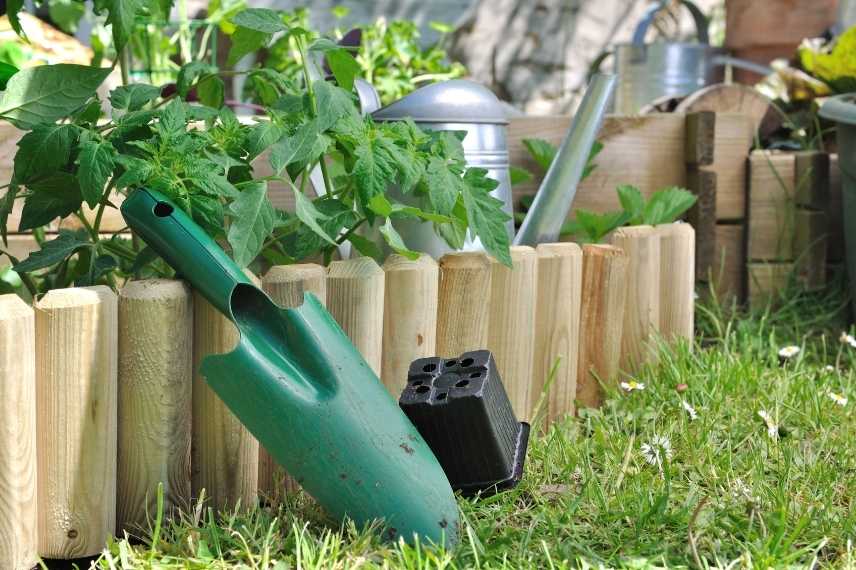
The indispensable transplanter for planting plug plants in the soil
The remarkable flower-pot planter
The flower-pot planter is a tool you might not have thought of, but proves extremely handy for planting pots of perennials or grasses, offered in 11 to 15 cm pots. A professional tool, it is ideal in well-worked, loose and fairly light soils. Indeed, the basket-shaped head hollows out sizeable holes, into which you simply place the plant.
Read also
Garden tools: essentialsPlanting tools for the vegetable garden
In addition to the two tools already mentioned, namely the dibber and the transplanter, which are also essential in the vegetable garden, you can use planting tools that are far more specific.
These tools are certainly highly targeted, but can prove indispensable for large‑scale plantings. Indeed, these tools will save you valuable time, while eliminating back pain, stiffness and other lower back issues often associated with certain gardening tasks:
- The potato planter: quite similar to a flower pot planter, the potato planter is specially suited for planting large-diameter tubercles or bulbs. Indeed, it features a basket that digs the planting holes with no effort, as well as a long handle to spare your back.
- The leek dibber : leeks are usually planted with a dibber. But it’s a long and tedious job since you have to bend over. With this leek dibber, fitted with two handles and a wide head with five steel teeth, sharp and pointed, it’s a real time-saver and, above all, fatigue is reduced. The investment can be worthwhile if you have a large quantity of leeks to plant.
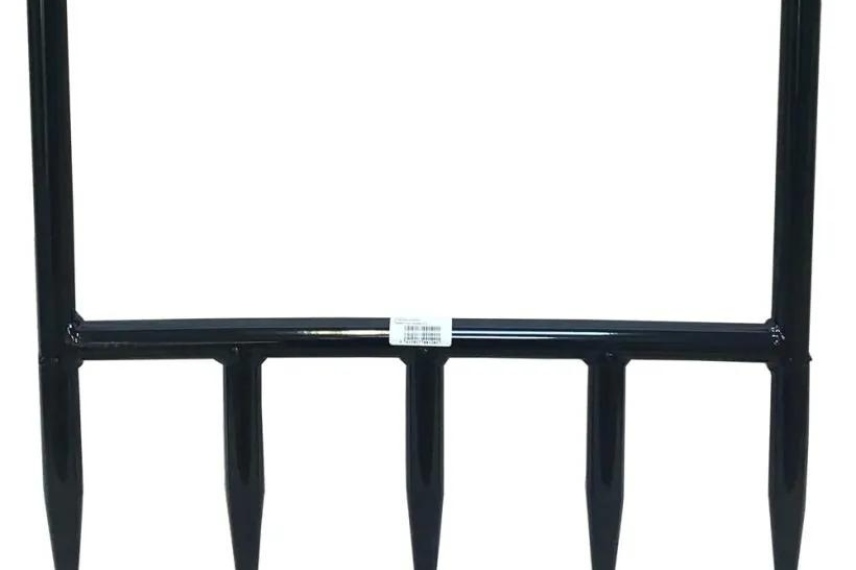
The leek dibber
The essential tools for planting trees and shrubs
Logically, when planting larger specimens such as bushes or trees, the small tools mentioned earlier are not enough. Simply because, for planting a tree or a shrub, sold in containers, you need to dig a hole two to three times larger and deeper than the container. And for bare-root plants, it’s the same. In short, the tools must be able to dig the soil deeply.
Thus, for digging planting holes, the traditional border spade with a square blade or the pointed planting spade are often indispensable. Its sharp blade makes it easy to penetrate the soil. The difference between the pointed planting spade and the traditional border spade generally lies in the width of the blade. The blade of the pointed planting spade is narrower and longer than that of the traditional border spade. It is, indeed, the planting tool most used by professionals, including nurserymen.
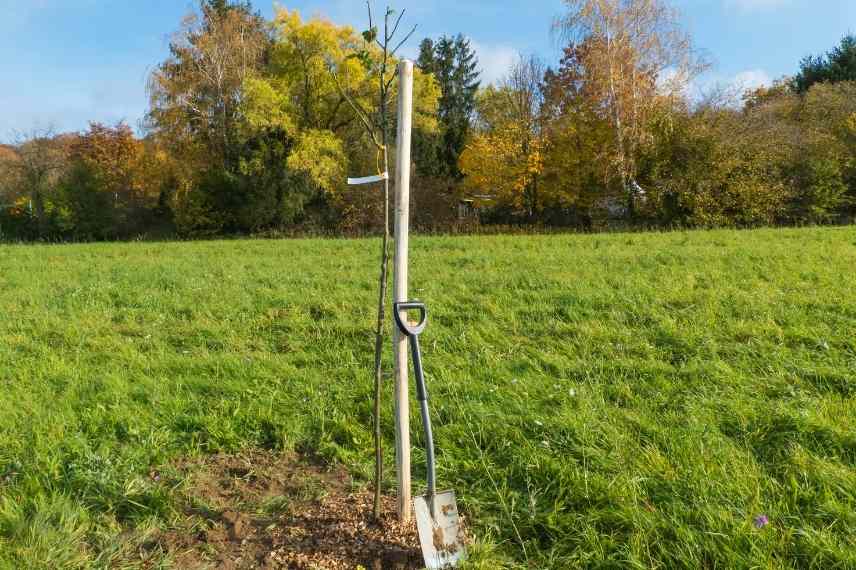
There are also more planting-specific spades. Unlike the traditional border spade, its blade is not square but rounded to better penetrate the soil.
Another tool for planting, the hoe allows digging shallow planting furrows.
For larger plantings, such as a hedge of shrubs, the terracing pickaxe helps prepare or begin digging the trench.
Finally, there is a tool that is specifically designed for digging holes, for example to set posts, which can also be very useful for planting trees or shrubs. It is the auger, a highly versatile tool that can dig to a depth of up to 50 cm, but over a shallower width than the traditional border spade. It is, among other things, a very handy tool for planting roses.
For more information:
Read also
7 time-saving toolsThe special case of bulbs
If you fancy a flowering garden from the end of winter (sometimes even in the heart of winter) with little effort, bulbs are perfect. They come back year after year, ever more floriferous and imposing. Yet you still need to plant these bulbs. This autumn planting, from September through October–November, can optionally be done with a transplanting trowel. But there’s a far more practical tool: the bulb planter, which allows you to plant hyacinths, daffodils, and other tulips at the right depth.
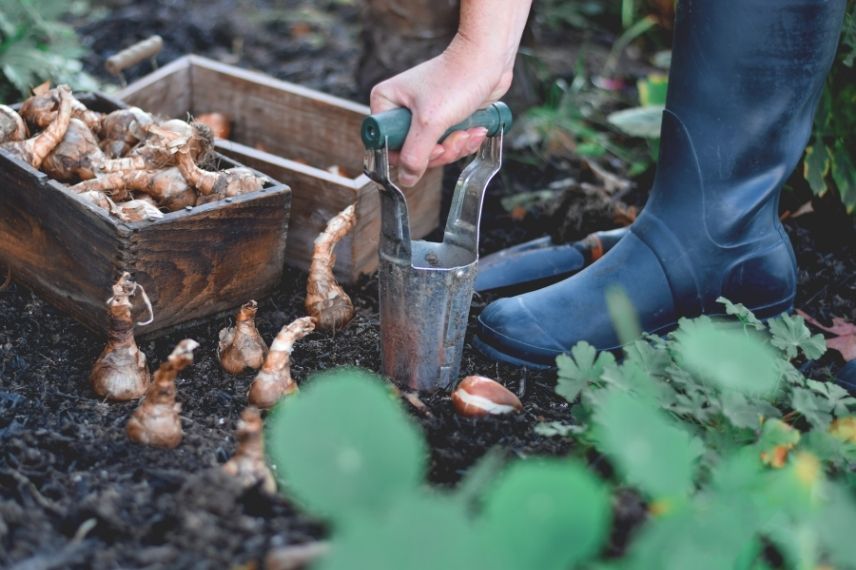
The bulb planter
For further reading, here is Olivier’s very comprehensive article: Bulb planting: Which tools to choose?
To learn more
Also read our article: Gardening for beginners: how to choose your tools?
- Subscribe!
- Contents
Comments