





























Trees for city gardens: the best varieties
Species best suited to urban constraints
Contents
Greening cities and urban spaces is now a given. Climate change and the constraints of urban environments require selecting species capable of withstanding both hot and dry conditions, but the compacted and poor soils that urban areas often offer.
Note: The strong tags above are preserved as in the original structure.
Moreover, their filtration capacity against the various pollutants in cities, whether present as gases or fine particles, is also to be taken into account for the well-being of urban populations and air quality in general, not to mention their ability to regulate runoff and absorption of rainfall.
Trees also contribute to markedly lowering the temperature of built-up areas; their shade and the evapotranspiration effect they generate can thus bring the thermometer down, with a difference of up to 5°C!
Seasonal markers, trees also play a role in reconnecting residents with nature, and this psychological aspect is not to be underestimated for morale.
Finally, by providing shelter or a home (leaves, branches, bark…), melliferous or nectariferous flowering, or fruits, trees help preserve, or even enrich, biodiversity on which our future partly depends.
The creation of green spaces and the greening of cities is therefore a priority given the climate context and the ongoing expansion of infrastructure.
It seems impossible to find an ideal subject that could meet all the conditions at once, especially if one wishes to favour diversity and not slip into monoculture, a source of many drawbacks (loss of biodiversity, monotony, risk of health problems…). However, in this article, we invite you to discover seven trees among the best suited to urban constraints, detailing both their advantages and their limitations.

Pagoda Tree - Sophora japonica
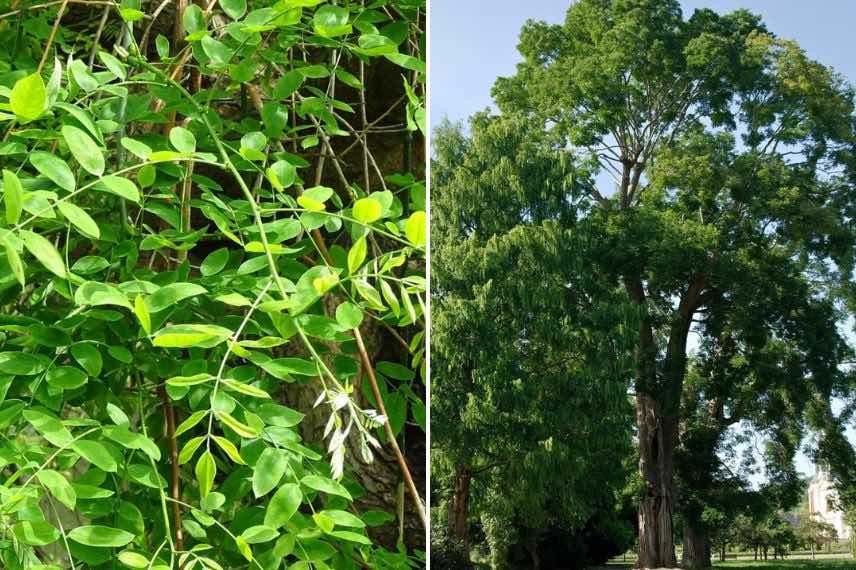
Sophora japonica (now known as Styphnolobium japonicum) is more commonly known as the Japanese Sophora. This tree, which can reach 20 metres in fresh, fertile soil, has good resistance to urban stresses such as pollution, compacted and poor soil, and hot, dry air. Of rapid growth, it features a rounded crown borne by a relatively short trunk. Its large deciduous leaves arranged in leaflets make it an excellent shade tree and exhibit a strong filtration capacity against gas pollution and fine particulates. They also take on a beautiful golden colour in autumn before falling. Flowering occurs only after several years of cultivation, but the cream-coloured scented panicles that develop in late summer are decorative and a boon for pollinators.
Hardy to around -20°C (younger specimens are somewhat more frost-prone), its wood can be brittle and susceptible to wind. Although its root system is relatively superficial, Sophora can be used in avenues, along roads or in parks.
Read also
10 shade treesCommon plane - Platanus acerifolia
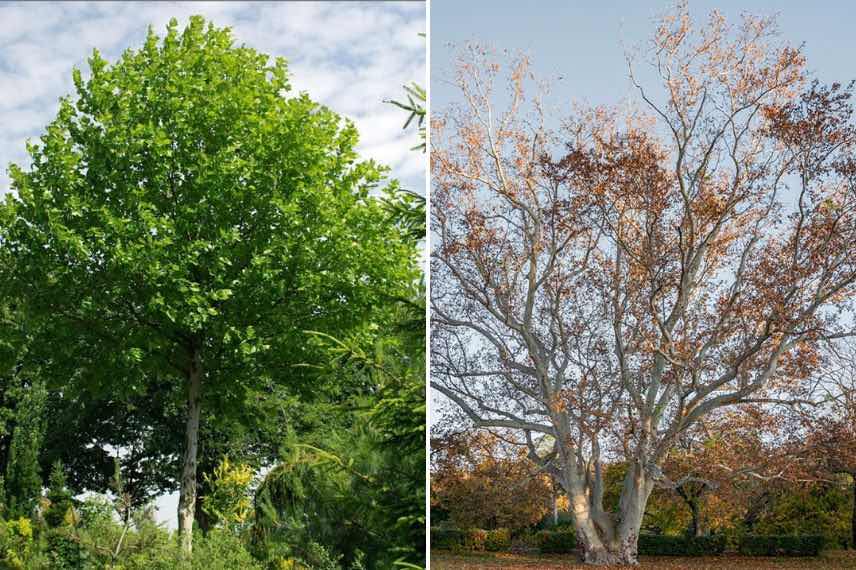
Its use in urban spaces has contributed to the renown of the plane tree. Platanus acerifolia can reach impressive dimensions and tower to nearly 30 metres tall, but it tolerates pruning well, which makes it a tree often chosen to provide shade for squares, car parks or wide avenues. Its thick trunk is easily identifiable thanks to bark divided into scales that blend different hues, from cream to brown, including green or yellow. Its broad, lobed leaves turn yellow and then brown in autumn before revealing its reassuring structure and sturdy branches bearing small, spiny fruits that persist well into winter. Harbouring a small fauna, the plane tree is also a very good ally for filtering gases and particulates. It tolerates compact and poor soils commonly found in towns, even if these soils are heavy, clayey and calcareous.
Hardy to at least -20°C, long-lived, it is also highly drought-tolerant once established. The hairs produced by its young leaves can, however, irritate some people. If an insect, known as the plane-tree tiger moth, can pose a problem for this tree, natural solutions exist to combat it.
Maidenhair tree- Ginkgo biloba
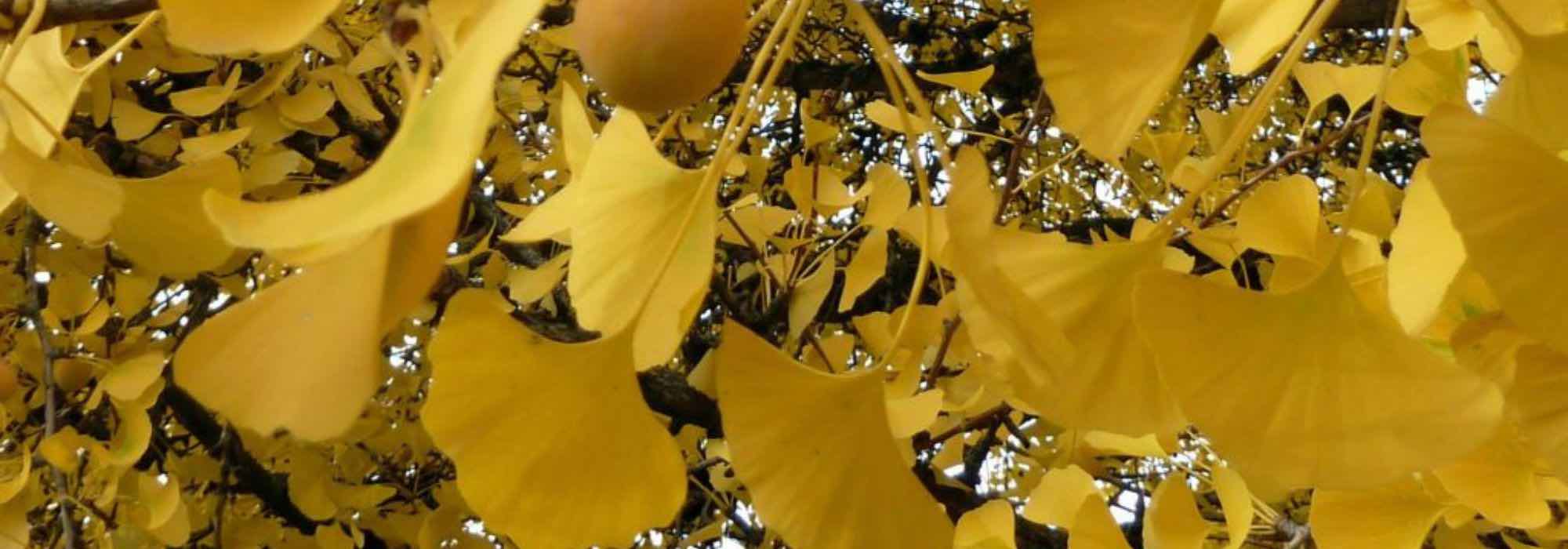
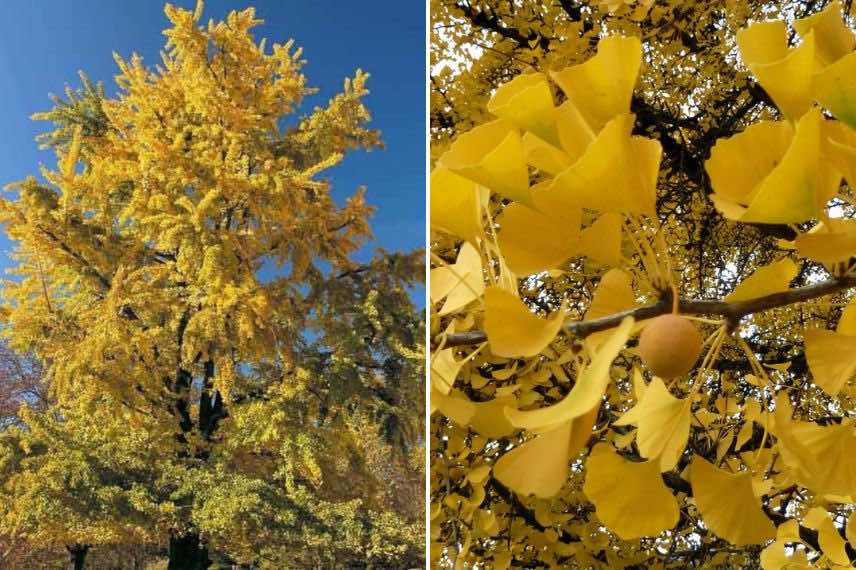
Ginkgo biloba is one of those trees that can withstand almost anything, even surviving a nuclear bombardment! With exceptional longevity, it rises gracefully to 20 metres or more and tolerates heat as well as poor, compacted soils, although it is more comfortable in deep, fertile soil. Its characteristic fan-shaped leaves are initially green and then take on a bright yellow hue that makes it stand out from afar late in the season. Filters air pollutants well, but is less effective at trapping fine particulates. It is advisable to select male plants, as female specimens produce messy fruits with a foul odour, not appreciated by walkers. If its silhouette is too imposing for the space required, some varieties are then interesting options for framing, for example urban routes, such as Ginkgo ‘Blagon’ or ‘Fastigiata’ with narrower habit and shorter height.
Read also
7 trees for an urban gardenScots pine - Pinus sylvestris
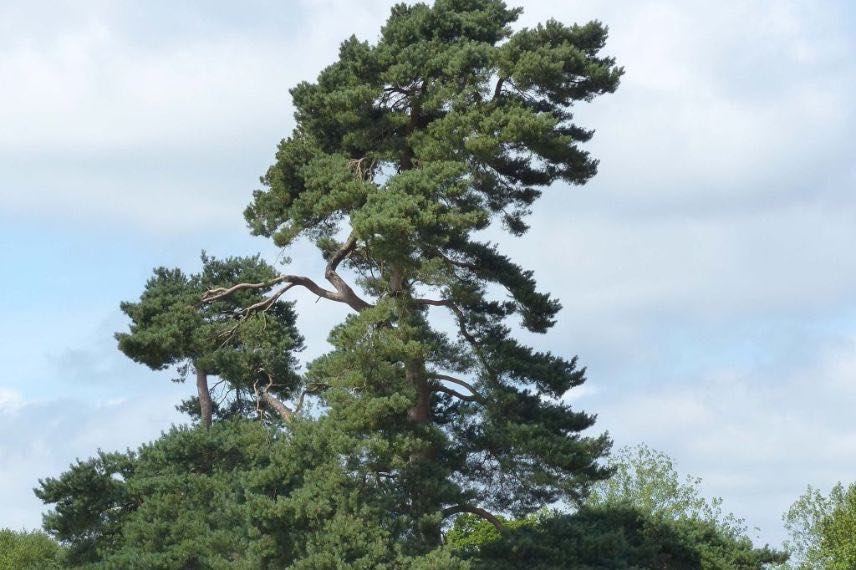
Pinus sylvestris is an evergreen conifer that is very adaptable, and drought, severe frosts and poor, sandy and compact soils do not deter it. Only calcareous soils can pose a problem for it. With a long vertical trunk, the form of which is somewhat twisted, its fissured bark shows ochre to pink-tinged hues in places. Its bluish-green to grey-green needles are not prickly and form a rounded crown, which is adorned with brown cones. In warm weather, balsamic aromas are perceptible around the tree. With relatively rapid growth, it is a long-lived species that develops a sturdy taproot, giving it good wind resistance, but it does require fairly deep soil. Its shade is moderately effective; it filters air rather poorly, unlike fine particles, but it is well equipped to cope with climate change. Taller than wide (about 30 metres tall by 7 metres wide on average), its ground footprint is therefore limited and it has a place in many settings such as parks, peri-urban developments or cycle paths. However, it is necessary to ensure a system to combat pine processionary caterpillars.
American honey locust - Gleditsia triacanthos
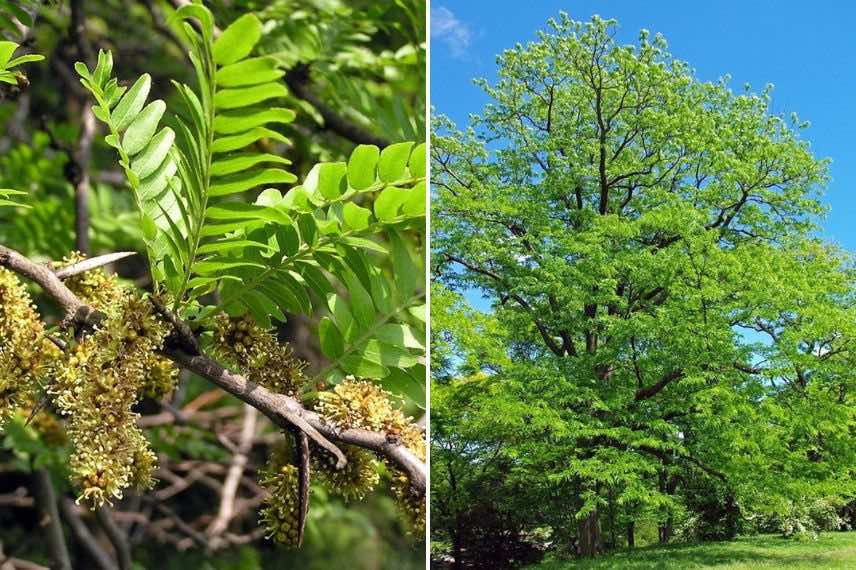
Gleditsia triacanthos grows rapidly, especially on moist soil and develops an erect habit that can reach 25 metres. Its deciduous foliage, pale green then yellow, is divided into leaflets. The branches are studded with sharp thorns, so it is wiser to opt for so-called ‘inermous’ varieties, such as ‘Sunburst’, ‘Elegantissima’ or even ‘Rubylace’, whose smaller dimensions are also better suited to certain urban settings. The flowering is in summer and is discreet but melliferous and nectariferous, and it is followed, on female plants, by long brown pods that persist throughout the winter. Its taproot requires deep soil. Its shade is light and its wood can be brittle, which means it should not be planted in areas exposed to strong winds. It can, however, tolerate moist soils, even poorly drained ones, but also withstands drier and poorer soils, including calcareous soils. Well adapted to climate change, it also filters particulates very well and can be found along waterways, in parks, or to create a play of shade and light on a square.
Norway maple - Acer platanoides
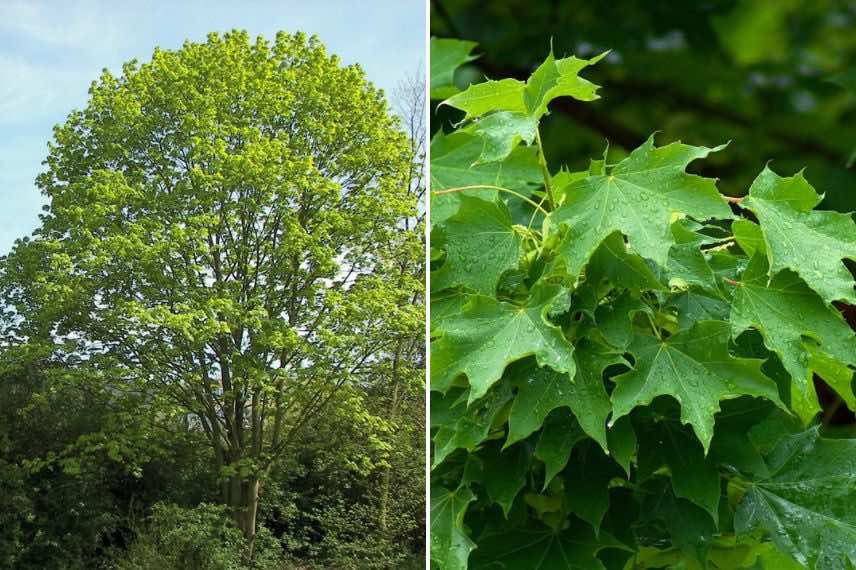
Among the maples recommended for urban greening, Acer platanoides is a large specimen whose canopy reaches around 25 metres. Rapid-growing and very long-lived, its crown is pyramidal and its lobed leaves, green, then coppery-yellow in autumn, cast a dense, refreshing shade, which is welcome during heatwaves. Hardy to at least -30°C, it is easy to grow. It tolerates deep, moist soil, even poor, calcareous and compact soils, but it has good drought resistance once mature. It should be given a bright location, from partial shade to full sun, as long as the site is not scorching. Furthermore, its root system should be taken into account when planting. Effective at filtering pollutants from the air and moderating urban temperatures, it is ideally suited for parks, along waterways or to shade a car park.
Provence hackberry - Celtis australis
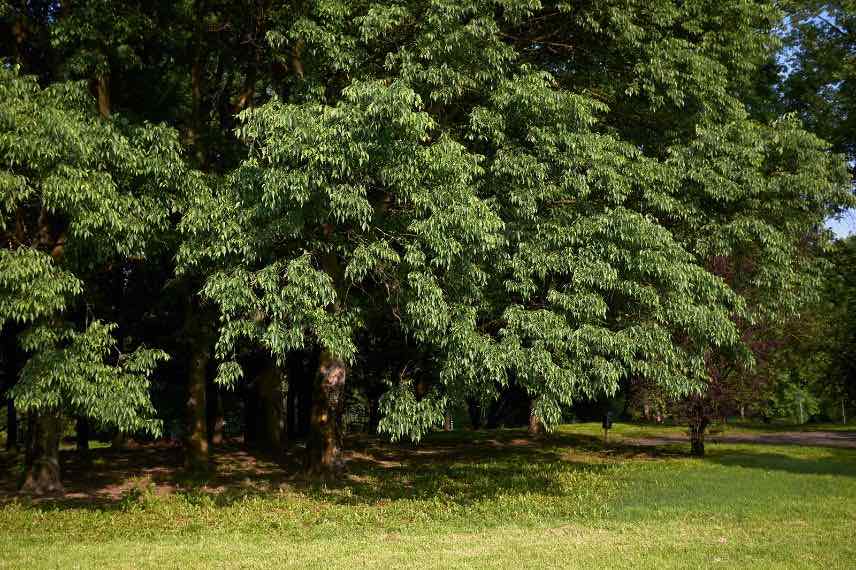
Celtis australis has an elegant habit and grows to around twenty metres tall when mature. Its deciduous leaves are dentate and green, then turn yellow in autumn. Its greenish spring flowering is not outstanding, unlike its red fruits, which follow them and range from bright to dark. These latter are edible and also a feast for birds. It provides high-quality shade, filters fine particles very well (slightly less so for gases) and offers advantages in the context of climate change. The development of its root system requires some space and it is thus suitable for greening parks, squares and peri-urban roadways but can also be used in a row. The European hackberry has a limited hardiness (-15°C for a mature specimen) but it tolerates heat, dry, compacted and poor soils. Plant it in fairly deep, well-drained soil.
Other noteworthy trees in urban environments
Other species could feature in this selection, each presenting both advantages and drawbacks that should be studied before selecting them according to the intended use and the place where you want to plant them (size, root system, fruits that can be messy or troublesome, hardiness…). Among them:
- Evergreen conifers : Cedrus atlantica, Abies pinsapo, Larix decidua.
- Deciduous broad-leaved trees : Aesculus hippocastanum, Acer campestre, Acer monspessulanum, Catalpa bignonioides, Cercis siliquastrum, Cornus mas, Corylus colurna, Fraxinus ornus, Paulownia tomentosa, Platanus hispanica, Platanus hybride, Sorbus aria, Sorbus terminalis, Tilia cordata, Quercus cerris, Quercus ilex.
Discover also our extensive range of trees and large shrubs as well as our drought-resistant trees in our online nursery!
- Subscribe!
- Contents
Comments