





























What is the best place to plant hibiscus?
The ideal soil types and sun exposure for beautiful hibiscus.
Contents
Are you wondering where the best place is to plant your Hibiscus? You’re in the right place. Discover our detailed tips for choosing the ideal location, preparing the soil, and ensuring flourishing growth of your Hibiscus (Rose of Sharon, common Rose mallow or scarlet hibiscus), whether in the ground or in a pot. Learn planting techniques, care tips and best practices to protect your young plant from extreme weather conditions.

Different types of Hibiscus
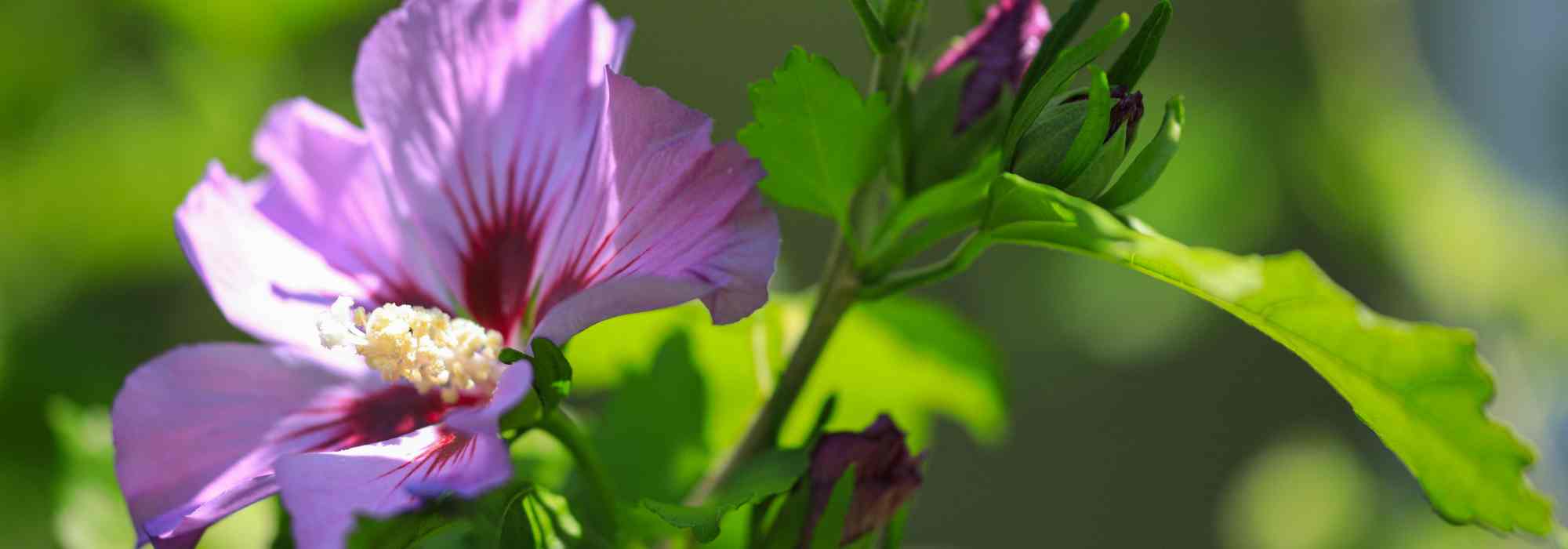
Hibiscus syriacus (Althea)
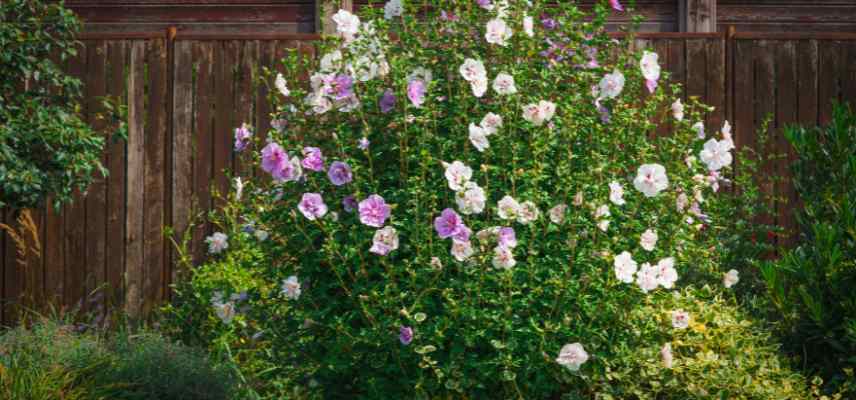
The Hibiscus syriacus, also known as Althea or tree mallow, is a vigorous and hardy bush, native to Asia. It is distinguished by its trumpet-shaped flowers, often bicolour, which appear in summer and autumn. This hibiscus can reach up to 3 metres in height and thrives particularly when planted in the ground in temperate climates. Its hardiness allows it to be grown outdoors even in areas where temperatures can drop to -15°C. For optimal flowering, plant Hibiscus syriacus in a sunny, wind-sheltered spot.
→To learn all about althea, discover Hibiscus, Althaea: plant, grow and maintain.
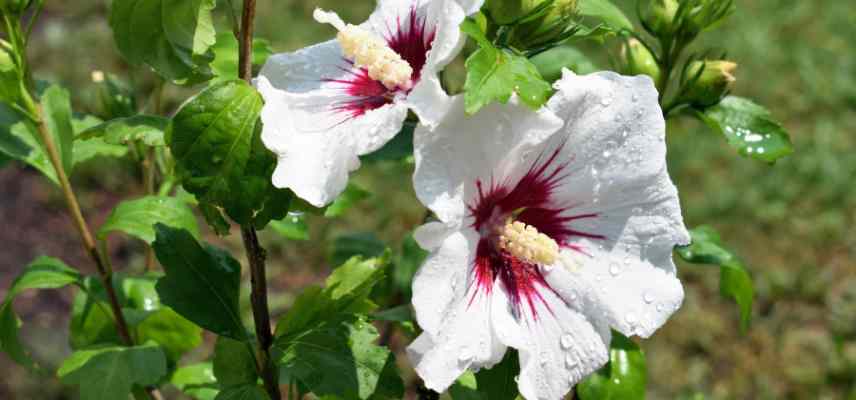
Hibiscus moscheutos (Hibiscus des marais)
The Hibiscus moscheutos, or swamp hibiscus, is a semi-hardy species native to the damp regions of North America. This plant is particularly prized for its giant flowers, reaching 20 to 25 cm in diameter. Preferring moist soils, the Hibiscus moscheutos (for example the cultivar ‘Cherry Cheescake’) thrives well along pond borders or in gardens where the soil remains moist for much of the year. It tolerates winter temperatures down to -10°C and prefers full sun for abundant flowering from summer to autumn.
Other popular varieties
Besides these two main species, there are many other hibiscus varieties, each with its own characteristics and cultivation requirements. Among them, you will find:
- Hibiscus coccineus: also called scarlet hibiscus, it produces bright red flowers and prefers moist soils.
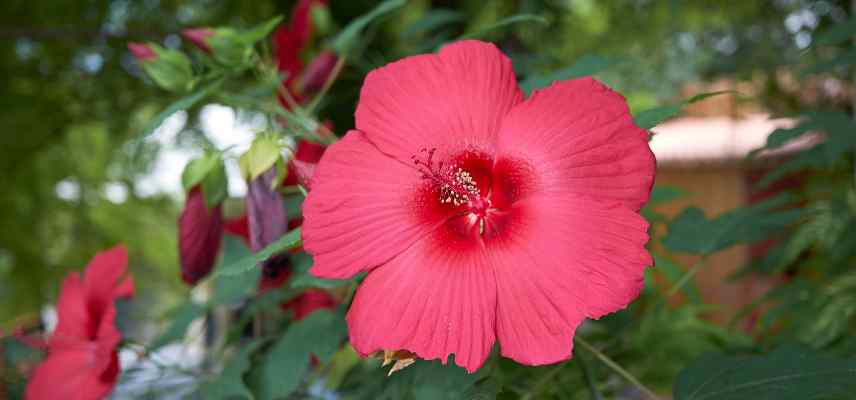
- Hibiscus paramutabilis is a handsome bush that can exceed 3 m in all directions, less well known than Althea, but just as floriferous from summer to the first frosts and hardy to -15°C. Its beautiful white flowers with pink tints, sometimes entirely pink, enhanced by a carmine-red maculation at the heart, are larger than those of its cousin.
- Hibiscus acetosella: known for its decorative purple foliage and dark pink flowers, this species is ideal for adding a splash of colour to the garden.
- Hibiscus trionum: also called Venetian hibiscus, this annual species is distinguished by its small cream flowers with a purple centre and finely cut leaves.
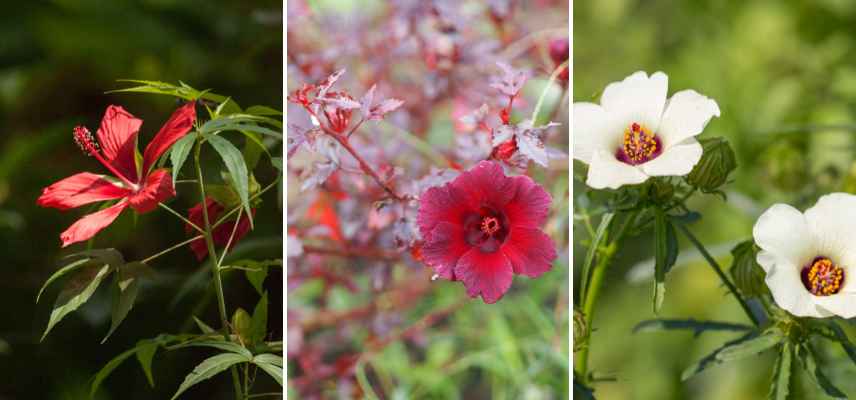
Hibiscus coccineus, Hibiscus acetosella and Hibiscus trionum.
Hibiscus rosa-sinensis (Chinese hibiscus)
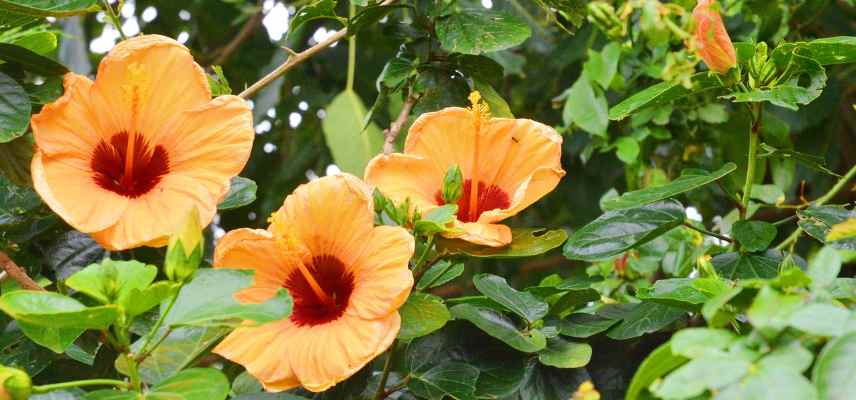
Finally, the Hibiscus rosa-sinensis, commonly called Chinese hibiscus, is a tropical plant prized for its large coloured flowers. Originating from Southeast Asia, these hibiscuses are often grown in pots in our latitudes, as they do not tolerate temperatures below 10°C. Their spectacular flowers, available in a wide range of colours from bright red to pure white, can reach up to 15 cm in diameter. Indoors or in a greenhouse, Hibiscus rosa-sinensis requires bright light with no direct sun and regular watering to keep the substrate slightly moist.
To discover : the Australian blue hibiscus or Alyogyne huegelii ‘Santa Cruz’ is a perennial shrub cousin of Hibiscus. Most Alyogyne are rather frost-fraid, but this species tolerates down to -8°C and can therefore be tried in southern France or on the Atlantic coast. Its bloom, a very bright mauve, consists of 15 cm flowers, short-lived, but continually renewing from the end of spring to the end of summer.
Read also
How to choose a hibiscus?What light conditions does hibiscus need?
Hardy hibiscus suitable for growing in the garden (Hibiscus syriacus or Hibiscus moscheutos) enjoy a sunny exposure (at least 6 hours of sun per day) for optimum flowering. Direct sunlight promotes abundant
Hibiscus are not particularly wind-tolerant. It is therefore best to plant Hibiscus near a hedge, a wall or a fence that can serve as a windbreak. For young plants, tie the main stems to sturdy stakes using raffia, but ensure you do not tie too tightly to avoid damaging the plant.
Oli’s tip: Planting several hibiscus together can also provide mutual protection against the wind. The plants support one another and form a mass more resistant to gusts.
What type of soil should you plant your hibiscus in?
Ideally, hibiscus is a plant that thrives in soil with a pH slightly acidic to neutral, between 6 and 7. This type of soil promotes the uptake of essential nutrients and allows the plant to grow vigorously. However, Hibiscus syriacus tolerate calcareous soils very well.
These bushes prefer fertile soil that remains moist, yet well-drained. Heavy soils, which retain too much water in winter, can lead to root rot and other fungal diseases, and reduce the hardiness by a few degrees. Once well established, Hibiscus syriacus are fairly drought-tolerant, but flower less. Common Rose Mallows, for their part, require moist soil during their growing season.
The ideal time to plant hibiscus is in spring, after the last frosts, when the soil begins to warm. This period allows the roots to establish well before the summer heat.
Oli’s tip: do you have clay soil? No worries: mix in some compost (the addition of well-decomposed compost provides essential nutrients to the plant and improves the soil’s moisture retention while promoting good drainage) or, if not available, into the soil at planting some potting compost and that’s that. In the end, this soil type, notably clay-loam or calcareous clay, is very well suited to Rose of Sharon. They even tend to reseed themselves there.
Read also
Growing a hibiscus in a potWhat depth and width are needed for planting?
To ensure healthy growth of your hibiscus, it is essential to dig a planting hole tailored to its needs:
- Depth: the hole should have a depth of 30–40 cm. This depth ensures that the hibiscus roots will have enough space to spread and develop properly.
- Width: the width of the hole should be around 50 cm. A hole wide enough allows the roots to spread easily into the surrounding soil, thereby improving stability and nutrient uptake.
Regarding planting distance, a planting distance of 1.5 to 2 m between each Rose of Sharon is recommended, and about 1 metre for common Rose mallow.
In the ground or in a pot?
Advantages and disadvantages of open-ground cultivation
Hibiscus grown in the open ground benefit from vigorous growth thanks to ample space for the roots, require less maintenance once established and are more resistant to climate variations. However, they are less mobile and may be more exposed to extreme conditions such as frost or drought.
Advantages and disadvantages of pot cultivation
Hibiscus in pots offer great mobility, allowing them to be moved to optimal conditions and brought indoors in winter for the less hardy. They also allow better control of the growing medium, watering and fertilising, and are ideal for small spaces. However, they require more frequent maintenance and risk their roots becoming confined, requiring regular repotting. The hibiscus requires regular watering to keep the soil moist, but not waterlogged, especially during periods of active growth and flowering. For optimal growth, fertilise monthly with a fertiliser rich in potassium and phosphorus during the growing season.
The ideal pot and growing medium for container cultivation
Use a pot with a diameter of at least 40 cm, with drainage holes. A light, well-drained mix of potting compost and compost is ideal.
Tips for overwintering hibiscus in pots
Bring frost-tender hibiscus indoors before frosts into a bright and cool place. Reduce watering, stop fertilising and monitor for pests.
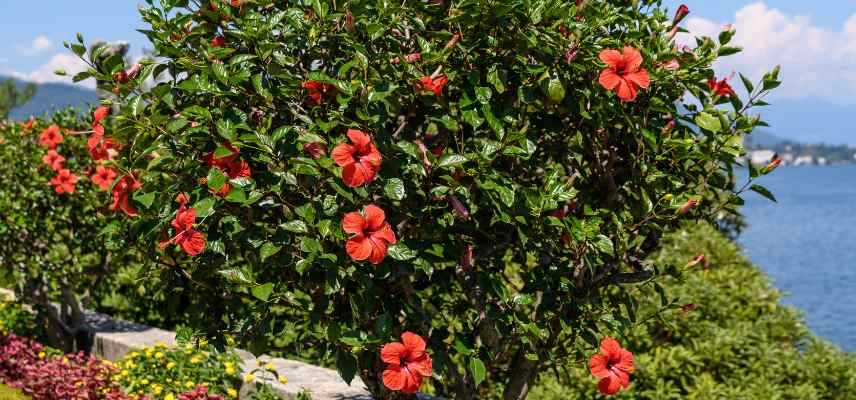
Chinese hibiscus can be planted in the ground only in the southern part of the country.
- Subscribe!
- Contents
Comments