


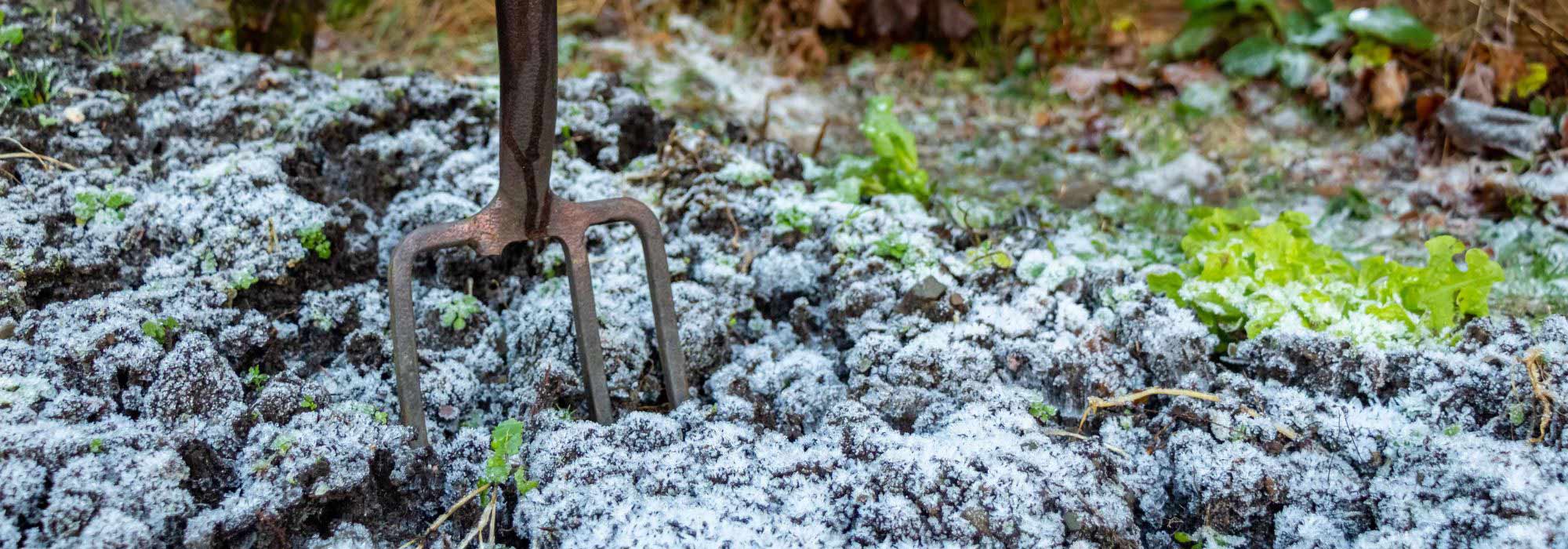
What to plant in winter?
Bare roots and more!
Contents
At last, everything is at rest in the garden. Frost and the first snows are making their appearance, plunging the plants into a gentle torpor. The months of December, January, and February are a bit quiet in the garden, especially as the days are short. Apart from in the privileged regions of the Atlantic or Mediterranean coast where the sun still shines and the days are not so cold, you may not venture outside much during this winter season.
But if boredom strikes in your garden, put on your padded jacket, hat, and warm boots, some planting is still possible in winter!

Ornamental trees and shrubs
In bare roots
When choosing trees or deciduous bushes to plant in the garden, winter allows you to opt for bare roots, as once the sap has descended and the leaves have fallen, the plants have entered dormancy. They have been grown in open ground in a nursery for a few years and are then uprooted when offered for sale. These plants are appealing because having experienced growth in open ground, they are vigorous, cheaper to purchase, and more environmentally friendly, as they are free from substrate and plastic containers.
The planting of a tree or a shrub with bare roots should be done between November and the end of March before the resumption of growth, which will allow for good rooting. However, caution is advised: gardeners with clay soil that remains moist throughout the bad season will benefit from planting these plants at the end of winter. Indeed, as the soil begins to warm up, it becomes lighter and more conducive to the proper development of roots.
It should be noted that you can plant trees and shrubs in bare roots when your soil is moist at depth but not waterlogged from heavy rains, but also provided that temperatures are not negative during the day.
→ Find our expert advice on planting trees and bushes in bare roots
In containers
In theory, planting potted plants can be done all year round, however planting without considering the characteristics of your climate is risky and not all plants have the same requirements or the same cold resistance. In Mediterranean regions, planting can occur in winter, including for evergreen subjects and conifers. In contrast, it may be a bit late in colder regions where frost and snow arrive early. During these winter months, December is the best time, especially in light soils or good free-draining soils. It is advisable to wait until February-March in the case of heavy soil and at altitude. Again, never plant when the soil is frozen or waterlogged.
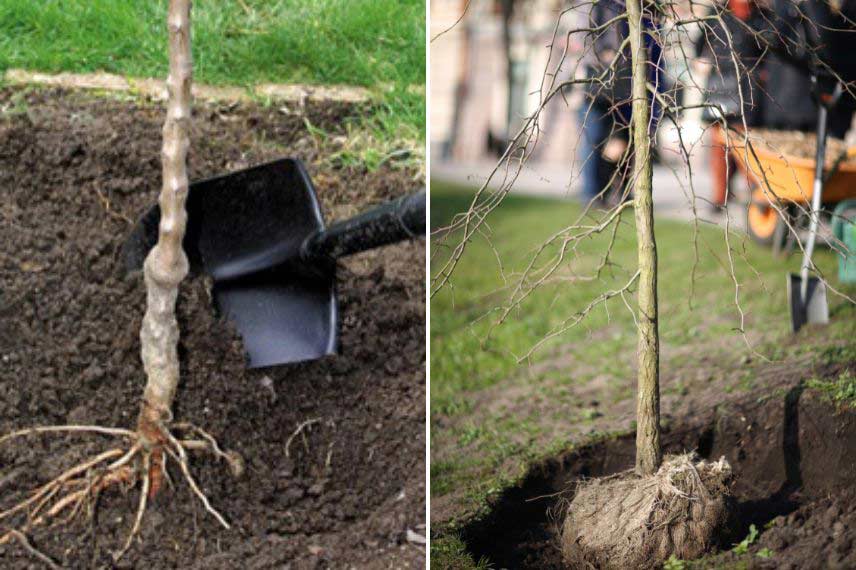
If you are making winter plantings, adapt the timing and the plants planted to your local climate, your soil, and the weather conditions
Read also
What to plant in autumn?Fruit trees
Winter is also a favourable time for planting bare root fruit trees. From 25th November, St Catherine’s Day, until mid-February, you can plant all your fruit trees. Planted during this period of vegetative rest, they will start growing more reliably in spring and will easily withstand the first summer heat.
However, don’t forget to check the weather and avoid planting a few days before a forecasted cold snap. Some years, winter can also be remarkably dry and cold; in such cases, it will be unnecessary to water the recently planted fruit trees. If heavy rain is expected, allow the soil to dry out for a few days before working it.
For planting your bare root fruit trees, remember the essentials:
- Ensure sufficient planting distances
- Prepare your planting holes a few days or even weeks in advance
- Soak and dress the roots
- Don’t forget to stake your trees
It may also be useful to protect the grafting point from the cold with a mound of soil that you will remove when growth resumes, or with a winter fleece or geotextile band.
Potted fruit trees can also be planted during this period, following the same recommendations as for ornamental trees.
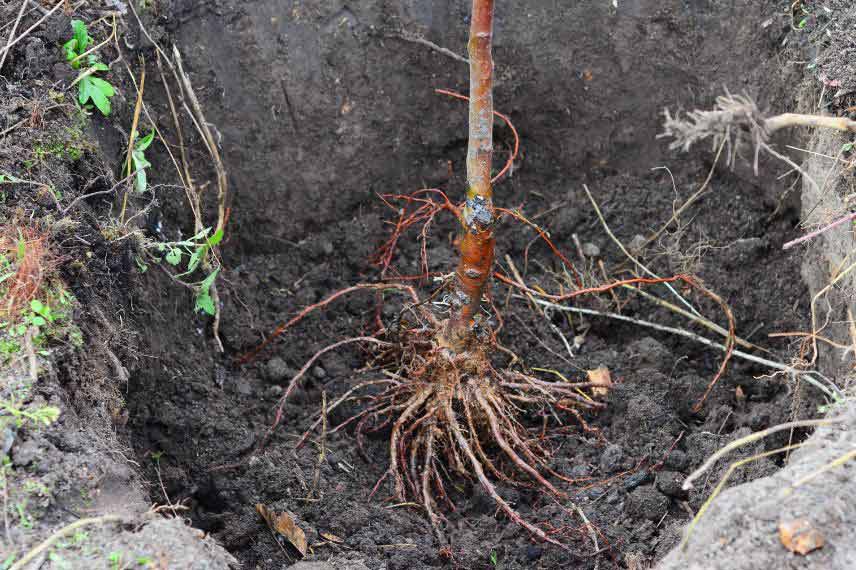 We plant bare root fruit trees from November to early March: winter is therefore the ideal time!</caption]
Hedge plants and roses
In winter, you can take advantage of offers on hedge shrubs with bare roots to create green screens at a lower cost! This can be particularly interesting if you have linear areas or large spaces to green. Moreover, your hedges will have a very good recovery and will grow more vigorously provided you plant them correctly. Find all our explanations on how to plant a hedge with bare roots here.
The same goes for roses, where the offer of bare roots is more economical and ensures very good recovery. → Read: When to plant roses?
However, hedge shrubs and potted roses can also be planted all year round, including in winter. As with trees and bushes, our recommendations for doing this appropriately are to avoid frost periods and waterlogged soils, and to plant at the end of winter in heavy clay soils.
Finally, remember to mulch the base of your newly planted hedges and roses: RCW, dead leaves, straw, or if necessary, cardboard without printing, these mulches will provide excellent protection against cold, evaporation, and runoff.
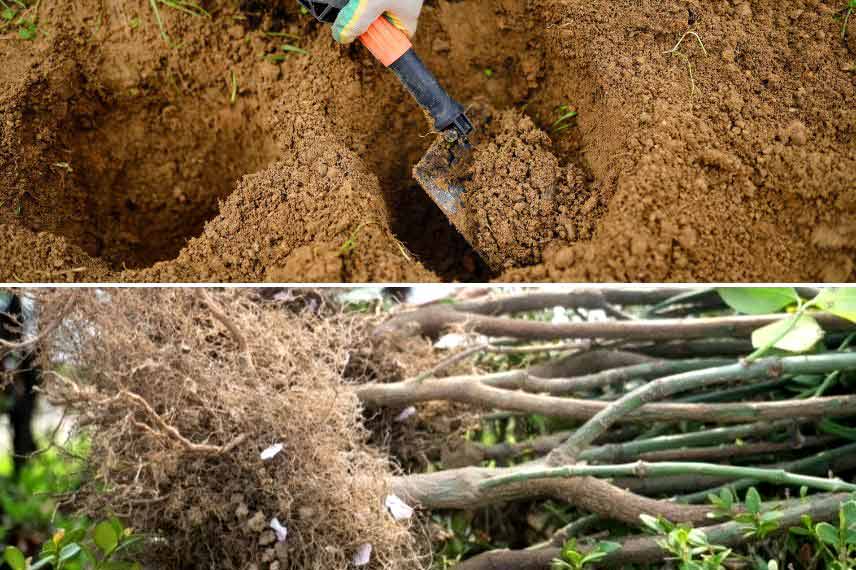 Plant bare root hedge bushes in winter for optimal recovery and growth</caption]
Read also
Planting in autumn: is it the best time?Bulbs
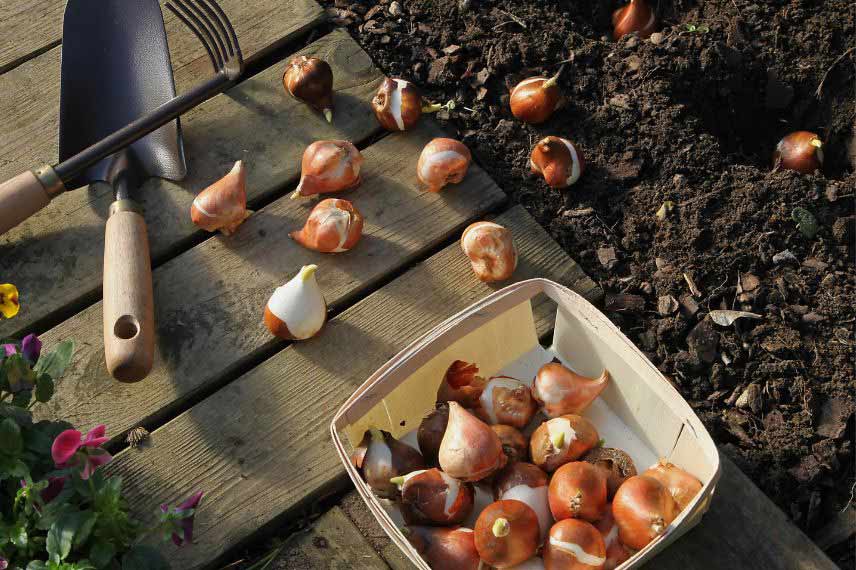
It is often said that the best time to plant spring-flowering bulbs is during the September-October period. This is true, but most varieties can be planted without issues until the end of November, even December or January. For this, favour late varieties such as Alliums, Eremurus (Foxtail Lily), or Lilies that will flower in summer. These late-flowering bulbs can be planted well into the season.
Bulbs planted late in winter will flower later. They will also bloom for a slightly shorter duration in the first year, but will establish properly for the following years.
Discover our tips for planting spring bulbs late
Perennials
In theory, you can plant perennials in pots or containers all year round. If you plant them in winter, it is essential that this is done outside of frost periods and by selecting plants suitable for your local climate. Remember to provide protection for your new plantings: a good mulch of leaves, for example, will do the trick perfectly.
Currently, few perennials are offered as bare roots. However, cultural practices and mindsets are slowly changing, and it is not unreasonable to think that bare root perennials will increasingly be marketed with a wider variety of options. For example, you can find Iris germanica in rhizome form, heucheras, lily of the valley, peonies, day lilies, or hostas.
Generally available between October and before the resumption of vegetation around March, you can plant bare root perennials in winter, always avoiding frost and waterlogged soil, and don’t forget to add a generous mulch.
Find a wealth of advice in our article: Planting perennials in bare roots: how and why?
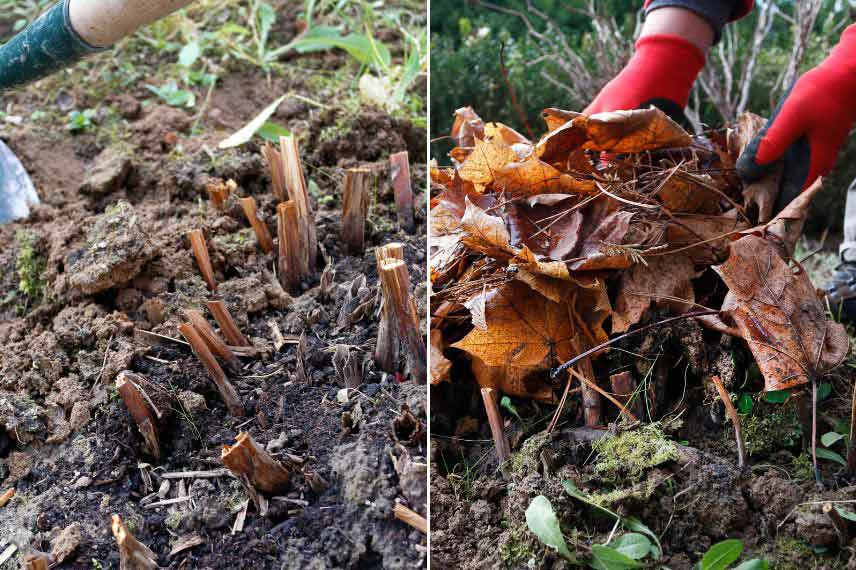
After planting bare root perennials (here, peonies), protect them with a generous mulch
What about the Christmas tree?
After the festivities, you may want to give your Christmas tree a second life! The main species are the Nordmann fir and the noble fir (Abies Nobilis). Hardy and resilient, they can transition from home to garden provided you give them space, fresh, deep soil that is not too chalky, and partial shade. They can reach up to 30 m in height with a spread of 6 to 7 m after many years, so it is important to consider their future growth before planting them in the garden. Therefore, if you have enough space, you can certainly plant the Christmas tree in the ground or pot it to decorate the terrace or balcony for a few years.
- First of all, make sure to buy a tree that is not cut, but in a root ball, meaning with its root system
- Remember to water and mist it regularly after purchase and keep it away from any heat source
- Replant it as soon as possible in January after the festivities, as our heated interiors do not provide the best survival conditions
- Place it outside or in a non-heated space a few days before replanting
- Dig a planting hole that is two to three times the volume of the root ball. Backfill with a mix of garden soil and compost or leaf mould. Water thoroughly and install a stake.
→ Our article “What to do with your Christmas tree after the festivities?” will provide you with ideas for recycling it, and our sheet “Fir, Abies: planting, pruning, and care” will answer your questions about fir trees.

- Subscribe!
- Contents

Comments