





























Which annuals will bloom in your garden all summer?
Selection of annuals that bloom in summer
Contents
Do you dream of a colourful, flowering garden all summer? Summer-flowering annuals allow you to add splashes of colour and a different atmosphere to a garden or balcony each year. Easy to grow and often very floriferous, they offer a palette of colours and a variety of shapes that will delight all flower-loving gardeners. Fast-growing, they have a one-year lifecycle and are planted from the end of spring to create a floral display during the summer. Discover our selection of summer-flowering annuals as well as our planting and maintenance tips to achieve a prolific flowering that lasts all summer.

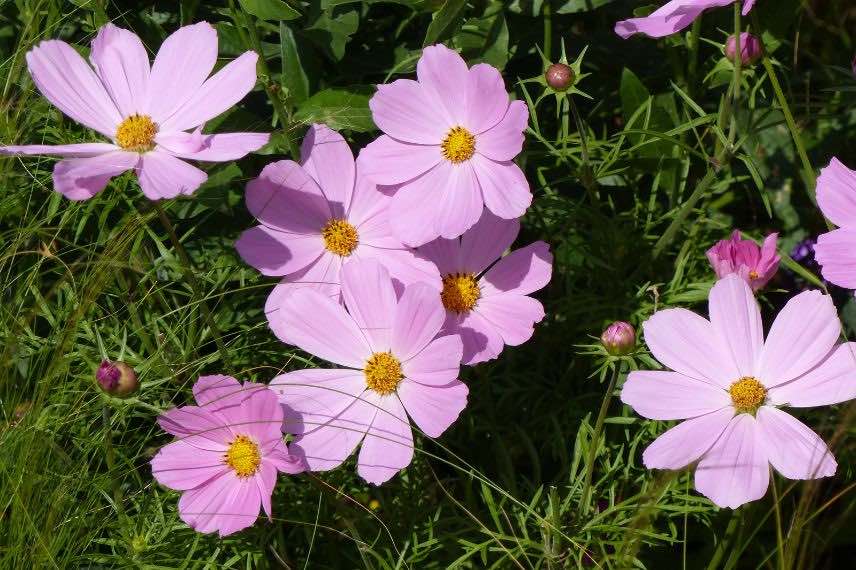
Cosmos, annual flowers for a cottage garden ambience
With its daisy-like, carefree charm, Cosmos is a plant most often grown as an annual, with airy flowering that lasts from June until the first frosts. Its pastel-coloured flowers, from candy-pink to pure white, yellow and purple, bloom on delicate, airy foliage. They can be single or double, and the height of the plant also varies by variety, from 30 cm tall to 1.8 m. Cosmos adds a cottage-garden touch to perennial borders and container plantings in summer. Two main varieties are distinguished: the Cosmos bipinnatus with red, white or yellow flowers and the Cosmos sulphureus with yellow or orange flowers.
Easy to care for, Cosmos tolerates drought and adapts to any well-drained soil. It is planted in full sun in spring, after the last frosts. For best flowering, deadhead regularly, pinch the stems to encourage branching, and water in dry weather. Cosmos can self-seed year after year.
For more information, read our full guide on the Sowing and care of Cosmos.
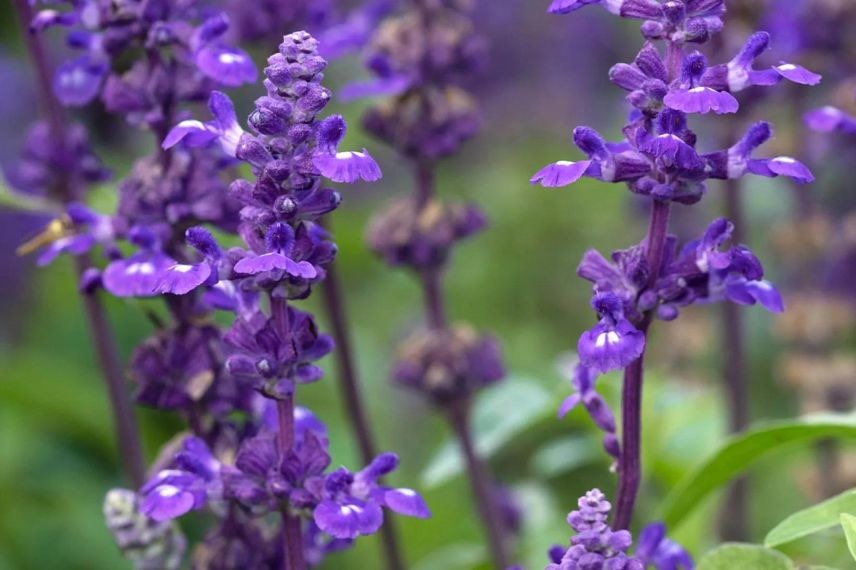
Annual salvias, flowering spikes, light and colourful
Annual salvias offer a light, cottage-garden display for many months, from May to October or November. Bushy, they are floriferous and do not have medicinal properties, unlike common sage. They bear spikes of small tubular flowers in colours ranging from white to blue, violet, pink and red. Some flowers are bi-coloured. The flowers have five petals and are two-lipped. Annual salvias range in height from 30 cm to 1.5 m. They are not very hardy perennials, grown as annuals in our regions where winters are cold.
They are grown in borders or in pots. Easy to care for, they require only a sunny spot sheltered from cold winds and a light, rich, well-drained soil to thrive. They can be planted in spring after the last frosts or sow them in situ in April–May.
Regularly deadhead spent flowers to encourage further flowering.
For more information, see our complete guide on planting and care of annual salvias.
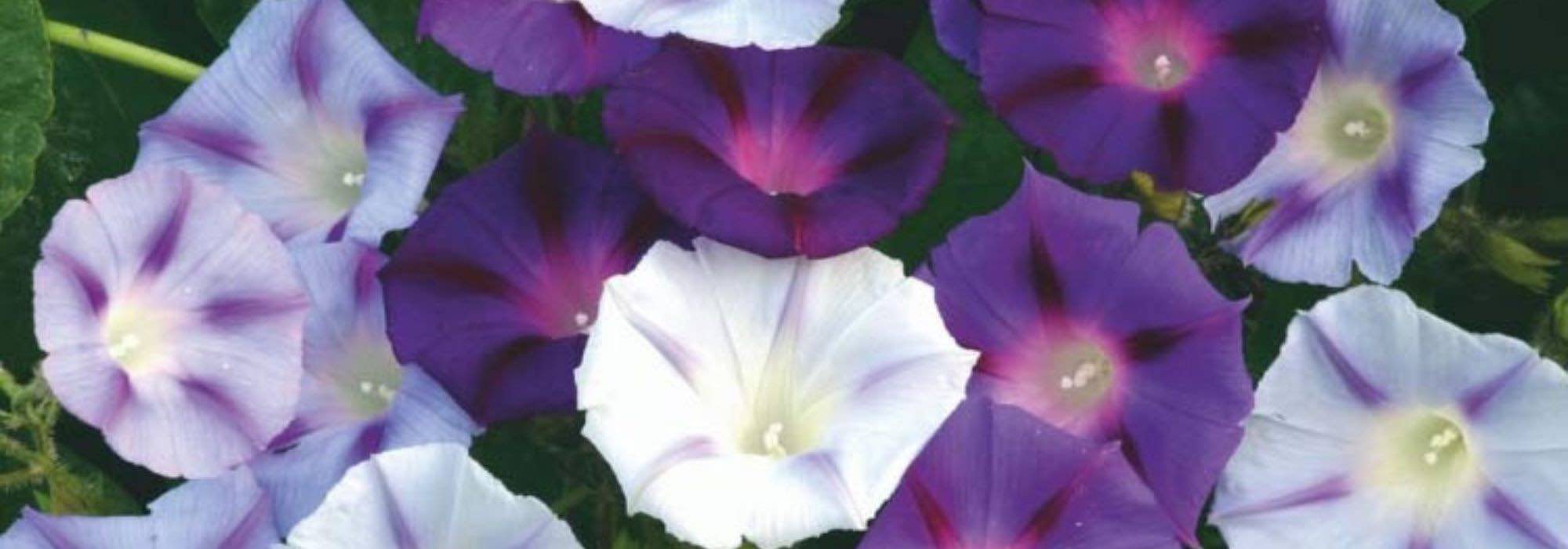
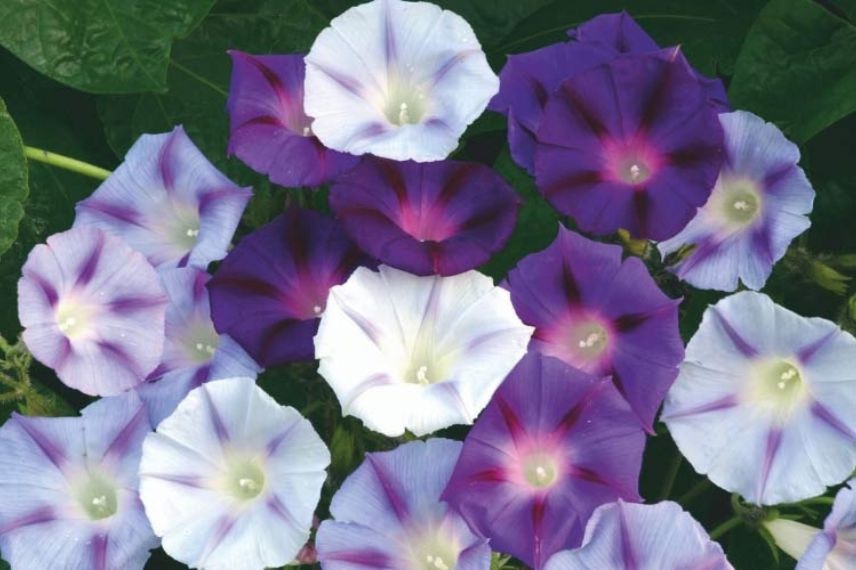
Ipomoeas, voluble annuals that are very decorative.
The Ipomoeas or Volubilis are very floriferous and decorative annuals. They are distinguished by their heart-shaped, alternate leaves and trumpet-shaped flowers. They offer a broad colour palette: from blue to white, including red and pink. Some flowers are bi-coloured and striped. Of tropical origin, these are perennials that are not hardy and are grown as annuals. They flower from July until frosts. There are climbing Ipomoeas and sweet potato Ipomoeas, the latter being especially prized for their colourful, trailing foliage, with flowering remaining rather discreet. They grow very quickly, and the climbers rapidly cover supports provided for them, such as a shed or a trellis.
Easy to grow, they are planted in a warm and sunny location in spring once the risk of frost has passed. They prefer light, rich, well-worked soils and require frequent watering to flourish. You can pinch back the stems to encourage branching and apply fertiliser for flowering plants each month to promote flowering. For more information, see our full guide on Ipomoeas: sowing, planting, cultivation and maintenance.
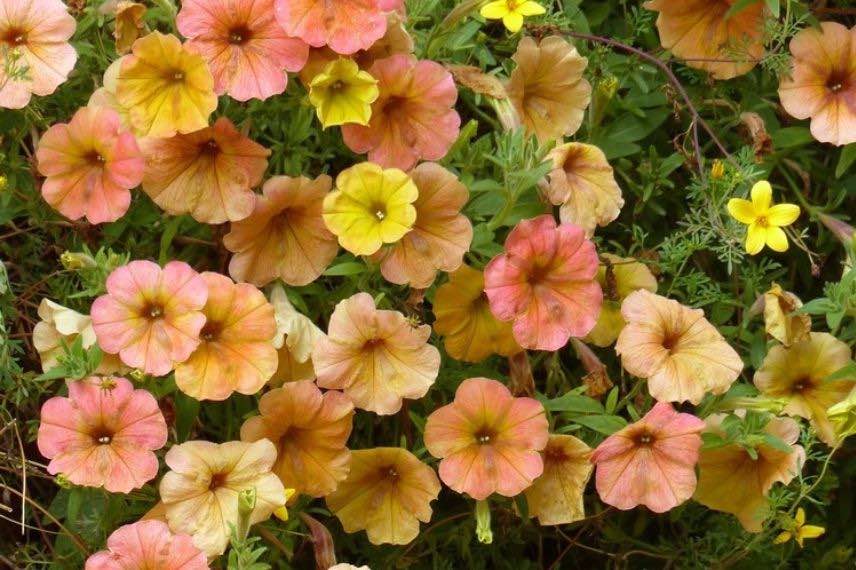
Petunias, brightly coloured annuals
Available in a wide range of colours, petunias are perfect for brightening window boxes, pots, but also the front of the garden borders. They provide abundant, long-lasting flowering throughout the summer, from May until the first frosts. The funnel-shaped flowers grow on soft, velvety shoots. They display colours that are often vivid and sometimes bi-coloured, from Indian pink to violet, through red, white, orange, blue, yellow and even black. Surfinia and Supertunia are hybrids with a trailing habit, ideal for creating cascading displays of flowers in hanging baskets.
Easy to care for, they are planted in spring, in full sun, in fertile, humus-bearing soil that drains well. To ensure a good flowering, water them regularly and feed them with liquid fertiliser.
For more information, see our full guide on planting and care for Petunias.
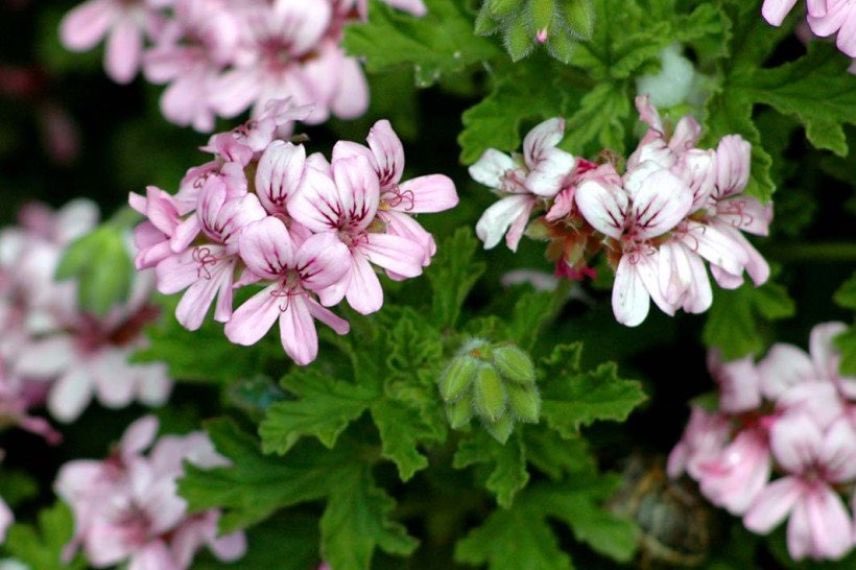
Pelargoniums, classic annuals for balconies and borders
Robust and hardy, pelargoniums, also known as geraniums, are classic balcony plants. These plants are perennials in climates similar to their native countries, which are South Africa and the Mediterranean regions, but they are grown as annuals in cooler climates. They bring splashes of bright colour and thrive just as well in the ground as in pots on a balcony. There are the zonal Pelargonium with an upright habit and the ivy geranium Pelargonium with a trailing habit, most often grown in hanging baskets. The flowers are made up of five petals and grouped into small rounded clusters. They come in a wide range of bright or pastel colours and can be single or double and scented.
Pelargoniums are planted in May in full sun. To ensure good flowering, apply liquid fertiliser every ten days and regularly remove spent flowers. If you wish to overwinter your Pelargoniums, you can bring them indoors to protect them from the cold in winter, and then move them outside again in spring once the frosts have ended.
For more information, see our full guide on planting and care of Pelargoniums.
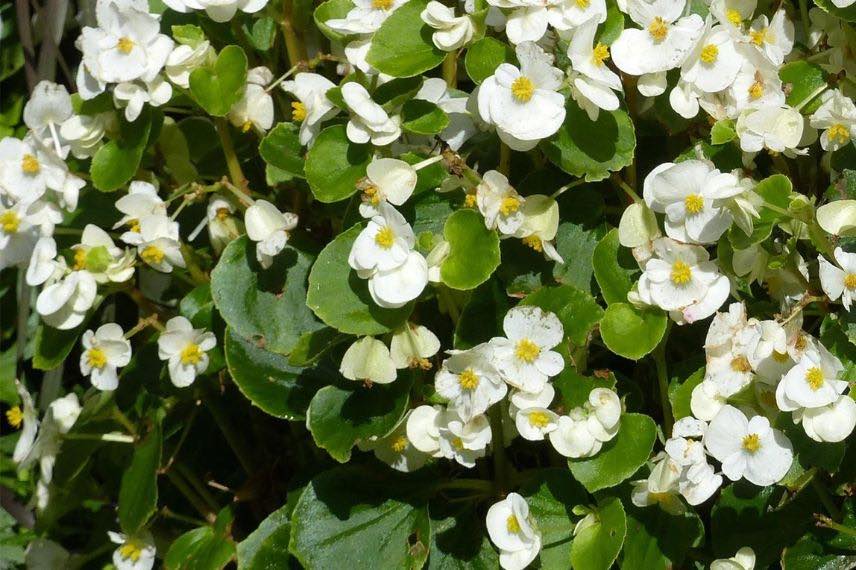
Begonias, annuals to colour shaded corners
Border begonias (Begonia semperflorens) are not frost-hardy perennials, used as annuals in our regions. They bring an exotic and colourful touch to garden borders or pots on a balcony. They bloom from May–June to October–November. The spectacular flowering offers vivid colours, from red to pink and white. Their foliage is also decorative, rounded, fleshy and glossy, tinged with green, purple or bronze. The flowers are composed of four sepals with a yellow centre formed by stamens or stigmas. They can be single or double. The height of Begonia can vary between 15 and 60 cm.
Begonias are easy to grow, and establish quickly. They are planted in spring, after the frosts have passed. Plant them in a sunny or half-shade position in a light, well-drained soil. They do not like scorching sun and prefer slightly acidic or neutral, humus-bearing soils. When planting, add well-decomposed compost. In summer, water them regularly and remove faded flowers to encourage a new flowering. Mulch the base to keep the roots cool.
For more information, consult our full guide on planting and caring for Begonias.
Many other types of annuals exist and provide varied decorative touches. Draw inspiration from our full range of summer-flowering annuals to create in the garden or on your balcony the atmosphere you desire.
- Subscribe!
- Contents
Comments