





























Which brooms to plant for a hedge?
The best suited for a flowering and fragrant hedge in spring
Contents
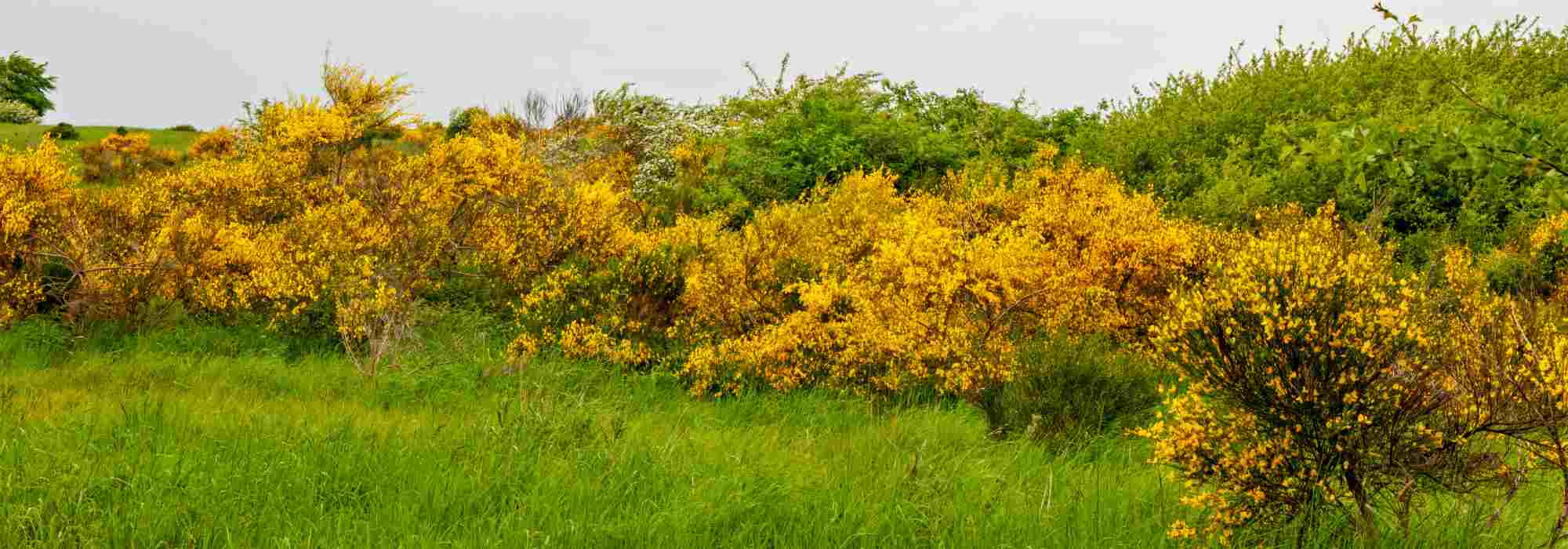
Brooms or Cytisus are robust bushes for sunny locations and well-drained soils. They flower continuously from May to June (a little earlier for the Cytisus praecox) in a burst of fragrant pea-like flowers in shades of yellow, orange, red, pink, white, or bi-coloured depending on the chosen varieties.
Some can be planted without worry in free-form hedges with a slightly wild or rustic appearance. This is the case for the classic yet always effective broom or Cytisus scoparius. However, other brooms will thrive in a lower hedge, such as the small Cytisus ‘Palette’, or conversely, in a taller hedge alongside larger bushes like the pineapple broom.
→ It can be challenging to navigate the wide selection of brooms. To assist you, we will sort them based on the size of the adult bushes. Let’s discover which brooms are best suited for a hedge in our advice sheet.

A low hedge: less than 50 cm high
Brooms under 50 cm tall are ideal undershrubs for groundcover. However, some can be used at the edge of borders or as low hedges with a slightly wild appearance.
This is the case with Genista pilosa ‘Vancouver Gold’ (45 cm tall and 1 m wide), also known as Pilous Broom, a small deciduous bush with a rounded and prostrate habit. From May to June, it is almost hidden under its abundant flowering of sparkling golden yellow. Quite hardy, it enjoys sunny or lightly shaded situations, poor and well-drained soils, with an acidic tendency.
Note: To maintain a dense and rounded habit, perform annual pruning before the resumption of growth, from February to June. Be careful to only prune the young wood, as Brooms flower on the previous year’s wood.
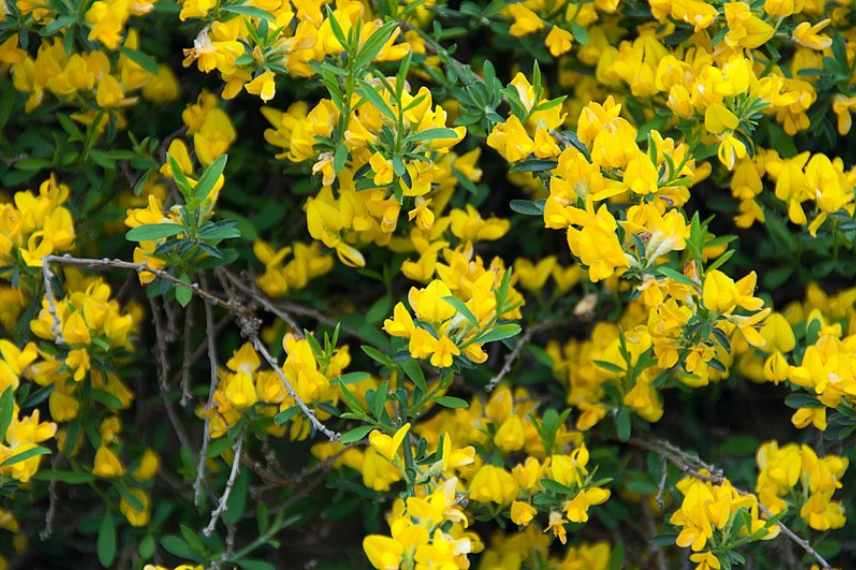
Genista pilosa ©Wikimedia Commons
A medium hedge: between 50 cm and 1 m
For a colourful hedge that won’t exceed 1 m in height, there is a particularly suitable broom: Cytisus ‘Palette’.
The Cytisus scoparius ‘Palette’ (1 m high and 1 m wide) is a variety of broom with a remarkably colourful spring flowering (from May to June), each small flower showcasing a palette of red, orange, yellow, peach, and lilac pink. It develops a bushy, upright, fairly dense habit, yet appears light due to its fine stems and very few tiny leaves.
This broom thrives in full sun in light, poor soil, without excess lime. In rich soil, the Cytisus ‘Palette’ can grow up to 1.50 m, but it will tend to become bare at the base.
Note: a severe pruning after flowering will prevent the plant from exhausting itself in producing fruit. This also helps maintain a compact habit that does not become bare at the base.
Discover other Hedge shrubs
View all →
Available in 1 sizes
Available in 2 sizes

Available in 2 sizes
Available in 1 sizes
Available in 1 sizes
Available in 1 sizes
Available in 1 sizes
Available in 1 sizes
Available in 1 sizes
Available in 1 sizes
A beautiful hedge: between 1 m and 1.50 m
It’s within this height range that we will find the greatest selection of brooms.
The Broom or Cytisus scoparius
The broom is the most classic and widely planted. It is also the most effective broom for a free and wild hedge not exceeding 1.50 m in height.
Several flower colours are available depending on the horticultural varieties: bright yellow, for example, for Cytisus scoparius ‘Apricot Gem’, white-pink for Cytisus ‘Moyclare Pink’, red for Cytisus ‘Roter Favorite’, or even bi-coloured for Cytisus ‘La Coquette’. There is something for everyone!
Like the vast majority of brooms, brooms should be planted in light, well-drained soil, preferably slightly acidic, in a sunny position. Pruning after flowering is beneficial to maintain a relatively compact habit.
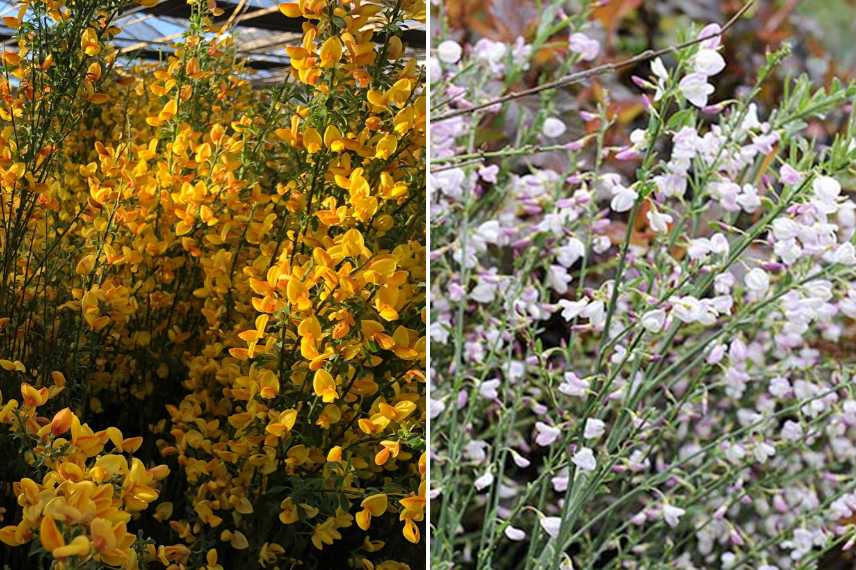
Cytisus scoparius ‘Apricot Gem’ and ‘Moyclare Pink’
The Early Broom or Cytisus praecox
As their name suggests, early brooms produce an earlier flowering than their botanical cousins: that is, from March to April.
Generally speaking, Cytisus praecox will reach a height of about 1.30 to 1.50 m.
The Cytisus x praecox is the original hybrid of the early broom, recognisable by its pale yellow flowers. However, there are much more colourful varieties, such as the Cytisus x praecox ‘Hollandia’ with fragrant flowers combining cherry red, pink, and cream.
These brooms should be planted in light, well-drained soil, preferably slightly acidic or sandy, poor, in a sunny position. You can prune after flowering to maintain a compact habit.
The Cytisus procumbens
The Cytisus procumbens ‘Zeelandia’ is a very floriferous variety of broom, forming a shrub with arching branches, covered with a multitude of lilac-pink and cream flowers at the end of spring. Ultimately, this broom will reach 1.50 m in height and the same in width.
This broom adapts to any light, well-drained soil, preferably slightly acidic, in a sunny position. It will benefit from severe pruning after flowering to prevent fruiting, which quickly exhausts the plant. This also helps to maintain a compact habit that does not become bare at the base.
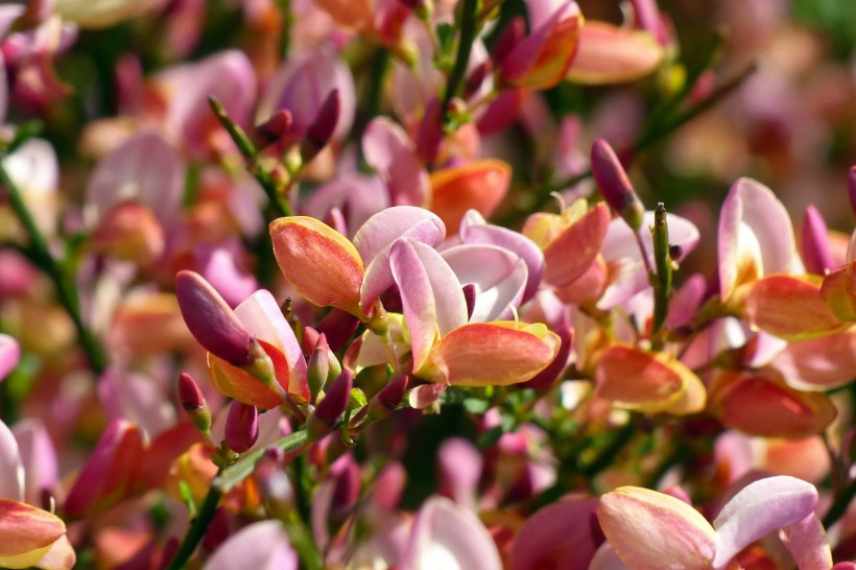
Cytisus procumbens ‘Zeelandia’
The Broom ‘Porlock’
The Genista ‘Porlock’ is a hybrid broom that is covered with countless clusters of golden yellow flowers, highly fragrant in spring (sometimes re-flowering in autumn). It is a fast-growing shrub that will reach 2 m in height and the same in width. It has soft, downy branches, covered with small, dark green, semi-evergreen trifoliate leaves.
The broom ‘Porlock’ should be planted in full sun, in poor to average, but well-drained soil.
Read also
How to choose a Broom?For large free and wild hedges: over 2 m
Among the brooms, there are large bushes, almost small trees, like the intriguingly named Broom: the Pineapple Broom.
The Cytisus battandieri, or Pineapple Broom, features summer flowering in clusters of golden yellow flowers with a sweet pineapple scent (hence its name!). It also boasts charming deciduous foliage that is grey-green-silvery and silky, developing an open and airy habit. The growth of this bush is rapid, and its mature height will reach 3 to 4 m, with a spread of 2 to 3 m.
Moderately hardy (-12°C), this broom enjoys full sun and acidic, neutral, or slightly calcareous soils, ranging from dry to moist. It prefers light and well-drained soils, as winter moisture can affect its hardiness.
Note: Ideal in a free and slightly wild hedge alongside other large spring-flowering bushes, the Pineapple Broom can, however, be pruned to achieve a more compact and ramified plant. Simply trim the tips of the branches each year after flowering.
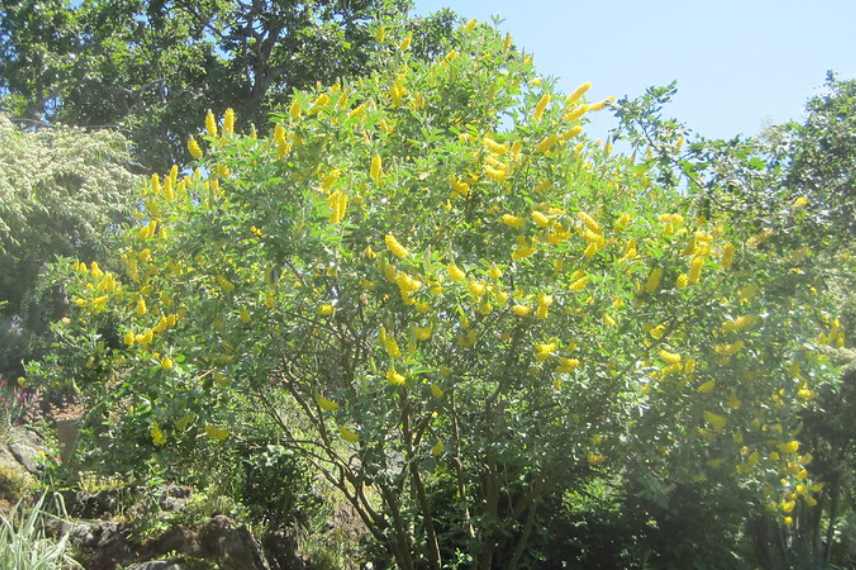
Pineapple Broom
- Subscribe!
- Contents
Comments